
The Fascinating Evolution of the Can Opener: From Clumsy Beginnings to Everyday Convenience
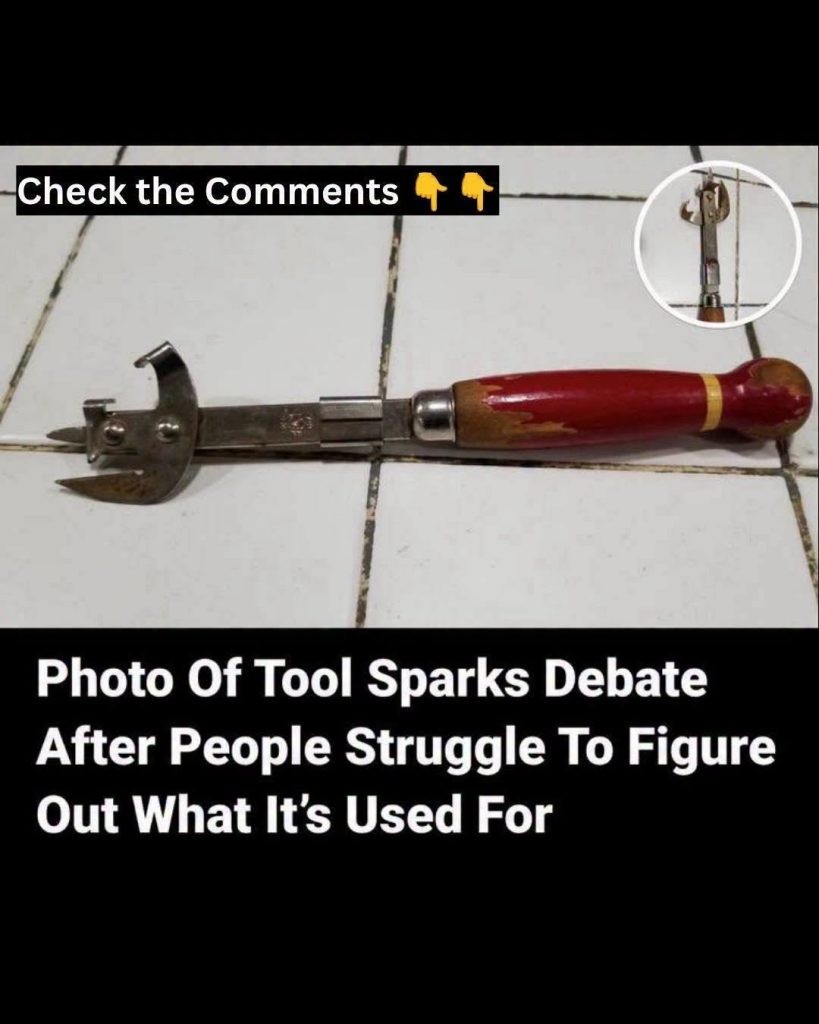
Deep within the forgotten corners of many family kitchens, particularly those of older generations, one can find relics of daily life that tell stories of innovation and perseverance. One such item recently captured widespread attention, sparking both nostalgia and curiosity: a strange metal gadget from a grandmother’s cabinet, which at first glance resembled a medieval weapon more than a culinary tool. This accidental discovery, shared by a Reddit user, illuminated the intricate journey of the can opener—a device that radically changed how we access and enjoy food.
An Unusual Discovery Sparks Online Curiosity
When the Reddit user posted a photo of the mysterious metal object, the online community immediately began speculating about its function. Was it an early survival tool? A bizarre nineteenth-century invention? Enthusiasts and experts chimed in with guesses, referencing antique catalogs and historic patents. The consensus ultimately formed around its real identity: an early version of the can opener, a kitchen device many now take for granted.
The Origin of Canned Food: Necessity Breeds Invention
The story of the can opener cannot be told without a look at canned food itself. Canning was invented in the early nineteenth century as a solution to preserve food for long voyages and wartime rations. In 1810, French innovator Nicolas Appert first developed the method of sealing food in glass jars, soon followed by British inventor Peter Durand, who patented the use of tin cans for food storage. This breakthrough enabled armies and explorers to carry sustenance over long distances. However, opening these sturdy metal containers posed an enduring challenge.
For decades after cans became commonplace, dedicated openers did not exist. Instructions frequently advised the use of a hammer and chisel—or even bayonets in the case of soldiers—to pierce the sealed cans. While effective, these improvised techniques were neither safe nor convenient for ordinary households.
The First Can Openers: Crude Tools for a Difficult Task
The need for a specialized device led to the first true can opener patents in the mid-nineteenth century. The design of the earliest tools reflected the materials and technology of the era, as well as contemporary ideas about safety and utility. In 1858, American inventor Ezra Warner patented one of the first can openers, which featured a pointed, curved blade much like the object discovered in the grandmother’s kitchen cabinet. The tool’s operation was decidedly manual: users had to puncture the can’s lid with the blade and then carefully saw around the edge to create an opening. Military quartermasters widely adopted this device during the American Civil War, and it soon became a fixture in the kitchens of late-nineteenth-century America.
Despite its innovation, this early can opener demanded significant strength and patience. It would often slip, potentially causing injury—as recounted by those who used the device in their youth. The resulting jagged edges and stray metal shards also raised food safety concerns. Yet, for decades, this was the standard process for opening canned goods.
Memories and Hazards: The Human Experience with Early Can Openers
For those who grew up using these vintage gadgets, the memory is frequently accompanied by stories of difficulty and, sometimes, injury. Online forums and social media threads collected tales of permanent scars caused by the tool’s errant slip, and recollections of the anxiety that accompanied mealtime preparations. Many recall how the lack of ergonomic design made the device hard to handle, especially for children or elderly family members.
Nonetheless, these can openers had a certain rugged charm—a testament to human ingenuity and adaptability in the face of everyday problems. They were, in many kitchen drawers, symbols of resourcefulness that families passed down through generations.
Technical Evolution: Precision, Safety, and Convenience
As the popularity of canned foods continued to grow into the twentieth century, so did consumer demand for safer, easier openers. In 1870, American inventor William Lyman patented a major breakthrough: the rotary can opener. This design featured a cutting wheel that rolled along the edge of the can, allowing users to remove the lid with a simple turning motion. The design was further refined in the decades that followed, with adjustments to improve safety and ergonomics.
By the 1930s, electric can openers began to make their appearance in households, primarily among the affluent or those seeking the latest in kitchen innovation. However, it was the development of the familiar handheld, side-cutting can opener in the 1950s that finally made opening cans a quick, safe, and accessible everyday task. The new design minimized the risk of cuts and ensured that the lid did not fall into the food, addressing the main criticisms of earlier models.
The Can Opener in Popular Culture and Everyday Life
As can openers became safer and more convenient, they took on a new role in kitchens around the world. Their presence enabled families to stock up on affordable, shelf-stable foods, supporting everything from quick weeknight meals to emergency preparedness plans. For generations, these devices symbolized modernity and progress, marking the shift from laborious food preparation to greater ease and efficiency.
In popular culture, the can opener stands as a humble but important emblem of domestic life. It appears in cooking shows, comic strips, and even art installations. Antique can openers, like the one discovered by the Reddit user, are now collectors’ items, appreciated for their historic value and unique design.
Expert Perspectives: Food Safety and Design Innovations
Experts emphasize that the trajectory of the can opener closely follows advances in food safety and household engineering. Dr. Rachel Laudan, a food historian, notes that “the interplay between food preservation technology and domestic tools is central to the evolution of our diets.” The can opener’s evolution mirrors improvements in metalworking, consumer safety standards, and ergonomic research. Modern can openers often undergo rigorous safety testing and are constructed with features such as soft-grip handles, magnetic lid retrievers, and smooth-edge cutting mechanisms designed to protect users from accidental injury.
Food safety organizations, including the US Food and Drug Administration (FDA), have periodically issued guidelines on the use of kitchen tools like can openers. Proper cleaning and maintenance are highlighted, as residue from canned goods can harbor bacteria if devices are not adequately sanitized. The transition from primitive to modern can openers, therefore, has had a direct impact on health and household hygiene as well as convenience.
Global Use and Innovation in Modern Can Openers
Though the basic principle of can opening is nearly universal, local traditions and culinary customs have led to regional innovations. In some countries, specialized can openers are designed for bulk catering or industrial kitchens, featuring automated or heavy-duty mechanisms. In the travel and outdoors industry, lightweight, compact openers remain essential kit items. The military continues to use petite versions known as “P-38” or “P-51” openers, prized for their portability and reliability in field conditions.
With the growth of interest in vintage collections and retro home décor, antique can openers have found new audiences among collectors and enthusiasts. Online marketplaces and antique shops often feature rare or unusual models, some fetching significant prices due to their uniqueness or historical provenance.
The Can Opener Today: Everyday Utility and Future Prospects
In the modern kitchen, the can opener may not be the most glamorous tool, but it remains indispensable. Advances in packaging, such as easy-pull tabs and recyclable containers, have reduced—but not eliminated—the need for traditional openers. Many consumers still rely on them for accessing a variety of pantry staples, including soups, fruits, vegetables, and pet foods.
Looking ahead, continued innovation in kitchen technology may further alter how we open canned goods. Concepts such as entirely pull-tab packaging and smart, sensor-driven preparation devices are already under exploration by some manufacturers. However, the enduring relevance of the can opener—both as a tool and cultural icon—attests to the enduring balance of convenience, safety, and tradition in daily life.
Conclusion: From Obscure Origins to Everyday Essential
The journey of the can opener—from awkward metal contrivance to sleek, reliable kitchen staple—reflects broader themes in the history of technology and daily living. The device’s evolution showcases not just improvements in engineering, but also in safety, usability, and design. Today, the can opener remains a quiet but steadfast ally in homes around the world, making meal preparation just a little bit easier, one can at a time.
Sources
Disclaimer: This content is intended for entertainment purposes only and is not based on real events.