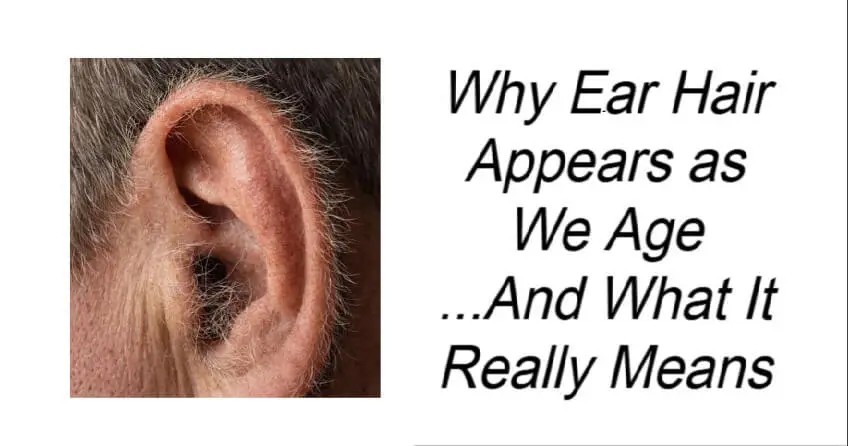

Why Ear Hair Appears as We Age …And What It Really Means
Growing older brings many noticeable physical changes, from wrinkles and gray hair to changes in skin texture and body composition. One change that often catches people by surprise is the appearance of thicker, darker, or longer hair around the ears.
For some people, it becomes noticeable during a routine haircut. Others discover an unexpected strand while looking in the mirror or grooming their facial hair. Although ear hair is frequently treated as a humorous sign of aging, there is a genuine biological explanation behind this common occurrence.
Hormones, genetics, and the natural aging process all influence how hair develops in different areas of the body. Understanding these factors can help explain why ear hair becomes more prominent over time, whether it indicates a health concern, and how to manage it safely.
Why Ear Hair Increases With Age
Almost everyone has some hair around their ears. In younger individuals, these hairs are generally fine, short, and difficult to notice. As people get older, however, certain hairs may become thicker, darker, and more visible.
This change is part of a broader pattern of age-related differences in body hair. While some areas experience reduced hair growth, others may develop more prominent hair. Men, in particular, may notice longer or coarser hair around their ears, eyebrows, and nostrils as they age.
According to medical information published by MedlinePlus, changes in facial and body hair are among the normal physical developments associated with aging. These changes are influenced by several biological processes rather than a single cause.
One important factor is the way individual hair follicles respond to hormones. Different follicles behave differently depending on their location, genetics, and sensitivity to hormonal signals.
The Role of Testosterone and Other Androgens
Androgens are a group of hormones that influence the development and maintenance of many characteristics associated with male and female bodies. Testosterone is one of the best-known androgens and plays an important role in regulating hair growth.
Hair follicles in different parts of the body do not respond identically to these hormones. Some follicles are more sensitive to androgen activity than others. This helps explain why hair growth can increase in certain locations while becoming weaker in others.
For example, scalp follicles in genetically susceptible individuals can gradually become smaller under the influence of androgen-related processes. This condition is commonly associated with male-pattern hair loss, although women can experience pattern hair thinning as well.
Meanwhile, follicles around the ears, nostrils, and eyebrows may continue producing visible terminal hairs. These are thicker and more pigmented than the fine vellus hairs that cover much of the body.
Dermatologists recognize that the relationship between androgens and hair growth depends on the location and characteristics of individual follicles. Therefore, increasing ear hair and thinning scalp hair can occur in the same person without the hair actually moving from one area to another.
Changes in Hair Growth Cycles
Every hair follicle follows a natural growth cycle. This cycle generally includes three main stages: anagen, or active growth; catagen, a transitional period; and telogen, the resting phase before the hair is eventually shed.
The duration of these stages varies depending on the type of hair and its location on the body. Scalp hair, eyebrow hair, and body hair all have different growth patterns.
As people age, hair follicles can undergo changes in their activity and growth cycles. Some hairs may become longer or more noticeable because of differences in their growth patterns and shedding behavior.
However, aging does not affect every follicle in the same way. Genetics, hormonal sensitivity, and individual biological differences all contribute to the final appearance of ear hair.
Age-Related Changes in Skin
Skin also changes gradually throughout adulthood. Collagen production declines, elasticity decreases, and the skin may become thinner or develop a different texture.
These changes can make certain features more noticeable, including fine facial hair and small strands around the ears. Lighting, hair color, and the contrast between hair and skin can also influence how visible individual strands appear.
Although changes in skin contribute to the overall appearance of aging, they should not be considered the primary explanation for increased ear hair. Follicle activity, hormonal influences, and genetics are more directly relevant.
How Genetics Influence Ear Hair Growth
Genetics play an important role in determining where the body grows hair, how thick individual strands become, and how follicles respond to hormonal changes.
If several members of a family have noticeable ear hair, other relatives may develop similar characteristics. This does not mean that everyone in the family will experience the same degree of growth, since inherited traits interact with age and individual hormone responses.
Genetic factors also help explain why some people develop prominent ear hair relatively early, while others experience very little visible growth even at an advanced age.
Hair characteristics can vary considerably between individuals and populations. Differences in pigmentation, hair thickness, follicle distribution, and hormonal sensitivity all contribute to these variations.
Importantly, noticeable ear hair is not an indication of poor personal hygiene. Washing, shaving, or regularly cleaning the ears does not determine whether new hairs develop. It is primarily a biological characteristic rather than a reflection of grooming habits.
Is Ear Hair a Sign of an Underlying Health Problem?
For most people, ear hair is a normal and harmless part of aging. Its presence alone is not generally considered a medical condition and does not require treatment.
Nevertheless, understanding the difference between normal age-related changes and unusual symptoms is important.
When Hormonal Changes Deserve Attention
Hormones influence many functions throughout the body, including hair growth, metabolism, energy levels, and reproductive health. Significant changes in hormone activity can sometimes affect the appearance and distribution of body hair.
However, ordinary ear hair growth is not a reliable way to measure testosterone levels or identify a hormonal disorder.
If a person experiences sudden and substantial changes in hair growth alongside other unexplained symptoms, discussing those changes with a healthcare professional may be appropriate. A clinician can evaluate the overall symptoms and determine whether further investigation is necessary.
Other changes worth discussing include unexplained hair loss, unusual skin changes, or new symptoms that develop alongside changes in body hair. The appropriate evaluation depends on the person’s age, medical history, medications, and overall health.
Does Ear Hair Predict Heart Disease?
One persistent health question concerns a possible relationship between ear hair and cardiovascular disease. Some older observational studies have investigated whether particular ear characteristics, including prominent hair growth and diagonal earlobe creases, are associated with coronary artery disease.
Some studies have reported statistical associations in specific patient populations. However, an association does not establish that one physical characteristic causes a disease or reliably predicts an individual’s risk.
Research involving ear hair has limitations, including differences in study populations, sample sizes, and methods of evaluating cardiovascular risk. Findings from individual observational studies should not be interpreted as definitive medical conclusions.
There is currently no established clinical recommendation to use ear hair as a screening test for heart disease.
Established cardiovascular risk factors are much more useful when assessing heart health. These include high blood pressure, elevated cholesterol, diabetes, smoking, physical inactivity, and family history.
Anyone concerned about cardiovascular health should discuss appropriate screening and preventive measures with a healthcare professional rather than relying on external physical features.
Why Ear Hair Has a Natural Protective Function
Although visible ear hair may be unwanted from a cosmetic perspective, hair around the ears is not entirely without purpose.
Small hairs near the entrance of the ear canal can help catch dust and other airborne particles before they travel farther into the ear. They work alongside other natural protective mechanisms, including earwax and the skin lining the ear canal.
Earwax, also known medically as cerumen, helps lubricate and protect the ear canal. It also traps dirt and particles, supporting the ear’s natural cleaning process.
According to the World Health Organization, the inside of the ear is generally self-cleaning. Normal movements of the jaw and the natural migration of skin help move accumulated material toward the outer ear.
This means that removing every visible hair is unnecessary. People can maintain their appearance without attempting to eliminate all hair around or inside the ears.
Safe Ways to Manage Unwanted Ear Hair
For people who prefer a cleaner appearance, several grooming options can help control visible ear hair. The most important consideration is protecting the delicate skin of the outer ear and avoiding injury to the ear canal.
1. Use a Small Electric Ear-Hair Trimmer
A purpose-designed electric ear and nose hair trimmer is generally a convenient option for routine maintenance. These devices are designed to shorten visible hair without requiring the user to pull individual strands from their follicles.
Choose a clean, well-maintained device with a suitable protective head. Follow the manufacturer’s instructions and use it only on accessible outer-ear hair.
Avoid inserting the cutting head deeply into the ear canal. The goal is to manage visible hair around the entrance, not to remove protective hair from inside the ear.
2. Carefully Trim Visible Strands
Small grooming scissors with rounded or blunt tips can be useful for trimming isolated hairs on the outer ear.
Good lighting and a mirror are important. Make small, controlled cuts and avoid working too close to delicate skin.
People with poor visibility, limited hand control, or concerns about accidentally injuring themselves may prefer professional grooming assistance.
3. Consider Professional Grooming
Barbers and trained grooming professionals can help manage visible ear hair as part of a regular haircut. A healthcare professional, particularly an ear, nose, and throat specialist, can also provide guidance when hair growth is difficult to manage safely.
Professional advice may be especially useful for people with sensitive skin, previous ear injuries, or other conditions affecting the ear canal.
Grooming Methods to Avoid
Not every hair-removal technique is suitable for the ear area. The skin around the ear canal is delicate, and inappropriate methods can lead to irritation, injury, or infection.
- Plucking and tweezing: Pulling hairs from their roots can irritate follicles and cause inflammation, ingrown hairs, or infection.
- Depilatory creams: Chemical hair-removal products are not designed for use inside the ear canal and may irritate sensitive skin.
- Home waxing: Applying hot wax near the ear canal can cause burns or accidental injury. It is not a suitable do-it-yourself approach for internal ear hair.
- Sharp grooming tools: Improperly used blades or pointed scissors can cut the skin and create unnecessary risks.
Medical guidance from Cleveland Clinic specifically advises against plucking ear hair and using depilatory creams in the ear canal. When in doubt, trimming accessible outer-ear hair is a more conservative approach.
Protect the Ear Canal During Grooming
One of the most important rules is to avoid inserting grooming tools, cotton swabs, or other objects into the ear canal.
The American Academy of Otolaryngology–Head and Neck Surgery warns that inserting objects into the ear can push earwax deeper, scratch the canal, or damage the eardrum.
These precautions apply even when someone is attempting to remove hair rather than earwax. The ear canal should be treated as a delicate area that does not require routine internal grooming.
When Should You Speak With a Healthcare Professional?
Ordinary ear hair growth does not usually require medical attention. However, certain accompanying symptoms should not be ignored.
Consider arranging a medical evaluation if you experience:
- Persistent ear pain or unusual tenderness.
- Discharge, bleeding, or signs of inflammation.
- New or unexplained hearing difficulties.
- Persistent itching or irritation inside the ear.
- Sudden changes in hair growth accompanied by other unexplained physical symptoms.
These symptoms do not necessarily indicate a serious condition, but they may have causes unrelated to ordinary aging. A healthcare professional can examine the ear and recommend appropriate treatment when necessary.
The Bottom Line: Ear Hair Is Usually a Normal Part of Aging
Discovering thicker or longer hair around the ears can be an unexpected reminder that the body changes throughout life. Although the appearance may seem unusual, ear hair is generally a normal biological characteristic rather than a warning sign of declining health.
Hormonal activity, genetics, and differences in individual hair follicles help explain why some people develop more noticeable ear hair as they grow older. These same biological processes can produce different patterns of hair growth across the scalp, face, eyebrows, and other parts of the body.
There is no need to remove ear hair unless it creates a personal grooming concern. For those who prefer to manage it, careful trimming with an appropriate electric device or professional assistance can provide a practical solution.
Most importantly, avoid aggressive removal techniques and never insert sharp tools or grooming products into the ear canal. Preserving the ear’s natural protective mechanisms is more important than achieving completely hair-free ears.
Aging brings many changes, and not all of them require intervention. Understanding the science behind these changes can make them easier to approach with confidence, perspective, and sensible self-care.
Sources
The following medical and health organizations provide additional information about age-related hair changes, ear anatomy, and safe ear care:
- Cleveland Clinic – Ear Hair: Causes and Removal
- Nebraska Medicine – Why Do Ear and Nose Hair Grow More as You Age?
- MedlinePlus – Aging Changes in Hair and Nails
- World Health Organization – Ear Care
- ENT Health – Dos and Don’ts of Earwax
- American Academy of Otolaryngology–Head and Neck Surgery – Clinical Practice Guideline: Earwax
- PubMed – Research on Ear Characteristics and Coronary Artery Disease
Medical disclaimer: This article is intended for general educational purposes and does not replace professional medical advice, diagnosis, or treatment. Consult a qualified healthcare professional about individual health concerns.
“`
Disclaimer: This content is intended for entertainment purposes only and is not based on real events.