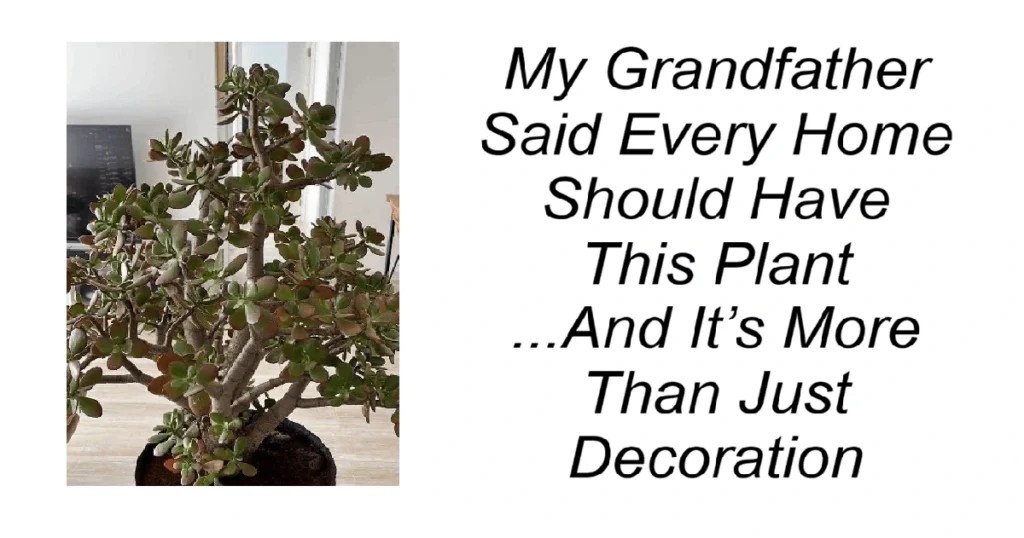

My Grandfather Said Every Home Should Have This Plant …And It’s More Than Just Decoration
Some plants become part of a family’s story. They may sit beside a sunny window for decades, appear in photographs, or be passed from one generation to another. While their beauty is often the first thing people notice, the traditions and memories associated with them can make them even more meaningful.
One plant that has earned this special place in households around the world is Crassula ovata, commonly known as the jade plant or money plant. Recognized by its thick, glossy green leaves and sturdy, branching stems, this attractive succulent is valued for its distinctive appearance, relatively simple care requirements, and association with prosperity.
For many families, the jade plant represents more than an attractive addition to a windowsill. It is traditionally connected with good fortune, financial success, growth, and new beginnings. Some people also share stories suggesting that the plant can sense illness or provide natural healing benefits. Although these stories are interesting, it is important to distinguish cultural traditions from scientifically established facts.
So, what makes the jade plant so popular? Where did its reputation for bringing good luck come from, and what should homeowners know about its care, potential uses, and safety? Understanding these details can help explain why this modest succulent has remained a favorite for generations.
The Jade Plant: A Traditional Symbol of Good Luck and Prosperity
The jade plant is native to southern Africa, where it grows in environments that experience periods of limited rainfall. Like other succulents, it has adapted to dry conditions by storing water in its thick, fleshy leaves and stems.
Its rounded leaves, deep green color, and tree-like growth pattern give it an appearance that makes it easy to recognize. Under suitable conditions, a jade plant can develop a thick central stem and multiple branches, eventually resembling a miniature tree. Mature plants may also produce small, star-shaped flowers, although flowering is not guaranteed for indoor specimens.
Beyond its botanical characteristics, the jade plant has developed an enduring cultural association with wealth and prosperity. In some Feng Shui traditions, its rounded leaves are compared with coins, making the plant a symbol of financial growth and abundance.
This symbolism explains why jade plants are frequently given as gifts for housewarmings, business openings, birthdays, and other important milestones. Placing one in a home or workplace is sometimes viewed as a symbolic way of welcoming success and positive opportunities.
It is important to understand that these associations are based on cultural beliefs rather than scientific evidence. There is no reliable research demonstrating that keeping a jade plant directly increases wealth, improves business performance, or changes a person’s financial circumstances.
Nevertheless, meaningful traditions can add emotional value to ordinary household objects. A plant received from a grandparent or given to celebrate a new home may become a lasting reminder of family relationships and important life events.
Why the Jade Plant Is a Popular Choice for Homes
One reason the jade plant has remained popular is its combination of attractive appearance and manageable maintenance requirements. Unlike plants that require frequent watering or constant attention, jade plants can tolerate periods of relatively dry soil.
Their compact growth makes them suitable for many indoor settings, including bright windowsills, desks, shelves, and living room corners. They can also be grown outdoors in appropriate warm climates, provided they receive suitable sunlight and protection from frost.
Another advantage is their slow-growing nature. Rather than quickly becoming too large for their surroundings, jade plants generally develop gradually. With proper care, they can remain attractive household plants for many years.
For beginners, this can make the jade plant an appealing introduction to indoor gardening. It offers an opportunity to learn about sunlight, soil drainage, watering schedules, and the seasonal needs of succulents without requiring an elaborate gardening setup.
Can a Jade Plant Sense When Someone in the Family Is Ill?
One of the more unusual stories associated with the jade plant is the belief that it can somehow recognize when someone in the household becomes ill. According to this traditional account, the plant may begin to droop, lose leaves, or appear unhealthy when a family member is unwell, then recover as that person gets better.
Although this story may sound meaningful, there is currently no reliable scientific evidence that jade plants can detect human illness or monitor someone’s physical condition.
Plants do respond to their surroundings, but their responses are related to environmental and biological factors. Changes in light exposure, temperature, humidity, watering, soil conditions, and root health can all influence the appearance of a jade plant.
For example, leaves that become soft or fall off may indicate excessive watering or problems with the roots. Wrinkled leaves can sometimes suggest that the plant needs water water, while weak or stretched growth may indicate insufficient light.
These changes can happen independently of anything occurring in the household. A plant that looks unhealthy should therefore be examined for environmental problems rather than treated as an indicator of someone’s medical condition.
That does not mean the family stories surrounding jade plants have no value. Caring for a living plant can encourage people to observe nature more closely, develop consistent routines, and create small moments of relaxation during busy days.
Does the Jade Plant Have Proven Medicinal Properties?
Traditional plant-based remedies have been used in different cultures for generations. Various plants are associated with soothing, cleansing, or healing properties, and some members of the Crassula genus have appeared in traditional practices.
However, traditional use should not be confused with scientifically demonstrated medical effectiveness. A plant’s historical reputation does not automatically establish that it can safely treat a health condition.
Claims that jade plant leaves have proven antiseptic, anti-inflammatory, or calming effects in humans are not supported by sufficient clinical evidence. There is not enough reliable human research to recommend jade plant preparations as treatments for infections, inflammation, skin conditions, or other medical concerns.
Another important consideration is that plants contain naturally occurring chemical compounds, and their safety depends on the species, preparation, amount consumed, and individual circumstances. A preparation that is traditionally used in one setting should not automatically be assumed safe for everyone.
Jade plants are also identified as toxic to cats and dogs if ingested. Pet owners should take particular care to position these plants where curious animals cannot chew or swallow the leaves.
For people, eating jade plant leaves or using homemade preparations as medicine is not recommended. There is no established medical benefit that justifies the uncertainty associated with ingesting an ornamental plant.
Questions about possible contaminants, including arsenic, also require careful consideration. Contamination is influenced by growing conditions, soil composition, water quality, and environmental exposure. It would be inaccurate to claim that every jade plant contains harmful levels of arsenic or that growing one indoors automatically makes it safe for medicinal use.
The most responsible approach is to enjoy the jade plant for its ornamental qualities and leave medical treatment to products and practices supported by appropriate safety testing and clinical evidence.
Can a Jade Plant Improve the Indoor Environment?
Bringing greenery indoors is one of the simplest ways to make a living space feel more welcoming. The jade plant’s rich green leaves and sculptural shape can add natural color to rooms that otherwise contain mostly furniture, electronics, and decorative objects.
Houseplants may also provide psychological enjoyment. For some people, watering plants, checking for new growth, and maintaining a small indoor garden can become a relaxing daily activity. Gardening is often associated with opportunities for mindfulness, creativity, and a stronger connection with the natural world.
However, claims about indoor plants removing significant amounts of air pollution should be interpreted cautiously. Although laboratory research has examined the ability of certain plants to absorb some airborne compounds, ordinary potted plants generally do not replace ventilation or effective air filtration in real-world homes.
Likewise, a jade plant should not be considered a medical device or a treatment for respiratory problems. Its practical contribution is primarily decorative, with the additional enjoyment that many people experience from caring for living greenery.
For a healthier indoor environment, regular ventilation, appropriate cleaning, control of moisture problems, and suitable air filtration are more dependable approaches than relying on houseplants alone.
Can Jade Plant Leaves Be Used for Dry or Irritated Skin?
Some traditional home remedies recommend applying the juice or gel of succulent leaves to dry, rough, or irritated skin. Because certain plants contain water-rich tissues, it may seem reasonable to assume that their leaves can provide natural moisture.
However, there is insufficient reliable clinical evidence to establish that jade plant leaves safely moisturize human skin or treat dryness, irritation, or other dermatological conditions.
There is also a difference between a plant that contains moisture and a product that has been formulated and tested for skin care. Homemade plant preparations may contain substances that irritate sensitive skin, and their cleanliness and concentration are difficult to control.
For everyday dry skin, established moisturizing ingredients are a more reliable choice. Products containing glycerin help attract water to the outer layer of the skin, while petrolatum helps reduce moisture loss. Ceramides can also support the skin’s protective barrier.
People with persistent dryness, painful cracks, swelling, or ongoing irritation should consider speaking with a pharmacist or healthcare professional. These symptoms may require more than a basic moisturizer.
It is best to avoid applying crushed jade leaves or their juice to broken or irritated skin. Homemade plant remedies should never replace appropriate treatment, particularly when a skin problem is persistent or worsening.
How to Care for a Jade Plant and Help It Thrive
One of the most appealing features of the jade plant is that it does not require complicated care. However, providing the right growing conditions is important for maintaining healthy leaves, strong stems, and balanced growth.
1. Provide Plenty of Bright Light
Jade plants grow best in bright locations with several hours of suitable sunlight. A bright window can be an excellent position for an indoor plant. If moving a jade plant from a shaded location into stronger direct sunlight, do so gradually to reduce the risk of leaf damage.
Insufficient light can cause the stems to become stretched and weak, making the plant appear less compact.
2. Avoid Overwatering
Overwatering is one of the most common problems affecting jade plants. Because their leaves and stems store water, they generally do not need frequent watering.
Allow the potting mix to dry between waterings. The exact frequency depends on temperature, sunlight, pot size, soil composition, and the season. During cooler periods or slower growth, the plant may need considerably less water.
3. Choose Well-Draining Soil
Succulents need soil that allows excess water to drain rather than remain around their roots. A commercially available cactus and succulent potting mix is generally a suitable option.
Ordinary garden soil or dense potting mixtures may retain too much moisture, particularly when used in containers without adequate drainage.
4. Use a Pot With Drainage Holes
A container with drainage holes allows excess water to escape after watering. This helps reduce the risk of waterlogged soil and root rot.
Decorative pots can still be used, but it is helpful to keep the plant in a properly draining inner container rather than allowing water to collect at the bottom.
5. Protect It From Frost and Extreme Cold
As a succulent native to a warmer region, the jade plant does not tolerate frost well. During cold weather, outdoor plants may need to be moved indoors or protected from low temperatures.
Stable, warm conditions and appropriate light can help maintain healthy growth throughout the year.
6. Keep It Away From Pets
Because jade plants can be toxic to cats and dogs when eaten, their placement deserves particular attention in homes with animals. Choose a location that prevents pets from reaching and chewing the leaves.
Why the Jade Plant Makes a Meaningful Gift
The jade plant is often chosen as a gift because it combines attractive appearance with symbolic meaning. Its association with prosperity makes it a popular option for people celebrating a new home, opening a business, starting a new job, or reaching another important milestone.
Unlike many short-lived decorative gifts, a healthy jade plant can remain part of a household for years. As it grows, it may become associated with the person who gave it or the occasion on which it was received.
Some families even pass plants between generations, creating a connection between older and younger relatives. A cutting from a parent’s or grandparent’s plant can become a small living reminder of family history.
These personal associations may be more valuable than any traditional promise of wealth or good fortune. They turn an ordinary houseplant into something that carries memories, affection, and a sense of continuity.
Final Thoughts: A Little Greenery With a Meaningful Story
The jade plant is a wonderful example of how an ordinary houseplant can become much more than a decorative object. Its glossy leaves, distinctive shape, relatively straightforward care requirements, and traditional association with prosperity have helped make it a favorite in homes around the world.
Although stories about its ability to sense illness or heal the body remain unproven, there are still plenty of reasons to appreciate this attractive succulent. It can brighten a room, introduce a little nature into everyday surroundings, and provide a rewarding gardening experience.
It is also a reminder that family traditions do not always need scientific explanations to have personal meaning. A jade plant passed down from a grandparent can represent memories, care, and the importance of nurturing something over time.
If your grandfather believed every home should have one, perhaps the most valuable part of his advice was simply the encouragement to make room for nature in everyday life.
Sometimes, the real gift of a houseplant is not a promise of healing or good fortune. It is the beauty, meaning, and quiet enjoyment it brings into your home.
Sources
The following credible botanical, veterinary, dermatological, and scientific resources provide additional information about jade plants, their care, and the health and safety considerations discussed in this article.
- University of Connecticut – Jade Plants (Crassula ovata)
- University of Wisconsin–Madison Extension – Jade Plant Care
- ASPCA – Are Succulents Safe to Have Around Pets?
- American Academy of Dermatology – Dermatologists’ Tips for Relieving Dry Skin
- PubMed – Potted Plants and Indoor Air Quality: A Scientific Review
- Mayo Clinic – Dry Skin: Diagnosis and Treatment
- North Carolina State University Extension – Crassula ovata
Disclaimer: This content is intended for entertainment purposes only and is not based on real events.