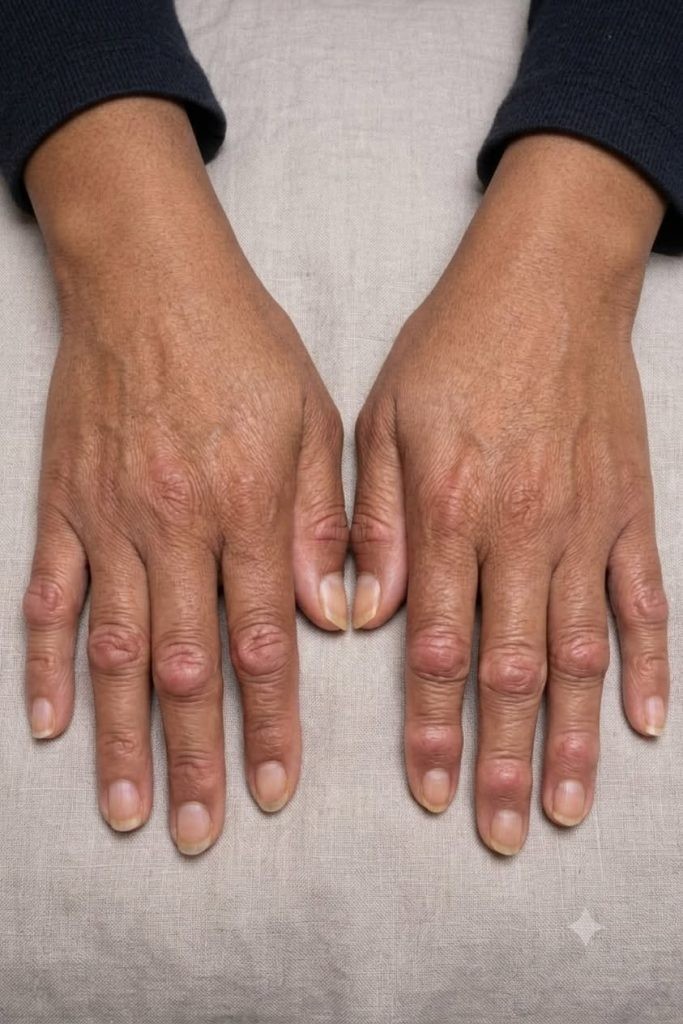

Small, Hard Bumps Near the Fingernails: Causes, Symptoms, and When to Seek Care
Small, firm bumps near the last joints of the fingers, especially close to the nails, are a common concern. They may begin on one finger and later appear on others, creating the impression that they are spreading. In many cases, these changes develop gradually as part of aging-related joint changes. However, several conditions can cause lumps around the fingertips, and a medical assessment is important when the cause is uncertain.
One of the most frequent explanations is hand osteoarthritis, a condition that can affect the small joints at the ends of the fingers. When osteoarthritis involves these joints, it may cause hard, bony enlargements called Heberden’s nodes. These nodes are generally associated with long-term wear and changes in joint cartilage and bone. Although they can be uncomfortable during their early stages, some people have little pain once the bumps have fully formed.
Understanding the possible causes of hard bumps near the fingernails can help people recognize changes worth discussing with a healthcare professional. This article explains Heberden’s nodes, other possible finger lumps, common symptoms, diagnosis, treatment options, and signs that need timely medical care.
What Are Heberden’s Nodes?
Heberden’s nodes are hard, bony bumps that form at the distal interphalangeal joints, often shortened to DIP joints. These are the last finger joints, located closest to the fingertips and nails. They are a recognized sign of osteoarthritis affecting the hands.
Osteoarthritis occurs when the tissues within a joint change over time. Cartilage, the smooth tissue that helps joints move with less friction, can become thinner or irregular. The surrounding bone may respond by forming small outgrowths, often called osteophytes or bone spurs. In the fingers, these structural changes can produce visible enlargement around the joint.
Heberden’s nodes are not contagious and do not move from one finger to another. When new lumps develop on additional fingers, it usually reflects osteoarthritis affecting more than one joint over time. Hand osteoarthritis can involve several joints in both hands, although the pattern and severity vary greatly from person to person.
Why Do Hard Bumps Near the Fingernails Appear?
There is no single reason why someone develops hand osteoarthritis or Heberden’s nodes. The condition is linked to a combination of age, genetics, joint structure, previous injury, and other individual factors. Risk generally rises with age, but aging does not mean that everyone will develop noticeable finger-joint changes.
Family history can play an important role. People with close relatives who have hand osteoarthritis or prominent finger nodes may be more likely to develop similar changes. Research also suggests that hand osteoarthritis is more common in women, particularly after midlife, although it can affect people of all sexes.
Previous injury to a finger joint may contribute to later osteoarthritis in that joint. Repetitive hand use can sometimes aggravate symptoms in people who already have joint disease, but ordinary hand activity is not considered the sole cause of osteoarthritis. The condition is complex, and it should not be assumed that someone caused it through work, hobbies, or daily tasks.
Common Symptoms of Finger Osteoarthritis
The appearance of bony lumps is only one possible feature of hand osteoarthritis. Symptoms may come and go, and they can affect each person differently. Some people notice discomfort before the joint enlargement becomes obvious, while others first become aware of a visible bump.
Common symptoms can include:
- Hard bumps or enlargement at the finger joints nearest the nails
- Aching, tenderness, or soreness around the affected joint
- Stiffness, particularly after rest or in the morning
- Temporary swelling during symptom flare-ups
- Reduced flexibility or difficulty fully bending and straightening a finger
- Less grip strength or discomfort when opening jars, turning keys, or handling small objects
- Changes in finger shape as the joint becomes enlarged
Symptoms do not always match the visible appearance of the joints. A person may have clearly enlarged joints with little pain, while another may experience notable stiffness or tenderness with only mild visible changes. Symptoms can also vary from day to day.
Why the Bumps Can Seem to “Spread”
It is understandable to worry when a bump appears on one finger and another develops months or years later. However, Heberden’s nodes do not spread like an infection, and a lump does not physically travel from one joint to another.
Instead, osteoarthritis can affect multiple small joints. Because the underlying tendency toward joint changes may be present in both hands, additional joints can develop enlargement over time. The process is usually gradual. Some people notice changes on several fingers, while others develop a single node that remains stable.
A healthcare professional can assess whether the pattern is consistent with osteoarthritis or whether another condition may be contributing. This is particularly important if the symptoms are sudden, severe, or different from the slow development typically associated with osteoarthritis.
Other Possible Causes of Lumps Near Fingernails
Not every bump near a fingertip is a Heberden’s node. Lumps around the fingers can have several causes, and their location, texture, appearance, speed of growth, and associated symptoms can provide useful clues. A clinician may be able to identify the cause through an examination, although imaging or other tests are sometimes needed.
Digital Mucous Cysts
Digital mucous cysts, also called myxoid cysts, are small fluid-filled sacs that can develop near the DIP joint or at the base of the nail. They are often associated with osteoarthritis in the nearby finger joint. Unlike a hard bony node, a mucous cyst may appear smooth, rounded, and somewhat translucent. It can be skin-colored or have a pinkish or bluish appearance.
These cysts can affect the nail if they press on the nail-producing tissue. A groove, ridge, or other change in nail shape may develop. It is important not to puncture or drain a suspected mucous cyst at home, as this can increase the risk of infection and other complications. A clinician can advise whether observation, protective measures, or treatment is appropriate.
Ganglion Cysts
Ganglion cysts are another type of fluid-filled lump that can occur around joints or tendons. They are more common at the wrist but may occur in the hand or fingers. Their size may fluctuate, and they can sometimes cause pressure or discomfort depending on their position.
Inflammatory Arthritis
Some inflammatory forms of arthritis can affect the fingers and cause swelling, pain, stiffness, and joint changes. Rheumatoid arthritis often affects different hand joints than osteoarthritis, but individual patterns can vary. Psoriatic arthritis can also involve the fingers and may be associated with psoriasis, nail changes, or swelling affecting an entire finger.
Inflammatory arthritis requires professional evaluation because treatment may differ significantly from the approach used for osteoarthritis. Persistent swelling, prolonged morning stiffness, or symptoms affecting multiple joints should be discussed with a healthcare provider.
Other Skin, Tendon, or Bone Changes
Less commonly, bumps on the fingers may be related to skin conditions, tendon-sheath growths, calcium deposits, previous injuries, or other medical issues. This is why it is not advisable to self-diagnose solely from a photograph or description. A new or changing finger lump deserves clinical attention, especially if it does not fit the typical slow pattern of hand osteoarthritis.
How Doctors Diagnose Hard Finger Bumps
A clinician will usually begin by asking when the bump appeared, whether it has changed, and whether there is pain, stiffness, injury, or difficulty using the hand. They may also ask about medical history, family history, skin conditions such as psoriasis, and symptoms in other joints.
During the physical examination, the clinician may assess the bump’s location, firmness, movement, tenderness, and relationship to the nearby nail and joint. They may evaluate finger motion, grip function, swelling, warmth, and signs of inflammation.
In many cases, a diagnosis of hand osteoarthritis can be made based on symptoms and examination. X-rays may be used when the diagnosis is unclear, symptoms are significant, or another condition needs to be ruled out. X-rays can show changes such as narrowing of joint spaces, bone spurs, or other structural features associated with osteoarthritis. Blood tests are not usually needed to diagnose typical osteoarthritis, but they may be considered if inflammatory arthritis is suspected.
Treatment and Self-Care for Heberden’s Nodes
There is currently no treatment that removes the underlying tendency toward osteoarthritis or reliably reverses established bony nodes. Management focuses on relieving symptoms, maintaining hand function, and helping people continue with everyday activities.
For people with minimal discomfort, no treatment beyond monitoring may be necessary. When pain or stiffness is present, a clinician may recommend a combination of practical self-care and medical options.
Gentle Movement and Hand Exercises
Keeping the fingers moving can help maintain flexibility. A hand therapist, occupational therapist, physiotherapist, or qualified clinician can recommend exercises suited to the individual’s needs. Exercises should be gentle and should not cause persistent worsening pain. Simple movements may include slowly opening and closing the hand, bending and straightening individual fingers, and practicing light functional tasks.
Heat and Cold for Symptom Relief
Some people find that warmth helps ease stiffness, especially before activity. Warm water, a heating pad used safely, or other heat-based approaches may provide temporary comfort. Cold packs wrapped in a cloth may help reduce soreness or swelling during a flare-up. The best approach differs between individuals, and skin should be protected from extreme temperatures.
Medication Options
Topical pain-relief medicines or anti-inflammatory medications may help some people with hand osteoarthritis. Oral pain medicines may also be considered in certain circumstances. The safest option depends on a person’s health history, other medicines, and risks such as stomach, kidney, liver, or cardiovascular conditions. A pharmacist, doctor, or other qualified healthcare professional can provide individualized advice.
Splints and Activity Adjustments
A splint may sometimes be recommended to support a painful joint for a limited period. Adaptive tools, including jar openers, larger-handled utensils, and ergonomic grips, can reduce strain during household and work tasks. These strategies are intended to make activities more comfortable rather than to eliminate normal use of the hands.
Specialist Care
Referral to a rheumatologist, dermatologist, hand specialist, or hand therapist may be appropriate when the diagnosis is uncertain, symptoms significantly affect function, a cyst is present, or conservative treatment has not provided enough relief. Surgery is not commonly needed for Heberden’s nodes, but specialists can discuss options in selected cases.
When to Seek Medical Attention Promptly
Many finger-joint bumps develop slowly and are not an emergency. Even so, certain features should not be ignored. Seek medical advice promptly if a finger lump grows quickly, becomes increasingly painful, or is accompanied by marked redness, warmth, or swelling.
Medical assessment is also important if there is fever, drainage from the skin, numbness, significant loss of motion, a sudden deformity after injury, or difficulty using the hand. A bump that changes the nail, breaks the skin, or has an uncertain cause should be evaluated rather than treated at home.
Living With Hand Osteoarthritis
For many people, Heberden’s nodes become a manageable part of living with hand osteoarthritis. The appearance of the fingers may change, but the level of pain and functional impact can be mild. Learning how to protect joints, pace demanding hand tasks, use helpful tools, and manage symptom flare-ups can support independence and comfort.
Because hand changes may develop gradually, regular communication with a healthcare professional is useful when symptoms change. An accurate diagnosis can provide reassurance, identify conditions that need different treatment, and help people choose practical ways to maintain hand function.
Small, hard bumps near the nails are often linked to osteoarthritis and Heberden’s nodes, but they are not always caused by the same condition. A careful examination remains the best way to understand what a lump represents and whether any treatment or follow-up is needed.
Sources
Disclaimer: This content is intended for entertainment purposes only and is not based on real events.