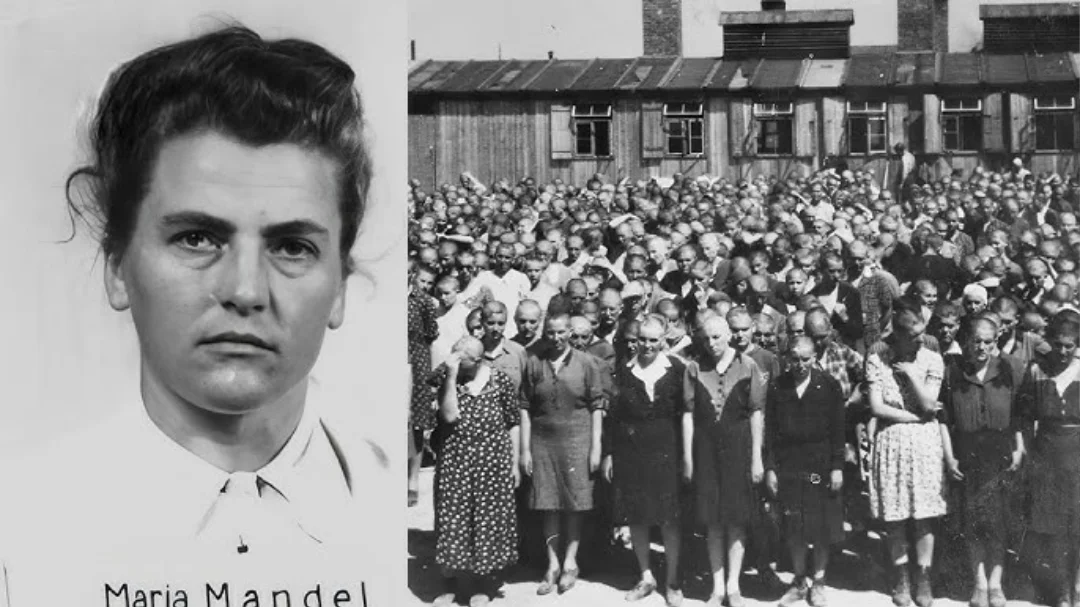

In the years following the end of World War II, international and national judicial bodies faced the monumentally complex task of investigating the systematic atrocities committed across Europe. Among the most significant legal proceedings was the First Auschwitz Trial, held in late 1947 before Poland’s Supreme National Tribunal in Kraków. This tribunal sought to hold key administrative and operational personnel accountable for their roles in the concentration camp system.
Among the forty defendants was Maria Mandl, who had held the highest operational position for female staff at Auschwitz-Birkenau. The trial stands as a foundational moment in post-war international justice, documenting the administrative mechanics of the camp system and affirming that high-ranking operational leaders bear direct responsibility for crimes against humanity.
Early Life and Auxiliary Service
Maria Mandl was born in March 1912 in Münzkirchen, a small town in Upper Austria. Following her early education, she held various minor employment positions, including working for the Austrian postal service. In late 1938, following the annexation of Austria into the German Reich, Mandl volunteered to join the auxiliary female guard staff (SS-Gefolge) of the camp system.
Her career in the auxiliary guard network began at the Lichtenburg camp in Saxony, one of the earliest facilities established for female political prisoners. In May 1939, when Lichtenburg was closed and its inmates transferred to the newly constructed Ravensbrück camp north of Berlin, Mandl was relocated there as well.
At Ravensbrück, Mandl developed a reputation among administrative staff for strict adherence to regulations and uncompromising enforcement of camp discipline. Her compliance with structural directives led to rapid promotions within the auxiliary organization. By October 1942, she was selected for a major operational leadership role and transferred to occupied Poland.
Role as Chief Supervisor at Auschwitz-Birkenau
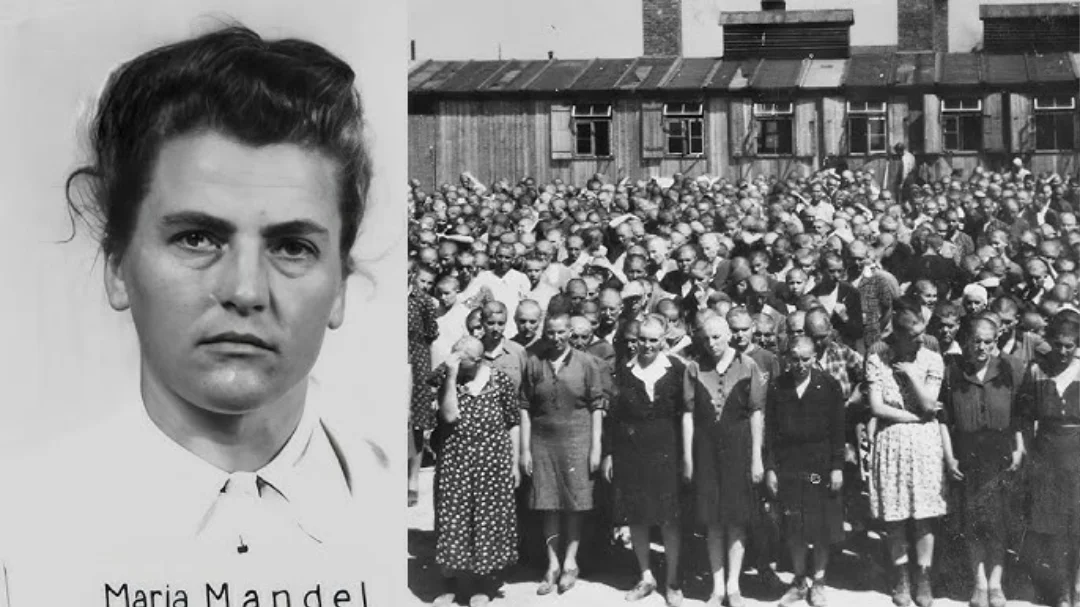
From October 1942 until November 1944, Mandl served as Oberaufseherin (Chief Female Supervisor) of the women’s section at Auschwitz II-Birkenau. In this capacity, she held authority over all female auxiliary personnel and was directly responsible for the daily administration of the women’s camp, which held tens of thousands of prisoners at its peak.
Mandl answered directly to the camp commandant, making her one of the highest-ranking female officials within the entire concentration camp administrative hierarchy. Her responsibilities encompassed every aspect of daily life within the women’s sector, including housing assignments, labor details, roll calls, and physical discipline.
Historical documentation and survivor testimonies present a clear picture of Mandl’s tenure at Birkenau:
-
Selection Process Participation: Mandl regularly participated in the formal selection process at the railway ramp and within the camp infirmaries, determining which arriving or weakened prisoners were assigned to forced labor and which were sent directly to the gas chambers.
-
Enforcement of Severe Discipline: Survivors documented that Mandl frequently administered severe physical punishments for minor administrative infractions, personally striking prisoners and directing staff to withhold food rations.
-
Cultural Orchestration: In a notable manifestation of camp control, Mandl established the Women’s Orchestra of Auschwitz in early 1943. While the orchestra provided a slight survival advantage to its musicians, Mandl used the group to play lively music during roll calls, labor departures, and as arriving transports entered the facility—creating a stark, surreal environment.
Witness accounts continuously highlighted her cold demeanor and apparent detachment from the immense suffering around her, earning her an infamous reputation among the inmate population.
Extradition and the 1947 Kraków Trial
As Allied forces advanced across Europe in late 1944, Mandl was reassigned to the Dachau camp complex in Bavaria. Following the collapse of the German state in May 1945, she fled into the Austrian mountains, attempting to evade capture by disguising her identity.
However, United States military authorities identified and arrested Mandl in August 1945. Recognizing the severity of her involvement in the administration of Auschwitz-Birkenau, U.S. forces extradited her to Poland in November 1946 to stand trial before the Polish judicial system.
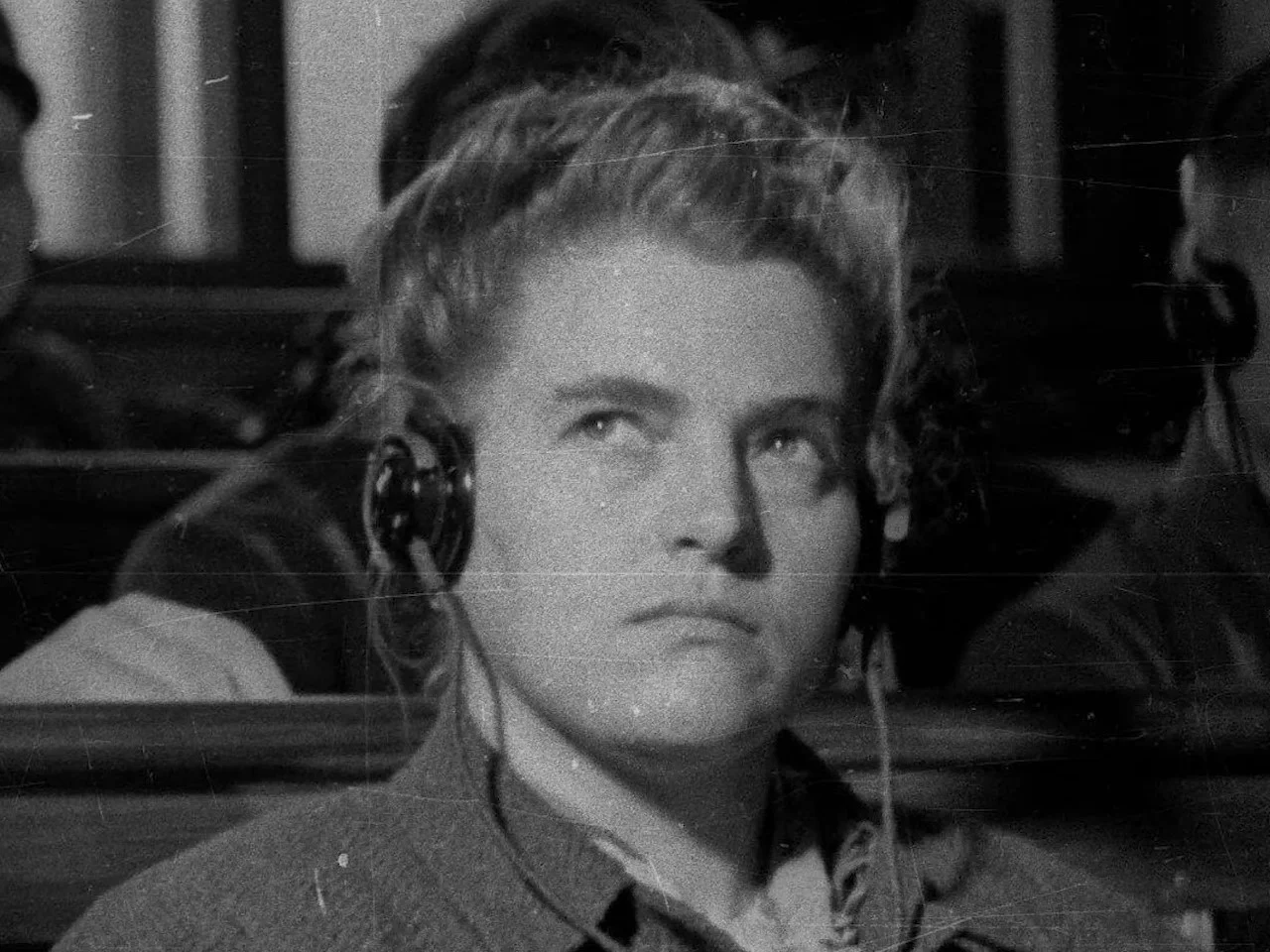
The First Auschwitz Trial convened in Kraków on November 25, 1947, lasting through December 22 of that year. Organized by Poland’s Supreme National Tribunal, the court prosecuted forty former members of the Auschwitz staff, including former commandant Arthur Liebehenschel and senior medical personnel.
The prosecution presented extensive documentary evidence, administrative records, and sworn testimonies from hundreds of survivors of various nationalities. Witnesses detailed the systematic starvation, routine physical abuse, forced labor, and mass extermination that defined Auschwitz-Birkenau under Mandl’s operational supervision.
Throughout the proceedings, Mandl maintained that she had acted strictly within the bounds of her administrative duties and under superior military directives. However, the tribunal reviewed overwhelming evidence demonstrating her active, personal involvement in selection decisions and severe mistreatment of prisoners.
Verdict, Execution, and Legal Legacy
On December 22, 1947, the Supreme National Tribunal rendered its judgment. Maria Mandl was found guilty of war crimes and crimes against humanity. Given the scale of atrocities committed under her direct authority, the tribunal sentenced her to death.
The sentence was carried out on January 24, 1948, at Montelupich Prison in Kraków. Mandl was thirty-five years old at the time of her execution.
The 1947 Kraków trial provided critical legal and historical contributions to post-war international jurisprudence:
-
Establishment of Institutional Accountability: The trial demonstrated that institutional leadership—even within auxiliary civilian units—shares direct legal responsibility for systemic crimes committed under their command.
-
Systematic Documentation of the Holocaust: The vast archive of survivor statements and administrative documents assembled during the trial created a permanent, undeniable record of the genocide perpetrated at Auschwitz-Birkenau.
-
Rejection of the Defense of Duty: The tribunal firmly rejected the argument that administrative necessity or compliance with organizational culture excused participation in systematic human rights violations.
Historical Remembrance and Educational Impact
Examining the historical record of figures like Maria Mandl serves as a critical educational imperative. It illustrates how ordinary administrative systems can be weaponized, and how individuals within those structures can become active agents of profound cruelty.
Reflecting on these historical trials is not intended to foster perpetual resentment, but to honor the memory of the hundreds of thousands of women, children, and families who suffered and perished at Birkenau. By rigorously studying the legal mechanisms established to address war crimes, contemporary society reinforces its commitment to fundamental human dignity, ethical accountability, and the rule of law. Preserving this truth remains a vital defense against the recurrence of systemic violence in the modern world.
