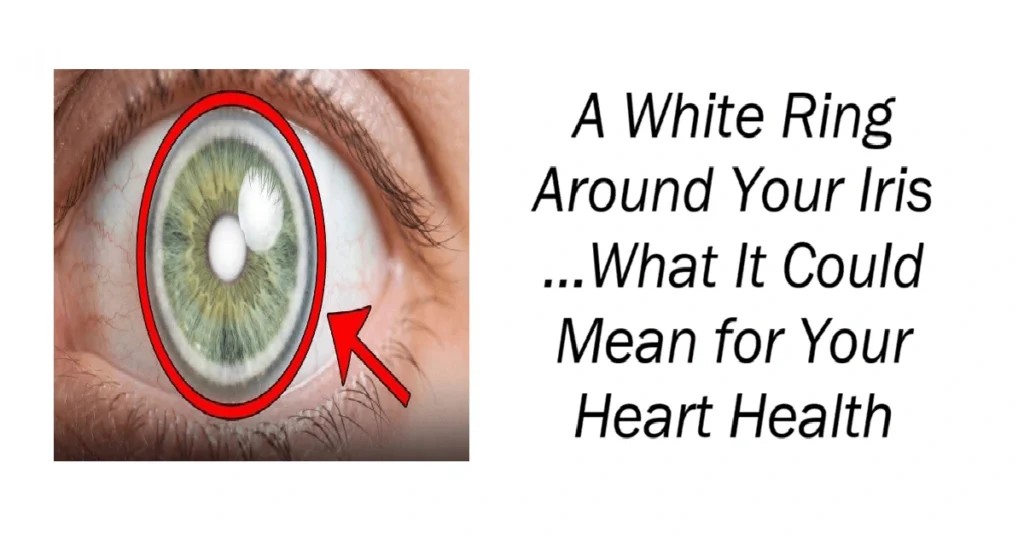

A White Ring Around Your Iris …What It Could Mean for Your Heart Health
A white, grey or bluish ring near the coloured part of the eye can be surprising to notice. In many cases, especially later in life, it is a common and harmless finding called corneal arcus. It does not usually cause discomfort, blurred vision or damage to the eye.
However, age and personal medical history matter. When a ring develops in a younger adult, it can sometimes be associated with raised blood lipid levels, including LDL cholesterol. It may prompt a useful conversation with an optometrist, ophthalmologist or primary-care clinician about cholesterol screening and family history.
A visible ring around the eye is not a diagnosis of heart disease, blocked arteries or familial hypercholesterolaemia. Many people with corneal arcus do not have a serious underlying condition, while many people with high cholesterol have no visible eye changes at all. Still, understanding the difference between a normal age-related change and a potential health clue can support timely, evidence-based care.
What Is the White Ring Around the Iris?
The term “white ring around the iris” is commonly used, but the ring is not actually located in the iris. The iris is the coloured structure that controls the size of the pupil. Corneal arcus forms in the cornea, the clear, curved outer surface at the front of the eye.
Corneal arcus usually appears as a pale grey, white or blue-grey band at the outer edge of the cornea. It may begin as an arc above or below the iris and gradually become a complete circle. A clear zone often remains between the ring and the edge of the iris, which helps distinguish the appearance from a true change in iris colour.
The ring develops when fats, or lipids, accumulate in the peripheral cornea. These deposits can include cholesterol and other lipoproteins carried in the blood. The outer edge of the cornea is close to small blood vessels in surrounding eye tissue, making it more susceptible to this gradual deposition over time.
Although the appearance can be noticeable, corneal arcus typically does not affect the central cornea, where light passes through for vision. It is therefore not usually painful and does not generally reduce eyesight. It is also different from a cataract, which develops inside the eye’s lens and can cause clouded vision.
Corneal Arcus, Arcus Senilis and Arcus Juvenilis
Healthcare professionals may use different names for corneal arcus depending on a person’s age. Arcus senilis refers to corneal arcus seen in older adults. Despite the older terminology, it simply describes an age-associated finding and is not, by itself, a disease.
Corneal arcus becomes increasingly common with age. It may be seen in people without high cholesterol or known cardiovascular disease, particularly in later adulthood. In this setting, clinicians generally regard it as a benign physical finding rather than a direct warning sign of a heart problem.
When it occurs in a younger person, it may be described as arcus juvenilis. There is no single age cutoff that applies identically to every guideline or patient. Nevertheless, corneal arcus identified before about age 45 to 50 deserves more careful consideration, particularly when there is a strong family history of elevated cholesterol or early cardiovascular disease.
Age is not the only relevant factor. A clinician will consider sex, ethnic background, blood pressure, diabetes, smoking status, kidney disease, diet, medication use and family history. The ring itself is only one part of a much larger health assessment.
Why Cholesterol May Be Relevant
Cholesterol is a waxy, fat-like substance that the body needs to make hormones, vitamin D and substances that support digestion. The liver produces cholesterol, and people also obtain some through foods. Cholesterol travels in the bloodstream attached to proteins, forming particles called lipoproteins.
Low-density lipoprotein cholesterol, often called LDL cholesterol, is sometimes described as “bad” cholesterol because higher levels contribute to the formation of plaque in artery walls. Over time, plaque can narrow or stiffen arteries, a process known as atherosclerosis. Atherosclerosis is a major contributor to coronary heart disease, stroke and peripheral artery disease.
High-density lipoprotein cholesterol, or HDL cholesterol, helps transport cholesterol back to the liver for processing. Triglycerides are another type of fat measured in many lipid panels. A standard cholesterol test gives clinicians a broader picture than any visible sign in the eye can provide.
Corneal arcus can be associated with elevated cholesterol, but the relationship is not simple. In older adults, the ring is common enough that it does not independently establish a person’s cardiovascular risk. In younger adults, especially those with additional risk factors, it can be a reason to check whether blood lipids are elevated.
Importantly, someone can have a normal-looking cornea and still have high LDL cholesterol. Conversely, a person may have corneal arcus without having dangerous cholesterol levels. Blood testing, medical history and a clinician’s risk assessment remain the appropriate ways to evaluate heart health.
Familial Hypercholesterolaemia and Early Cholesterol Testing
One condition that may be considered when corneal arcus appears at a relatively young age is familial hypercholesterolaemia, often abbreviated as FH. FH is an inherited disorder that reduces the body’s ability to remove LDL cholesterol from the bloodstream efficiently. As a result, LDL cholesterol can be markedly elevated from childhood.
People with FH may look and feel well for many years. Healthy eating, exercise and avoiding tobacco are important for everyone, but lifestyle measures alone may not lower LDL cholesterol sufficiently in people with inherited high cholesterol. Without recognition and treatment, prolonged exposure to high LDL cholesterol can raise the likelihood of cardiovascular disease at an earlier age.
Corneal arcus is not enough to diagnose FH. Clinicians may consider FH when high LDL cholesterol occurs alongside a family history of very high cholesterol or heart disease at a younger-than-expected age. Some individuals may also have other cholesterol-related physical findings, but these are not present in every case.
If FH is suspected, a healthcare professional may recommend repeat lipid testing, assessment of relatives and, in some situations, referral to a lipid specialist or genetic service. Identifying the condition can benefit families because close relatives may also have inherited the same risk.
When Should You Seek Medical Advice?
A new ring around the cornea is rarely an emergency, and it should not cause immediate alarm. However, it is sensible to arrange a routine eye examination if you have not already had one. An optometrist or ophthalmologist can confirm whether the appearance is consistent with corneal arcus and assess the overall health of your eyes.
You may also wish to speak with a primary-care clinician about a cholesterol test if any of the following apply:
- You are a younger adult and have noticed a grey, white or blue-grey corneal ring.
- You have a parent, sibling or child with high cholesterol or diagnosed familial hypercholesterolaemia.
- A close relative experienced a heart attack, stroke or other cardiovascular disease at a relatively young age.
- You have other risk factors, such as high blood pressure, diabetes, smoking, chronic kidney disease or obesity.
- You have not had recommended cholesterol screening or do not know your previous results.
Seek prompt eye-care advice for symptoms that do not fit typical corneal arcus, including eye pain, sudden changes in vision, marked redness, light sensitivity, injury or a new opaque spot that seems to affect the centre of the cornea. These symptoms may have different causes and should not be self-diagnosed as a cholesterol-related eye finding.
What to Expect From a Cholesterol and Heart Health Assessment
A clinician can order a lipid panel, a blood test that commonly measures total cholesterol, LDL cholesterol, HDL cholesterol and triglycerides. In many settings, a non-fasting test is acceptable for initial assessment, although fasting testing may sometimes be requested depending on the result and the reason for testing.
Cholesterol numbers are interpreted in context. A result that needs treatment for one person may be approached differently in another person based on age, existing medical conditions, family history and estimated long-term cardiovascular risk. Clinicians may also measure blood pressure, assess blood glucose or diabetes status, discuss smoking and review medications.
If cholesterol is elevated, treatment may include nutrition guidance, regular physical activity, weight management where appropriate, smoking cessation support and medication. Statins are commonly used medicines that lower LDL cholesterol and reduce cardiovascular risk for many people. Individuals with FH or very high LDL cholesterol may require more intensive treatment or specialist care.
There is no evidence-based reason to treat the corneal ring itself in routine cases. The priority is identifying and addressing any underlying risk factors, rather than trying to remove a harmless peripheral corneal deposit.
Protecting Cardiovascular Health
Whether or not corneal arcus is present, preventive healthcare can make a meaningful difference. Major public-health organizations recommend a pattern of eating that emphasizes vegetables, fruits, legumes, whole grains, nuts and lean protein sources while limiting foods high in saturated fat, trans fat, added sugars and excess sodium.
Regular movement is also valuable. Adults are commonly advised to aim for at least 150 minutes of moderate-intensity physical activity each week, along with muscle-strengthening activity on two or more days when possible and appropriate for their health. Even modest increases in day-to-day activity can support heart health.
Avoiding tobacco is one of the most important ways to reduce cardiovascular risk. Managing blood pressure, diabetes, sleep and stress can also form part of a comprehensive prevention plan. These measures complement medical treatment; they do not replace prescribed medication for people with conditions such as familial hypercholesterolaemia.
Key Takeaway: A Visible Clue, Not a Diagnosis
A white ring around the iris is often corneal arcus, a common lipid deposit at the outer edge of the cornea. In older adults, it is frequently a harmless age-related change. In younger adults, it can sometimes be a useful clue that warrants cholesterol testing and a discussion of family cardiovascular history.
The most balanced response is neither to ignore the change nor to assume the worst. Schedule an eye examination, ask a qualified clinician whether a lipid test is appropriate, and follow individualized advice based on verified results. A simple assessment can clarify whether the ring is merely an eye finding or part of a broader conversation about long-term heart health.
Sources
- American Academy of Ophthalmology: Corneal Arcus
- Centers for Disease Control and Prevention: About Cholesterol
- Centers for Disease Control and Prevention: Heart Disease Risk Factors
- American Heart Association: Familial Hypercholesterolemia
- NHS: High Cholesterol
- World Health Organization: Cardiovascular Diseases
Disclaimer: This content is intended for entertainment purposes only and is not based on real events.