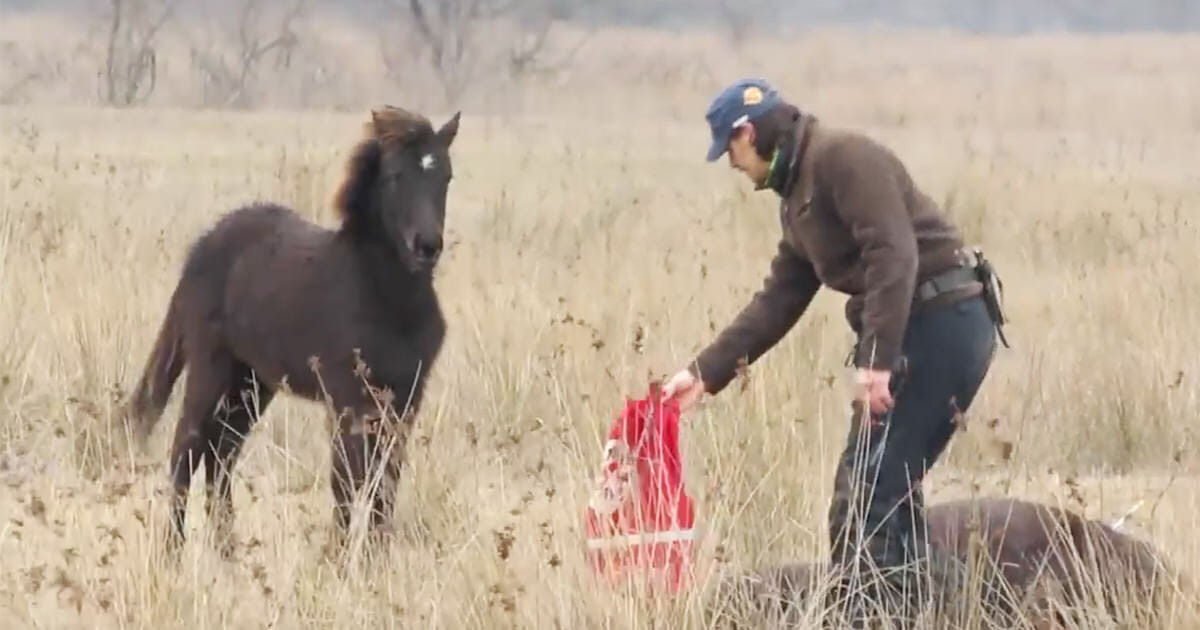

FOUR PAWS heroes: How a wild horse thanks its savior
Horses are highly mobile animals whose health and welfare depend on their ability to walk, graze, rest, and interact with other horses. In Romania’s Danube Delta, a rescue documented by animal welfare organisation FOUR PAWS drew attention to the consequences of restrictive leg restraints and the importance of prompt veterinary care.

The incident involved a horse found with a chain restricting the movement of its legs. According to FOUR PAWS, veterinarian Ovidiu Roșu encountered the animal while working in the Danube Delta region, an internationally important wetland area in eastern Romania. The restraint appeared to be causing discomfort and had rubbed against the horse’s skin, limiting its ability to move normally.
The rescue video has been widely shared because it offers a clear example of a practical animal welfare intervention: identifying an animal in distress, approaching it carefully, removing the harmful restraint with appropriate tools, and allowing the horse to regain freedom of movement. While viewers may understandably respond emotionally to the scene, the wider issue is also one of responsible horse management, veterinary oversight, and humane treatment.
Why Freedom of Movement Matters for Horses
Horses evolved as grazing animals that travel regularly while searching for food, water, shelter, and social contact. Domestic and free-roaming horses alike need sufficient movement to support their muscles, joints, hooves, digestion, and mental wellbeing. When a horse is unable to move naturally, it may face physical stress as well as difficulty accessing food or avoiding hazards.
Animal welfare guidance generally recognises that horses should be housed and managed in ways that reduce pain, injury, fear, and unnecessary restriction. The World Organisation for Animal Health, known as WOAH, has published international principles on animal welfare that emphasise responsible handling, competent care, and prevention of avoidable suffering. Veterinary assessment is particularly important when an animal has been caught, entangled, injured, or restrained.
Leg restraints may sometimes be used in certain traditional or management settings, but they can present serious welfare concerns when applied incorrectly, left on too long, or used without monitoring. A restraint that is too tight can rub the skin, cause swelling, interfere with circulation, or create wounds. Even when there is no visible injury, restricted movement can increase the risk of stumbling, stress, and difficulty reaching grazing areas.
For these reasons, animal welfare organisations and equine professionals generally encourage owners and communities to use humane, well-supervised alternatives for containing horses. Secure fencing, appropriate enclosures, identification, pasture management, and local veterinary advice can help reduce the need for practices that limit an animal’s normal movement.

A Rescue in Romania’s Danube Delta
The Danube Delta is one of Europe’s most significant natural landscapes. Located where the Danube River flows into the Black Sea, it includes wetlands, forests, grasslands, lakes, and channels that support a remarkable diversity of wildlife. The region is also known for free-roaming and semi-free-ranging horses, particularly in and around areas such as Letea Forest.
Horses in the Delta have attracted attention from conservationists, residents, local authorities, and animal welfare groups for many years. Their presence raises complex questions about animal welfare, land use, population management, public safety, and environmental protection. These questions do not always have simple answers, especially where animals live close to communities but are not continuously supervised by individual owners.
In the rescue highlighted by FOUR PAWS, veterinarian Ovidiu Roșu found a horse whose legs had been bound by a heavy chain. The horse appeared unable to walk freely, and the restraint had affected the skin around the leg. The situation required a calm, methodical response. Approaching a frightened or restricted horse without care can put both the animal and rescuers at risk.
Veterinary rescuers typically assess an animal’s condition before attempting to remove an obstruction or restraint. They consider the horse’s behaviour, its ability to stand, the location of the restraint, and whether immediate treatment is needed. In some cases, pain, exhaustion, or fear can make an animal unpredictable. A quiet approach, patient handling, and suitable equipment are essential.

The Veterinary Response
In the footage released by FOUR PAWS, Roșu works to bring the horse into a position where the chain can be safely reached and removed. The process takes patience. Horses can be wary of people, particularly when they are in pain or unable to move as they normally would. Sudden movements, loud sounds, or rushed handling can heighten their stress.
Once the animal is settled, the veterinarian uses tools to cut through or release the chain. This stage of a rescue is important because removal must be carried out without causing additional injury. A trapped or restrained animal may move abruptly as soon as pressure is released, so rescuers need to remain aware of the horse’s body language and maintain a safe distance where possible.

The video shows the chain being removed after a careful effort. The horse is then able to move its legs more naturally. Although a brief video cannot provide a complete clinical record, the central welfare lesson is clear: restrictive equipment should be checked frequently, and animals with signs of injury or impaired movement should receive prompt professional attention.
Veterinarians play a vital role in animal rescue work because they combine practical handling skills with medical knowledge. They can evaluate wounds, pain, mobility, hydration, and other health factors, while also advising on recovery and follow-up. In rural or remote landscapes such as the Danube Delta, cooperation among veterinarians, animal welfare groups, authorities, and local residents can be especially important.
What the Horse’s Response Can and Cannot Tell Us
After the restraint is removed, the horse pauses before moving away. FOUR PAWS presents the moment as a moving interaction between the horse and the veterinarian. Viewers often interpret the animal’s calm behaviour and close attention as a sign of relief or trust.
It is reasonable to recognise that animals can show behavioural responses to comfort, safety, pain relief, and familiar handling. However, it is also important not to claim certainty about an animal’s emotions based on a short video alone. A horse may stand close to a person for many reasons, including caution, curiosity, fatigue, reduced stress, or attention to its surroundings.
What can be said with confidence is that the removal of a restrictive chain restored the horse’s ability to move more freely. The footage also demonstrates the value of humane handling. Calm intervention can reduce risk and improve the likelihood that an animal will tolerate necessary care.

Animal Welfare and Responsible Horse Management
The rescue has broader relevance beyond one horse or one location. Around the world, horses may be kept for work, transport, sport, tourism, farming, companionship, or free-ranging management. In every setting, owners and caretakers have a responsibility to provide adequate food, water, shelter where appropriate, health care, and conditions that allow safe movement.
The American Association of Equine Practitioners and other equine health bodies stress the importance of routine observation. Changes in gait, reluctance to move, swelling, skin damage, unusual posture, or altered behaviour can indicate that a horse needs attention. Restraints, harnesses, halters, blankets, and other equipment should be fitted correctly and checked regularly.
Preventing horses from wandering onto roads or damaging crops can be a legitimate concern for owners and local communities. Yet prevention methods should be proportionate, humane, and adapted to the animal’s needs. Well-maintained fencing, supervised grazing, identification systems, and community education are generally more sustainable solutions than methods that risk injury or prolonged discomfort.
Population management for free-roaming horses can also be challenging. It may involve welfare assessments, contraception programmes where appropriate and lawful, rescue capacity, adoption initiatives, habitat monitoring, and cooperation with local stakeholders. Policies should be informed by veterinary evidence, local law, environmental considerations, and transparent public discussion.
The Importance of Reporting Animals in Distress
Members of the public can make a difference when they encounter an animal that appears trapped, injured, or unable to move normally. The safest response is usually to contact local veterinary services, animal welfare organisations, police, park authorities, or emergency services, depending on the location and circumstances.
People should avoid trying to free a large animal without suitable training or equipment. A frightened horse can react suddenly, and an improperly handled rescue can worsen an injury. It is helpful to note the location, observe from a safe distance, and provide responders with clear information about the animal’s condition.
Sharing verified information can also support responsible animal welfare work. Videos and photographs may raise awareness, but they should be accompanied by context and should not encourage untrained individuals to attempt dangerous interventions. The most effective response is often one that connects an animal in need with qualified professionals.

Watch the FOUR PAWS Horse Rescue
The original FOUR PAWS video documents the veterinarian’s intervention and the moment the horse is able to move without the chain. It has helped bring public attention to equine welfare and the need for humane management practices.
Why This Rescue Still Matters
The horse rescue in Romania is a reminder that animal welfare often depends on practical decisions made by people: whether equipment is checked, whether an injury is noticed, whether veterinary advice is sought, and whether communities choose humane solutions to difficult management problems.
Roșu’s intervention gave one horse the opportunity to move freely again. More broadly, the story underlines the value of skilled veterinary work, responsible ownership, and public awareness. Horses cannot explain when a chain, rope, fence, or other object is causing pain. Their welfare depends on people recognising the signs and responding with care, competence, and respect.
Sources
Disclaimer: This content is intended for entertainment purposes only and is not based on real events.