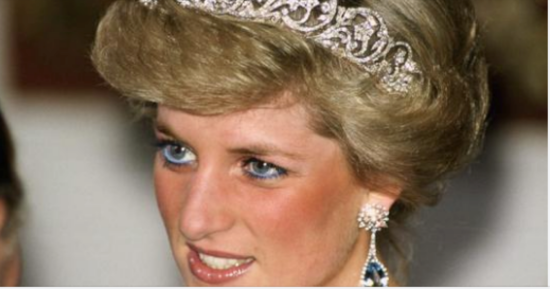

Princess Diana: A Look Back at Her Remarkable Life
Princess Diana remains one of the most recognised public figures of the twentieth century. More than two decades after her death in 1997, interest in her life continues because of the unusual combination of roles she occupied: a young woman who married into the British royal family, the mother of two future senior royals, a global fashion figure, and a prominent advocate for humanitarian causes.
Born Diana Frances Spencer on 1 July 1961, she became Lady Diana Spencer when her father inherited the title of Earl Spencer in 1975. Her engagement to Charles, Prince of Wales, was announced in February 1981, and their wedding at St Paul’s Cathedral that July was watched by a vast international television audience. Their sons, Prince William and Prince Harry, were born in 1982 and 1984.
While Diana’s public life was often intensely documented, many photographs also show a more informal side of her life: time with her children, outdoor visits, travel, and moments away from formal royal ceremonies. These images are best understood within the wider context of a woman navigating exceptional public attention while using her visibility to draw attention to health, disability, poverty and conflict-related issues.
Family Life and Time with Princes William and Harry
Diana repeatedly sought opportunities for Prince William and Prince Harry to experience activities that were familiar to many families, including school events, holidays and visits to leisure attractions. Royal life necessarily brought security and media attention, but she was widely associated with a parenting style that aimed to give her sons contact with everyday settings beyond palace life.
Winter holidays became part of the family’s public image. Photographs of Diana skiing with William and Harry in Austria capture a relaxed family occasion, while also illustrating the intense press interest that followed the family abroad. The boys were still young, and such images became memorable because they contrasted with the more formal portraits traditionally associated with the monarchy.
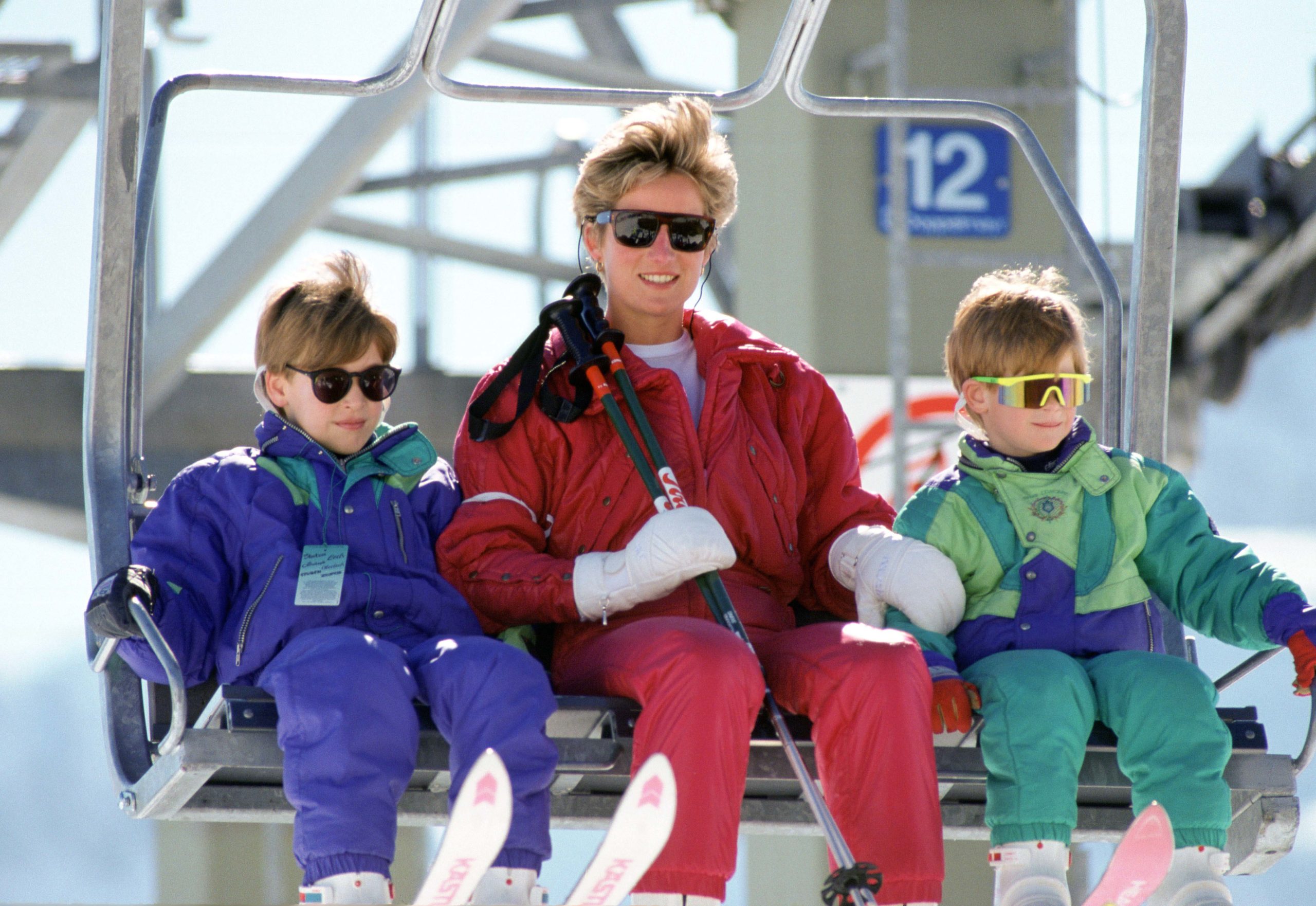
These private-looking family scenes have endured in public memory because they show Diana as a mother as well as a princess. It is important, however, to remember that individual photographs offer only brief snapshots. Her family life unfolded under extraordinary scrutiny, particularly after the separation of the Prince and Princess of Wales was announced in 1992 and their divorce was finalised in 1996.
A 1990 holiday on Necker Island in the British Virgin Islands, an island owned by Virgin founder Richard Branson, is another example of the family spending time away from official duties. Diana was joined by her sons and members of the wider Spencer family. Holidays such as this offered a degree of privacy, although photographs from them still became part of the public record.

Diana also took her children to places associated with ordinary childhood enjoyment. Her 1992 visit with Prince Harry to Thorpe Park, a theme park in Surrey, attracted particular attention because it was a public family outing rather than a ceremonial engagement. Such appearances helped shape the perception that she wanted William and Harry to encounter experiences shared by children outside royal circles.
Why Diana Became Known as the “People’s Princess”
The phrase “People’s Princess” became closely linked with Diana after her death, most notably through a tribute by then-prime minister Tony Blair. The description reflected the way many people responded to her approach at public engagements. She often spoke directly with patients, volunteers, children and community workers, and her body language was seen as less formal than the conventions traditionally associated with senior royals.
Her public role developed significantly during the 1980s and 1990s. Diana supported a broad range of charities and causes, including organisations working on homelessness, children’s welfare, cancer care, mental health, disability, HIV/AIDS and palliative care. She was patron of Centrepoint, a charity helping young people facing homelessness, and maintained a long association with the organisation. Her visits helped bring sustained public attention to issues that could otherwise be overlooked.

One of the most frequently cited examples of her influence came during the HIV/AIDS epidemic. In 1987, she opened the United Kingdom’s first specialist HIV/AIDS unit at London Middlesex Hospital and shook hands with a patient without gloves. Medical evidence had already established that HIV could not be transmitted through casual contact, but stigma remained widespread. The image was widely reported and helped challenge damaging misconceptions.
Diana’s importance was not based solely on photographs or public affection. Her visits could increase media coverage, encourage fundraising and give organisations a platform to explain their work. At the same time, charities and health experts carried the long-term responsibility for service delivery, research and policy advocacy. Her role was therefore most effective when understood as high-profile support for the work of specialists and communities.
Humanitarian Advocacy and the Campaign Against Landmines
During the final year of her life, Diana became internationally associated with the campaign against anti-personnel landmines. In January 1997, she visited Angola with the British Red Cross, meeting people affected by mines and visiting a cleared minefield outside Huambo. Her trip took place as governments and civil society groups were debating stronger international restrictions on these weapons.
Landmines can remain active long after fighting ends, creating long-term dangers for civilians and restricting access to farmland, roads, schools and health services. Survivors may require surgery, rehabilitation, prosthetic limbs and social support. International humanitarian organisations have consistently emphasised that mine action includes clearance, risk education and assistance for survivors, not only the removal of explosives.

Photographs from Diana’s visit to an orthopaedic workshop in Luanda showed her meeting people receiving rehabilitation support. The images drew global attention, but they should also be viewed alongside the efforts of Angolan communities, medical staff, the International Committee of the Red Cross, mine-clearance organisations and campaigners who worked for years on the issue.
Later in 1997, the Anti-Personnel Mine Ban Convention was adopted in Ottawa. Often called the Ottawa Treaty, it prohibits the use, stockpiling, production and transfer of anti-personnel mines for states that join it. Diana did not live to see its entry into force in 1999, but her advocacy helped bring wider public focus to the humanitarian consequences of landmines. The International Campaign to Ban Landmines received the Nobel Peace Prize in 1997 for its work.
Before Royal Life: Diana Spencer’s Early Years
Long before she became Princess of Wales, Diana grew up within the Spencer family’s social and country-life environment. Childhood photographs are often compelling because they predate the global attention that later defined her life. They show a young Diana during family holidays and informal occasions, rather than at royal engagements or major state events.

A photograph from a 1971 holiday in Itchenor, West Sussex, belongs to this earlier period. Itchenor is a village on Chichester Harbour, an area known for sailing and coastal recreation. Images from Diana’s youth have become part of the broader archive through which the public has tried to understand her life before the intense expectations of royal duty.
Before her engagement, Diana worked with children, including at the Young England Kindergarten in Pimlico, London. This practical experience has often been noted in accounts of her later rapport with young people during official visits. Although her life changed dramatically after 1981, these earlier years provide useful context for the less formal, accessible style she later brought to public engagements.

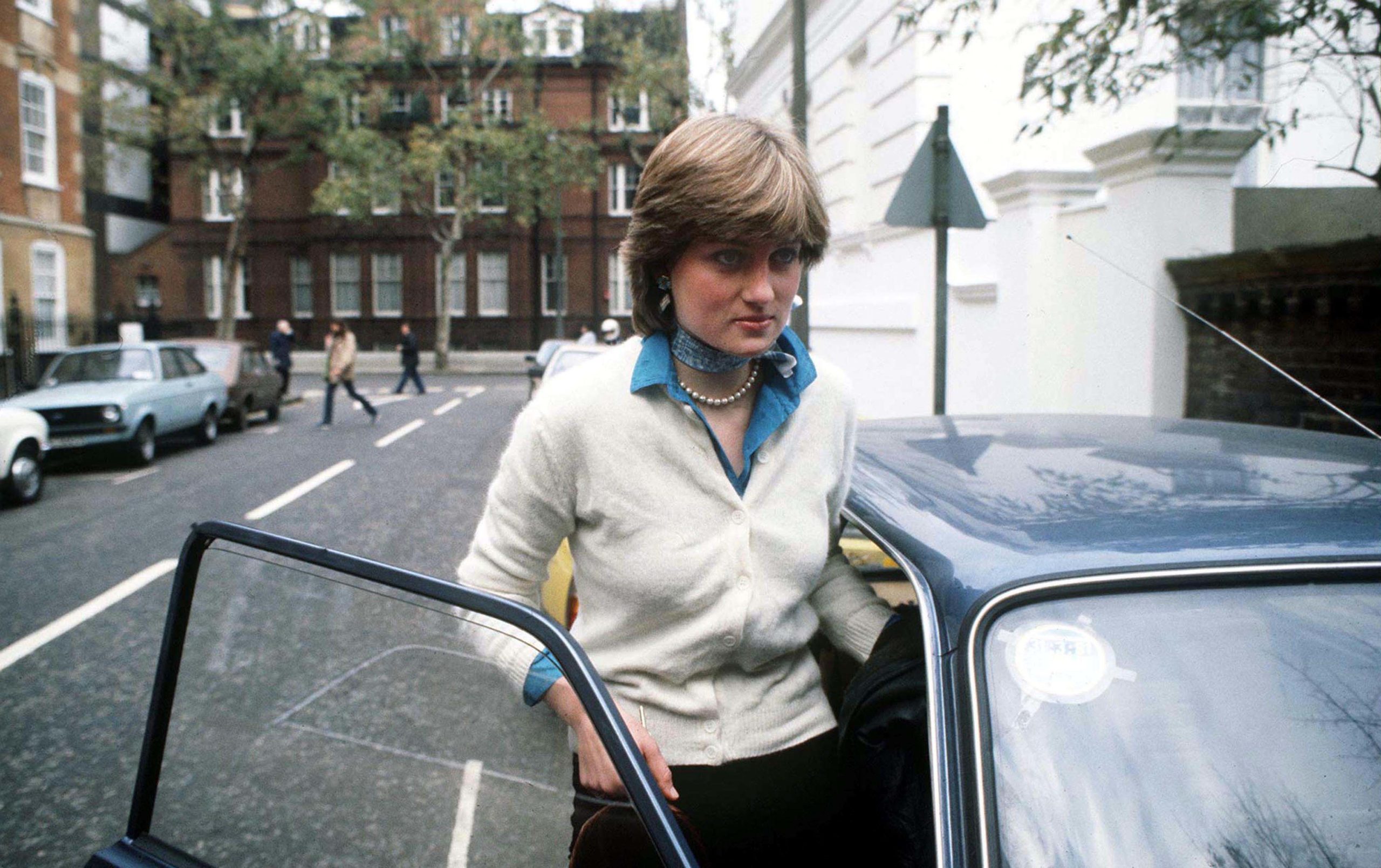
Photographs outside Coleherne Court, the London building where Diana lived before her engagement, mark another transition point. Her relationship with Charles quickly became a major news story, and media attention around the couple increased sharply in the months before their wedding. The consequences of that attention would become an enduring subject of debate about privacy, the press and public life.
Public Attention, Royal Fashion and a Distinctive Style
Diana’s clothes were closely followed throughout her public life. Her style changed over time, from the elaborate silhouettes associated with early 1980s royal fashion to more streamlined tailoring, simple dresses and practical outerwear in later years. Designers including Catherine Walker, Bruce Oldfield and David Sassoon contributed to looks that were widely photographed and frequently discussed in fashion reporting.
Her clothing choices were not merely decorative. On overseas engagements, she sometimes used colour or designers to acknowledge host countries. For charitable visits, she often chose outfits that were practical and approachable. This attention to presentation contributed to her influence on retail trends, but it also reflected the visual demands placed on a woman whose every appearance was closely examined.
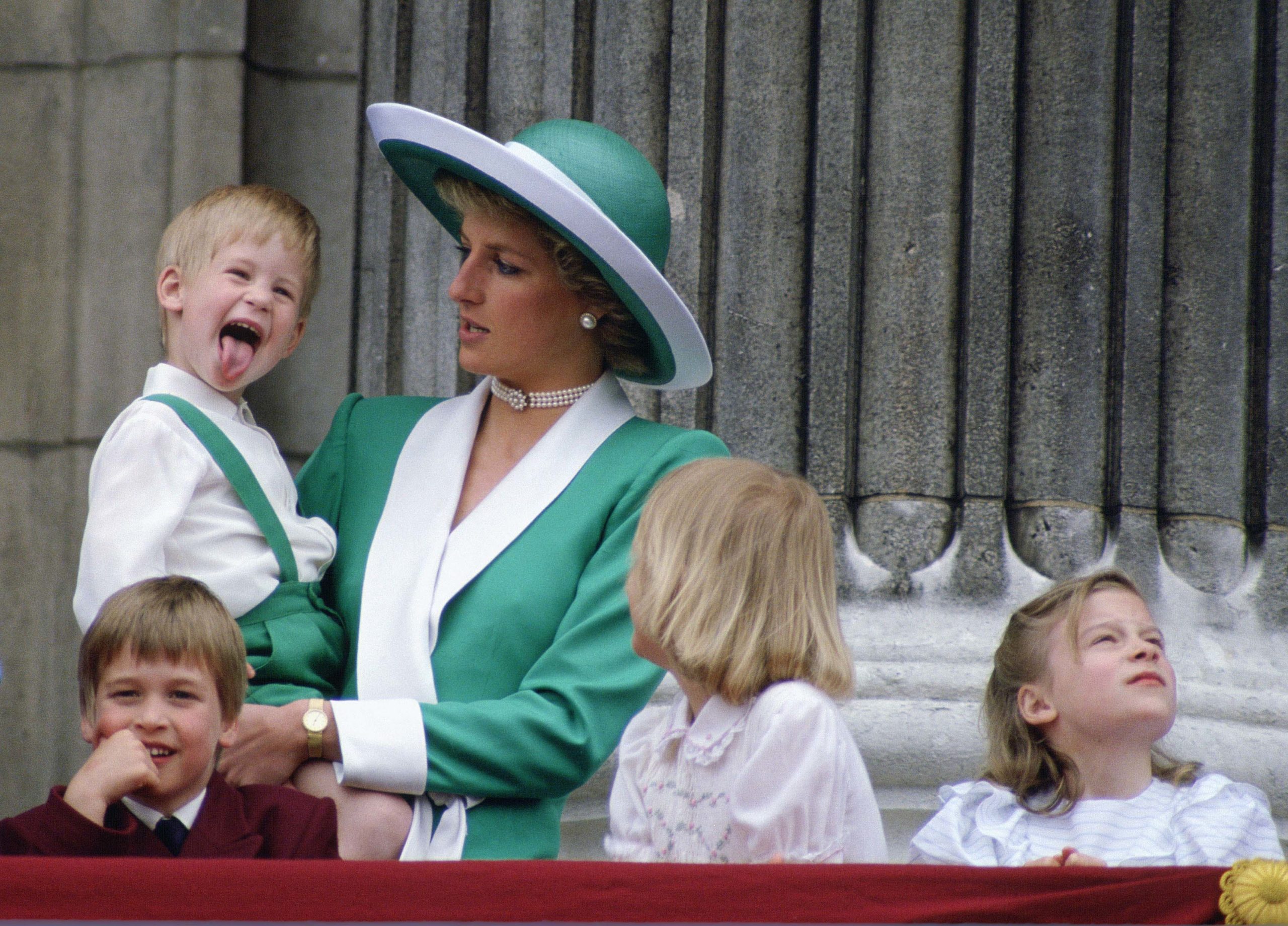
Photographs of Prince Harry reacting playfully to crowds outside Buckingham Palace offer a reminder that public appearances could contain spontaneous family moments. Such occasions attracted photographers because they combined royal tradition with recognisable childhood behaviour. Diana’s expression in images like these has helped make them particularly memorable, though they remain only a brief record of a much larger family story.
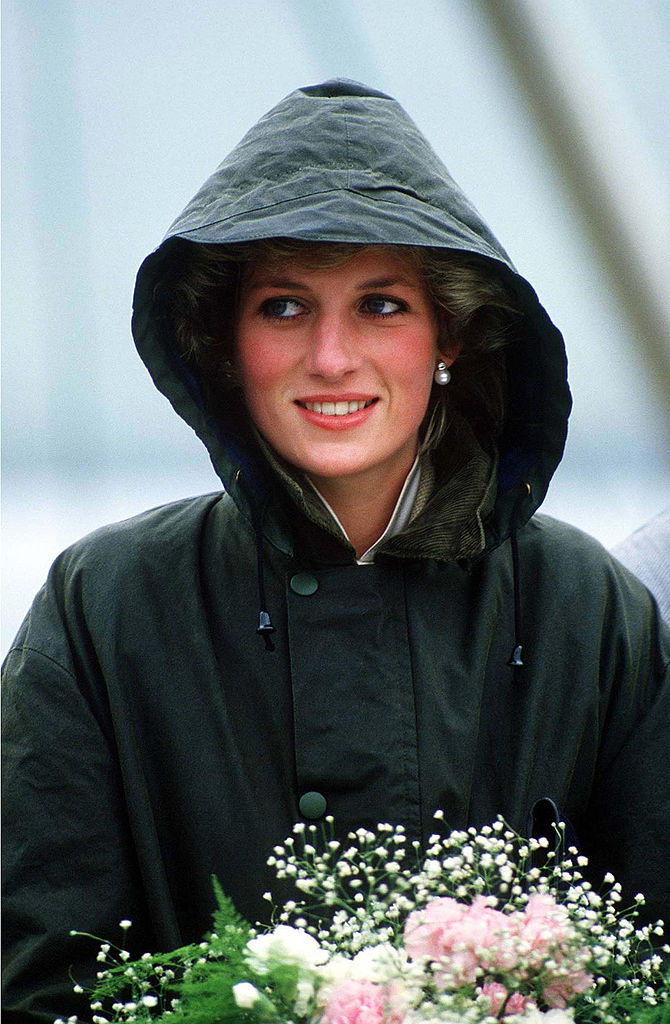
Outerwear was among the most imitated elements of Diana’s wardrobe. Barbour-style waxed jackets, worn for country visits and wet-weather engagements, matched the practical requirements of Britain’s climate while retaining a polished appearance. The brand continues to be associated with British country clothing and has remained popular across generations.
During a 1985 visit to the Outer Hebrides in Scotland with Charles, Diana wore a weather-ready jacket suited to the wind and rain of the islands. Royal photographer Jayne Fincher later recalled the challenging conditions surrounding the trip and the striking contrast between the poor weather and Diana’s composed appearance. The image remains a well-known example of the accessible outdoor style for which she was admired.

Photographs from official tours also demonstrate the demanding relationship between the royal family and the press. Journalists and photographers travelled extensively to document engagements, while royal households sought to balance public interest with personal boundaries. Those tensions became especially pronounced during Diana’s later years and remain relevant to discussions about media ethics today.
Princess Diana’s Final Months and Enduring Legacy
In the summer of 1997, Diana was photographed in the south of France during a holiday that included Dodi Fayed. These widely circulated images became part of the intense media coverage of her final months. Diana died in Paris on 31 August 1997, aged 36. Her death prompted an extraordinary public response in the United Kingdom and around the world, with many people leaving flowers and messages outside Kensington Palace and other royal locations.

Her legacy continues through the work of charities she supported and through wider public conversations about compassion, mental health, homelessness, HIV stigma, disability and humanitarian protection. The Diana, Princess of Wales Memorial Fund operated from 1997 to 2012, supporting charitable work in the United Kingdom and internationally. Her sons have also spoken publicly about the importance of mental health awareness and charitable service, themes that connect with aspects of their mother’s public work.
Princess Diana’s life cannot be reduced to a collection of famous photographs. The images remain powerful because they document changing roles: daughter, mother, royal figure, charity supporter and international humanitarian advocate. They also reflect the pressures of fame and the responsibilities attached to visibility. Her most lasting contribution may be the attention she helped direct toward people whose experiences were too often ignored, and the enduring expectation that public figures can use their influence with empathy and purpose.
Sources
- The Royal Family: Diana, Princess of Wales
- BBC News: Princess Diana’s legacy and public life
- International Committee of the Red Cross: Princess Diana and landmines
- International Campaign to Ban Landmines–Cluster Munition Coalition
- United Nations Office for Disarmament Affairs: Anti-personnel landmines
- Centrepoint: Youth homelessness charity
Disclaimer: This content is intended for entertainment purposes only and is not based on real events.