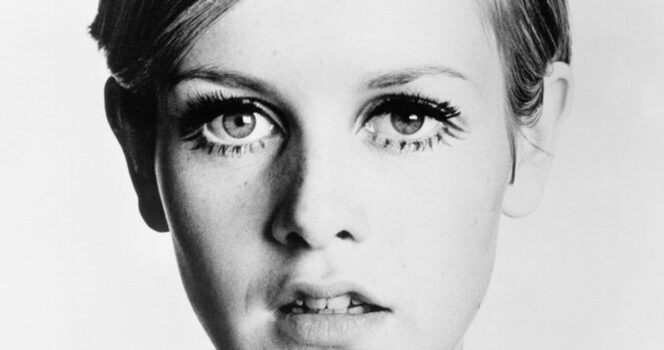

In the mid-1960s, a quiet revolution took place inside a stylish London salon—one that would forever alter the landscape of global fashion. Twiggy, born Lesley Hornby, became an international symbol of youth culture, mod fashion, and timeless elegance. Her delicate features, striking gaze, and famously cropped hair captured the spirit of an era. Yet, behind the image that launched a generational movement lies a surprising truth: the signature look that defined her modeling career was an accidental transformation that the young aspiring model was simply too timid to refuse.
As fashion history continues to celebrate the cultural legacy of the Swinging Sixties, the story of Twiggy’s sudden rise reminds us how chance encounters, personal artistic expression, and courage can converge to reshape an entire industry.
The Fateful Appointment at Mayfair
In 1966, sixteen-year-old Lesley Hornby was a hopeful teenager navigating the highly competitive world of British modeling. Standing at five feet, six inches, she faced frequent skepticism from industry scouts who considered her too short for traditional runway standards. Looking for fresh headshots to build her portfolio, she arranged a visit to the House of Leonard, a premier London salon operated by the legendary British hairstylist Leonard Lewis, professionally known as Leonard of Mayfair.
At the time, Lewis was searching for a model willing to showcase a bold new short haircut he had been developing. During her routine shampoo and set, Lewis noticed the young girl’s unique features and proposed a radical change.
Speaking candidly on Jessie Ware’s podcast, Table Manners, Twiggy recalled her inner hesitation during that pivotal moment:
“I went in to have it shampooed and set, and Leonard saw me and said, ‘Let me do my new haircut on you.’ I’d been growing my hair, so for a moment I thought, ‘I don’t know whether I want my hair cut.’ But I was in this very posh salon in Mayfair, so I was a bit too shy to say I didn’t want it done, and I kind of nodded.”
That hesitant nod set off an exhaustive styling process. Returning to the salon the following morning, she sat in the stylist’s chair for seven straight hours as Lewis meticulously cut, colored, highlights-treated, and re-cut her hair into a golden-blonde pixie crop. Though she had never envisioned adopting such a dramatic aesthetic, the final result framed her face in a way that highlighted her large blue eyes and sharp cheekbones.
Crafting the Signature “Doe-Eyed” Look
Complementing the tailored haircut was a distinct makeup technique that Twiggy had crafted independently at home. Growing up in a strict grammar school environment where uniforms were mandatory and cosmetics strictly forbidden, weekend gatherings with friends became a creative outlet for self-expression.
Drawing inspiration from a favorite childhood rag doll, she began experimenting with false eyelashes and precise liner techniques:
-
Spikey Eyelash Pattern: She applied individual lower false lashes and drew tiny accent lines beneath her lower rim to mimic the oversized eyes of vintage dolls.
-
Defined Crease Lines: Using dark eyeliner, she exaggerated the natural fold of her eyelids to create depth and contrast for black-and-white photography.
-
Youthful Mod Styling: Pairing her artistic makeup with vibrant miniskirts and structured hemlines, she fully embraced the emerging youth culture of suburban London.
When photographer Barry Lategan took the initial portraits of her new look, Leonard displayed the black-and-white prints in his salon lobby. Daily Express fashion editor Deirdre McSharry noticed the striking portrait during a routine salon visit and immediately recognized its artistic potential. Within weeks, the publication ran a featured layout declaring Twiggy “The Face of ’66.”
Shortly thereafter, her first shoot for Vogue was published, catapulting the teenager into international fame.
A Cultural Phenomenon: From Runway to Pop Culture
Twiggy’s sudden rise marked a major shift in the modeling industry, moving away from the formal, mature elegance of 1950s high fashion toward a fresh, youthful, and accessible aesthetic. She quickly became the muse for visionary British designer Mary Quant, whose revolutionary short skirts and geometric patterns redefined women’s wear across Europe and North America.
Her influence grew so rapidly that toy manufacturer Mattel selected her as the first real-life celebrity inspiration for a Barbie doll, cementing her place in pop culture history.
Despite achieving global stardom as a teenager, Twiggy made the unexpected decision to step back from full-time modeling in 1970 to pursue her creative interests in music, stage performance, and film acting:
-
Award-Winning Screen Performances: She starred in the 1971 musical film The Boy Friend, winning two Golden Globe Awards for her acting and musical debut.
-
Feature Films: She shared the screen with comedic legends, including starring alongside Robin Williams in the 1986 film Club Paradise.
-
Television and Judging: She served as a long-term judge on America’s Next Top Model, sharing practical advice with emerging talent across several seasons.
-
Music and Design: She released multiple studio albums, including 2011’s Romantically Yours, and partnered with major retailers like Marks & Spencer to create exclusive apparel collections.
Family, Grounded Values, and Lasting Legacy
Throughout decades of public life, Twiggy has consistently placed her family at the center of her priorities. Following the passing of her first husband, actor Michael Witney, she raised her daughter, Carly Lawson, alongside her second husband, actor Leigh Lawson, whom she married in 1988.
Reflecting on her career path, she has frequently noted that professional opportunities were always evaluated around her responsibilities as a mother:
“My number one priority is family. It always has been, even when Carly was little. If an opportunity didn’t work for Carly, I didn’t take it. We went everywhere together, which is why we remain so close today.”
Now enjoying her role as a grandmother and hosting her own interview podcast, Tea with Twiggy, she continues to engage with creative artists, design projects, and global fashion initiatives.
Decades after stepping into a Mayfair salon out of quiet politeness, Twiggy’s courage to embrace the unexpected transformed a simple hair appointment into a defining moment of twentieth-century style—proving that true elegance comes from authenticity, adaptability, and enduring grace.
Sources & Historical References
-
BBC Radio & Podcast Archives: Guest appearance transcripts on Table Manners with Jessie Ware detailing early salon history and modeling experiences.
-
Vogue Magazine Historical Archives: Feature articles and retrospective interviews on 1960s mod fashion and beauty techniques.
-
The Daily Express Archives (1966): Original editorial publication introducing “The Face of ’66” photographed by Barry Lategan.
-
Golden Globe Awards Records: Official documentation of film honors and performance awards for The Boy Friend (1971).
