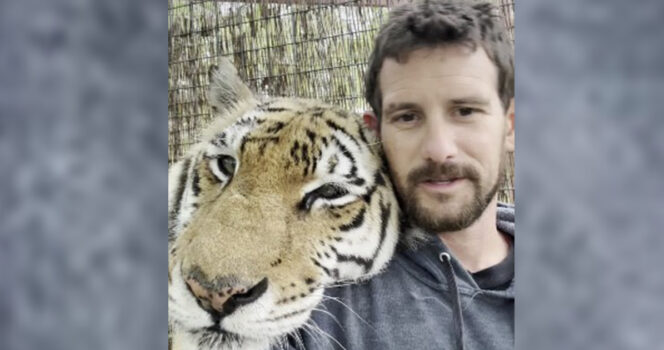

A tragic incident unfolded at the Growler Pines Tiger Preserve in Hugo, Oklahoma, when thirty-seven-year-old big cat trainer Ryan Easley lost his life after an unexpected encounter with a tiger during a live presentation. The event took place in front of an assembled audience, leaving spectators, including Easley’s wife and young daughter, stunned by the sudden turn of events.
The occurrence has renewed nationwide discussions surrounding the safety, ethics, and regulatory frameworks governing exotic animal facilities, captive wildlife care, and public animal performances across the United States.
A Fatal Encounter During a Live Demonstration
According to local authorities, including Choctaw County Sheriff Terry Park, Easley was conducting a routine demonstration with a tiger he had raised since it was a young cub. Toward the conclusion of the scheduled presentation, the animal unexpectedly reacted aggressively toward its handler.
“It happened toward the end of a show in which there were people who saw this incident occur,” Sheriff Park stated in an interview following the event. “No one knows, other than God above, as to what made the tiger react so suddenly against the trainer.”
The animal inflicted severe physical trauma to Easley’s neck and upper shoulder area, resulting in fatal injuries almost instantly. Witnesses reported that as soon as the tiger moved away, Easley’s wife courageously entered the primary enclosure, successfully guiding the animal into an adjacent secured holding area to prevent further harm to bystanders or emergency personnel.
First responders were dispatched to the Growler Pines facility at approximately two o’clock in the afternoon. However, upon their arrival, medical personnel confirmed that Easley had already succumbed to his injuries. His body was subsequently transported to the state Medical Examiner’s Office in Tulsa for formal forensic examination.
Following the event, the management of Growler Pines Tiger Preserve issued an official statement expressing grief over the loss of their lead trainer:
“It is with profound sorrow that we confirm the tragic loss of Ryan Easley, who lost his life in an accident involving a tiger under his care. Ryan was a passionate advocate for wildlife conservation. His dedication to animals, especially big cats, was evident in every aspect of his life. He dedicated his career to the protection and daily management of these magnificent animals, believing deeply in the mission of Growler Pines to provide a secure and enriching home for the animals in our care.”
Background and History of the Facility
Prior to his work at Growler Pines, Easley was widely known within the exotic animal industry as the founder and operator of ShowMe Tigers, an educational and traveling presentation act that featured trained big cats. Over his years in the field, Easley had built a long standing reputation as an experienced handler who emphasized structured care routines.
Representatives for the preserve noted that both Growler Pines and ShowMe Tigers maintained a consistent record of regulatory compliance with federal oversight bodies. The operations had successfully passed thirty-two consecutive regulatory inspections conducted by the United States Department of Agriculture (USDA), including a full facility re-licensing audit completed in early 2025.
In the wake of the incident, multi-agency investigations were formally launched. The USDA, which oversees federal licensing for facilities displaying captive mammals, initiated an immediate inquiry alongside the Oklahoma Department of Wildlife Conservation and local law enforcement. Sheriff Park confirmed that the tiger involved in the incident has been permanently housed in a isolated, secure enclosure pending the final determinations of the regulatory review.
Industry Reactions and Broader Debates
The tragic event has drawn varied reactions from wildlife advocates, animal welfare organizations, and members of the public, reflecting deep divisions over the practice of keeping large predators in captive settings for public display.
Laura Hagen, director of captive wildlife programs for Humane World for Animals, expressed deep sorrow regarding Easley’s passing while emphasizing the inherent risks involved in close-contact animal handling:
“Ryan Easley’s death was a sad and preventable tragedy,” Hagen noted in a public statement. “We hope it serves as a stark reminder of the inherent dangers associated with utilizing dangerous wild animals for commercial entertainment and public exhibitions.”
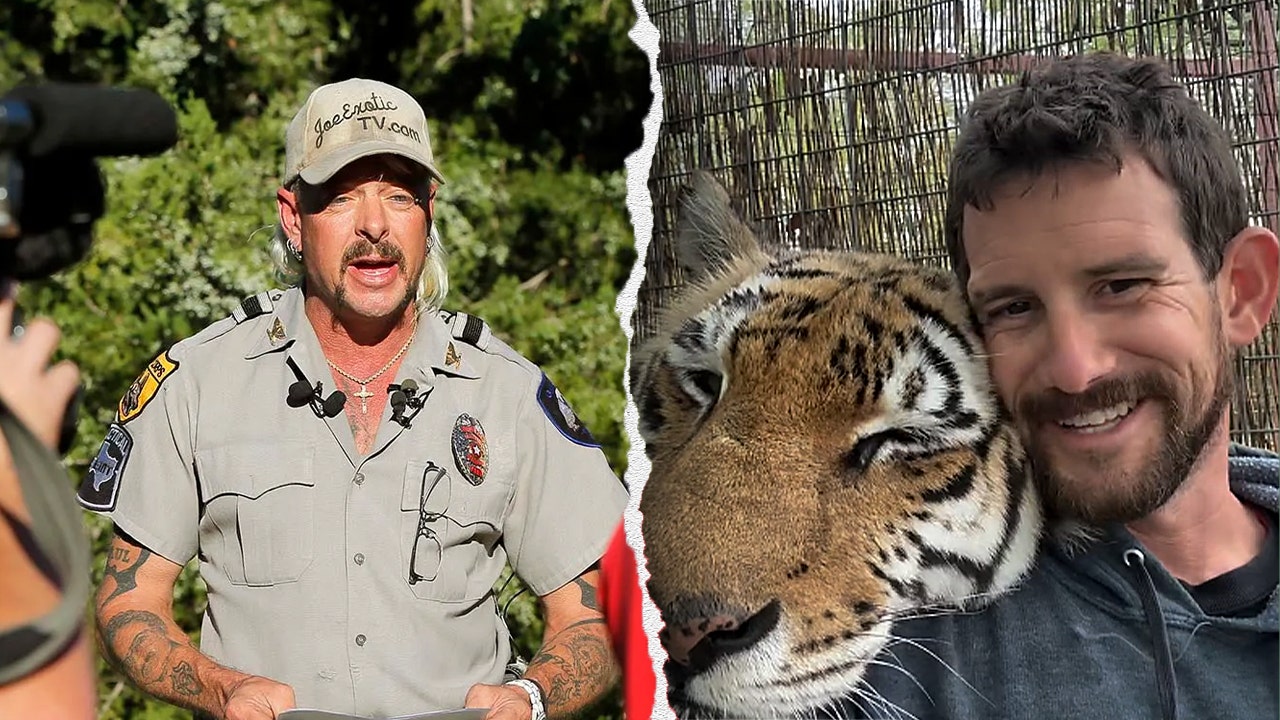
Additionally, reports confirmed that several of the big cats housed at the Growler Pines facility had previously been acquired from Joseph Maldonado, widely known as “Joe Exotic,” the former operator of the Greater Wynnewood Exotic Animal Park in Oklahoma. Maldonado, who is currently serving a twenty-one-year federal prison sentence following his high-profile conviction on multiple wildlife and federal charges, issued a statement of condolence from prison upon learning of Easley’s death.
Conversely, national animal advocacy groups offered a much harsher critique of the traveling big cat industry. Representatives from People for the Ethical Treatment of Animals (PETA) issued a statement pointing to Easley’s history with traveling exhibitions, alleging that transport routines and prolonged confinement in temporary enclosures cause chronic stress in large carnivores, regardless of handler experience or regulatory compliance records.
The stark contrast in responses highlights the ongoing conflict between exotic animal exhibitors—who argue that controlled public presentations foster wildlife appreciation and conservation funding—and animal rights groups advocating for complete bans on private ownership, traveling acts, and direct human-predator contact.

Understanding Big Cat Behavior in Captivity
Wildlife experts and veterinary animal behaviorists frequently point out that even captive-bred big cats retain their natural biological instincts as apex predators. While wild felids like tigers can form strong bonds of familiarity with human caregivers through years of positive reinforcement, experts emphasize that domestic behaviors cannot be fully bred out of wild species within a few generations.
Key factors that can contribute to sudden shifts in captive animal behavior include:
-
Unpredictable Environmental Triggers: Subtle changes in lighting, sudden loud noises from an audience, or unexpected movements can cause a sudden defense response.
-
Hormonal or Territorial Shifts: Seasonal changes or social dynamics within a multi-animal facility can elevate stress levels and aggressive behaviors.
-
Underlying Health Conditions: Unnoticed dental issues, joint pain, or internal discomfort can make an animal unusually sensitive or quick to react to routine touch.
-
Instinctive Predatory Drive: A sudden stumble or loss of balance by a handler can inadvertently trigger an animal’s predatory reflexes before the handler can regain control.
The investigation into the specific triggers surrounding the incident at Growler Pines remains ongoing as investigators review facility security footage, visitor recordings, and physical evidence from the scene.

Moving Forward: Policy and Public Safety
The death of Ryan Easley adds to a historic list of high-profile incidents involving professional trainers, exotic animal keepers, and public exhibitions over recent decades. In response to recurring safety concerns, legislative bodies across the United States have increasingly moved toward stricter regulations regarding large carnivore ownership.
The passage of federal legislation such as the Big Cat Public Safety Act in late 2022 represented a major shift in federal policy, placing tight restrictions on private ownership, prohibiting direct public contact with big cat cubs, and establishing stricter operational requirements for sanctuaries and non-exempted exhibitors.
As authorities finalize their investigation into the event in Hugo, Oklahoma, the tragic loss of Ryan Easley serves as a sobering reminder of the complex responsibilities, inherent physical risks, and ongoing ethical dilemmas surrounding the care and management of the world’s most formidable predators.
Sources & Reference Materials
-
United States Department of Agriculture (USDA) Animal and Plant Health Inspection Service (APHIS): Licensing records, facility inspection reports, and regulatory guidelines under the Animal Welfare Act.
-
Oklahoma Department of Wildlife Conservation (ODWC): State regulations governing captive wildlife permits, safety enclosures, and native/non-native dangerous species.
-
Humane World for Animals & PETA: Policy briefs and public statements regarding captive wildlife protection and traveling animal act regulations.
-
The Big Cat Public Safety Act (H.R. 263 / S. 1210): Legislative frameworks establishing federal standards for big cat ownership, public contact, and sanctuary operation.
