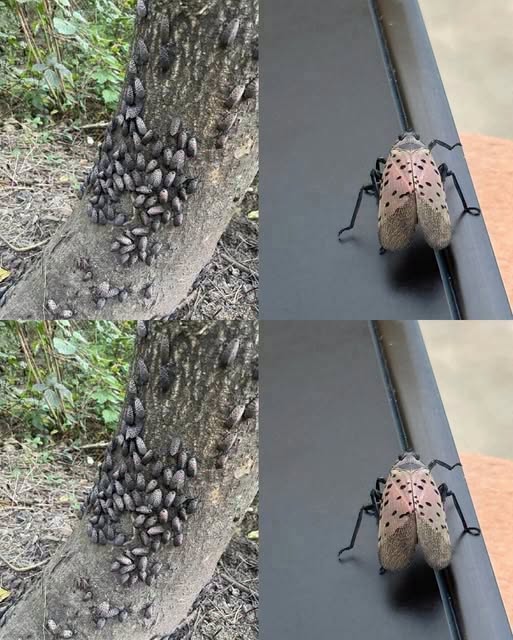

You park your car beneath a shaded maple tree on a warm afternoon, only to return a few hours later to find the windshield coated in a tacky, sugar-like mist. On nearby patio furniture, a dark, powdery black layer begins to form across the cushions and surrounding leaves. While these outdoor nuisances might initially look like separate issues—a dripping tree or a seasonal fungus—they are frequently the first subtle warning signs of an invasive pest that has rapidly reshaped agricultural landscapes across the United States: the spotted lanternfly (Lycorma delicatula).
First detected in Pennsylvania in 2014, this sap-feeding planthopper native to East Asia has expanded its range across multiple eastern and midwestern states. Capable of swarming agricultural crops, hardwood forests, and residential gardens, the spotted lanternfly poses a serious threat to native ecosystems and local economies. Understanding its biology, recognizing its distinct life stages, and knowing how to manage its presence are critical steps in protecting trees and agricultural crops from severe damage.
Folklore, Cultural Context, and the Impact of Invasive Species
Throughout agricultural history, unexpected insect outbreaks have held significant cultural resonance. Ancient civilizations often viewed sudden pest swarms through the lens of folklore and mythology, interpreting them as warnings of environmental imbalance or natural hardship. In various regional traditions, strange seasonal insects were woven into tales of agricultural cycles, reminding farmers to remain vigilant stewards of their fields.
In modern ecological science, invasive species like the spotted lanternfly represent a distinct challenge born of global trade and travel. Lacking natural predators in new environments, introduced species can multiply rapidly, outcompeting native wildlife and disrupting delicate ecological food webs. The spotted lanternfly’s arrival highlights the importance of biosecurity and environmental awareness, reminding us that protecting local habitats requires collective community action.
Biological Mechanics: Feeding Behavior and the Honeydew Phenomenon
The spotted lanternfly is a planthopper belonging to the order Hemiptera (true bugs). Rather than chewing leaves like caterpillars or beetles, it utilizes specialized piercing-sucking mouthparts called a stylet to drill directly into the vascular tissue (phloem) of host plants.
Entomological research highlights several key physiological impacts of this feeding style:
-
Vascular Sap Extraction: By tapping into the plant’s phloem, the insect drains vital nutrients, sugars, and water meant for growth and fruit production. Heavy infestations cause branch dieback, leaf curling, wilting, and severe physiological stress.
-
Honeydew Excretion: Because plant sap is rich in sugars but relatively low in protein, lanternflies must consume massive volumes of liquid. They excrete excess sugar water as “honeydew,” a sticky residue that coats leaves, outdoor furniture, vehicles, and walkways beneath host trees.
-
Sooty Mold Proliferation: While honeydew itself does not directly infect plant tissue, it creates an ideal growing medium for sooty mold—a dark, powdery fungus. As sooty mold blankets leaf surfaces, it blocks sunlight, significantly reducing the plant’s capacity for photosynthesis and further weakening its overall health.
While the spotted lanternfly targets over 70 plant species, its preferred host is Ailanthus altissima (commonly known as the tree-of-heaven), an invasive tree species itself. However, it also severely impacts economically vital crops, including grapevines, apple orchards, hops, maples, walnuts, and ornamental nursery stock.
Recognizing the Life Stages: From Mud-Like Eggs to Vivid Adults
Controlling the spread of the spotted lanternfly requires identifying the insect across its distinct developmental phases:
-
Egg Masses (Fall through Spring): Female lanternflies lay egg masses containing 30 to 50 eggs on flat surfaces, including tree trunks, rocks, firewood, patio furniture, and vehicles. The masses are covered in a protective waxy secretion that resembles a smear of gray, cracked mud.
-
Early Nymphs (Spring to Early Summer): Upon hatching, young nymphs are flightless and measure less than half an inch long. They are black with bright white spots and move with an agile, jumping motion.
-
Late Nymphs (Mid to Late Summer): Before reaching adulthood, fourth-instar nymphs develop vibrant red patches overlaid with black bands and white spots.
-
Adults (Late Summer through Fall): Adult lanternflies are approximately one inch long. At rest, their forewings are gray with black spots and black-tipped reticulated patterns. When startled or flying, they expose striking red hindwings with white bands and black patches.
Practical Strategies for Management and Prevention
Slowing the spread of the spotted lanternfly relies on active community participation and simple management techniques:
-
Scrape and Destroy Egg Masses: From autumn through early spring, inspect trees, outdoor structures, and vehicles for mud-like egg masses. Scrape them off using a plastic card or putty knife directly into a container filled with rubbing alcohol or hand sanitizer to destroy the eggs.
-
Inspect Vehicles and Equipment: Adult lanternflies and egg masses frequently hitchhike on cars, trailers, campers, and outdoor furniture. Thoroughly check vehicles and equipment before traveling out of infested areas.
-
Avoid Transporting Firewood: Moving untreated firewood is one of the primary pathways for spreading wood-boring and egg-bearing pests. Always source firewood locally or purchase certified heat-treated wood.
-
Utilize Physical Traps and Removal: Placing circle traps or specialized sticky bands around host tree trunks can capture nymphs as they climb up to feed. Ensure sticky traps feature protective wildlife guards to prevent accidental capture of birds or beneficial insects.
Reflection on Human Curiosity, Stewardship, and Environmental Health
The battle against invasive species like the spotted lanternfly offers a meaningful reflection on human curiosity and ecological responsibility. As global connectivity brings us closer together, it also requires us to pay closer attention to the subtle changes in our immediate environments.
By combining scientific understanding with proactive community habits, we can mitigate the impact of invasive pests on our forests, farms, and gardens. Staying observant and taking simple, preventative steps helps safeguard the natural beauty and agricultural health of our shared landscapes for generations to come.
Sources and References
-
United States Department of Agriculture (USDA) APHIS. (2023). Spotted Lanternfly Identification, Impact, and Quarantine Management. USDA Public Health and Agriculture Publications.
-
Penn State Extension. (2022). Spotted Lanternfly Management Guide for Homeowners and Agricultural Producers. Pennsylvania State University College of Agricultural Sciences.
-
Journal of Economic Entomology. (2021). Host Range, Feeding Behavior, and Ecological Impact of Lycorma delicatula in North America. Entomological Society of America.
