
As dawn settled over central Mexico, thousands of commuters and freight operators began another routine journey along the busy Mexico–Querétaro Highway. Delivery trucks moved steadily toward industrial hubs, families traveled between cities, and workers headed toward Mexico City expecting an ordinary day on one of the nation’s most important transportation corridors.
But near the municipality of Huehuetoca in the State of Mexico, traffic suddenly came to a halt.
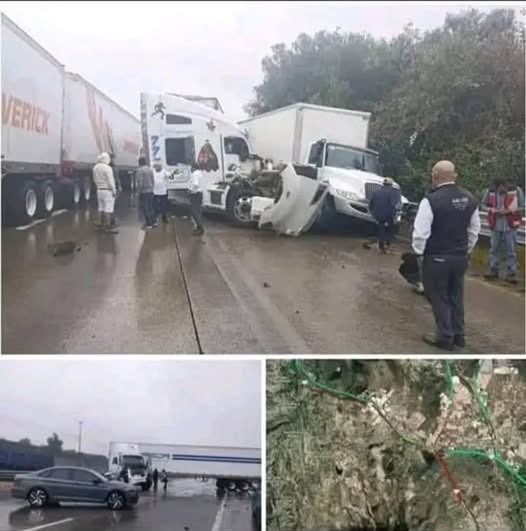
A large cargo trailer approaching the Jorobas intersection became involved in a major traffic collision that affected multiple vehicles and blocked several lanes of traffic for hours. Fortunately, authorities confirmed that no fatalities occurred, though several individuals sustained minor injuries and required medical evaluation.
Even without tragic loss of life, the incident quickly became a nationwide talking point. For many observers, it highlighted ongoing concerns surrounding highway safety, infrastructure maintenance, heavy cargo transportation, and emergency preparedness in Mexico.
The collision also served as a reminder that transportation systems are deeply connected to economic stability, public confidence, and everyday life. When one major roadway experiences disruption, the effects can ripple far beyond the immediate scene.

Understanding the Importance of the Mexico–Querétaro Highway
The Mexico–Querétaro Highway is considered one of the busiest and most economically significant highways in Mexico. Stretching through key industrial and commercial regions, it connects Mexico City with central and northern states that depend heavily on road transportation for trade and commuting.
Every day, thousands of freight vehicles transport goods ranging from consumer products to industrial materials along this route. Passenger vehicles, buses, and logistics fleets share the same roadway, creating constant high-density traffic conditions.
Because the highway functions as a critical economic artery, even temporary closures can create widespread delays and financial consequences. Businesses relying on punctual deliveries may experience setbacks, while commuters can lose hours navigating congestion or seeking alternate routes.
Transportation experts often describe highways like this one as “living systems” that require constant maintenance, monitoring, and adaptation to changing traffic demands.
What Happened Near Huehuetoca?
According to preliminary reports, the collision occurred as a large cargo trailer approached the Jorobas intersection, an area known for heavy traffic flow and complex merging patterns.
Witness accounts suggested that the trailer appeared unable to reduce speed effectively before reaching the congested area. Authorities later confirmed that investigators were examining several possible contributing factors, including braking efficiency, vehicle load, road conditions, and traffic density.
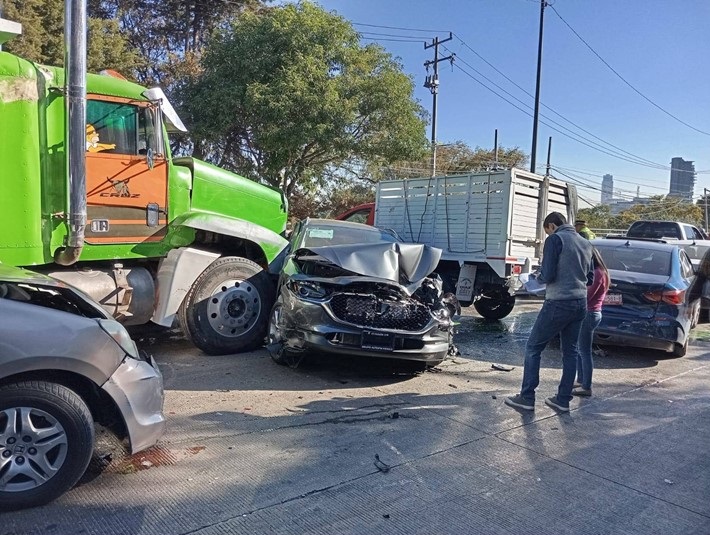
The trailer reportedly struck a roadside embankment before colliding with several smaller vehicles, including passenger cars and a pickup truck. The impact caused the cargo vehicle to block all northbound lanes, bringing traffic movement to a complete standstill.
Emergency responders arrived quickly to assist those involved and prevent additional incidents from occurring in the backed-up traffic.
Although the injuries reported were described as minor, the visual scale of the disruption sparked widespread public discussion online and in local media.
Traffic Disruptions and Economic Consequences
One of the most immediate effects of the collision was the extensive traffic congestion that followed.
Within minutes, northbound traffic stretched for several kilometers as vehicles became trapped behind the blocked lanes. Freight operators faced delayed schedules, commuters missed appointments, and public transportation services struggled to maintain normal operations.
Traffic incidents on major highways often produce consequences that extend beyond the roadway itself. Delays can interrupt supply chains, increase fuel consumption, and create additional pressure on nearby secondary roads as drivers attempt to reroute.
Economists and urban planners frequently point out that transportation efficiency directly influences productivity. When highways experience repeated disruptions, businesses may face higher operational costs and reduced reliability in delivery systems.
The Huehuetoca incident demonstrated how a single collision can temporarily affect thousands of individuals and multiple sectors of the economy.
Emergency Response and Public Safety Coordination
One positive aspect highlighted by authorities was the speed of the emergency response.
Paramedics, highway patrol officers, and road maintenance teams coordinated efforts to secure the area, assist injured individuals, and manage traffic conditions. Their actions helped reduce confusion and ensured that affected individuals received medical attention promptly.
Emergency preparedness plays a major role in limiting the consequences of highway incidents. Well-trained response teams can help prevent secondary accidents, improve communication with motorists, and restore road functionality more efficiently.
In modern transportation planning, emergency response systems are considered just as important as road design itself. A highway network is only as effective as its ability to respond when unexpected events occur.
The Challenges of Heavy Cargo Transportation
The involvement of a large trailer in the incident renewed public attention on the unique challenges associated with freight transportation.
Heavy cargo vehicles are essential to Mexico’s economy, but they also require greater stopping distances and more careful maneuvering than standard passenger vehicles. In congested traffic conditions, these limitations can become especially important.
Transportation specialists have long discussed the need for balanced policies that support commercial logistics while maintaining public safety standards.
Some commonly discussed strategies include:
Improved Vehicle Inspection Programs
Routine inspections help ensure that braking systems, tires, and other essential components remain in proper working condition.
Enhanced Driver Training
Commercial drivers often operate under demanding schedules and difficult traffic conditions. Advanced training programs can help drivers respond more effectively to congestion and emergency situations.
Smarter Highway Design
Road engineering improvements such as expanded lanes, better signage, and redesigned intersections may reduce bottlenecks and improve traffic flow.
Technology Integration
Modern safety technologies, including automated braking assistance and traffic monitoring systems, are increasingly viewed as valuable tools for preventing collisions.
Infrastructure and the Future of Road Safety
Infrastructure maintenance remains one of the most important factors in highway safety.
Mexico’s highway system spans thousands of kilometers and supports millions of daily journeys. Maintaining such an extensive network requires substantial investment and cooperation between federal, state, and municipal authorities.
Experts often emphasize that preventative maintenance is more effective and less costly than emergency repairs after incidents occur.
Potential improvements frequently discussed include:
Better Road Surface Maintenance
Worn pavement and reduced traction may contribute to vehicle control difficulties, especially during periods of heavy traffic or poor weather.
Improved Lighting and Visibility
Clear signage and proper illumination can help drivers identify hazards and make safer decisions.
Real-Time Traffic Monitoring
Modern traffic systems can alert drivers to congestion, accidents, or hazardous conditions before they reach problem areas.
Expanded Emergency Access Routes
Creating dedicated access points for emergency responders may improve response times during major incidents.
The Huehuetoca collision encouraged renewed discussion about whether enough resources are being dedicated to long-term transportation planning.

Public Awareness and Shared Responsibility
While infrastructure and regulation are essential, road safety also depends heavily on driver behavior.
Authorities regularly encourage motorists to maintain safe following distances, obey speed regulations, and remain attentive during congested conditions. Public awareness campaigns can help reinforce these habits and reduce preventable risks.
Commercial and private drivers alike share responsibility for creating safer road environments. Experts often stress that highway safety is not solely the responsibility of governments or transportation companies but also of individual road users.
This shared-responsibility perspective has become increasingly important in modern traffic safety discussions worldwide.
Cultural Perspectives on Roads and Mobility
Roadways have always carried cultural significance beyond their practical purpose.
In many societies, highways symbolize progress, connection, and economic opportunity. In Mexico, major transportation routes link communities, industries, and traditions across vast distances.
Historically, trade routes shaped the growth of civilizations, allowing ideas, goods, and cultures to move between regions. Modern highways continue that legacy in a contemporary form.
Some cultural commentators even view traffic incidents as reminders of how dependent modern society has become on mobility and infrastructure. When transportation systems pause unexpectedly, people are reminded of the complexity required to keep daily life functioning smoothly.
Although such reflections are philosophical rather than scientific, they contribute to broader public conversations about safety, planning, and modernization.
Scientific Perspectives on Traffic Safety
From a scientific standpoint, traffic safety research focuses heavily on risk reduction and system analysis.
Transportation scientists study patterns involving speed, traffic density, driver reaction times, and roadway design to better understand how collisions occur.
Research consistently suggests that effective prevention usually depends on multiple overlapping safety measures rather than any single solution.
These measures may include:
Traffic calming strategies
Predictive congestion analysis
Automated warning systems
Regular infrastructure assessments
Commercial vehicle oversight
Human behavior studies
Scientists and engineers increasingly use data modeling and artificial intelligence to identify high-risk traffic zones and improve preventative strategies.
The Huehuetoca collision may eventually contribute additional data that helps transportation planners better understand safety challenges along heavily traveled freight corridors.
Learning from Incidents Without Sensationalism
One notable aspect of the public response to the collision was the focus on prevention rather than sensationalism.
Because no fatalities occurred, discussions centered more heavily on lessons learned, infrastructure resilience, and opportunities for improvement. This constructive approach may encourage more productive conversations around transportation policy and safety investment.
Traffic incidents often receive public attention only briefly, but experts argue that long-term improvement requires sustained focus rather than temporary concern.
Meaningful change usually develops through gradual investment, education, and cooperation between authorities, businesses, and citizens.
Looking Ahead
As Mexico continues expanding industrial activity and transportation demand, highways like the Mexico–Querétaro corridor will remain central to national development.
Growing traffic volumes will likely increase pressure on infrastructure systems, making proactive planning even more important in the years ahead.
Authorities have indicated that findings from the investigation may help guide future safety measures and policy decisions. Whether through updated regulations, improved monitoring systems, or infrastructure upgrades, the goal remains the same: reducing risks while maintaining efficient mobility.
The incident near Huehuetoca serves as a reminder that transportation systems require constant attention and adaptation to meet evolving demands.
Conclusion
The traffic collision on the Mexico–Querétaro Highway near Huehuetoca highlighted important questions about road safety, freight transportation, infrastructure management, and emergency preparedness in Mexico.
Although the incident resulted only in minor injuries, its impact on traffic flow and public discussion demonstrated how interconnected modern transportation systems truly are. From highway engineering and vehicle maintenance to driver awareness and emergency response, every component plays a role in creating safer roads.
Beyond the practical lessons, the event also reflects a broader truth about modern society: people depend deeply on transportation networks that often operate unnoticed until disruption occurs.
Human curiosity naturally seeks to understand why such incidents happen and how future risks can be reduced. Through scientific research, public awareness, and continued investment in infrastructure, societies can transform moments of disruption into opportunities for learning and improvement.
As highways continue connecting communities and economies across Mexico and beyond, the pursuit of safer and more resilient transportation systems remains a shared responsibility for everyone on the road.
Sources
OrVeb
World Health Organization Road Safety Resources
National Highway Traffic Safety Administration
International Transport Forum
