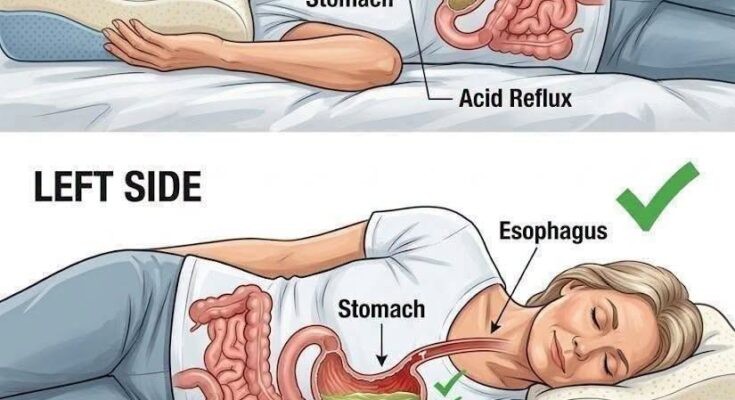

Benefits of Sleeping on Your Left Side
Sleeping on your left side is often presented as a simple way to improve digestion, circulation, heart health, and overall wellbeing. Some of these claims have a reasonable basis in anatomy and clinical research, especially for people who experience nighttime acid reflux. Others are overstated or remain uncertain. Like most sleep advice, the best position depends on an individual’s health needs, symptoms, comfort, and ability to get enough uninterrupted rest.
The body does not function in exactly the same way in every sleeping position. Gravity, the location of internal organs, pressure on muscles and joints, and the alignment of the airway can all influence how a person feels during the night. For many adults, side sleeping is comfortable and practical. Left-side sleeping may be particularly useful in a few circumstances, but it should not be viewed as a universal health rule or a replacement for medical care.
Why Sleeping Position Can Affect the Body
Sleep position can influence reflux symptoms, snoring, joint pressure, and comfort during pregnancy. The stomach sits mainly in the upper left portion of the abdomen, while the liver is largely on the right. The esophagus, the tube that carries food from the mouth to the stomach, enters the stomach near its upper section. These anatomical relationships help explain why gravity and body position can affect the movement of stomach contents.
When a person lies down, gravity no longer helps keep stomach acid in the stomach as effectively as it does when sitting or standing. For someone with gastroesophageal reflux disease, commonly called GERD, this may lead to heartburn, regurgitation, coughing, throat discomfort, or disrupted sleep. Research indicates that lying on the left side may reduce the exposure of the esophagus to stomach acid compared with lying on the right side.
Side sleeping can also change the way body weight is distributed. It may reduce pressure on the lower back for some people, but it can place additional pressure on the shoulder and hip that are against the mattress. A comfortable sleep position therefore requires more than choosing a side: pillow support, mattress firmness, body size, injuries, and chronic conditions all matter.
Left-Side Sleeping and Nighttime Acid Reflux
The most widely supported potential benefit of sleeping on the left side concerns nighttime acid reflux. Studies using measures of esophageal acid exposure have found that reflux can occur more frequently and clear more slowly when people lie on their right side. In contrast, the left-side position may help keep the junction between the stomach and esophagus above the level of stomach contents, reducing the likelihood that acid travels upward.
This does not mean that left-side sleeping will eliminate GERD or cure chronic digestive symptoms. Reflux is influenced by many factors, including the timing and size of meals, alcohol use, smoking, body weight, certain medicines, and the function of the lower esophageal sphincter. Still, changing position can be a low-risk strategy worth trying for people whose symptoms tend to appear after they go to bed.
People with frequent nighttime heartburn may also benefit from avoiding meals for several hours before lying down. Medical organizations commonly recommend avoiding large late-evening meals and considering elevation of the head of the bed for persistent nocturnal symptoms. Raising the head of the entire bed can be more effective than simply adding pillows, which may bend the body in a way that increases abdominal pressure.
Persistent reflux should not be ignored. A clinician can assess symptoms that occur regularly, disturb sleep, fail to improve with lifestyle changes, or are accompanied by difficulty swallowing, unexplained weight loss, vomiting, chest pain, or signs of gastrointestinal bleeding. These symptoms may require timely medical evaluation.
Sleeping on the Left Side During Pregnancy
Sleep can become increasingly difficult during pregnancy because of physical changes, reflux, back discomfort, leg cramps, frequent urination, and anxiety. Side sleeping is generally recommended later in pregnancy because it can be more comfortable than sleeping flat on the back. Major health guidance, including advice from the American College of Obstetricians and Gynecologists, supports sleeping on either side during pregnancy.
Left-side sleeping has historically received special attention because it may reduce pressure from the growing uterus on major blood vessels in the abdomen. Some pregnant people also find that this position helps with reflux or feels more comfortable. However, current guidance does not require someone to remain exclusively on the left side throughout the night. It is normal to shift positions while asleep, and people should not become distressed if they wake up on their back or right side.
A practical approach is to begin sleep on either side and use pillows for support. A pillow between the knees can reduce strain on the hips and lower back, while a pillow under the abdomen or behind the back may improve stability and comfort. Anyone with specific pregnancy complications or concerns should follow the advice of their obstetric care team.
Does Left-Side Sleeping Improve Heart Health or Circulation?
Claims that sleeping on the left side prevents heart disease, “improves circulation,” or strengthens the heart are not supported by strong evidence for healthy adults. The heart is located slightly left of center in the chest, and some people are more aware of their heartbeat when lying on their left side. This sensation can feel uncomfortable or concerning, but awareness of a heartbeat does not necessarily mean that the heart is under harmful stress.
For people with heart or lung conditions, the most comfortable position can vary. Some individuals may find lying flat difficult because it worsens breathlessness. New or worsening shortness of breath when lying down, chest pressure, swelling in the legs, fainting, or palpitations should be discussed with a healthcare professional rather than managed solely by changing sleep position.
Long-term cardiovascular health is influenced far more by factors such as blood pressure, cholesterol, diabetes management, physical activity, smoking status, diet, sleep duration, and access to appropriate medical care. A comfortable sleeping position may support better rest, but it is not a proven substitute for these established measures.
Lymphatic Drainage, Detox Claims, and What Science Actually Shows
Online discussions sometimes suggest that sleeping on the left side dramatically improves lymphatic drainage or helps the body “detox.” These statements go beyond the available evidence. The lymphatic system is a network of vessels, nodes, and organs that helps return fluid to the bloodstream and plays an important role in immune function. It works continuously; there is no reliable evidence that a specific side-sleeping position provides a major detoxification effect.
Sleep itself is important for many biological processes, including immune regulation and brain health. Research has also examined the brain’s waste-clearance system, sometimes called the glymphatic system, which appears to be active during sleep. However, findings from experimental and animal research should not be turned into broad claims that sleeping exclusively on the left side cleanses the brain or removes toxins from the body.
The body’s liver, kidneys, lungs, digestive system, and skin all contribute to normal waste processing and elimination. Supporting these systems involves basic health practices: adequate sleep, hydration appropriate to individual needs, balanced nutrition, physical activity, and medical care for diagnosed conditions. No preferred sleeping side can replace those functions.
Snoring, Sleep Apnea, and Breathing During Sleep
Side sleeping may reduce snoring for some people because it can help prevent the tongue and soft tissues in the throat from falling backward as easily as they can when someone sleeps on their back. This may also help some people with position-dependent obstructive sleep apnea, a condition in which breathing repeatedly pauses or becomes restricted during sleep.
However, changing sleep position is not a complete treatment for obstructive sleep apnea. The condition can contribute to excessive daytime sleepiness, concentration problems, high blood pressure, and other health concerns when it is untreated. Loud habitual snoring, witnessed pauses in breathing, gasping during sleep, morning headaches, or severe fatigue are reasons to seek a medical assessment. A sleep study may be needed to determine whether sleep apnea is present and what treatment is appropriate.
For people who simply snore occasionally, a side-sleeping pillow or other positioning strategy may be useful. Maintaining a healthy weight where appropriate, avoiding alcohol close to bedtime, and treating nasal congestion can also help. Still, persistent snoring should not automatically be dismissed as harmless, particularly when it is paired with breathing interruptions or daytime symptoms.
Managing Shoulder, Hip, Neck, and Back Comfort
Although side sleeping can be beneficial for reflux and may help some people breathe more comfortably, it can also aggravate musculoskeletal pain. The shoulder and hip on the lower side carry more pressure. A mattress that is too firm may cause pressure points, while one that is too soft may allow the spine to sag out of alignment.
Proper pillow height is especially important. A pillow should support the head and neck so that the neck remains roughly aligned with the rest of the spine. If the pillow is too high or too low, it can contribute to neck stiffness or headaches. Placing a pillow between the knees can help keep the hips aligned and may reduce lower-back strain. Some people also benefit from hugging a body pillow to support the upper arm and chest.
People with shoulder injuries, hip bursitis, arthritis, or persistent pain may need to alternate sides or use additional cushioning. If pain repeatedly wakes someone from sleep or worsens despite adjustments, a clinician or qualified physical therapist can help identify possible causes and appropriate treatment options.
How to Try Left-Side Sleeping Safely
For most people, trying left-side sleeping is simple and safe. Start by settling on the left side when getting into bed, particularly if nighttime reflux is a concern. Use a supportive pillow under the head, and consider a pillow between the knees to reduce pressure on the hips and lower back. If reflux symptoms are frequent, discuss whether elevating the head of the bed and adjusting meal timing may help.
It is not necessary to force yourself to remain in one position all night. Sleep naturally involves movement, and repeatedly waking to correct posture may be more disruptive than beneficial. The priority is sufficient, restorative sleep in a position that does not cause pain or worsen medical symptoms.
The Bottom Line on Sleeping on Your Left Side
Sleeping on the left side can be a helpful option, especially for people with nighttime acid reflux and for pregnant people seeking a comfortable side-sleeping position. Side sleeping may also reduce snoring in some cases, although it is not a replacement for evaluation or treatment of sleep apnea. The evidence does not support sweeping claims that left-side sleeping prevents heart disease, transforms circulation, or detoxifies the body.
The most useful approach is individualized. Choose a position that supports comfortable, consistent sleep; use pillows and a suitable mattress to protect joints and spinal alignment; and seek medical advice for persistent reflux, breathing difficulties, severe snoring, or pain. Sleeping on the left side may be one practical part of better sleep hygiene, but overall sleep quality and attention to ongoing symptoms matter most.
Sources
- Mayo Clinic: GERD diagnosis and treatment
- American College of Obstetricians and Gynecologists: Back sleeping during pregnancy
- National Heart, Lung, and Blood Institute: Sleep apnea
- National Institute of Diabetes and Digestive and Kidney Diseases: Acid reflux and GERD in adults
- CDC: About sleep and sleep health
Disclaimer: This content is intended for entertainment purposes only and is not based on real events.
