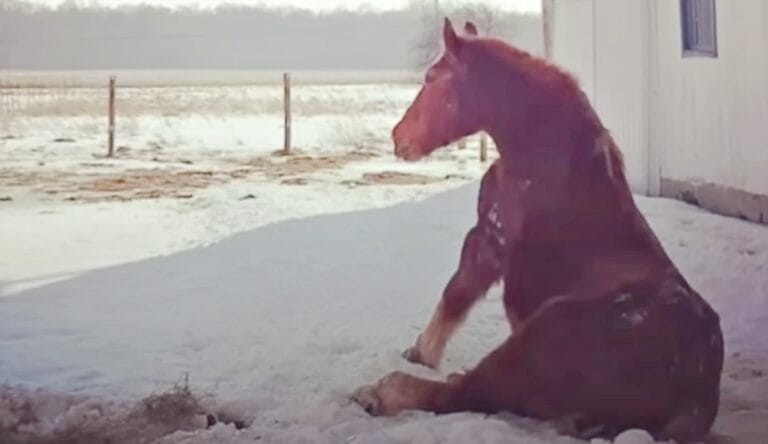

Lonely Horse Who Waited a Lifetime for a Friend Finally Finds Her Soulmate
For years, a senior horse named Gidget lived a remarkably isolated life, with little opportunity to experience the companionship of other animals or regular human interaction. But when she finally found her way to Mockingbird Farm Sanctuary in New York, her circumstances changed in a way that would make her final year especially meaningful.
At 29 years old, Gidget was given something she had been missing for much of her life: a welcoming environment, attentive caregivers, and an unexpected friendship with a miniature horse named Peggy. Their story is a touching reminder of the importance of animal companionship and the difference that dedicated rescue organizations can make in the lives of vulnerable animals.

Gidget’s Long Years of Isolation
Gidget’s story began with a difficult change in circumstances. She had spent 17 years with her previous owner, but as he grew older, caring for the horse became increasingly challenging. Although he continued providing her with oats through a feeding chute, he was no longer able to offer the attention and everyday care that an aging horse requires.
Over time, Gidget’s world became extremely limited. According to the account shared by those involved in her rescue, she had gone years without meaningful contact with other animals or regular human companionship. Her daily routine was largely confined to receiving food, with few opportunities to interact with the outside world.
Providing food is an essential part of animal care, but responsible horse ownership involves much more. Horses need suitable shelter, clean water, appropriate nutrition, veterinary attention, opportunities for movement, and an environment that supports their physical and behavioral needs.
As social animals, horses also benefit from opportunities to interact with compatible companions. Their natural behavior includes forming relationships, communicating through body language, and spending time near other members of their group. Prolonged isolation can therefore present significant challenges to their overall welfare.
Gidget’s circumstances eventually came to the attention of animal rescuers, creating an opportunity for her to receive the care and companionship she had been missing.
Mockingbird Farm Sanctuary Gives Gidget a Second Chance
The organization that helped change Gidget’s circumstances was Mockingbird Farm Sanctuary, located in Byron, New York. Founded in 2015 by Jonell Chudyk and Jon Tedd, the sanctuary was established to provide refuge and long-term care for farm animals in need.
Its mission focuses on rescuing animals that have experienced neglect, abuse, abandonment, or surrender. Rather than providing only temporary accommodation, the sanctuary aims to give its residents permanent homes where their individual physical and emotional needs can be addressed.
For Gidget, this represented an important turning point. At 29, she was an older horse who needed a safe place to spend her remaining years. The people at Mockingbird Farm recognized that she deserved an opportunity to experience a more comfortable and socially enriching environment.
When Gidget arrived, her response was reportedly remarkable. As she stepped down from the transport trailer, she encountered a setting filled with unfamiliar sights, sounds, animals, and people.
According to the rescue story shared by GeoBeats Animals, Gidget appeared excited by her new surroundings. Her arrival marked the beginning of a different kind of life, one in which she could explore her environment and gradually become familiar with the other residents.
An Unexpected Friendship With a Miniature Horse Named Peggy
When Gidget first arrived, Jonell Chudyk expected that she might naturally form a close relationship with one of the other full-sized horses at the sanctuary. However, the friendship that eventually developed was not quite what anyone anticipated.
Gidget became particularly attached to Peggy, a miniature horse who had also experienced a difficult past.
Peggy had previously been surrendered to a humane society after experiencing neglect and unsuitable living conditions. According to Mockingbird Farm Sanctuary’s account, she had spent time confined in a small stall and arrived at the organization frightened and distrustful.
Her initial behavior reflected the challenges she had experienced. She was reportedly fearful around people and sometimes attempted to escape unfamiliar surroundings. Building trust required patience, consistency, and an environment in which she could gradually feel secure.
Over time, Peggy became more comfortable with her caregivers and surroundings. She developed a more trusting personality and began enjoying the companionship available at the sanctuary.
When Gidget and Peggy met, their connection developed in a particularly special way. Despite their differences in size and background, the two horses appeared to enjoy spending time together.
Jonell noticed that Gidget seemed to make a soft, contented sound whenever Peggy was nearby. She described the sound as something resembling a purr, an observation that became one of the most memorable details of their friendship.
The pair’s relationship was built through everyday interactions rather than dramatic moments. Simply being close to one another, sharing their surroundings, and spending time together appeared to bring both animals comfort.
Why Companionship Matters for Horses
Gidget and Peggy’s relationship also illustrates an important aspect of equine welfare: horses are social animals with behavioral needs that extend beyond food and shelter.
In natural and well-managed domestic environments, horses commonly develop social relationships with other horses. They communicate through posture, facial expressions, vocalizations, and physical proximity. These interactions help them establish familiarity and maintain relationships within their social groups.
Companionship does not necessarily mean that every horse will immediately become friends with every other animal. Individual personalities, previous experiences, age, health, and temperament can all influence how horses respond to potential companions.
Some horses form particularly close bonds with specific individuals. They may prefer grazing near a familiar companion, resting in the same area, or maintaining visual contact when separated. Such behaviors demonstrate why suitable social opportunities are an important consideration in responsible horse management.
Introducing unfamiliar horses also requires care. Differences in temperament, physical condition, and social behavior can influence whether an introduction is successful. Experienced caregivers generally consider these factors and provide enough space and supervision for animals to become familiar with one another safely.
Gidget and Peggy’s relationship is a heartwarming example of how an appropriate companion can enrich an animal’s environment. Their story should not be interpreted as proof that every isolated horse will respond in exactly the same way, but it does highlight the value of recognizing individual social needs.
Making Gidget’s Final Year Meaningful
Although Gidget had already reached an advanced age when she arrived at Mockingbird Farm, her caregivers made the most of the time they had together.
Instead of allowing her final months to be defined by the isolation she had previously experienced, the sanctuary gave her opportunities to enjoy a more varied environment and develop a meaningful relationship with Peggy.
For an older horse, quality of life involves several interconnected factors. Appropriate nutrition, comfortable living conditions, veterinary monitoring, and careful attention to mobility are all important. Social interaction can also contribute to a more enriching daily routine.
The sanctuary’s approach reflected the importance of considering each animal as an individual. A horse that has experienced years of limited interaction may need time to adjust to new surroundings. Patient handling and consistent care can help make that transition more manageable.
Gidget’s story became especially memorable because her new friendship arrived relatively late in life. After spending so many years in a restricted environment, she finally had another horse with whom she could share her days.
Her time at the sanctuary was limited, but the experience gave her an opportunity to enjoy companionship and attentive care during her remaining months.
Remembering Gidget and the Friendship She Left Behind
Sadly, Gidget’s story eventually reached its conclusion. She passed away in April 2018, less than a year after arriving at Mockingbird Farm Sanctuary.
Although the sanctuary had not been able to give her many additional years, the time she spent there represented a significant change in her quality of life. She had found a place where she was cared for and, perhaps most importantly, a companion who appeared to bring her considerable comfort.
Her passing also affected Peggy. According to the story shared by GeoBeats Animals, the miniature horse showed signs of distress after losing her companion. Peggy reportedly spent time near Gidget’s former belongings, including her halter, suggesting that the absence of her familiar friend had changed her daily routine.
Animal grief is a subject that researchers continue to explore. Observations of horses and other social animals indicate that changes in behavior can occur following the loss or separation of familiar companions. Animals may become quieter, alter their routines, or seek out places associated with the missing individual.
It is important to avoid assuming that every behavioral change represents grief in precisely the same way humans experience it. Nevertheless, the observations of caregivers can provide valuable information about animal relationships and welfare.
For Peggy, the loss of Gidget meant adjusting to a different social environment. The sanctuary understood that although another animal could not replace her former companion, providing Peggy with new opportunities for friendship could help her move forward.
Peggy Eventually Finds Another Companion
After Gidget’s death, the sanctuary continued looking for ways to support Peggy. Her caregivers recognized that she had developed a strong attachment to another horse and that finding a suitable companion could be beneficial.
Eventually, Peggy formed a relationship with another miniature pony who also needed companionship. The sanctuary shared an update explaining that, although nobody could replace Gidget, Peggy had found another animal who needed a friend.
This development was an encouraging reminder that the loss of an important relationship does not necessarily mean an animal must remain alone. With suitable introductions and attentive care, new social relationships can develop over time.
It also demonstrated the continuing responsibility involved in animal rescue. Providing a safe home is not simply about bringing an animal through the sanctuary gates. It requires ongoing attention to health, behavior, social needs, and changing circumstances.
For Peggy, finding another companion offered the possibility of a new friendship while preserving the significance of the relationship she had shared with Gidget.
The Important Role of Animal Sanctuaries
Gidget’s experience highlights the work carried out by farm animal sanctuaries and rescue organizations. These organizations often take responsibility for animals whose previous owners can no longer provide adequate care or whose circumstances require specialized attention.
Senior animals can present particular challenges. Older horses may require adjustments to their feeding routines, dental care, hoof maintenance, shelter, and exercise. Some also need more frequent veterinary assessments to identify age-related changes and manage chronic health conditions.
Sanctuaries must therefore balance their commitment to providing lifetime care with the practical demands of operating a rescue facility. Food, bedding, veterinary services, medication, transport, staffing, and maintenance all require continuing resources.
Mockingbird Farm Sanctuary explains on its official website that its mission includes permanent homes for rescued animals and educational opportunities that encourage compassionate treatment of animals.
People interested in supporting animal welfare can contribute in different ways. Donations, volunteering, sharing information about responsible animal care, and supporting reputable rescue organizations can all help strengthen animal protection efforts.
Before supporting a sanctuary, prospective donors can research its mission, transparency, care standards, and the services it provides. Understanding how an organization operates helps ensure that assistance reaches animals in meaningful ways.
A Story About Second Chances and Lasting Connections
Gidget and Peggy’s friendship is more than an emotional animal rescue story. It illustrates why the welfare of horses should be considered in terms of their complete needs, including their physical health, living conditions, and opportunities for social interaction.
Gidget had spent much of her life without the companionship that many horses experience as part of their everyday environment. Her arrival at Mockingbird Farm gave her an opportunity to discover a different way of living, and her relationship with Peggy became an especially meaningful part of that experience.
Her story also demonstrates that rescue work can make a difference even when the time available is limited. A safe environment, attentive caregivers, and an appropriate companion helped make Gidget’s final year a more comfortable and socially enriching chapter of her life.
Although Peggy eventually found another friend, the connection she shared with Gidget remained a special part of the sanctuary’s history.
The story was also documented in a video by GeoBeats Animals, allowing viewers to see the two horses and learn about their unexpected friendship. For people interested in animal rescue, it offers a meaningful look at the importance of patience, compassion, and responsible care.
Gidget could not recover the years she had spent alone, but she was given the opportunity to experience something different before her life came to an end. Sometimes, a second chance does not have to last forever to matter. For Gidget, finding Peggy and a place to belong made her final chapter one worth remembering.
Watch Gidget and Peggy’s Heartwarming Story
GeoBeats Animals documented Gidget’s journey, from her arrival at Mockingbird Farm Sanctuary to the friendship that developed between her and Peggy. The video offers a closer look at their relationship and the people who helped make their new life possible.
Sources
- Mockingbird Farm Sanctuary – Official About Page: Information about the sanctuary’s history, founders, mission, and animal welfare goals.
- Mockingbird Farm Sanctuary – Animal Residents: Official information about Peggy and the care provided to sanctuary residents.
- GeoBeats Animals – Lonely Horse Makes a Friend in Her Final Year: Video documenting Gidget’s rescue and her friendship with Peggy.
- iHeartDogs – Isolated Horse That Waited a Lifetime for a Friend Finds Her Soulmate: Additional reporting on Gidget’s background and her relationship with Peggy.
Disclaimer: This content is intended for entertainment purposes only and is not based on real events.