
Baby Jessica: The 1987 Midland Well Rescue and Its Lasting Legacy
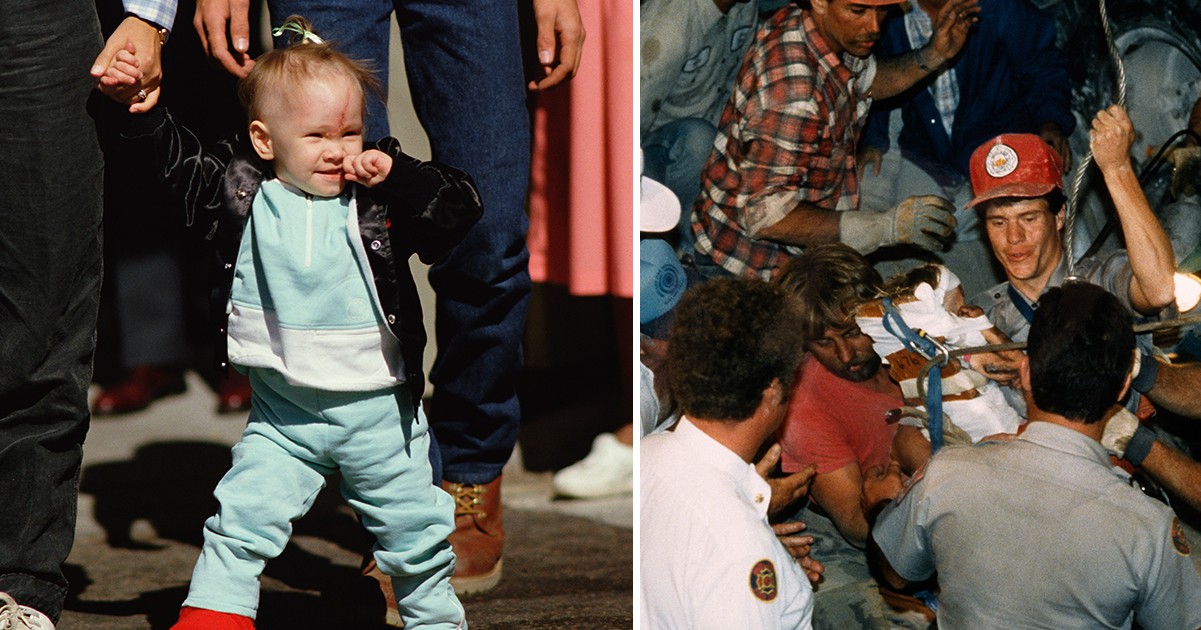
In October 1987, the rescue of 18-month-old Jessica McClure Morales from an abandoned well in Midland, Texas, became one of the most closely followed emergency stories in modern American television history. Known nationally as “Baby Jessica,” the toddler was rescued after being trapped underground for nearly 58 hours.
The event drew together firefighters, police officers, medical personnel, drilling specialists, engineers, volunteers, family members, and local residents. It also brought live television coverage of a local emergency into homes across the United States, creating an unusually shared national moment before the internet and social media era.

How Jessica McClure Fell Into the Well
Jessica McClure was playing with other children in her aunt’s backyard in Midland on October 14, 1987, when she fell into a narrow, abandoned water well. The shaft was approximately 22 feet deep and only about eight inches wide in places, making a direct rescue exceptionally difficult.
Her family quickly realized that she had fallen into the well, which had been believed to be covered. Emergency services were called, and responders arrived within minutes. Jessica’s mother, Cissy McClure, later recalled the fear and uncertainty of waiting for help while knowing her daughter was trapped below ground.
Early on, rescuers faced a major challenge: they could not immediately see Jessica or establish exactly where she was positioned. Officers called down the narrow shaft in an effort to locate her. According to accounts later shared by responders, they eventually heard her cry, confirming that she was alive and giving the team an essential point of contact.
The rescue was complicated by the small diameter of the well, the depth of the shaft, the hard rock around it, and the danger that further movement could cause debris to fall. The team had to create a safe route to reach Jessica without making the situation worse.
A Complex Emergency Rescue Operation
Rescuers decided that entering the well directly was not practical. Instead, drilling crews worked to create a parallel shaft beside the original well. They then planned to dig a horizontal tunnel from that new shaft to Jessica’s location.
This approach required precision and patience. The local geology included hard rock, which slowed drilling work. The response also involved changing conditions underground and the need to protect a very young child from further injury. Rescue workers used equipment designed for drilling and excavation, but much of the work required careful manual effort in confined conditions.
Emergency workers also tried to reassure Jessica by speaking and singing to her. Accounts from the rescue describe responders encouraging her to make sounds so they could monitor her condition. At times, they reportedly heard her crying and singing, including the children’s song associated with Winnie-the-Pooh.
Medical personnel were positioned nearby to assess her immediately once she was brought out. The response illustrates how large-scale rescue operations often rely on coordination between specialized professions: first responders manage the immediate emergency, engineers and drilling crews address structural obstacles, and healthcare teams prepare for treatment after extraction.

The Moment “Baby Jessica” Was Rescued
After nearly 58 hours underground, Jessica McClure was pulled to safety on October 16, 1987. Her rescue was carried live by television networks and watched by millions of people. For many viewers, the moment became a defining news memory of the late 1980s.
The public response was immediate and emotional. People across the country followed updates on the rescue, while media outlets provided continuous reporting from Midland. The story was notable not only because of the difficult technical operation, but also because viewers could follow developments almost in real time.
Jessica was taken for medical treatment after her rescue. She survived, but she needed extensive care for injuries linked to the incident. Reports have said that she later underwent multiple surgeries, including treatment and reconstruction involving her right foot. Her recovery was supported by medical professionals and by the enduring attention of people who had followed the rescue.
The event also became an important example in discussions about emergency preparedness and safety around wells, excavation sites, and other potentially hazardous openings. Unused wells can present risks when they are not properly sealed, marked, or maintained. Local and state regulations vary, but safety authorities generally stress the importance of securing abandoned or unused wells to prevent accidents.
Why the Rescue Captured International Attention
The Baby Jessica rescue happened at a time when 24-hour cable news was becoming more influential in the United States. CNN and other broadcasters were able to provide sustained coverage from the scene, turning a local emergency into a national story.
Media scholars have often pointed to the rescue as an early example of continuous live television news creating a shared public experience. The coverage was different from a traditional scheduled news report: audiences could watch rescue workers continue their efforts through the day and night, hear interviews with officials, and receive frequent updates as conditions changed.
The story resonated because it centered on a vulnerable child, a family in distress, and a visible community effort to help. It also offered a rare outcome in which an extremely difficult rescue ended with survival. While coverage of emergencies should always be handled carefully and respectfully, the response to Jessica’s rescue showed how news can bring widespread attention to the work of emergency professionals and local communities.
In Midland, the operation became part of local history. For the rescue workers involved, it was a demanding professional and personal experience. The work required long hours under intense pressure, and it depended on the judgment of people from several fields who had to make decisions in a rapidly evolving situation.

Jessica McClure’s Life After the Rescue
Jessica McClure grew up with a public identity she did not choose. Although she had no memory of the rescue itself, she became known to much of the public as Baby Jessica. She has discussed learning about the event as a child and later seeing television coverage of what happened.
In interviews with People, McClure has spoken about the complicated experience of being associated with a major news event from infancy. She said that some people recognized her immediately when they learned who she was, while others had no idea of her connection to the 1987 rescue.
She has also described the physical effects of the accident. Public accounts indicate that she underwent around 15 surgeries over the years after her rescue. The medical treatment she received as a child was an important part of her recovery, and her story has often been presented as one of resilience rather than as a moment defined solely by tragedy.
McClure married Danny Morales in 2006. Danny Morales has said that he remembers hearing about Baby Jessica’s rescue as a teenager while attending a football game. According to later interviews, an announcement was made that she had been rescued, underscoring how broadly the story had reached people far beyond Midland.
The couple have raised a family in Texas. McClure’s later life has largely remained private, though she has periodically spoken to media outlets about the rescue, her childhood, and what it means to be connected to an event remembered by millions of people.
The Trust Fund and Public Support
Following the rescue, donations from members of the public helped establish a trust fund for Jessica. The support reflected the extraordinary level of concern generated by the story. Many people who had watched the rescue wanted to contribute to her future after learning about the medical challenges she faced.
McClure received access to the fund when she became an adult. In later interviews, she said that financial losses connected to the 2008 financial crisis reduced the value of the investments. However, she also said that funds remained available to help her family purchase a home.
The trust fund remains one of the most visible examples of the public solidarity surrounding the rescue. It also demonstrates the long-term responsibilities involved in managing donations made in response to a high-profile emergency. Trusts and charitable contributions can provide meaningful support, but their value may depend on investment conditions, legal arrangements, and long-term financial planning.
Lessons From the Baby Jessica Rescue
The 1987 Midland rescue continues to be remembered for several reasons. First, it highlighted the skill and determination of emergency responders and technical workers. There was no simple solution to the situation; the rescue required careful assessment, specialized tools, and constant attention to safety.
Second, it increased public awareness of the dangers posed by unsecured wells and similar hazards. Property owners, local governments, and contractors all have roles in identifying and properly securing dangerous openings. Preventive safety measures are often less visible than emergency rescues, but they are essential to reducing risk.
Third, the event showed the powerful role of broadcast journalism in shaping public attention. The coverage made people feel connected to a community they may never have visited. At its best, this kind of reporting can help audiences understand the seriousness of an emergency while recognizing the professionalism of those responding to it.
Finally, Jessica McClure’s story is a reminder that people at the center of widely publicized events continue to live full lives long after cameras leave. Her identity extends far beyond the rescue that made her famous. The continued interest in her story reflects the lasting impression left by one remarkable rescue, but it should also be balanced with respect for her privacy and family life.
A Lasting Story of Community and Resilience
Nearly four decades after the rescue, the story of Baby Jessica remains an important part of American news history. It is remembered for its technical difficulty, the dedication of responders, the concern shown by people around the world, and the relief felt when a child was safely brought back to her family.
Jessica McClure’s survival was the result of a sustained and highly coordinated rescue effort. The operation required local expertise, determined teamwork, and a commitment to finding a safe path through an exceptionally difficult situation. Its legacy continues in public memory, in discussions about emergency response, and in the simple lesson that community support can matter profoundly during moments of crisis.
Sources
- Texas Monthly: Reporting and historical context on the Baby Jessica rescue
- Texas State Historical Association: Jessica McClure entry
- People: Jessica McClure’s life after the 1987 rescue
- Centers for Disease Control and Prevention: Public health and injury prevention information
- Encyclopaedia Britannica: Background reference on modern news media and historical events
Disclaimer: This content is intended for entertainment purposes only and is not based on real events.
