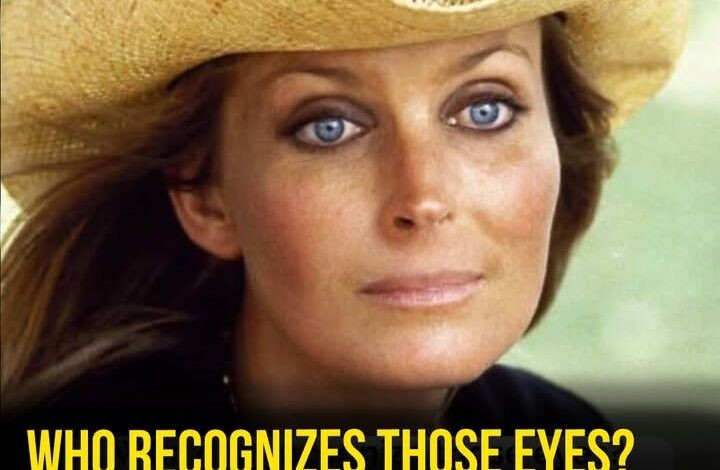

Bo Derek remains one of the most recognizable Hollywood figures to emerge from the late 1970s. Her memorable appearance in the 1979 comedy 10, including the beach sequence that became closely associated with the film, made her an international pop-culture symbol. Yet her public life has extended far beyond a single screen role. Over several decades, Derek has worked in film and television, written about her lifelong connection with horses, advocated for animal welfare, and supported rehabilitation programs for U.S. military veterans.
Her career has also reflected the changing expectations placed on women in entertainment. She became famous at a young age during an era when celebrity coverage often focused heavily on appearance. In later years, she has increasingly been known for charitable work, equestrian interests, and a notably private long-term relationship with actor John Corbett.
Early Life and Entry Into Hollywood
Bo Derek was born Mary Cathleen Collins in Long Beach, California, on November 20, 1956. She grew up in Southern California and was exposed to the entertainment industry at an early age. Her mother, Norma Bass, worked as a makeup artist and had connections in Hollywood, helping Derek become familiar with the professional environment surrounding film and television production.
As a teenager, she began pursuing acting and modeling opportunities. Her first film project was Once Upon a Love, later released as Fantasies. The production was filmed in Greece, where she met actor, director, and photographer John Derek. Their relationship became a major subject of media attention because of their significant age difference and because John Derek had been married to actor Linda Evans when the relationship began.
Bo and John Derek married in Las Vegas in 1976. Their personal and professional lives remained closely connected for more than two decades. John Derek photographed his wife extensively and directed her in several films. While the relationship was frequently discussed in celebrity media, Bo Derek has later spoken publicly about the pain caused to others during that period, including Linda Evans, with whom she has said she maintained respect in later years.
How 10 Made Bo Derek a Hollywood Icon
Bo Derek’s defining career breakthrough arrived with Blake Edwards’s 1979 romantic comedy 10. The film starred Dudley Moore and Julie Andrews and told the story of a middle-aged man confronting insecurity, fantasy, and changing ideas about romance. Derek played Jenny Hanley, a character seen largely through the perspective of Moore’s character.
Although her role was comparatively limited, Derek’s screen presence had an enormous cultural impact. Her blond hair styled in thin braids, combined with a flesh-toned swimsuit in a widely remembered beach scene, became one of the visual signatures of the period. The film was commercially successful, and Derek quickly became a household name.
The hairstyle was developed with input from John Derek and was intended to create a distinct look for the character. In later decades, public discussion around braids and other traditionally Black hairstyles has become more informed. Many writers and cultural commentators have noted the importance of recognizing the origins of protective styles and the unequal standards historically applied to Black people who wear them. Looking back at the image from 10 offers a useful example of how celebrity fashion can be both influential and subject to evolving cultural understanding.
Derek’s fame after 10 was immediate. She appeared on magazine covers, became a frequent reference point in television and advertising, and was widely treated as a symbol of late-1970s Hollywood glamour. Her public image, however, sometimes overshadowed the range of work she would pursue in the years that followed.
Film Career Beyond Her Breakthrough Role
After 10, Bo Derek starred in several films directed by John Derek, including Tarzan, the Ape Man in 1981, Bolero in 1984, and Ghosts Can’t Do It in 1989. These productions attracted considerable publicity but received largely negative responses from critics. Their reception demonstrated the difference between a celebrity’s visibility and critical acclaim: Derek remained famous even as many reviewers questioned the films’ scripts, direction, and treatment of their central characters.
Rather than leaving the entertainment industry, Derek continued to seek television and film work. Her later credits included appearances in series such as 7th Heaven, Lucky, and Queen of Swords. She also appeared in comedy films, television movies, and guest roles that allowed audiences to see a more self-aware and relaxed side of her public persona.
Her career illustrates a familiar challenge for performers who become famous through one defining image. Derek’s association with 10 was so enduring that it often shaped how the public viewed her subsequent work. Still, her longevity in the industry reflects continued audience interest and her willingness to work across formats, from theatrical films to network television.
Bo Derek’s Work With Veterans and Rehabilitation Programs
One of the most substantial aspects of Bo Derek’s public service has been her support for military veterans. She has served as honorary chair for the U.S. Department of Veterans Affairs National Rehabilitation Special Events, a program area designed to help veterans use adaptive sports, creative activities, and community events as part of rehabilitation and recovery.
VA adaptive programs are intended to support veterans with disabilities and health challenges by encouraging physical activity, confidence, social connection, and independence. Events associated with this work have included the National Veterans Wheelchair Games, the National Disabled Veterans Winter Sports Clinic, the National Veterans Golden Age Games, and other activities tailored to different groups of participants.
Derek’s connection to veterans is personal as well as public. Her father served in the U.S. military during the Korean War, and both her stepfather and John Derek were veterans. In statements released through the Department of Veterans Affairs, she has emphasized the value of programs that support both physical rehabilitation and emotional well-being.
Celebrity involvement does not replace professional medical care or government services, but public advocates can help draw attention to resources that veterans and their families may not know about. The VA’s rehabilitation events also highlight a broader principle supported by health professionals: accessible recreation, peer support, and meaningful goals can play an important role in quality of life.
Horses, Equestrian Life, and Animal Welfare Advocacy
Horses have long been central to Derek’s life. She has owned and worked with horses for many years and has spoken often about the discipline, patience, and responsibility involved in caring for them. Her particular interest in Lusitanos, a historic horse breed associated with Portugal, led her to become involved with equestrian communities and breeding.
In 2002, she published Riding Lessons: Everything That Matters in Life I Learned from Horses. The book combines personal reflections with observations about horsemanship and the lessons she believes people can learn from working with animals. Its themes include consistency, trust, attention, and respect for the needs of another living creature.
Derek has also been a prominent advocate for stronger protections for horses. She has supported efforts to prevent the slaughter of American horses for human consumption and has used her platform to encourage responsible treatment, rescue, and retirement options. Animal welfare organizations have long argued that horses require humane handling throughout their lives, including when owners can no longer care for them.
Her advocacy has connected her with policy discussions as well as charitable work. In 2008, then-California Governor Arnold Schwarzenegger appointed Derek to the California Horse Racing Board. The appointment reflected her longstanding visibility in the horse world, though horse racing itself remains the subject of continuing debate over welfare standards, safety practices, regulation, and accountability. Across those debates, animal welfare experts generally agree on the importance of veterinary oversight, transparent injury reporting, safe facilities, and responsible lifetime care.
Political Views and Public Independence
Bo Derek has occasionally discussed politics, particularly during the early 2000s. She supported Republican candidates and President George W. Bush during that period. However, she later described herself as politically independent and said that she voted for Barack Obama. Her comments have generally suggested that she does not view political affiliation as a fixed personal identity.
This shift is not unusual among public figures or voters. Political views can change in response to policy priorities, candidates, personal experience, and wider social conditions. Derek has not built her public identity around political campaigning in the same way she has around veterans’ issues and animal welfare, making those causes a more consistent part of her public record.
Life With John Corbett
John Derek died in 1998 after more than two decades of marriage to Bo Derek. In 2002, she began a relationship with actor John Corbett, known for roles in Northern Exposure, My Big Fat Greek Wedding, and Sex and the City. Their first date was arranged by entertainment executive Norby Walters, according to Corbett’s later account.
The couple maintained a private relationship for many years while occasionally speaking warmly about their shared life. In 2021, Corbett revealed during an interview with CBS that they had married in a private ceremony in December 2020. The announcement attracted positive coverage in entertainment media, in part because the pair had been together for nearly two decades before marrying.
Derek and Corbett have generally avoided turning their relationship into a constant public spectacle. Their approach stands apart from the highly visible celebrity culture that surrounded Derek during the early years of her fame. It also reflects a broader trend among some established actors who choose to keep family life and personal milestones largely outside the daily news cycle.
Why Bo Derek’s Legacy Continues
Bo Derek’s legacy cannot be reduced to a single image from a single film, even though 10 remains an unmistakable part of popular culture. She represents a particular moment in Hollywood history, when movie stardom could be created rapidly through a breakout role and a striking visual identity. At the same time, her later life has added important dimensions to that story.
Her work with veterans has helped raise awareness of adaptive rehabilitation programs. Her equestrian interests and animal welfare advocacy have given her a long-running purpose beyond acting. Her willingness to acknowledge complicated parts of her past has also offered a more reflective contrast to the simplified narratives often created by celebrity media.
For audiences who remember her rise to fame, Bo Derek remains a familiar screen icon. For those encountering her work today, her story is also one of reinvention: an actor whose public life has moved from Hollywood stardom toward advocacy, horses, community service, and a private family life in California.
Sources
Disclaimer: This content is intended for entertainment purposes only and is not based on real events.