
How Sleeping Position and Pillow Support May Affect Back and Neck Comfort
Waking up after a full night of sleep with a stiff neck, sore hips, or aching lower back can be frustrating. Many people assume that sleeping for seven or eight hours should leave them refreshed, but sleep duration is only one part of the picture. The position of the body, the support provided by a mattress and pillows, and pre-existing musculoskeletal conditions can all affect how comfortable a person feels in the morning.
Sleep posture does not automatically cause serious spinal damage, and morning pain does not always mean that a person is sleeping “wrong.” Back and neck discomfort can have many contributors, including daily activity, stress, muscle strain, arthritis, injury, underlying health conditions, and the natural effects of aging. However, spending several hours in a position that places pressure on sensitive areas, twists the torso, or leaves the neck unsupported may worsen existing symptoms or contribute to temporary stiffness.
For many people, relatively small adjustments to pillow placement and sleeping position can improve comfort. The goal is not to find a single perfect posture for everyone. Instead, it is to encourage a comfortable, neutral alignment of the head, neck, shoulders, hips, and lower back while avoiding excessive twisting or strain.
Why Sleeping Position Can Influence Morning Pain
During sleep, the body remains in one or several positions for extended periods. Although people naturally move during the night, the muscles and joints may still be exposed to sustained pressure. If the neck bends sharply upward or downward, if the pelvis rotates away from the shoulders, or if the lower back is left unsupported in an uncomfortable position, some people may wake with soreness or reduced mobility.
The spine has natural curves in the neck, upper back, and lower back. A supportive sleep setup does not need to flatten these curves completely. Instead, it should help prevent them from being forced into an extreme position. In practical terms, this often means using a head pillow that keeps the neck roughly aligned with the rest of the spine and adding support around the knees, hips, or lower back when it feels comfortable.
Medical guidance commonly emphasizes individual comfort and alignment rather than promoting one universal sleep position. What works well for one person may not work for another. A person with shoulder pain may find side sleeping difficult, for example, while someone with snoring or certain breathing concerns may receive different advice from a clinician. Personal health history matters, particularly for people with persistent pain, recent injuries, pregnancy, or diagnosed sleep disorders.
Back Sleeping and Support Under the Knees
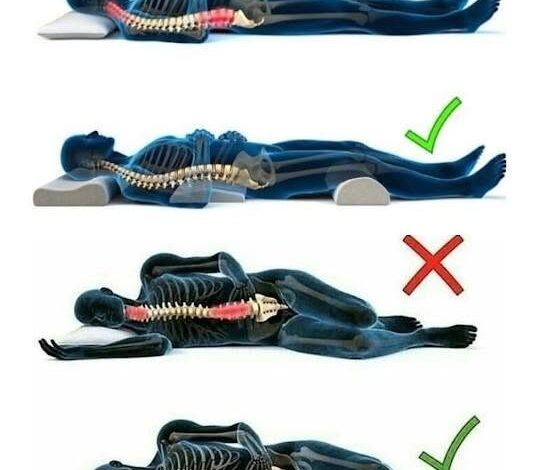
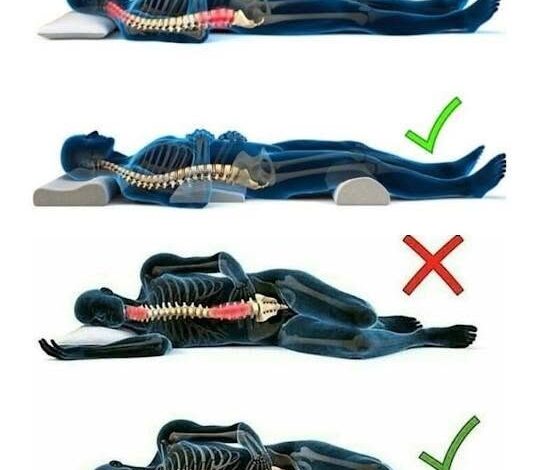
Sleeping on the back is often discussed as a position that can make it easier to keep the body symmetrical. When a person lies flat on their back, the shoulders and hips are generally facing the same direction, which can reduce the twisting that sometimes occurs in other positions. Yet back sleeping is not automatically comfortable for every person, especially when lower back discomfort is present.
For some back sleepers, keeping both legs completely straight can make the curve in the lower spine feel more pronounced. This may increase tension in the lower back muscles or create a sensation of pressure around the lumbar area. One commonly suggested adjustment is to place a small pillow beneath both knees. Raising the knees slightly can reduce the pull on the lower back and help the body settle into a more relaxed position.
The pillow does not need to be large or firm. In fact, excessive elevation may feel awkward or place pressure behind the knees. A folded blanket, a thin cushion, or a small pillow may be enough for some people. The best level of support is one that allows the legs to rest comfortably while reducing strain rather than creating a new source of discomfort.
Head and neck support remains important for back sleepers. A pillow that is too high may push the head forward, while one that is too flat may allow the head to tilt backward. Either situation can contribute to neck stiffness. A pillow with a height that keeps the chin, chest, and neck in a comfortable relationship may be more helpful than choosing a pillow based only on softness or brand.
Side Sleeping, Hip Alignment, and a Pillow Between the Knees
Side sleeping is common and can be comfortable for many people. However, the position may place uneven pressure on the shoulder and hip, particularly if the mattress is too firm, too soft, or no longer supportive. Side sleepers may also experience lower back discomfort when the top leg drops forward and rotates the pelvis away from the upper body.
When the pelvis turns while the chest and shoulders remain relatively still, the lower spine can be placed in a twisted position. This does not necessarily lead to injury, but it may contribute to morning stiffness, hip soreness, or discomfort in people who are already prone to back pain. A pillow placed between the knees can help keep the upper leg from falling too far forward and may support a more level position through the hips and pelvis.
For this approach, the knees are usually slightly bent rather than tightly curled toward the chest. The pillow should be thick enough to keep the knees separated comfortably, but not so large that it forces the hips apart. Some people prefer a standard pillow, while others find a smaller cushion or specially shaped knee pillow easier to keep in place during the night.
Side sleepers may also benefit from paying attention to their head pillow. The space between the shoulder and head is often greater when lying on one side than when lying on the back. If the head pillow is too thin, the neck may bend downward toward the mattress. If it is too thick, the neck may bend upward. The most comfortable choice generally fills the space enough to keep the head in a relatively neutral position.
What to Know About Stomach Sleeping
Stomach sleeping can be comfortable for some people, but it may be more challenging for the neck and lower back. Most stomach sleepers need to turn the head to one side in order to breathe, which can leave the neck rotated for a prolonged period. In some cases, this may aggravate neck stiffness or shoulder discomfort.
This position may also increase the arch in the lower back, depending on the mattress, body shape, and placement of the legs. Mayo Clinic notes that stomach sleeping can be hard on the back. People who cannot comfortably change positions may find that placing a pillow under the hips and lower abdomen helps reduce strain. Some may also prefer a very thin head pillow, or no head pillow, if that is more comfortable for the neck. These are general comfort measures, not guaranteed solutions for all pain.
People do not always choose their sleeping position consciously. Many shift positions while asleep, and trying to force a major change overnight can interfere with rest. A gradual approach may be more realistic, such as adding a supportive pillow first, adjusting the head pillow, or spending part of the night in a different position when comfortable.
Mattress Support Matters, but “Firm” Is Not Always Better
Pillow placement is only one part of sleep ergonomics. The mattress also influences how the body is supported. A mattress that sags substantially may allow the hips or shoulders to sink too deeply, while an overly rigid surface may create uncomfortable pressure points. The ideal level of firmness varies between individuals and can depend on body size, preferred sleeping position, and health needs.
Research and clinical guidance do not support a simple rule that every person with back pain needs the firmest possible mattress. In some cases, a medium-firm surface may be more comfortable than an extremely firm one. The important consideration is whether the mattress supports the body without causing excessive sagging, pressure, or an awkward spinal position.
Before replacing a mattress, people can consider simpler changes. Rotating a mattress if the manufacturer recommends it, checking whether the foundation is stable, or trying a supportive mattress topper may help identify whether the sleep surface is contributing to discomfort. However, a new mattress is not a substitute for medical evaluation when pain is frequent, severe, or worsening.
Using Pillows Carefully for Lower Back and Neck Support
Some people find that a small rolled towel or thin cushion beneath the lower back provides gentle support when sleeping on the back. This may feel helpful when it fills a natural gap between the lower back and mattress. However, the support should not force the spine into a larger arch or create pressure. If the adjustment increases pain, it is not the right setup for that individual.
Similarly, more pillows are not always better. Stacking several pillows beneath the head can push the neck out of alignment, while using thick cushions in multiple areas can make movement harder during sleep. The most useful setup is often the simplest one: a suitable head pillow, targeted support under or between the knees when needed, and a mattress that feels stable and comfortable.
The U.S. Department of Veterans Affairs advises people with back pain to consider the alignment of the entire body rather than focusing only on the head pillow. The shoulders, waist, hips, knees, and ankles all contribute to how the spine rests. A pillow arrangement that keeps the body from twisting may be useful, but comfort should remain the main guide.
When Morning Back or Neck Pain Needs Medical Advice
Sleep-position adjustments can be reasonable for mild, occasional stiffness, especially when discomfort improves after getting up and moving around. However, persistent pain should not be dismissed as a pillow problem. A healthcare professional can help assess possible causes and recommend appropriate care, including exercise, physical therapy, medication, or further evaluation when necessary.
Medical advice is particularly important when back or neck pain follows an injury, becomes progressively worse, disrupts daily activities, or occurs with symptoms such as fever, unexplained weight loss, weakness, numbness, tingling, or changes in bladder or bowel control. These symptoms can indicate conditions that require timely assessment.
It is also useful to remember that sleep quality and pain can affect each other. Pain may make it harder to sleep, while poor sleep can increase a person’s sensitivity to discomfort and reduce daytime energy. A broader approach may include regular movement, a consistent sleep schedule, stress management, and discussion with a clinician when symptoms continue.
Practical Steps for Better Sleep Alignment
A comfortable sleeping position is personal, but a few evidence-informed principles can help people experiment safely. Back sleepers may try a small pillow under the knees. Side sleepers may test a pillow between slightly bent knees. Stomach sleepers who experience lower back discomfort may consider gentle support under the hips and lower abdomen. In every position, the head pillow should support the neck without bending it sharply.
Make one change at a time and give it several nights before deciding whether it helps. Pay attention to how the body feels both on waking and throughout the day. If a new pillow arrangement causes more pain, numbness, or poor sleep, discontinue it rather than assuming that discomfort is part of an adjustment period.
There is no need for dramatic claims about sleep posture. A pillow under the knees or between the legs cannot prevent every cause of back pain, and no single position is right for all bodies. Still, thoughtful support, comfortable alignment, and attention to persistent symptoms can help many people create a more restful sleep environment.
Sources
Disclaimer: This content is intended for entertainment purposes only and is not based on real events.