
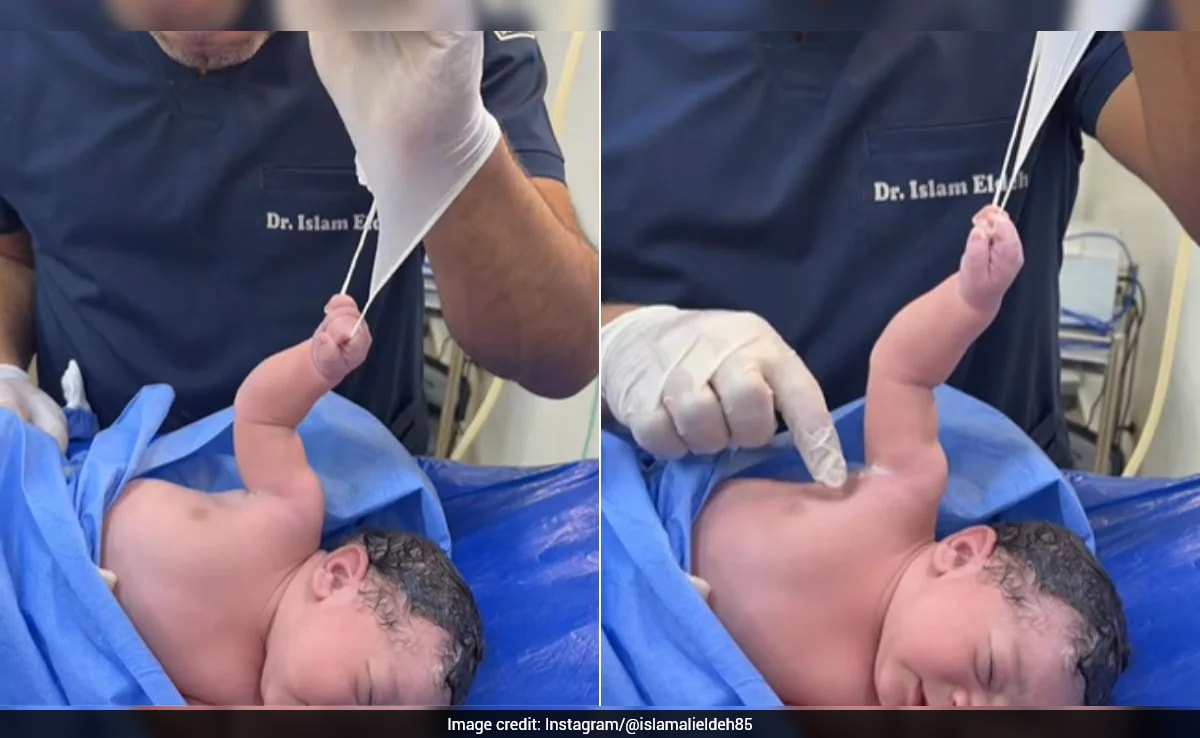
The baby found the glove and decided not to let go.
In the world of neonatal care, certain moments stand out for their subtlety and depth. A recent brief video captured such an instance, where a newborn baby, during a routine medical check, wrapped their tiny hand around Dr. Islam Eldeh’s gloved finger—and simply would not let go. This seemingly simple act, which unfolded during a test of the infant’s grasp reflex, resonated far beyond the clinical setting, illustrating the remarkable connection between patient and caregiver from the very first moments of life.
Understanding the Grasp Reflex in Newborns
The grasp reflex, also known as the palmar grasp reflex, is a primitive neurologic response commonly assessed in newborns. Present at birth, this reflex is automatically triggered when an object, such as a caregiver’s finger or a glove, touches the infant’s palm. The baby responds by firmly closing their fingers around the object. This reflex is considered a critical marker of healthy neurologic function during early infancy and generally fades by the age of six months.
Medical professionals, including pediatricians and neonatologists, routinely check the grasp reflex as part of an initial physical examination. According to the Mayo Clinic, the presence and strength of this reflex can help doctors assess the integrity of the baby’s nervous system and look for any potential abnormalities that might require further investigation.
The Importance of Touch and Connection
While the grasp reflex is neurologically driven, the scenario in the video took on a deeply human dimension. As Dr. Islam Eldeh extended a gloved finger, the newborn’s instinctive hold turned into a powerful symbol of trust and attachment. For infants, touch is not only a biological necessity but also an essential medium for emotional and psychological bonding. Within minutes or even seconds of birth, babies rely on touch to foster connections with those caring for them, promoting a sense of security and well-being.
This subtle encounter highlights a foundational aspect of developmental psychology: the caregiver-infant attachment. Pioneering research by British psychologist John Bowlby in the 20th century found that physical closeness and nurturing touch between newborns and caregivers are vital for healthy emotional development. The act of holding, however brief, supports the growth of trust and comfort—factors crucial in the earliest stages of life.
A Simple Check, an Uplifting Scene
The short video does not provide details about the specific circumstances or identity of the baby involved. Nevertheless, what stands out is the universal nature of the encounter. The doctor’s focus during the examination, combined with the newborn’s firm grip, transforms a standard medical test into a heartwarming moment that resonates with viewers worldwide. Observers on social media have described the scene as akin to a gentle hug or an early symbol of trust between a baby and their carer.
Medical staff working in neonatology, pediatrics, or family medicine often experience significant moments like this. These instances build rapport not only with parents and families, but set a foundation of trust and compassion that can influence an individual’s relationship with healthcare for years to come.
The First Milestones: Reflexes and Early Assessments
Shortly after birth, newborns undergo a series of physical and neurological assessments. Routine checks include monitoring vital signs, measuring reflexes (such as the grasp, rooting, and Moro reflexes), and evaluating muscle tone and responsiveness. Health professionals explain that these tests ensure that infants are adapting well to life outside the womb and are exhibiting typical neurological function. The grasp reflex, in particular, is checked by placing an object—often the examiner’s finger or a glove—in the baby’s palm and observing for a strong and symmetrical grip.
If abnormalities are noted, such as a weak or absent reflex on one side, physicians may recommend further evaluation to rule out possible nerve injury, muscular disorder, or central nervous system dysfunction. In the vast majority of cases, however, the grasp reflex is a reassuring indicator of a healthy start.
The Science Behind the Newborn Grasp Reflex
From a neurological standpoint, the newborn’s strong grip is mediated by the spinal cord and is not under voluntary control. As the brain develops and higher neurological pathways mature, newborn reflexes gradually fade—making way for coordinated, voluntary movements. The American Academy of Pediatrics notes that the steady disappearance of primitive reflexes is an important sign of normal brain maturation in infancy.
Though reflexes are automatic, they also serve a potential evolutionary purpose. In ancient times, a strong grasp may have helped infants cling to their parents, offering safety and protection from environmental threats. Today, while the reflex serves primarily as a diagnostic tool, it continues to fascinate parents, caregivers, and scientists alike for its innate power and meaning.
International Reactions and Societal Impact
Since its appearance online, the video of the newborn and Dr. Islam Eldeh has garnered positive attention and widespread sharing on social media platforms. Viewers from around the world have responded with messages of warmth, support, and curiosity about newborn development. Such public engagement underscores a common fascination with the earliest stages of human life and the emotional significance of caregiving interactions.
Experts in early childhood development frequently advocate for greater awareness of neonatal health, emphasizing that every infant deserves gentle, responsive, and expert care. Small gestures, such as a comforting touch during medical exams, not only help soothe babies but also convey compassion—benefiting both patient and provider.
International pediatric associations, including the World Health Organization (WHO) and the Centers for Disease Control and Prevention (CDC), highlight the vital role that affectionate, appropriate physical contact plays in newborn care. Such touch forms the basis for healthy growth, improved immunologic responses, and a foundation for lifelong trust in healthcare environments.
Caregiver Perspectives: The Emotional Side of Medicine
For doctors, nurses, and support staff who work with newborns and families, moments like the one captured on video are often cherished. These interactions remind medical professionals of the profound impact their roles have in shaping the start of a new life. Dr. Islam Eldeh’s careful attention during the reflex test, paired with the baby’s determined grip, communicates a story that bridges the art and science of medicine.
Nurses and parents frequently describe the first few days of an infant’s life as a delicate dance involving reassurance, trust, and emotional support. Physical touch, eye contact, and gentle speech all help to anchor infants in a world that is still brand new and overwhelming.
Key Takeaways: What This Moment Teaches Us
- The grasp reflex is a fundamental neurological response. It is present at birth, is easily evaluated, and reflects healthy infant development.
- Touch and connection matter. Physical contact between caregivers and newborns supports healthy psychological and emotional development.
- Brief medical interactions can have lasting effects. Simple gestures of kindness and attention often leave meaningful impressions on both providers and families.
- Public sharing of positive moments builds awareness. Viral videos such as this one encourage greater interest in neonatal health and foster international conversations about early child development.
Conclusion
Though the details behind the now widely shared video are limited, its impact is unmistakable. The sight of a newborn holding onto Dr. Islam Eldeh’s glove during a routine checkup offers a gentle reminder of the power of human connection in medicine. From both a scientific and emotional viewpoint, these moments underscore why compassionate practice remains at the heart of healthcare. The baby who wouldn’t let go, even for just a few seconds, exemplifies the importance of touch, trust, and attentive care—values that form the bedrock of healthy beginnings.
Disclaimer: This content is intended for entertainment purposes only and is not based on real events.
