

Woody Harrelson’s Journey From a Difficult Childhood to an Enduring Career
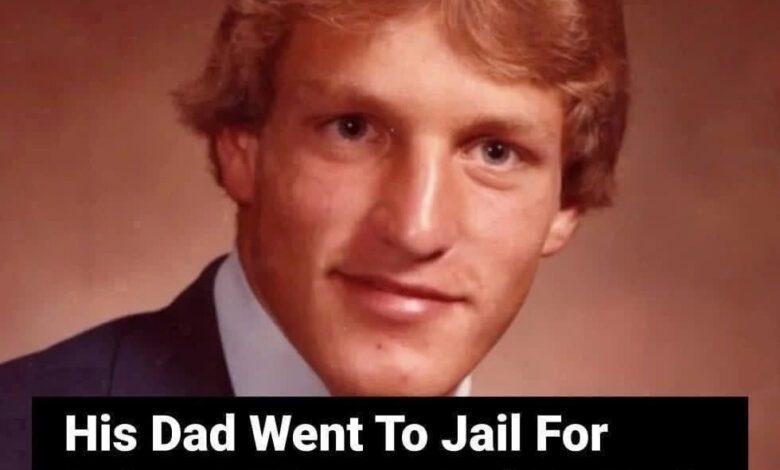
Woody Harrelson has built one of the most varied careers in modern American entertainment, moving comfortably between television comedy, serious drama, independent cinema, major studio films, theatre, and socially engaged public work. Known to many viewers first as the good-natured bartender Woody Boyd on Cheers, Harrelson later became an acclaimed actor in films including White Men Can’t Jump, The People vs. Larry Flynt, No Country for Old Men, Three Billboards Outside Ebbing, Missouri, and Triangle of Sadness.
His professional success has often been discussed alongside a difficult early family history. Harrelson’s father, Charles Harrelson, was a convicted contract killer who received a life sentence for the 1979 murder of U.S. District Judge John H. Wood Jr. The case attracted intense national attention because Judge Wood was the first federal judge to be assassinated in the United States during the 20th century. Woody Harrelson was young when his father became imprisoned, and he has spoken publicly over the years about the complicated emotions surrounding that relationship.
Rather than allowing a painful family history to define his public identity, Harrelson developed a career marked by range, resilience, and a willingness to take artistic risks. His story is not simply one of celebrity overcoming adversity. It also reflects the influence of family support, education, collaboration, therapy and self-reflection, and the opportunities that emerged from years of committed work in performance.
Early Life in Texas and a Complex Family Background
Woodrow Tracy Harrelson was born on July 23, 1961, in Midland, Texas. He was raised primarily by his mother, Diane Oswald, alongside his brothers Jordan and Brett. After his parents separated, the family faced financial limitations and moved between communities in Texas and Ohio. Harrelson has described his mother as an important stabilizing force during a period when his father was largely absent from daily family life.
Charles Harrelson had a criminal history that preceded the murder of Judge Wood. In 1973, he was convicted in connection with the killing of businessman Sam Degelia Jr. in Texas. He later became involved in the murder-for-hire plot targeting Judge Wood, who had been presiding over a case connected to drug trafficking. Charles Harrelson was convicted in 1982 and sentenced to two consecutive life terms. He died in prison in 2007.
For Woody Harrelson, the circumstances were personally painful and publicly unusual. The crimes committed by a parent can create lasting emotional burdens for family members, who may face unwanted attention, questions about identity, and the challenge of separating themselves from another person’s actions. Harrelson has acknowledged in interviews that he struggled with anger and confusion as a young person. At the same time, he has expressed affection for his father and an awareness that their relationship was emotionally complicated.
That nuance matters. A child is not responsible for a parent’s crimes, and Harrelson’s life demonstrates that family history does not determine an individual’s values, choices, or future. His eventual path was shaped by his own education, professional discipline, friendships, family relationships, and creative ambitions.
Education, Early Ambition, and the Move Toward Acting
Harrelson attended Hanover College in Indiana, where he studied English and theatre. He graduated in 1983, developing a foundation in writing, performance, and dramatic interpretation. Like many aspiring actors, he then moved to New York City to pursue opportunities in theatre and television.
New York offered creative possibility but also instability. Harrelson has recalled periods of financial pressure while trying to establish himself as an actor. For young performers, the city’s competitive environment can require persistence: auditions may be frequent, jobs uncertain, and living costs high. Harrelson’s early years reflected the familiar experience of many actors who balance ambition with temporary work, limited resources, and repeated rejection.
His arrival in New York coincided with a period when television sitcoms remained a major route to national recognition. A successful role could transform an actor’s career, but the process of finding the right role was unpredictable. Harrelson’s opportunity came when the long-running NBC comedy Cheers needed a new cast member following the departure of actor Nicholas Colasanto, who had played Coach Ernie Pantusso.
How Cheers Made Woody Harrelson a Household Name
Harrelson joined Cheers in 1985 as Woody Boyd, a cheerful and trusting young bartender from Indiana. The character was introduced as a friend and successor to Coach, and the role could easily have been difficult: viewers were attached to the existing ensemble, and replacing a beloved character is never simple. Harrelson instead gave Woody Boyd a distinct personality, combining innocence, gentle humor, loyalty, and unexpectedly sharp comic timing.
Cheers, set in a Boston bar where “everybody knows your name,” became one of the most celebrated sitcoms in American television history. The series was praised for its ensemble cast, character-based comedy, and ability to combine humor with human relationships. Harrelson’s work on the show earned him an Emmy Award for Outstanding Supporting Actor in a Comedy Series in 1989, along with additional nominations.
The role established Harrelson as a skilled comic actor, but it did not confine him to comedy. His performance suggested an ability to make apparently simple characters feel fully human. Woody Boyd was often naïve, yet Harrelson avoided turning him into a caricature. That quality would become a recurring feature of his later work: he could find humor in flawed people while also revealing their vulnerability, pride, fear, or conscience.
Building a Career Beyond Television Comedy
After gaining recognition on Cheers, Harrelson pursued roles that challenged expectations. In the early 1990s, he appeared in commercially successful films such as White Men Can’t Jump and Indecent Proposal. These projects helped introduce him to movie audiences and showed that his screen presence could extend beyond the familiar rhythms of a television sitcom.
A significant turning point came with his portrayal of publisher Larry Flynt in the 1996 biographical drama The People vs. Larry Flynt. Directed by Miloš Forman, the film examined free speech, legal conflict, and the controversial public life of Flynt. Harrelson’s performance earned an Academy Award nomination for Best Actor, confirming that he could lead serious dramatic work at the highest level of the industry.
He continued to build an unusually broad filmography. In the Coen brothers’ No Country for Old Men, Harrelson played Carson Wells, a confident but ultimately vulnerable professional drawn into a dangerous chain of events. In The Messenger, he portrayed an Army captain assigned to notify military families of deaths in service, a performance that brought him another Academy Award nomination. The role was widely recognized for its restraint and empathy.
Harrelson later earned a third Oscar nomination for Three Billboards Outside Ebbing, Missouri, in which he played a small-town police chief confronting institutional failures, personal illness, and community anger. The film’s reception also demonstrated how Harrelson’s career had evolved: he was no longer identified only with a single persona, but with complex characters across genres.
Television, Theatre, and a Reputation for Range
Harrelson’s career has remained closely connected to television even as his film work expanded. His performance opposite Matthew McConaughey in the first season of HBO’s True Detective brought renewed attention to his dramatic range. As detective Marty Hart, Harrelson played a man whose outward confidence concealed deep personal contradictions. The series became a major cultural event and received substantial critical recognition.
He has also maintained a relationship with live theatre, an art form that demands a different kind of discipline from screen acting. Theatre gives performers limited opportunities to revise a moment once a show begins; every performance depends on preparation, listening, timing, and a connection with the audience. Harrelson has written and performed in stage projects, including productions that reflect his interest in social issues and personal storytelling.
This movement among comedy, drama, theatre, independent productions, and mainstream franchises has made Harrelson one of the more adaptable actors of his generation. He has appeared in major entertainment properties such as The Hunger Games films, while also supporting smaller, director-driven projects. That balance has enabled him to reach large audiences without abandoning more unconventional material.
Personal Growth, Family, and Public Perspective
In public interviews, Harrelson has often spoken about the importance of family, self-awareness, and living in a way that reflects his principles. He is married to Laura Louie, and they have three daughters. Louie is a co-founder of Yoganics, an organic food delivery business, and the couple have long been associated with environmental and wellness-focused interests.
Harrelson has also supported environmental causes, sustainable food systems, and animal welfare initiatives. Like many public figures who speak on social issues, his views have prompted both support and disagreement. However, his engagement has been consistent with themes visible in parts of his public life: interest in nature, concerns about industrial consumption, and a preference for more sustainable practices.
It is important to distinguish public advocacy from expertise. Celebrities can help draw attention to issues, but scientific and policy questions should ultimately be assessed through evidence, qualified researchers, public institutions, and credible reporting. Harrelson’s public profile may amplify certain conversations, while the underlying facts require careful evaluation on their own merits.
Why Woody Harrelson’s Career Continues to Resonate
Woody Harrelson’s career has endured because he has resisted easy categorization. He can play a warm comic presence, an anxious authority figure, a morally compromised professional, an idealist, a villain, or an ordinary person caught in extraordinary circumstances. His performances often carry a relaxed naturalism that makes characters feel less like familiar movie types and more like people with conflicting impulses.
His early life remains part of his biography, but it is not the full explanation for his success. The public interest in his father’s case is understandable because of its historical significance and unusual nature. Yet Harrelson’s accomplishments are his own. They were built over decades of auditions, ensemble work, risks, failures, critical recognition, and continued reinvention.
For audiences, his story can be understood as a reminder that difficult beginnings do not impose a fixed outcome. Personal history can influence someone deeply without controlling every part of their life. Harrelson’s long career has instead been defined by sustained work, creative curiosity, and the ability to bring emotional honesty to characters across a wide range of stories.
Sources
Disclaimer: This content is intended for entertainment purposes only and is not based on real events.