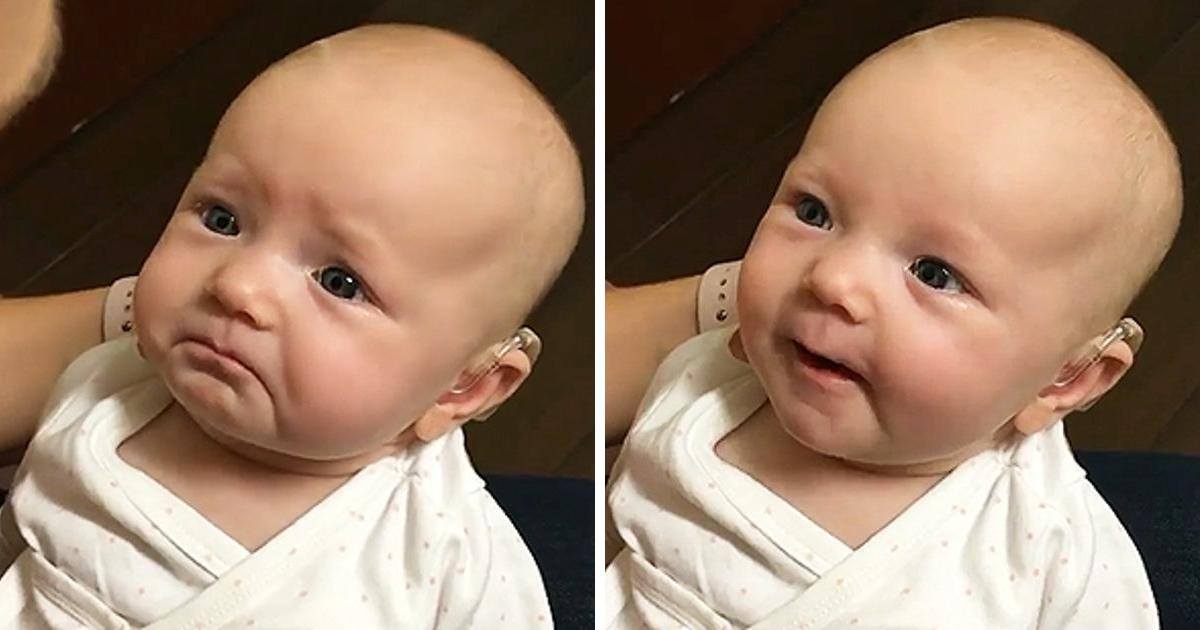

A Beautiful Baby Girl Experiences Mommy Say “I Love You” For The First Time
The Emotional Journey of Baby Charly and Her Family
The ability to hear is something most newborns experience naturally from their first moments. The sounds of a parent’s voice, household noises, and the rhythms of daily life become an integral part of the formative environment. However, for some families, this milestone is met with uncertainty. The story of Baby Charly, a little girl born with hearing impairment, touches hearts and highlights both the emotional and scientific aspects of modern hearing interventions.
Baby Charly’s parents noticed early on that she did not react to sounds or vocal cues in the way most infants do. Their concern led them to seek medical advice and schedule a comprehensive hearing test. The results confirmed Charly’s hearing loss, prompting immediate action to obtain a hearing aid for her. This intervention would soon lead to an incredible moment—the first time Charly heard her mother say “I love you.”
Understanding Infant Hearing Loss and Its Impacts
Hearing plays a critical role in a child’s development. According to the Centers for Disease Control and Prevention (CDC), children with normal hearing are immersed in language from birth, absorbing words through repeated exposure. This process is essential for acquiring communication and social skills.
For infants diagnosed with hearing loss, this natural immersion is absent. Without auditory cues, they may face challenges in developing speech and language. Specialists emphasize the importance of early identification and intervention; fitting babies with hearing aids as soon as possible increases their chances to develop language at the same rate as hearing peers.
Charly’s parents acted on this guidance. By prioritizing early treatment, they aimed to give Charly the best possible foundation for communication and understanding. The hearing specialist created a device tailored for her tiny ear, knowing that the next moments could be transformative.
The Life-Changing Moment: First Sounds and First Words
After the hearing aid was fitted, Charly’s parents hoped for progress but did not anticipate the emotional depth of what would follow. As the device was switched on, Charly’s response was profound. She heard her mother for the first time, an experience that brought visible emotion to her face—even tears. Her expressions reflected both surprise and joy, a testament to the new world she was beginning to perceive.
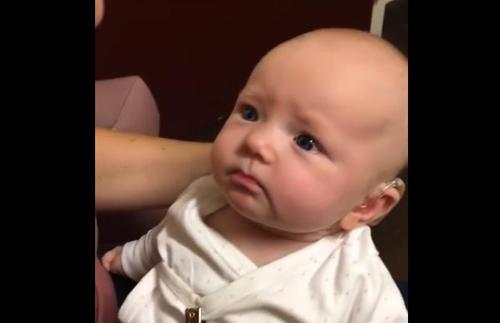
In a Good Housekeeping interview, Christy Keane, Charly’s mother, described the significance of the moment. She recalled, “I had never in my life seen that face before… I know the look in her eyes when she’s sad, upset or hurting, but that moment when our eyes met and she heard my voice for the first time, that was true emotion from her.”
While Charly was too young to verbalize her feelings, her reaction spoke volumes. The family and attending specialist witnessed her cry with recognition—the sound of her mother’s voice was both a comfort and a new experience. This moving scene underscores the importance of connection and the emotional depth technology can facilitate.
The Role of Hearing Aids in Infant Development
Hearing aids are a core part of early intervention for infants with hearing loss. The Mayo Clinic explains that these devices amplify sounds, making it possible for children to access speech and environmental noises during crucial developmental years.
Fitting infants with hearing aids early not only supports speech development but also fosters emotional and social bonds. Children with untreated hearing loss have a higher risk of delays in reading, language, and cognitive skills. By providing access to sound at an early age, families like Charly’s give their children the opportunity to participate fully in the world.
The process involves careful evaluation by audiologists, custom molding of hearing devices, and ongoing adjustment as the child grows. Parents must be actively involved, learning to support listening and speech practice throughout daily routines.
The Power of Technology and Family Resilience
Charly’s story is not only about medical progress but also about the strength and hope of families who face challenges together. Modern technology has revolutionized options for those with hearing impairment, from advanced digital hearing aids to cochlear implants for those with profound loss. According to the World Health Organization (WHO), millions benefit annually from these tools, which help break the isolation that can result from hearing loss.
After the breakthrough moment, Charly’s parents decided to share their experience through a video posted on social media. The footage showed Charly’s reaction as she encountered the sounds of her mother’s voice. The response was overwhelming: thousands of shares and views within days.
Christy Keane remarked, “I was not expecting such a large response to the post. I thought, ‘Oh, what’s the harm? I’ll make it public.’ And then, I think I woke up the next day with a thousand shares and by Monday it had hit a million.” The story resonated globally, offering encouragement and hope to other families navigating similar challenges.
Social and International Perspectives on Hearing Impairment
Across the world, early diagnosis and intervention for hearing loss are advocated by major health organizations. The CDC and WHO recommend universal newborn hearing screening, which helps identify affected children and sets timely support in motion. In countries with robust healthcare systems, these screenings are standard; however, in regions with limited resources, efforts are being made to expand access.
Experts note that early intervention is not limited to medical devices. Families, educators, and speech therapists all play a role in supporting children as they learn to communicate and interact. Social awareness campaigns, inclusive education, and advancements in assistive technology are transforming outcomes for hearing-impaired children worldwide.
Public reactions to stories like Charly’s reflect not only empathy but a growing understanding of the value of early support. Communities increasingly offer resources, sharing advice and encouragement through online networks and advocacy groups. For parents, these connections are vital for navigating the emotional and practical aspects of raising a child with hearing loss.
Expert Views on Childhood Hearing Loss and Intervention
Medical professionals and researchers agree: the earlier the intervention, the better the prognosis for children with hearing loss. Dr. Jane Madell, a pediatric audiologist, notes that “children who get hearing aids in their first year have the best chance at normal speech and language development.” Hospitals and clinics collaborate closely with families to create individualized plans, addressing both medical and emotional needs.
Advancements in hearing aid technology, including features like Bluetooth connectivity and noise reduction, have improved usability and outcomes. Some families choose cochlear implants, particularly for severe cases. Both paths require ongoing support—training, therapy, and follow-up to adapt as the child grows.
Research continues into early detection methods, device optimization, and holistic care. Educational specialists emphasize the importance of integrating hearing-impaired children into mainstream classrooms, providing accommodations as needed to foster inclusion.
The Emotional Impact on Families and Gratitude for Science
For families like Charly’s, the journey is both challenging and hopeful. The emotional moment of connection, when a child hears a parent’s loving words for the first time, is a culmination of medical skill, technology, and human resilience. The tears and smiles captured in Charly’s video are evidence of the profound effect that hearing restoration has—not only for the child but for all who love and support them.
Their story has inspired countless others, offering reassurance that timely intervention can change the trajectory of a child’s development. The ripple effect extends beyond individual families; it encourages society to invest in research, expand screening programs, and nurture supportive networks for children with disabilities.
Conclusion: A New World of Sound and Opportunity
Charly’s experience encapsulates the transformation that is possible when technology, medical expertise, and family dedication come together. Her journey from silence to the first words spoken by her mother demonstrates both the challenges and possibilities facing children with hearing impairment.
Stories like this remind us of the importance of early diagnosis, intervention, and the ongoing efforts to create an inclusive world. As science advances and awareness grows, more children like Charly will be able to access the sounds and connections that are vital for a full and meaningful life.
What did you think of Charly’s reaction to this brand-new world of sound? Share this story to inspire others, and encourage families everywhere to seek timely support and celebrate every step forward.
Further Reading and More Inspiring Stories
If this story resonated with you, explore more on breakthroughs in pediatric care, family journeys with hearing impairment, and community support networks. Scroll below for additional stories and resources designed to inform and uplift.
Disclaimer: This content is intended for entertainment purposes only and is not based on real events.
