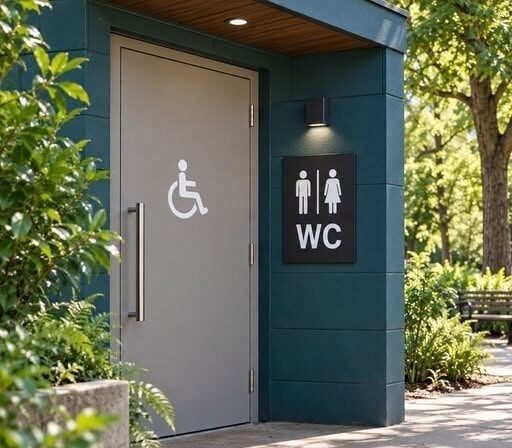

What Does “WC” Mean on a Restroom Door? The Simple Answer Goes Back Centuries
Those Two Familiar Letters Still Appear on Restroom Signs Around the World, but Their Original Meaning Comes From an Older English Term
Encountering the letters “WC” on restroom doors is a common experience, especially for travelers in Europe and beyond. Many people are accustomed to seeing signs labeled “bathroom” or “restroom,” making “WC” seem foreign at first glance. However, this abbreviation has a simple yet fascinating origin, reflecting centuries of evolution in language and sanitation technology.
The Meaning of WC: A Historic Abbreviation
WC stands for “water closet,” an English term describing a small room equipped with a flushing toilet. While the abbreviation is now recognized internationally, its roots lie in the development of modern plumbing and the shift in how societies approached personal hygiene and sanitation.
Origins of the Term “Water Closet”
Historically, the word “closet” referred to a small private room, not exclusively a storage space as most people envision today. The addition of “water” signified a specific function: a room containing a toilet that used water to flush waste away. This distinction became increasingly relevant with the rise of indoor plumbing, which dramatically improved sanitary conditions within homes and public spaces.
The term “water closet” enabled people to differentiate between various small rooms in their homes, with WC becoming shorthand for a dedicated toilet room. As the abbreviation gained traction, it contributed to the standardization of signage for public sanitation facilities, facilitating communication across linguistic barriers.
The Evolution of Flush Toilets and Sanitation
The story of “water closet” intertwines directly with the technological progress of flush toilets, which are now ubiquitous in developed nations. The earliest models date back centuries, reflecting a long history of innovation that shaped how people viewed hygiene.
Sir John Harington, an English courtier and inventor, is credited with designing one of the first flushable toilets in 1596 for Queen Elizabeth I. His advanced design set a precedent for future development, although it was not immediately adopted en masse. The mechanics of flushing, water supply, and disposal systems were refined over time, gradually paving the way for widespread indoor toilets.
As the flush toilet evolved, so too did the terminology. With the advent of indoor plumbing, “water closet” became an apt description for the room housing this revolutionary facility.
Key Advances: Alexander Cumming and the Water Trap
In 1775, Scottish watchmaker Alexander Cumming patented one of the most crucial innovations in toilet design—the S-shaped water trap. This simple yet effective mechanism used water as a barrier to prevent unpleasant sewer gases from traveling back into the living space. The water trap, known today as the “S-trap,” became a practical solution that enabled the modern flush toilet to gain traction and popularity.
Cumming’s patent marked a turning point in sanitation. Prior to this, odors and gases posed significant health risks in homes and buildings. With the advent of the water trap, indoor toilets became safer and more appealing, further supporting the adoption of “water closet” terminology as indoor bathrooms became standard features in urban architecture.
19th Century: The Spread of Indoor Plumbing and the Cultural Impact
The 19th century witnessed rapid changes in technology, architecture, and social norms regarding hygiene. The widespread adoption of indoor plumbing transformed the living conditions of urban populations. “Water closet” became a common term for the room containing a flush toilet, reflecting not just technological advancement but also improved social standards.
City planners and builders began integrating water closets into homes, hotels, and public institutions as plumbing advancements made sanitation more reliable and affordable. The term was used both in everyday conversation and official architectural plans, accelerating its popularity and the use of its abbreviation.
The convenience and safety provided by water closets fueled their acceptance across Western Europe, and eventually the world. The abbreviation WC was especially useful in multilingual settings, such as hotels and transport hubs, helping travelers find restroom facilities easily.
WC: International Adoption and Lingual Adaptation
While “water closet” originated in English, the abbreviation WC became universal, especially in Europe. From France and Germany to Italy and Spain, the letters WC appear prominently on restroom signs in airports, train stations, restaurants, and hotels. This global presence highlights the importance of creating signage that transcends language—a necessity in the modern era of international travel.
Even in places with their own words for restroom—such as “toilette” in French or “bathroom” in English-speaking countries—the WC abbreviation remains recognized. It acts as a bridge for non-native speakers, providing a simple, easily understood cue for essential services. This is particularly valuable in tourist hotspots, where a traveler may not know the local term for restroom but can confidently identify the WC sign.
The practicality of WC signage illustrates how international standards often emerge organically, driven by common needs and recurring patterns. The continued use of WC on restrooms is not merely a relic of the past but a testament to adaptability and functional communication.
WC in the United States: Alternative Terminology
In the United States, terms like “bathroom” and “restroom” dominate everyday speech. The word “WC” is rare in American homes, with most people encountering it while traveling abroad. The choice of language reflects cultural preferences and historical influences. In American hotels, airports, and institutions, signage typically favors the words “restroom” and “bathroom” for public facilities, while “toilet” appears less commonly in polite conversation.
The American practice also underscores the influence of social customs. Euphemisms for the toilet were developed in the mid-to-late 19th century, reflecting sensitivities about discussing bodily functions. “Restroom” implied a space for relaxation, while “bathroom” referred to rooms equipped with baths and sinks, even when no bath was present in the public facility. Still, for many Americans, encountering WC on a European restroom door is a memorable travel experience, easily decoded once its meaning is understood.
Sanitation, Signage, and Modern Society
The transformation of restroom signage from “water closet” to WC mirrors broader trends in sanitation and social interaction. The adoption of restroom labeling conventions serves practical purposes in big cities and transportation hubs. Public health policies also contribute, with authorities striving to make facilities accessible to all. The World Health Organization (WHO) and other agencies advocate clear signage as part of efforts to improve sanitation and hygiene globally.
In developing countries, the need for safe and hygienic toilet facilities remains high. While WC may not be the standard everywhere, its underlying philosophy—providing clean, accessible, and recognizable sanitation facilities—resonates worldwide. Organizations such as UNICEF and the CDC support initiatives aimed at constructing proper latrines and toilets, recognizing the vital role bathroom access plays in preventing disease and improving quality of life.
The abbreviation WC has even influenced how companies brand their products. Manufacturers of sanitary ware, toilet fixtures, and bathroom accessories often use WC in product descriptions, signaling compatibility with international standards. This widespread recognition further cements the importance of water closets in the global narrative of hygiene and public health.
Cultural and Societal Perspectives on the WC
The designation of WC on restroom doors also reflects changing attitudes toward privacy, hygiene, and convenience. Societies have transitioned from outdoor privies and communal latrines to private indoor spaces, resulting in improved dignity and comfort for users. The development of the water closet stands out as an achievement in engineering and public health, credited with reducing the spread of disease and elevating social norms.
Experts emphasize the importance of hygienic, accessible toilets for quality of life. The Mayo Clinic and similar institutions underscore the role of proper sanitation in preventing waterborne illnesses, promoting wellness, and fostering healthy communities. International travelers, meanwhile, often highlight the reliability of WC signage in guiding them to restrooms in unfamiliar countries.
The simple presence of WC on a door is thus more than a linguistic curiosity—it is a marker of progress, a signal of shared human priorities, and a bridge connecting cultures and eras.
Conclusion: The Lasting Legacy of WC
Few people pause to consider the history embedded in restroom signage. Yet each encounter with the familiar letters WC connects us to centuries of change, innovation, and adaptation. From Sir John Harington’s pioneering flush toilet in the 16th century, to Alexander Cumming’s groundbreaking water trap, and the widespread adoption of indoor plumbing in the 19th century, the story of the “water closet” is a chronicle of societal advancement.
The abbreviation WC endures as both a practical tool and a symbol—a reminder of how modern sanitation evolved and how simple solutions can offer universal understanding. Whether in hotels, airports, or urban neighborhoods across the globe, WC remains a recognizable signifier, helping travelers and communities access essential facilities. The next time you see “WC” on a restroom door, you’ll know it points to more than a toilet; it speaks to the enduring history and international language of hygiene.
Disclaimer: This content is intended for entertainment purposes only and is not based on real events.
