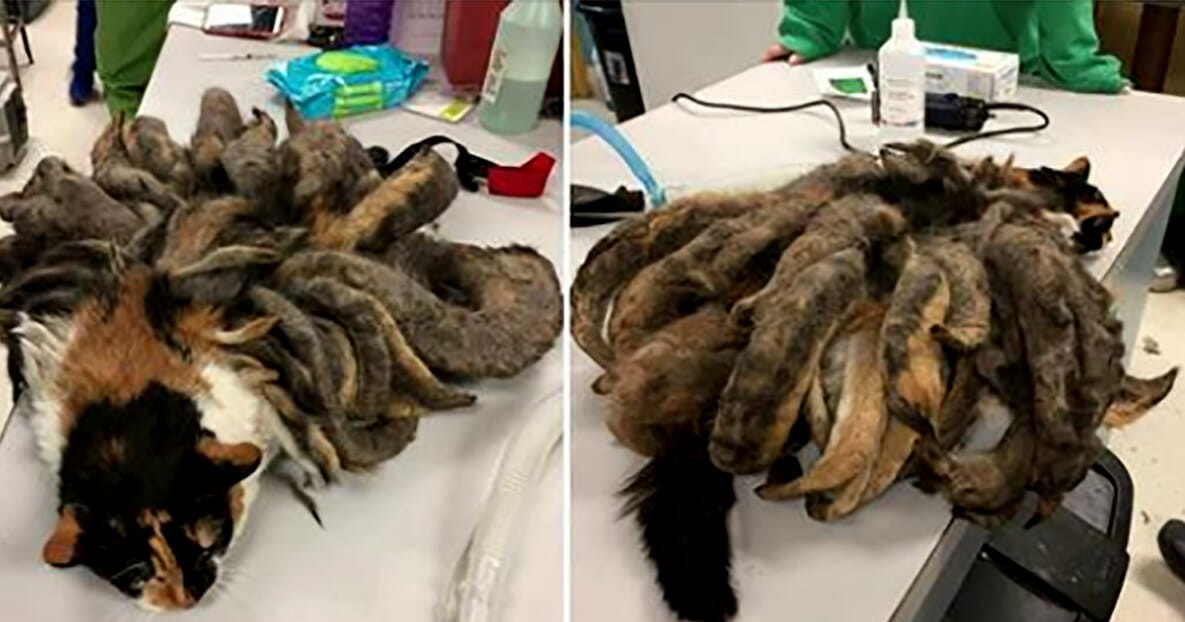

Cat Hidey Rescued After Years of Neglect With Severely Matted Fur: A Reminder to Look After Elderly Neighbors and Their Pets
Animal rescue stories can remind us how important everyday care and community support are, particularly when older people experience difficulties looking after themselves and their pets. The story of Hidey, a cat discovered with severely matted fur after her elderly owner entered a nursing home, highlights the importance of regular grooming, responsible pet ownership, and looking out for vulnerable members of our communities.
Hidey’s condition required professional veterinary attention, but her rescue ultimately gave her an opportunity to enjoy a more comfortable life. Her experience also drew attention to a frequently overlooked issue: pets belonging to elderly people may need additional support when their owners experience health challenges or changes in their living circumstances.

Why Some Cats Need More Grooming Than Others
Cats are often considered independent animals. Many are naturally good at maintaining their coats through regular licking and grooming. This behavior helps remove loose hair, distribute natural oils, and keep their fur relatively clean.
However, not every cat can maintain its coat without assistance. Long-haired breeds and cats with particularly thick or dense fur may require regular brushing to prevent tangles from developing into painful mats.
Age and physical condition can also influence a cat’s grooming habits. Older cats may become less flexible, making it difficult for them to reach certain areas of their bodies. Weight problems, mobility limitations, dental discomfort, and other health concerns can further interfere with normal grooming behavior.
When loose hair becomes tangled, small knots can gradually develop into larger masses. Without intervention, these tangles can become tightly attached to the surrounding coat, making ordinary brushing increasingly difficult.
Severe matting is more than a cosmetic problem. It can restrict movement, pull on the skin, trap moisture and debris, and make routine activities uncomfortable. For this reason, regular coat inspections are an important part of responsible cat care.
Hidey’s Story: A Cat Discovered in Need of Help
Hidey’s situation became known after her elderly owner, who was living with Alzheimer’s disease, was moved into a nursing home. Following the change in the owner’s living arrangements, people discovered that the cat had been left without the grooming and care she needed.
Concerned about her condition, those who found her contacted the Animal Rescue League Shelter and Wildlife Center in Pittsburgh, Pennsylvania.
When animal welfare professionals examined Hidey, they discovered extensive matting throughout her coat. The tangled sections had become so large that they resembled dreadlocks. Some were reportedly between six and eight inches long.
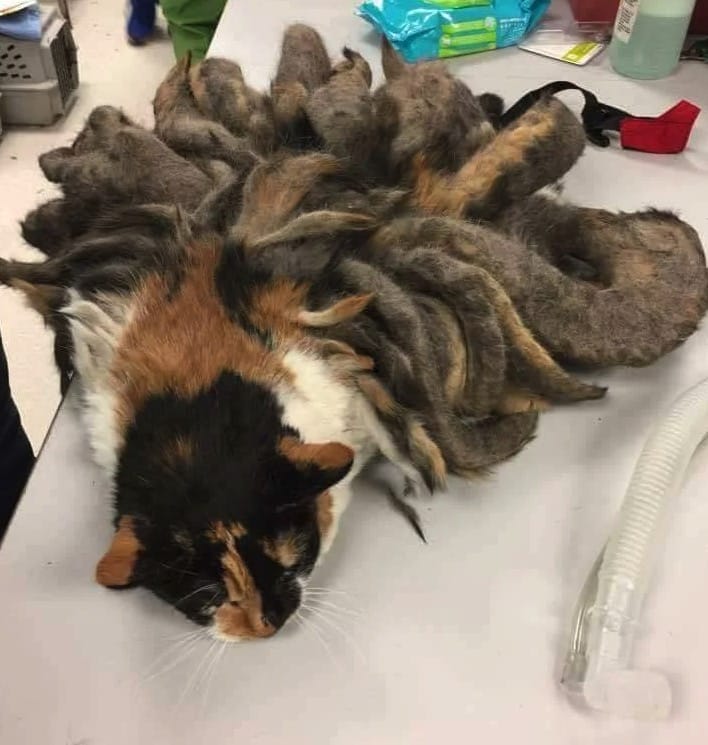
The condition suggested that Hidey had gone without appropriate grooming for a considerable period. According to the original reports, rescuers believed the problem could have developed over as long as two years.
Her appearance illustrated how quickly an animal’s grooming needs can become difficult to manage when regular care is interrupted. It also demonstrated why family members, neighbors, and community organizations can play an important role in identifying pets that may need assistance.
Veterinary Professionals Help Remove Hidey’s Matted Fur
Because Hidey’s coat was severely tangled, ordinary brushing was not an appropriate solution. Attempting to pull apart tightly compacted mats can cause discomfort and potentially injure an animal’s delicate skin.
Veterinary professionals therefore arranged for the affected fur to be removed carefully. Veterinarian Jenn Levitzki helped with the procedure and shared a video documenting Hidey’s transformation on Facebook.
Levitzki described the matting as among the worst she had encountered, emphasizing the unusual extent of the tangled fur.
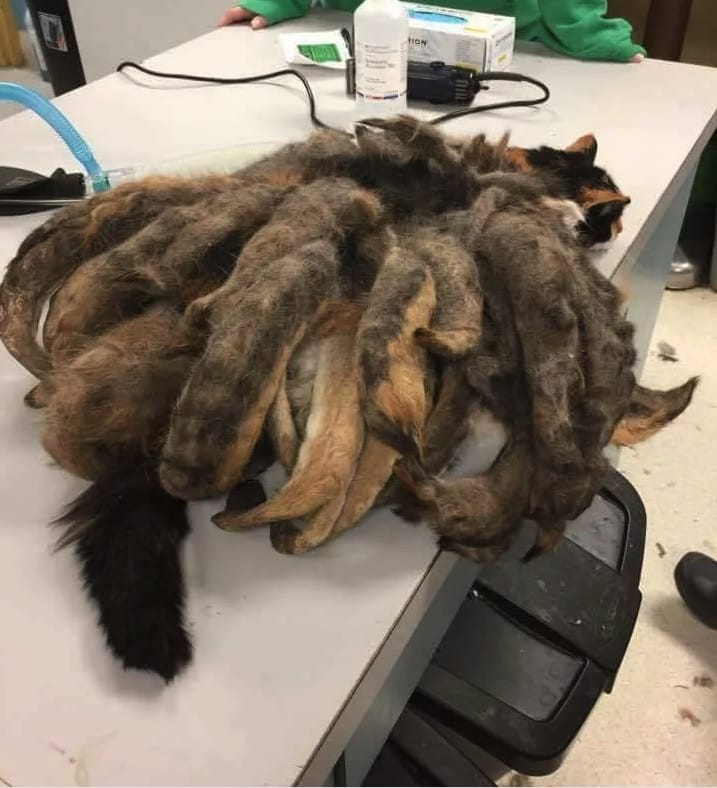
To make the procedure more comfortable and manageable, Hidey was sedated under veterinary supervision. This allowed the medical team to remove the extensive mats without subjecting her to unnecessary stress during the grooming process.
Sedation can sometimes be considered when an animal requires extensive grooming or medical treatment that would otherwise be difficult to perform safely. The decision depends on the animal’s individual circumstances, overall health, and the professional judgment of the veterinary team.
For animals with severe matting, professional assessment is particularly important. The skin beneath compacted fur may be difficult to examine, and attempting to remove the mats at home can create additional risks.
The Transformation: A More Comfortable Life for Hidey
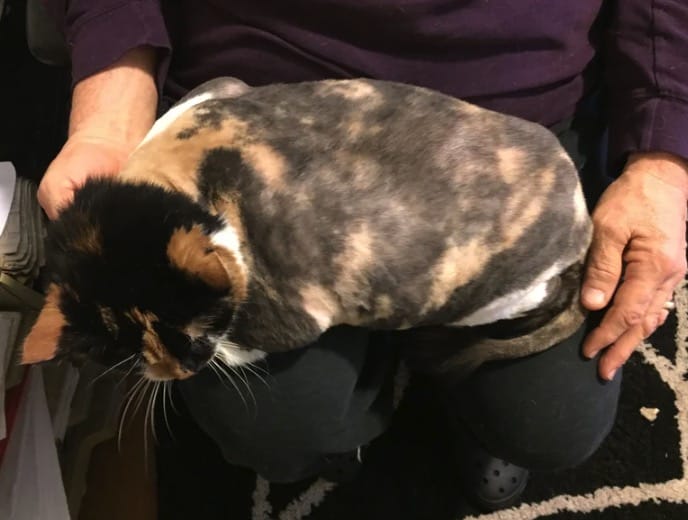
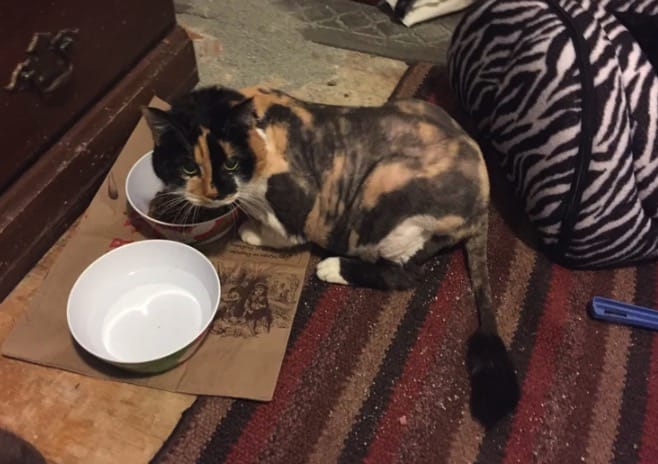
The veterinary team successfully removed the large masses of intertwined fur from Hidey’s body. The shelter subsequently shared an update explaining that the medical staff had removed a substantial amount of matted hair and that the cat appeared much more comfortable afterward.
According to the shelter’s account, the removal of the heavy, tangled coat made a significant difference to Hidey’s condition.
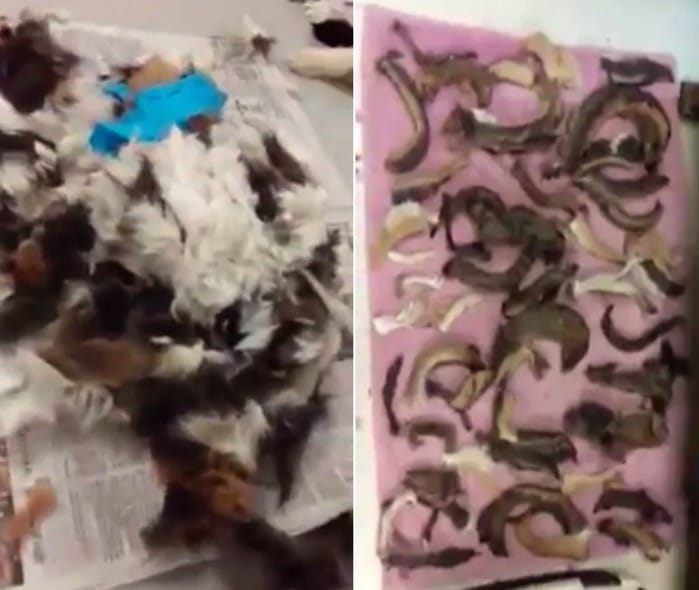
Although the transformation attracted attention because of the dramatic difference in Hidey’s appearance, the most important outcome was her improved comfort and opportunity to receive appropriate care.
After the procedure, Hidey was given another opportunity to live in a supportive home environment. Reports stated that she was rehomed with a distant relative of her former owner.
This arrangement offered a positive conclusion to a difficult situation. It also highlighted how relatives and other trusted people can help ensure that pets continue receiving care when their original owners are no longer able to provide it.
How Severe Cat Matting Can Be Prevented
Hidey’s condition illustrates why grooming should be treated as an essential part of pet care rather than an occasional cosmetic activity. Fortunately, most cases of severe matting can be prevented through consistent attention and early intervention.
1. Establish a Regular Brushing Routine
Long-haired cats generally need more frequent brushing than short-haired cats. A suitable grooming schedule helps remove loose hair before it becomes tangled and allows owners to identify developing knots early.
The appropriate frequency depends on the cat’s coat type, age, and individual grooming needs. Owners should ask a veterinarian or professional groomer for advice when they are unsure which tools or techniques are appropriate.
2. Pay Attention to Areas That Easily Become Tangled
Some parts of a cat’s body are particularly prone to matting. These include areas behind the ears, beneath the legs, around the neck, along the belly, and near the hindquarters.
Checking these areas regularly can help identify small tangles before they become larger problems.
3. Monitor Changes in Grooming Behavior
A cat that suddenly stops grooming itself may be experiencing discomfort or an underlying health problem. Changes in flexibility, mobility, weight, or general behavior can affect its ability to maintain a healthy coat.
If a previously well-groomed cat begins developing knots or appears unable to clean itself, a veterinary examination can help identify possible causes.
4. Seek Professional Help for Severe Mats
Owners should avoid cutting tightly attached mats with ordinary scissors because cat skin can be difficult to distinguish from the compacted fur. Accidental cuts can occur even when someone is attempting to help.
Professional groomers experienced with cats or veterinary teams can determine the safest approach. Severe matting, skin irritation, or signs of discomfort should be assessed by a veterinarian.
The Connection Between Elderly Pet Owners and Animal Welfare
One of the most meaningful aspects of Hidey’s story concerns the relationship between an elderly person’s well-being and the welfare of their companion animal.
For many older adults, pets provide companionship, emotional comfort, and a sense of routine. Caring for an animal can also encourage daily activity and provide an important source of social connection.
However, circumstances can change as people grow older. Health conditions, reduced mobility, memory difficulties, hospitalization, and transitions into residential care can make everyday responsibilities more challenging.
These changes do not necessarily mean that an older person no longer cares about their pet. In many situations, they may simply need practical assistance to continue providing appropriate care.
Alzheimer’s disease, for example, can affect memory, planning, and the ability to manage complex daily tasks. Depending on the individual’s circumstances, remembering feeding schedules, arranging veterinary appointments, purchasing supplies, or maintaining grooming routines may become increasingly difficult.
Recognizing these challenges with empathy is important. Supporting an elderly pet owner should involve preserving their dignity while ensuring that the animal’s basic needs are met.
How Families and Neighbors Can Help Protect Pets
Hidey’s experience provides a useful reminder that small acts of community support can make a meaningful difference. Family members, friends, and neighbors may be among the first people to notice when an older adult is struggling with everyday responsibilities.
There are several practical ways to help:
- Check in regularly: Occasional visits or friendly conversations can help identify whether an older neighbor needs additional support.
- Ask about their pets: Simple questions about feeding, grooming, and veterinary appointments can reveal whether an animal needs assistance.
- Offer practical help: Helping with pet food purchases, transportation, grooming appointments, or routine errands can reduce the burden on an older owner.
- Coordinate with family members: When appropriate, relatives can work together to establish a reliable care arrangement.
- Plan for emergencies: Families should consider who will look after a pet if its owner becomes ill, enters hospital, or needs residential care.
- Contact animal welfare organizations: If an animal appears to be in need of assistance and its owner cannot provide adequate care, local animal welfare professionals may be able to offer guidance.
These actions can help prevent situations in which animals go without necessary attention for extended periods.
Planning Ahead for Pets When Owners Need Additional Care
Responsible pet ownership includes thinking about the future. While nobody can predict every health or family circumstance, having a basic contingency plan can protect both the owner and the animal.
Older pet owners may benefit from identifying a trusted relative, friend, or neighbor who can temporarily take responsibility for their animals if necessary.
Keeping important information in one accessible place can also make transitions easier. This may include veterinary contact details, vaccination records, medication instructions, feeding routines, grooming requirements, and information about the animal’s temperament.
Families arranging a move into assisted living or a nursing home should also consider the animal’s long-term needs. Depending on the facility’s policies and the owner’s circumstances, possible arrangements may include keeping the pet with the owner, arranging regular assistance, or finding a suitable alternative home.
Early planning can reduce uncertainty and help ensure that an animal receives consistent attention during a potentially difficult transition.
What Hidey’s Rescue Teaches Us About Compassion and Responsibility
Hidey’s story is ultimately about more than a cat receiving a much-needed grooming treatment. It demonstrates how animal welfare and human welfare can be closely connected, particularly when older people face health challenges or changes in their living arrangements.
The veterinary professionals who helped Hidey, the people who recognized that she needed assistance, and the relative who provided her with a new home all contributed to a positive outcome.
Her experience also reminds pet owners that regular grooming, veterinary attention, and appropriate planning are essential parts of responsible animal care.
Perhaps the most important lesson is that people should not hesitate to check on elderly relatives and neighbors when they may need support. A short visit, a friendly conversation, or an offer to help with everyday tasks can make a difference.
It is equally important to remember that pets are dependent on the people responsible for them. When an owner encounters difficulties, timely assistance can help prevent avoidable welfare problems.
By building stronger connections within our communities, we can help older adults maintain their independence while making sure their beloved companions remain safe, healthy, and cared for.
Share Hidey’s story as a reminder to check on elderly neighbors, relatives, and their pets. Sometimes, a little attention and kindness can make a lasting difference.
Sources
- Animal Rescue League Shelter and Wildlife Center – Animal rescue and welfare information.
- People – Original reporting on Hidey’s rescue and veterinary treatment.
- American Society for the Prevention of Cruelty to Animals (ASPCA) – Guidance and resources on responsible animal care.
- Cats Protection – Educational information about cat grooming and general welfare.
- Alzheimer’s Association – Information about Alzheimer’s disease and support for affected individuals and families.
Disclaimer: This content is intended for entertainment purposes only and is not based on real events.