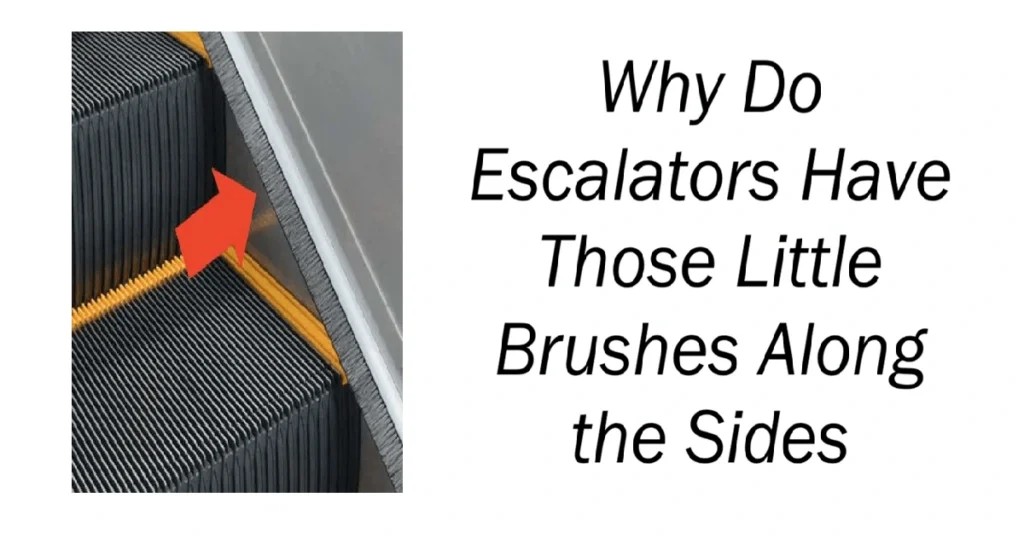

Why Do Escalators Have Those Little Brushes Along the Sides
Millions of people use escalators every day in shopping centres, airports, railway stations, office buildings, and public transit systems. Most riders notice the moving steps, handrails, and metal comb plates at each end, but a smaller detail often goes unnoticed: the rows of bristles running along both sides of the escalator.
These brushes are not primarily designed to clean shoes. They are commonly known as skirt deflectors, skirt brushes, or safety brushes. Their main role is to encourage passengers to keep shoes, clothing, bags, and other belongings away from the narrow space between the moving steps and the stationary side panels of an escalator.
Although they are simple components, skirt brushes are part of a wider safety system. They provide a tactile and visual reminder that passengers should stand toward the middle of the step, hold the handrail where possible, and keep loose items clear of moving equipment. Understanding their purpose can help riders make safer choices during an everyday journey.
What Are the Little Brushes on Escalators?
The bristles are fitted along the lower edges of an escalator’s side panels. Those panels are usually called skirts or skirt panels. They sit beside the steps and remain stationary while the escalator steps move upward or downward.
Because escalator steps must travel continuously, there is a narrow clearance between the moving steps and the stationary skirt panels. This space is carefully designed and maintained, but it is still an area where passengers should avoid placing footwear, fabric, or personal possessions.
Skirt brushes project slightly into the riding space. If a passenger stands too close to the side, a shoe or item may touch the bristles. That contact is intended to be noticeable without being disruptive. It serves as a prompt to move inward, away from the side panel.
In technical terms, these devices are often described as deflectors because they help deflect a passenger’s foot or object away from the skirt area. They do not block the gap completely, and they are not a substitute for attentive riding or regular escalator maintenance. Instead, they are one layer of protection within the overall design of modern escalators.
Why Escalator Skirt Brushes Are Important
Escalators are engineered to transport people efficiently, but they contain moving mechanical parts. The steps travel in a continuous loop, while the side panels remain fixed. This means riders should maintain some distance from the edges of the steps throughout the ride.
Footwear with soft soles, loose shoelaces, long clothing, shopping bags, and other loose items can create avoidable risks if they are allowed to rest near moving parts. The U.S. Consumer Product Safety Commission and other safety bodies have long advised escalator users to keep feet away from the sides, stay clear of step edges, and pay attention while boarding and exiting.
The brushes make the boundary easier to recognize. Unlike a printed warning sign, which may be overlooked by a distracted rider, the bristles offer a direct physical cue. A passenger who feels them against a shoe may instinctively reposition their feet nearer the centre of the step.
This approach reflects an important principle in public safety design: equipment should not depend only on users reading instructions. Physical design features can guide safer behaviour in real time. Similar examples can be seen in tactile paving near rail platforms, rumble strips on roads, and textured surfaces near changes in floor level.
Are Escalator Brushes Meant to Clean Shoes?
The idea that escalator brushes are shoe cleaners is a popular misconception. Because the bristles may brush dust from the side of a shoe, it is understandable why some people assume that cleaning is their purpose. However, the brushes are positioned and designed for safety awareness rather than cleaning.
They are usually placed exactly where passengers should avoid standing: close to the skirt panels. If they were intended as shoe-cleaning devices, riders would be encouraged to place their feet against them. That would conflict with the basic safety advice given by escalator operators and public-safety authorities.
The better interpretation is simple: if the brushes touch your footwear, it is generally a sign that you are standing too close to the side. Moving your feet toward the centre of the step is the sensible response.
How Skirt Deflectors Work as a Safety Reminder
Skirt brushes do not need electronics, alarms, or moving sensors to be useful. Their effectiveness comes from their placement and texture. The bristles create a gentle obstacle at the edge of the riding area, making it less comfortable or less convenient to rest a foot directly against the side panel.
For passengers, the message is immediate: the centre of the step is the intended standing position. The brushes can also make the side boundary more visible, particularly for people who may not otherwise notice how close their shoes are to the skirt panel.
It is important not to overstate what the brushes can do. They cannot eliminate every potential hazard, prevent every accident, or replace safe conduct. Escalator safety depends on multiple factors, including appropriate design, inspection, maintenance, clear signage, responsible operation, and rider behaviour.
Escalator manufacturers and building operators use a range of protective features. These may include handrails moving at a similar speed to the steps, emergency stop buttons, clearly defined comb plates at landing areas, lighting, warning signs, and devices intended to reduce access to hazardous spaces. Skirt deflectors are one practical part of this broader system.
Why Children Need Extra Supervision on Escalators
Children may be especially likely to benefit from the visual and tactile reminder provided by skirt brushes. Young riders can be curious about moving machinery, easily distracted by signs or shop displays, or tempted to stand close to the edges. They may also be less familiar with safe escalator habits.
However, the brushes are not a replacement for adult supervision. Safety guidance commonly recommends that adults hold young children’s hands while riding, ensure they stand facing forward, and keep them away from the sides of the steps. Children should not sit on escalator steps, play on handrails, or place hands near moving edges.
Parents and carers should also pay attention to loose items. Long scarves, trailing clothing, open shoelaces, and dangling bag straps should be kept secure. If a child is travelling in a stroller, wheelchair, or mobility device that cannot safely use an escalator, an elevator is usually the more suitable choice.
These habits are not intended to create fear around escalators. Escalators are widely used and can be safe when they are properly maintained and used as intended. The goal is simply to help passengers, especially younger ones, treat the equipment with appropriate care.
Safe Escalator Habits for Everyday Riders
The small brushes along the sides are a useful reminder of several basic escalator safety practices. These habits apply whether someone is commuting, travelling, shopping, or visiting a public venue.
- Stand facing the direction of travel.
- Keep both feet within the marked step area and away from the sides.
- Hold the handrail when practical, especially when carrying items or travelling with children.
- Keep shoelaces, clothing, bags, and straps clear of the step edges and side panels.
- Do not sit, climb, or play on an escalator.
- Watch the step as you board and leave the escalator promptly at the landing.
- Use an elevator when transporting strollers, wheeled luggage that cannot be safely carried, or mobility equipment.
Passengers should also avoid becoming overly distracted by phones or other devices while stepping on or off. Boarding and exiting are moments when attention matters most, because the moving steps meet fixed floor surfaces at the escalator’s landing areas.
If an escalator appears damaged, makes unusual noises, has missing components, or has an unsafe obstruction, passengers should avoid using it and notify staff or building management. Escalators require scheduled inspection and maintenance by qualified professionals, and operators have an important role in keeping equipment safe for the public.
Escalator Design and Safety Standards
Escalator safety is shaped by engineering standards, building rules, manufacturer specifications, and inspection requirements. In the United States and Canada, the ASME A17.1/CSA B44 Safety Code for Elevators and Escalators is an important industry standard covering many aspects of elevator and escalator safety. Other regions use their own national or regional standards and regulations.
While requirements can differ by location and by the age of an installation, the underlying safety objective is consistent: reduce unnecessary exposure to moving components and help passengers use the equipment safely. Features such as skirt deflectors, comb plates, handrails, emergency stop controls, and warning labels contribute to that objective.
Maintenance is equally important. Escalators operate for long hours in busy public spaces and are exposed to dirt, moisture, foot traffic, and normal mechanical wear. Routine servicing helps ensure that steps, handrails, brushes, sensors, and other components remain in proper working condition.
For the public, there is no need to understand every mechanical detail. The most useful takeaway is that seemingly minor features often exist for a reason. The brushes are not decorative, and they are not an invitation to place shoes against the sides. They are a straightforward signal to maintain a safer position.
A Small Detail With a Practical Purpose
The next time you step onto an escalator, look at the rows of bristles beside the steps. They may appear unremarkable, but they represent a thoughtful piece of everyday safety design.
Escalator skirt brushes are intended to guide shoes and belongings away from the narrow area where moving steps meet stationary side panels. They work mainly by creating awareness: when riders see or feel the brushes, they are encouraged to stand closer to the centre of the step.
They are not shoe cleaners, impenetrable barriers, or a complete solution on their own. Their value comes from supporting safer passenger behaviour alongside proper maintenance, visible instructions, careful supervision of children, and attention from riders.
In short, the little brushes are a reminder that good design is often quiet and unobtrusive. By standing clear of the edges, securing loose belongings, holding the handrail when appropriate, and watching where you step, passengers can help make escalator travel safer for themselves and the people around them.
Sources
Disclaimer: This content is intended for entertainment purposes only and is not based on real events.