
Unusual Cloud Photograph Draws Attention and Highlights Pareidolia
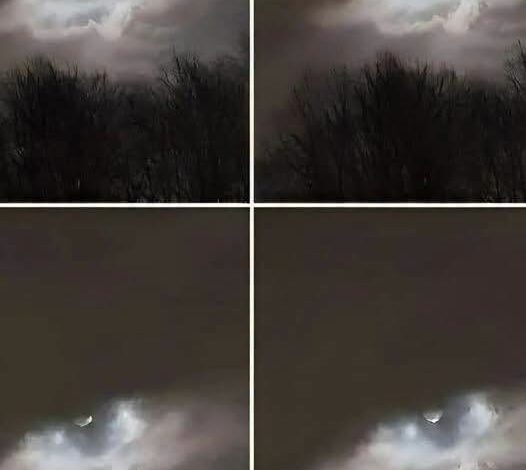
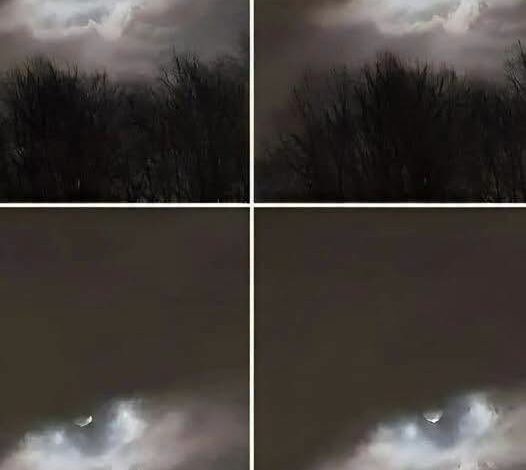
An unusual cloud photographed on June 22, 2026, roughly 21 kilometers from a quiet town has prompted extensive discussion online. The image appears to show an ordinary atmospheric formation, yet its outline encouraged viewers to identify a wide range of familiar shapes and symbolic figures. Reactions to the photograph demonstrate how a simple scene in the sky can become a shared conversation about perception, imagination, weather, and meaning.
Cloud photographs often attract attention because they capture shapes that are temporary and open to interpretation. Unlike a clearly defined object such as a road sign, house, or tree, a cloud has soft edges that shift continuously with wind, moisture, sunlight, and viewing angle. What one person sees as a face, animal, wing, or figure may look entirely different to another observer.
The varied reactions to this particular image do not necessarily indicate that the cloud itself was extraordinary in a scientific sense. Instead, they offer a useful example of a well-known psychological process called pareidolia. Pareidolia occurs when the human brain finds recognizable patterns in vague or random visual information. It is why people may see faces in rocks, animals in inkblots, or familiar forms in clouds.
Why an Ordinary Cloud Can Look Meaningful
Humans are highly efficient pattern-recognition systems. The brain constantly processes large amounts of information from the environment and quickly identifies details that may be important. This ability has practical value: recognizing a person’s face, noticing movement in the distance, or distinguishing an object from its background can help people make decisions rapidly.
However, this same efficiency can lead the brain to recognize patterns even when a clear pattern was not intentionally formed. In an ambiguous image, the mind tends to draw on memory, expectation, culture, and personal experience. A cloud with a curved edge and a darker shadow may resemble an eye or profile to one viewer, while another viewer may see a bird, an angel-like shape, or simply a changing mass of vapor.
Researchers generally describe pareidolia as a normal aspect of human perception rather than evidence that an image contains a hidden message. The visual system often favors a quick possible identification over waiting for perfect information. In other words, it can be more useful for the brain to notice a possible face or familiar object than to overlook something that may matter.
This does not make people’s emotional reactions unreal. A cloud can genuinely inspire wonder, comfort, curiosity, or reflection. The formation is physically natural, but the meaning attached to it is personal. People frequently connect what they see with memories, spiritual traditions, artistic imagery, current events, or stories they already know.
The Science Behind Changing Cloud Shapes
Clouds form when water vapor in the air cools and condenses onto tiny particles, known as condensation nuclei. These particles may include dust, sea salt, smoke, or other microscopic material suspended in the atmosphere. Once water droplets or ice crystals develop, they can become visible as clouds.
The appearance of a cloud depends on several changing conditions. Temperature influences whether it contains mostly liquid droplets or ice crystals. Humidity affects how much moisture is available. Wind determines how quickly a cloud moves, stretches, breaks apart, or merges with nearby formations. Air rising through the atmosphere can create towering clouds, while stable layers of air can produce flatter, more uniform cloud decks.
Sunlight is equally important to a cloud photograph. A low sun can create strong shadows and highlights, making contours appear more defined than they would at midday. Light arriving from behind a cloud can produce bright edges, while light from the side can emphasize a shape that may disappear minutes later. Digital camera settings, contrast, zoom, and image compression can also affect how clearly viewers believe they can see an outline.
For these reasons, a cloud that seems striking in one photograph may look less distinctive from another location or a few minutes afterward. Clouds are not static objects. They are part of a moving atmosphere, continuously influenced by local weather conditions and broader air currents.
How Social Media Shapes What People See
The online response to the cloud image also illustrates the role of social media in shared perception. A viewer may initially regard a photograph as an attractive weather scene. After reading a comment suggesting that the cloud resembles a particular object or figure, that viewer may begin to see the same resemblance. This effect is sometimes described as perceptual suggestion: an idea provided by another person can influence how an ambiguous image is organized by the mind.
Once a suggested interpretation gains attention, it can spread rapidly. Comments, captions, reposts, and short videos may highlight a particular section of the photograph, encouraging more people to focus on the same lines and shadows. The image itself has not changed, but the social context surrounding it has. Online discussion can turn a fleeting cloud formation into a widely shared cultural moment.
Different interpretations are especially likely when an image has no single obvious answer. One person’s description can encourage another person to offer a new possibility, and the conversation becomes participatory. Rather than simply consuming an image, viewers actively contribute to its meaning by comparing impressions and explaining what they see.
This is one reason cloud images remain popular across many cultures. They are familiar enough for everyone to understand, but ambiguous enough to invite imagination. In a fast-moving digital environment, a photograph that encourages people to pause and look again can generate substantial engagement without requiring a dramatic or unusual event.
Personal Beliefs and Cultural Context
People do not approach images as blank observers. Personal beliefs, religious traditions, local folklore, artistic references, and individual memories can all influence interpretation. A shape that resembles a meaningful symbol to one person may have no special significance to someone else. These different reactions can coexist without changing the underlying meteorological explanation.
It is reasonable for viewers to describe an emotional or symbolic response to a cloud photograph. At the same time, it is important to distinguish personal interpretation from evidence about the cloud’s physical origin. Meteorology explains how cloud formations develop through atmospheric processes. Personal meaning explains why an observer may feel drawn to a particular resemblance.
This distinction is valuable when images circulate widely online. Claims that a cloud proves an extraordinary event should be approached carefully unless they are supported by reliable evidence. In most cases, clouds can be understood through established weather science, including moisture, air pressure, temperature, wind shear, and lighting. An unusual-looking cloud is not, by itself, evidence of a supernatural or unexplained occurrence.
Understanding Pareidolia in Everyday Life
Pareidolia is not limited to cloud watching. People may see faces in household objects, hear words in unclear sounds, or recognize animals in natural rock formations. Familiar examples include seeing a face in the front of a car, a figure in the grain of wood, or an image in the pattern of a toasted slice of bread.
Faces are especially common because humans are socially oriented and highly sensitive to facial features. Even a few simple marks arranged in a face-like pattern can trigger recognition. Two dark spots and a curved line may be enough for the brain to interpret eyes and a mouth. In clouds, light and shadow can create precisely the kind of incomplete visual cues that invite this response.
Psychologists and neuroscientists study these responses because they reveal how perception works. Seeing is not a passive process in which the eyes simply record reality. The brain interprets visual signals using previous knowledge and expectations. That interpretive process is usually helpful, but it can also produce several possible meanings when the information is unclear.
An ambiguous cloud photograph provides a simple way to observe this process. A viewer may see nothing unusual at first. After someone points out a possible outline, the new interpretation can become difficult to ignore. The experience shows how strongly context can shape perception, even when the physical image remains exactly the same.
Cloud Watching as Science and Observation
Cloud watching can also be an accessible introduction to weather observation. Meteorologists classify clouds according to their appearance and altitude, using names such as cirrus, cumulus, stratus, and cumulonimbus. High, thin cirrus clouds are often made of ice crystals, while puffy cumulus clouds generally form lower in the atmosphere. Large cumulonimbus clouds can develop vertically in unstable conditions and are commonly associated with thunderstorms.
Not every cloud can be identified easily from a single photograph, particularly when the location, time, altitude, and broader weather conditions are unknown. Still, observing clouds can help people notice changes in local weather. A gradual thickening of clouds, an increase in wind, or the arrival of darker layers may provide useful clues about changing conditions.
Weather agencies advise people to rely on official forecasts and alerts rather than trying to predict hazardous weather solely from cloud appearance. A photograph can be visually interesting, but it cannot provide the complete information available from radar, satellites, surface observations, and professional forecasting models. For reliable weather guidance, local meteorological services remain the best source.
A Reminder About How People Create Meaning
The cloud photographed on June 22, 2026, became interesting not only because of its form but because of the human responses it inspired. The scene brought together two real phenomena: a naturally changing atmospheric formation and the human tendency to search for familiar patterns in uncertain visual information.
The reported distance from the photographer’s town adds a sense of personal place to the story, but it does not determine what the cloud means. Its significance emerged through observation and discussion. The sky supplied the colors, shadows, moisture, and movement; viewers supplied comparisons, memories, and interpretations.
Looking at a cloud for a second time can therefore reveal something about perception itself. The first glance may produce one impression. A caption or comment may lead to another. Neither response changes the weather process that formed the cloud, but both show how expectations influence what people notice.
Ultimately, the image is a reminder that ordinary natural scenes can encourage curiosity without requiring extraordinary explanations. Clouds remain scientifically understandable, visually compelling, and deeply open to imagination. Their shifting shapes invite people to look upward, compare perspectives, and appreciate the complex relationship between the physical world and the way the human mind interprets it.
Sources
Disclaimer: This content is intended for entertainment purposes only and is not based on real events.