
Utah Grandmother Nancy Hauck’s Extraordinary Surrogacy Story: A Family’s Journey of Hope and Love
In the realm of assisted reproduction, the support of surrogates often makes the dream of parenthood possible for families facing infertility. When that role is taken up by a close relative, the emotional significance and complexity deepen, turning the journey into a profound testament to familial bonds and compassion. The story of Nancy Hauck, a grandmother from Utah, who acted as a gestational carrier for her son Jeff Hauck and daughter-in-law Cambria Hauck, stands out in recent headlines as a remarkable example of selflessness and love.
Surrogacy arrangements are governed by medical, ethical, and legal considerations, but the involvement of a family member introduces new dimensions of trust, motivation, and emotional intimacy. Nancy’s decision, culminating in the birth of her granddaughter on November 3, 2022, is both heartwarming and inspiring, offering a perspective on the possibilities within modern reproductive medicine and the enduring strength of family ties.
The Hauck Family’s Path to Parenthood
Jeff and Cambria Hauck had always envisioned a large family. After welcoming four children, including two sets of twins conceived via in vitro fertilization (IVF), their dreams were interrupted by unforeseen medical challenges. Cambria, a social media influencer, suffered severe complications during her last pregnancy, resulting in lasting damage. These complications led to a medically necessary hysterectomy, ending her ability to carry future pregnancies.
The couple, aware of their limitations but determined to expand their family, considered alternative options. They had previously stored embryos during fertility treatment. As they contemplated possibilities, Jeff’s mother, Nancy Hauck, felt compelled to step forward. According to interviews with Today, Nancy expressed a strong sense of calling to offer herself as a gestational carrier for her son and daughter-in-law.
A Grandmother’s Commitment
Nancy’s decision, notably made at 56 years old, was not without concerns. Medical professionals typically exercise caution regarding surrogacy in older women, due to health and safety risks for both the surrogate and the baby. Nancy herself acknowledged the potential barriers, stating, “I knew I was too old. I knew it wasn’t going to be possible, even though that’s exactly what’s happened. I just felt I needed to tell them I would be willing to do it.”
With a family history of safe pregnancies and her last childbirth decades prior, Nancy underwent thorough medical evaluation. Specialists assessed her uterine health, cardiovascular fitness, and overall readiness for pregnancy. After a rigorous screening process, she was approved as a gestational carrier, with the embryo transfer taking place in early 2022. Nancy’s commitment set the stage for a unique and closely monitored pregnancy.
Pregnancy and Emotional Impact
Nancy’s surrogacy journey was shaped by regular prenatal care, attentive monitoring, and the emotional support of her family. The experience, as described by Nancy and Jeff, encompassed feelings of gratitude, anticipation, and a heightened sense of purpose. Nancy noted that this pregnancy, though medically similar to her prior ones, was emotionally distinct: “It is a mix of deep gratitude and some sadness from the separation.”
The family openly shared their story, garnering widespread media attention. Many observers hailed Nancy’s act as evidence of extraordinary altruism and love. Reproductive specialists also weighed in, noting that surrogacy among family members can offer advantages—such as greater trust and transparency—but may also introduce complex emotional dynamics.
The Birth: Welcoming Hannah into the Family

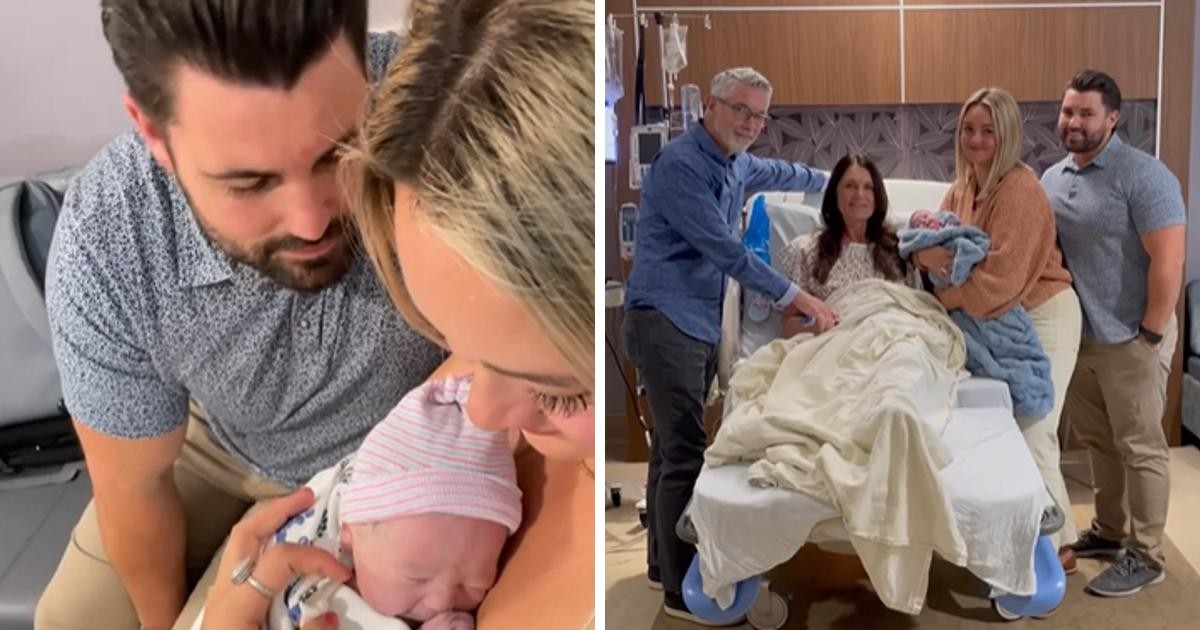
After nine hours of labor on November 3, 2022, Nancy delivered her granddaughter—a moment described as “remarkable and spiritual” by Nancy herself during interviews with People. Jeff echoed the sentiment, calling it “a beautiful moment” and “really special” since it was his daughter being born in such a unique way. For the Haucks, the event was a celebration of family, resilience, and hope.
The birth itself was followed by an emotional transition as Nancy was recognized not as the mother of the newborn, but as grandmother and surrogate. She described a mix of joy and loss, feeling a twinge of sadness when she handed the baby to Jeff and Cambria. Experts in perinatal psychology note that these emotions are normal in surrogacy arrangements, particularly when the surrogate is a relative. A sense of closure and healing often develops when all parties understand and accept their roles.
Naming Hannah: A Touch of Legacy and Meaning
Jeff and Cambria chose to name their baby girl Hannah, a decision steeped in sentiment and symbolism. Nancy recounted experiencing a moment of intuition during the embryo transfer, feeling “woken up in the middle of the night” and hearing a voice say, “My name is Hannah.” Upon researching the name, the family discovered its meaning paralleled Nancy’s, further cementing the connection between grandmother and grandchild.
Naming conventions in surrogacy can carry unique significance, acknowledging the roles of biological, gestational, and emotional contributors. In the Haucks’ case, Hannah’s name honors the grandmother who made her birth possible, highlighting the profound impact surrogates can have in shaping families.
Medical, Ethical, and Societal Dimensions of Surrogacy
Surrogacy, particularly gestational surrogacy, is a medically and legally regulated process. The American Society for Reproductive Medicine (ASRM) and other major organizations recommend comprehensive psychological and physical screening for all surrogates. Age limitations are generally advised to reduce risks, but exceptions may be made with careful consideration.
Ethical discussions around intra-family surrogacy revolve around issues of consent, autonomy, and emotional well-being. Counseling plays a crucial role in preparing all parties for the challenges of temporary separation post-birth and the shifting family dynamics. Nancy’s story demonstrates the importance of transparent communication and supportive networks.
Societal reaction to Nancy’s story has been overwhelmingly positive, with many communities applauding her bravery and commitment. However, such arrangements also prompt public conversation about surrogacy norms, the significance of family support, and the evolving landscape of reproductive technology.
Expert Views and International Perspective
Experts in reproductive medicine say that successful surrogacy arrangements depend on the health and psychological preparedness of the surrogate. Dr. Eve Feinberg, a reproductive endocrinologist, notes that surrogacy by older women is rare, but possible in exceptional cases with strong health backgrounds and diligent medical oversight. Psychologists also emphasize the importance of counseling and support both during and after the pregnancy.
Around the world, surrogacy laws differ significantly. Some countries restrict surrogacy to family members, while others prohibit it altogether. The Haucks’ story has resonated internationally, highlighting both the unique possibilities and challenges of assisted reproduction. It illustrates how medical advances and changing societal attitudes are enabling more families to realize their dreams.
Reflecting on Nancy Hauck’s Legacy
The story of Nancy Hauck highlights the transformative power of surrogacy, particularly when carried out within a family. Her willingness to carry her granddaughter, despite age-related health concerns and emotional complexities, has touched many and opened avenues of dialogue about assisted reproduction. For Jeff and Cambria, Nancy’s act fulfilled their long-held wish for a larger family and created lasting memories.
As medical science continues to enhance reproductive options, stories like Nancy’s demonstrate the importance of compassion, careful decision-making, and respect for everyone involved. They remind us that family support, when paired with sound medical advice and ethical practice, can help overcome immense obstacles.
Concluding Thoughts
Surrogacy is a journey marked by hope, challenge, and profound connection. Nancy Hauck’s experience as a grandmother-surrogate is a testament to the strength of familial love and the possibilities created by advances in reproductive medicine. As society continues to redefine traditional concepts of family, stories like this offer insight, inspiration, and opportunities for understanding the impact of surrogacy on individuals and their communities.
Disclaimer: This content is intended for entertainment purposes only and is not based on real events.
