
Visual perception is a fascinating biological system, but it is far from infallible. Every so often, a simple photograph surfaces on social platforms that manages to completely baffle millions of observers around the world. These visual puzzles, widely known as optical illusions, challenge our understanding of reality by revealing the intricate ways our visual system processes complex spatial information.
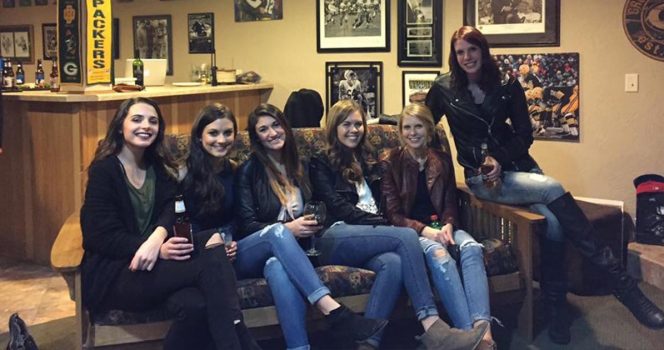
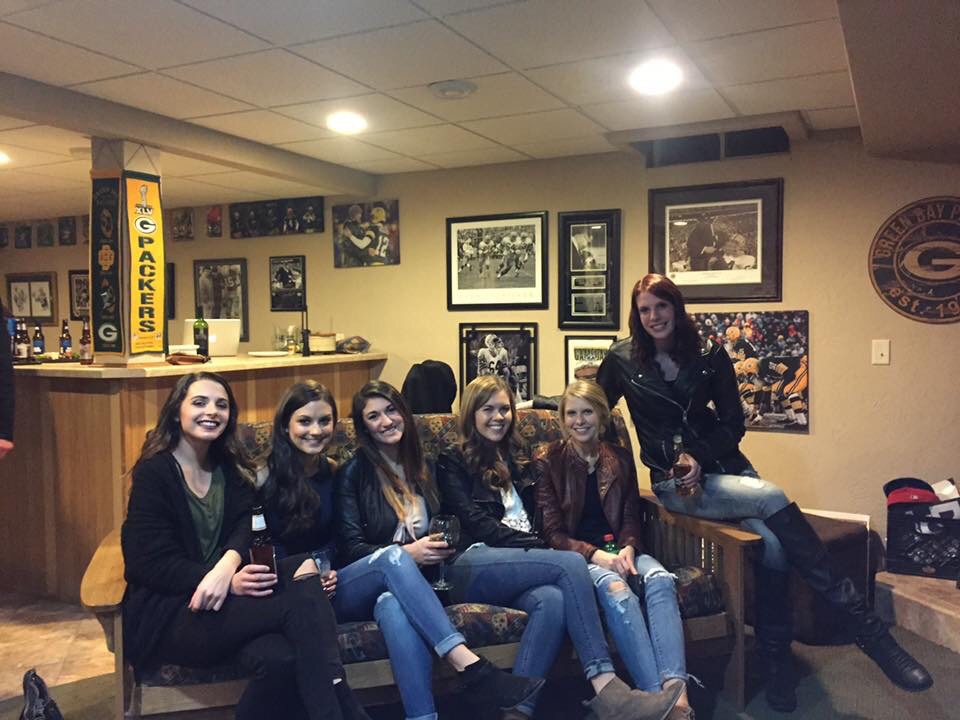
One such puzzle recently captured global attention after being shared on the popular forum site Reddit. The image features a group of six friends sitting side by side on a cozy couch, enjoying a casual moment together. However, upon closer inspection, a striking anomaly becomes apparent: while there are clearly six individuals present in the photograph, observers can only count five distinct pairs of legs. The resulting visual discrepancy creates the strange impression that one of the individuals is floating without legs, leaving viewers scratching their heads and debating the true layout of the scene.
The Science of Visual Perception and Illusion
To understand why this photograph causes such widespread confusion, it helps to examine how the visual system interprets everyday imagery. The process of seeing involves far more than simply capturing light like a camera lens. Instead, visual perception relies on active cognitive processing, where the brain rapidly interprets incoming visual signals, fills in missing details, and constructs a coherent model of the environment.
According to cognitive science researchers, visual illusions occur when the visual processing system attempts to streamline information, leading to a subtle misinterpretation of shapes, colors, or spatial depth. The brain relies heavily on established shortcuts developed over millions of years of human evolution.
Consider the primary evolutionary drivers behind our visual system:
-
Movement Sensitivity: Early human survival depended on detecting subtle motion patterns within dense natural environments, allowing individuals to identify potential threats or resources quickly.
-
Edge and Contour Detection: The visual cortex constantly scans for high-contrast boundaries to separate distinct objects from their backgrounds.
-
Pattern Recognition: The visual system naturally attempts to group similar colors, textures, and aligned lines into single, continuous forms to simplify visual scenes.
When a two-dimensional photograph contains overlapping shapes, matching fabric shades, and complex shadow patterns, these automatic visual shortcuts can occasionally lead observers to draw incorrect conclusions about how objects are arranged.
Deconstructing the Scene: Finding the Hidden Solution
When the photograph first gained traction on Reddit under the username jr0d7771, it sparked a wave of curious debate. Thousands of forum members carefully analyzed every detail of the image, zooming in on denim fabrics, footwear, and seating postures to solve the puzzle.
Initially, many users put forward straightforward theories regarding the spatial arrangement:
“The girl sitting second from the left is simply tucking her legs completely behind the person sitting farthest to the left.”
While this explanation seemed logical at first glance, a more detailed inspection revealed a subtle visual overlap that accounted for every person’s position in the image.
A breakthrough came when another forum contributor, posting under the handle ElMangosto, shared a detailed breakdown that systematically mapped out the seating arrangement from left to right:
-
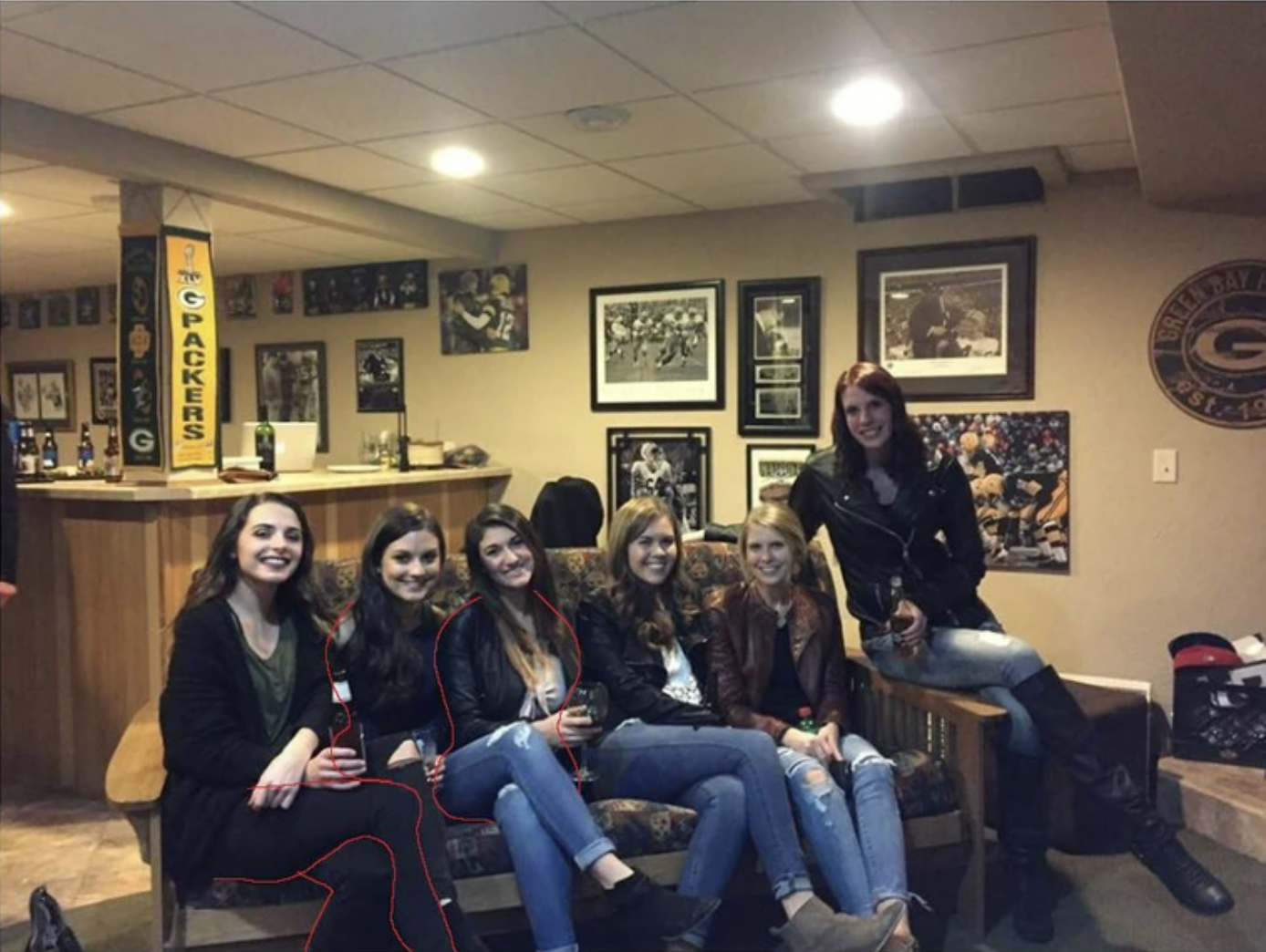
The First Person (Farthest Left): The individual on the far left of the couch is sitting with her legs cleanly crossed. Her denim jeans are uniform in color without any distinct tears or distressing at the knee.
-
The Second Person: Sitting directly adjacent, the second individual is leaning significantly toward her left. Her legs are positioned behind those of the first person, but one of her legs remains visible. The key detail is a distinct tear at the knee of her jeans, paired with a visible white sock near her shoe.
-
The Blend Effect: Because both of the individuals on the far left are wearing nearly identical dark denim jeans, their legs visually merge into a single, continuous shape. The eye naturally groups the matching fabric together, tricking the brain into seeing only one set of legs where two actually exist.
-
The Remaining Group: Moving down the couch, the third, fourth, fifth, and sixth individuals are positioned at slight angles, leaning against one another to fit comfortably on the seating cushions. Their limbs cross over in a manner that conceals small portions of fabric, further reinforcing the visual trick.
Once observers realize that the second person’s body posture causes her legs to overlap with the first person’s jeans, the visual trick becomes clear. The “missing” legs were visible all along—they were simply disguised by matching colors, shadows, and clever angles.
Why Visual Illusions Capture Our Curiosity
The enduring popularity of visual puzzles on social media platforms highlights a fundamental aspect of human psychology: people enjoy solving complex mental challenges. Puzzles like the missing leg dilemma encourage collaborative problem-solving, as viewers compare notes, draw annotated diagrams, and test different hypotheses online.
Moreover, these optical phenomena serve as fun reminders that our everyday perception of the world is a constructed experience. Whether it is an unexpected shadow creating a false shape, matching colors blending together, or forced perspective altering our perception of height, visual puzzles show how easily our eyes can be tricked by simple patterns.
The next time you encounter a confusing photograph online, remember that your visual processing system is simply doing its best to interpret complex clues. With a bit of patience and a careful look at the details, even the most baffling visual mystery can be solved.
Sources & Reference Material
-
Cognitive Neuroscience Research Briefs: Insights on edge detection, pattern recognition, and optical interpretation from leading brain research institutes.
-
Reddit Digital Community Archives: Forum discussions, user-submitted analysis, and image breakdowns surrounding viral visual puzzles (Thread ref: jr0d7771 and ElMangosto).
-
Media & Pop Culture Reporting: Retrospective summaries and digital trend coverage of viral optical illusions.
