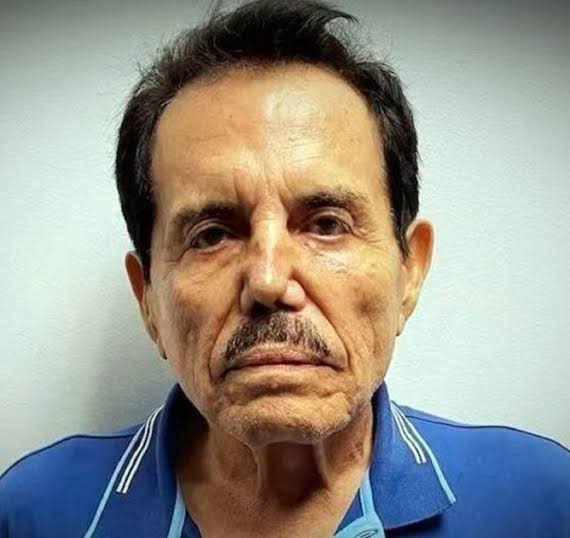

For nearly four decades, Ismael “El Mayo” Zambada moved like a shadow across the vast, arid terrain of northern Mexico and beyond. While other leaders of the Sinaloa Cartel—most notably his long-time partner Joaquín “El Chapo” Guzmán—embraced ostentatious lifestyles, high-profile media appearances, and dramatic prison escapes, Zambada chose absolute discretion. He operated silently, commanding an international illicit enterprise from remote hideouts in the mountains, shielded by layers of security, calculated secrecy, and systemic corruption.
While the public eye focused on the violent spectacles and media frenzies surrounding other criminal figures, Zambada quietly orchestrated one of the largest logistics networks in history. His organization funneled metric tons of controlled substances—ranging from cocaine and heroin to synthetic compounds like methamphetamine and fentanyl—into international markets, generating billions of dollars in revenue while leaving behind a trail of social ruin and human suffering.
For decades, federal authorities in multiple countries viewed him as an unreachable target. He survived shifting political regimes, violent internal rivalries, and sweeping military campaigns aimed at dismantling his network. Yet, despite his ability to evade capture for over forty years, the architectural foundation of his empire eventually gave way—not to a traditional military operation, but to a profound internal betrayal.
Betrayal at 30,000 Feet
The turning point came with dramatic suddenness, ending one of the longest-running evasion sagas in modern law enforcement history. Under the pretense of inspecting clandestine airstrips, Zambada was allegedly ambushed by a high-ranking member of a rival faction within his own organization—the son of his former partner, El Chapo. Forced onto a private aircraft under false pretenses, the aging cartel leader was flown across the international border without his knowledge or consent.
When the aircraft touched down on an isolated runway in the American Southwest, federal law enforcement agents were waiting. After decades of operating with near-total impunity, the elusive strategist found himself in custody in a matter of seconds. The sudden capture sent shockwaves through the criminal underworld, triggering immediate shifts in regional power dynamics and marking the beginning of the end for the syndicate’s founding era.
Facing Accountability in a Federal Courtroom
Transferred to a high-security federal facility, Zambada confronted a massive indictment charging him with racketeering, ongoing criminal enterprise violations, and extensive international trafficking conspiracies. Faced with overwhelming evidence compiled across decades of inter-agency investigations, the defendant chose to enter a guilty plea. The formal agreement allowed him to avoid the death penalty in exchange for admitting full legal responsibility for his role in leading the enterprise.
During the proceedings in a federal courtroom in Brooklyn, New York, the septuagenarian leader presented a starkly different image from the legendary figure who had once governed an illicit trade network. Visibly weakened by age and underlying health conditions, he stood before the court to acknowledge the decades of harm caused by his actions. In his final statement to the court, he acknowledged the profound devastation inflicted on communities across multiple nations and publicly urged younger generations to reject the path of organized crime, stating that no one truly wins in such conflicts.

The Legal and Financial Judgment
The presiding federal judge handed down a mandatory sentence of life imprisonment without the possibility of parole, ensuring that Zambada will spend the remainder of his days inside a maximum-security federal institution. In addition to the life sentence, the court entered a massive $15 billion forfeiture judgment against him, reflecting the vast illicit profits generated by the Sinaloa Cartel over four decades of global operations.
Prosecutors and federal officials characterized the sentencing as a historic milestone in the international effort to dismantle transnational criminal organizations. While the judgment brings legal closure to one of the most prominent figures in the history of illegal trafficking, experts note that the structural challenges associated with international substance supply chains remain ongoing. Nevertheless, the fall of “El Mayo” signals a definitive end to the era of the early cartel founders, demonstrating that even the most elusive figures are ultimately subject to the rule of law.
