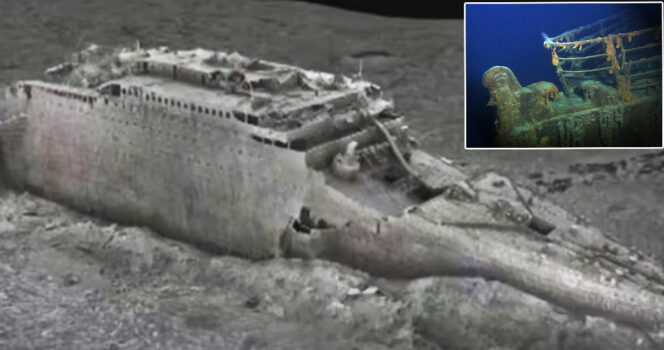

In the late summer of 1985, a deep-sea exploration team led by oceanographer Dr. Robert Ballard navigated the frigid, ink-black waters of the North Atlantic, nearly four hundred miles off the coast of Newfoundland. Guided by specialized underwater camera systems towed miles behind their research vessel, the expedition followed a trail of scattered metal debris along the ocean floor, over twelve thousand feet beneath the surface. Suddenly, through the gloom of the abyssal zone, the massive steel bow of the RMS Titanic materialized into view—resting silently in the dark where it had lain untouched since April 1912. Yet, as explorers began documenting the vast debris field, a subtle and solemn mystery emerged. Amid preserved leather boots, china plates, and bronze fixtures laying intact on the sediment, there were no human skeletal remains to be found.
This haunting absence has inspired decades of public fascination, giving rise to sea legends, maritime lore, and widespread speculation about the ultimate fate of those lost on that fateful night. However, when examined through the lens of deep-sea oceanography, marine biology, and visual chemistry, the total disappearance of organic material reveals a fascinating scientific narrative about the transformative power of the deep ocean.
To understand why human bones do not endure on the deep ocean floor, oceanographers point to a critical chemical boundary known as the Calcium Carbonate Compensation Depth, or CCD. The ocean is not a uniform body of water; its chemical composition shifts dramatically as depth increases, governed by water pressure, temperature, and dissolved carbon dioxide levels.
At depths greater than three thousand feet (and varying by oceanic region), cold deep-sea water becomes severely undersaturated with calcium carbonate—the primary mineral component that gives human bones and marine shells their structural rigidity.
When organic material rests below the CCD—such as the Titanic wreckage resting at over twelve thousand feet—a two-stage natural process occurs. First, specialized deep-sea benthic organisms and micro-bacteria consume soft organic tissues. Once exposed to the surrounding seawater, the calcium phosphate framework of the bone gradually dissolves directly into the ocean. Over several decades, this natural chemical reaction completely recycles the calcium back into the marine ecosystem, leaving behind only non-organic personal artifacts like tanned leather shoes, which resist both bacterial consumption and chemical dissolution.
The Mythos of the Sea: Maritime Legends and Symbolic Resting Places
Long before modern oceanography could map the chemical dynamics of the abyssal zone, sailors and coastal communities developed rich mythologies to explain the complete absorption of ships and crews into the deep. Throughout maritime history, the ocean has been viewed as a sacred, transformative realm where physical forms are reclaimed by nature’s elemental forces.
In classical folklore, the sea was personified as a vast, living sanctuary that protected those who ventured across its surface. The concept of a quiet, eternal resting place beneath the waves offered solace to grieving families who had no physical grave to visit.
Speculatively, cultural historians note that the absence of visible remains at the Titanic site has reinforced its status as a solemn memorial rather than a mere archaeological site. The complete integration of the lost passengers back into the natural world allows the public to view the debris field with a sense of quiet reverence, transforming a historical tragedy into an enduring symbol of human vulnerability before the majesty of nature.

Biological Adaptations: The Unseen Ecosystems of the Deep Ocean
The ocean floor at twelve thousand feet was once thought to be an empty, lifeless desert. However, deep-sea research submersibles have revealed that the abyssal plains are home to highly specialized ecosystems engineered by evolution to thrive in extreme environments.
In this lightless realm, where hydrostatic pressure exceeds four hundred atmospheres and water temperatures hover just above freezing, opportunistic marine organisms rely on organic matter falling from the upper ocean layers to survive.
Interestingly, it is not just organic matter that is recycled by deep-sea life. Biologists have discovered species of extremophile bacteria, such as Halomonas titanicae, that actively feed on the iron hull of the ship itself. These microorganisms create delicate, icicle-like formations known as “rusticles,” which slowly consume the steel framework. Scientists estimate that through this continuous biological process, much of the remaining hull structure may collapse and dissolve into iron dust over the coming decades, demonstrating the absolute efficiency of marine ecosystems in recycling human structures.
Preservation versus Exploration: The Ethics of Memorial Sites
The discovery of the Titanic and subsequent technological advances in deep-sea exploration have sparked ongoing global debates regarding how society should interact with historical underwater sites. Over the years, submersibles have recovered thousands of artifacts—ranging from personal letters and jewelry to structural pieces of the ship—for conservation and public exhibition in museums worldwide.
Proponents of artifact recovery argue that preserving physical objects allows future generations to connect tangibly with history, ensuring that the stories of those aboard remain vivid and remembered. Conversely, historic preservationists and oceanographers like Dr. Robert Ballard have consistently advocated for treating the wreckage as an undisturbed undersea memorial.
This ongoing ethical discussion highlights how modern society balances educational curiosity with respect for historical memory. Whether viewed through museum displays or preserved in-situ beneath the Atlantic, the site remains a powerful touchstone for understanding maritime heritage and human ambition.

A Reflection on Human Curiosity and the Wonders of Discovery
Our enduring fascination with the Titanic and the mysteries of the deep ocean reflects a fundamental quality of the human spirit: our unyielding curiosity. We are naturally driven to explore the unknown, to venture into the deepest valleys of our planet, and to seek out answers to questions that once seemed beyond our reach. Whether we are gazing up at distant stars or diving miles beneath the ocean’s surface, we are guided by the same instinctual desire to understand our place within the natural world.
We study deep-sea chemistry, build advanced submersibles, and preserve historical artifacts because we possess a deep, collective drive to learn from the past. This passion for discovery turns complex scientific data into meaningful opportunities for education, reminding us that every journey into the unknown expands our shared understanding of life, history, and the natural forces that shape our planet.
Ultimately, the story of the Titanic and its silent resting place serves as a timeless reminder of the harmony between human history and the natural environment. While human engineering built a magnificent vessel, the ocean eventually reclaimed its materials through elegant biological and chemical processes. By approaching the deep ocean with both scientific curiosity and humble respect, we continue to uncover the profound wisdom hidden within the earth’s most remote environments.
Sources
-
National Oceanic and Atmospheric Administration (NOAA): Oceanographic data on deep-sea pressure, calcium carbonate compensation depths, and benthic ecology.
-
The Smithsonian Institution: Historical essays on the discovery of the RMS Titanic, deep-sea exploration history, and artifact conservation.
-
National Geographic Society: Research reports detailing the expeditions of Dr. Robert Ballard, deep-sea photography, and underwater archeology.
-
Journal of Marine Environmental Research: Scientific papers analyzing extremophile bacteria, rusticle formation, and the biological degradation of iron shipwrecks.
-
The Woods Hole Oceanographic Institution (WHOI): Educational archives detailing deep-sea submersible technology, ocean chemistry, and abyssal exploration techniques.
