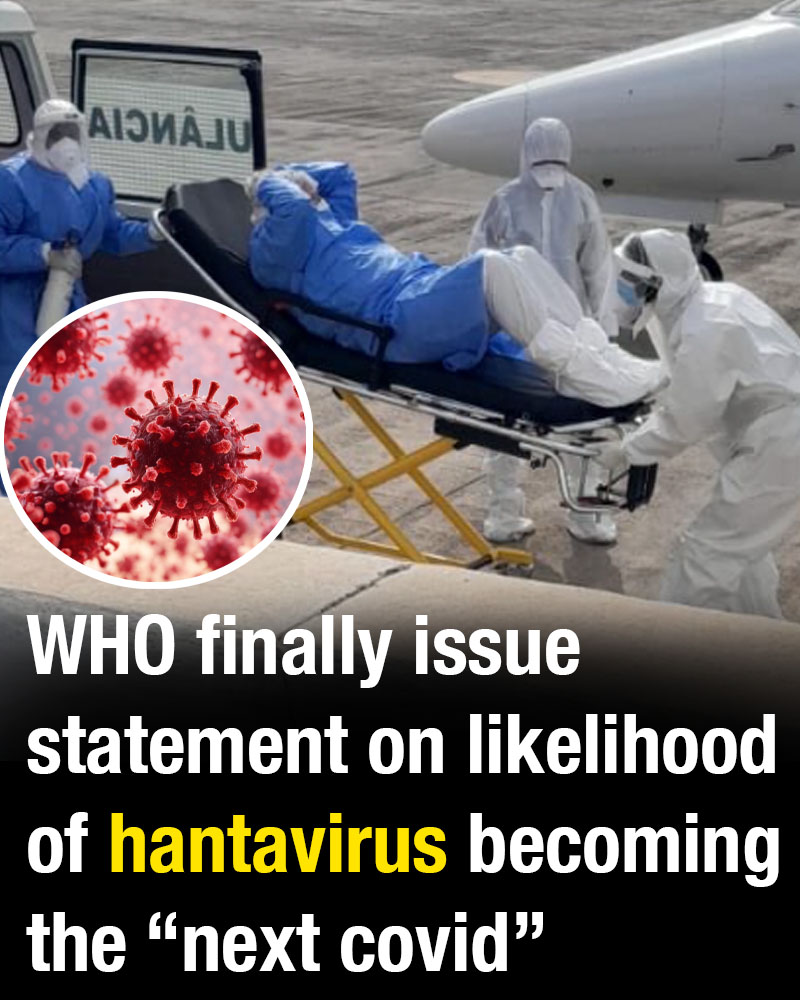

As news spreads about a hantavirus outbreak linked to the cruise ship MV Hondius, many people around the world are asking the same unsettling question: could this become another global pandemic similar to Covid-19?
The concern is understandable. Reports of multiple severe illnesses aboard an international cruise ship, emergency evacuations, quarantines, and international monitoring naturally remind people of the early days of the coronavirus pandemic. Social media discussions have only intensified those fears, with many users wondering whether history could repeat itself.
However, health experts and the World Health Organization have strongly cautioned against drawing direct comparisons between hantavirus and Covid-19.
While officials describe the outbreak as serious and worthy of close monitoring, they also emphasize that hantavirus behaves very differently from highly contagious respiratory viruses like Covid-19. Understanding those differences is essential for separating scientific reality from online panic.
What Is Hantavirus?
Hantavirus refers to a group of viruses primarily carried by rodents. Humans can become infected after exposure to rodent urine, droppings, saliva, or contaminated dust particles.
Different strains of hantavirus exist around the world. Some affect the lungs, while others primarily impact the kidneys or circulatory system.
In the Americas, one of the best-known forms is Hantavirus Pulmonary Syndrome (HPS), a rare but potentially severe respiratory illness. In Europe and Asia, related strains may cause Hemorrhagic Fever with Renal Syndrome (HFRS).
Despite the alarming headlines, experts stress that hantavirus infections remain relatively uncommon compared with widespread respiratory viruses like influenza or Covid-19.
Why the Cruise Ship Outbreak Drew Global Attention
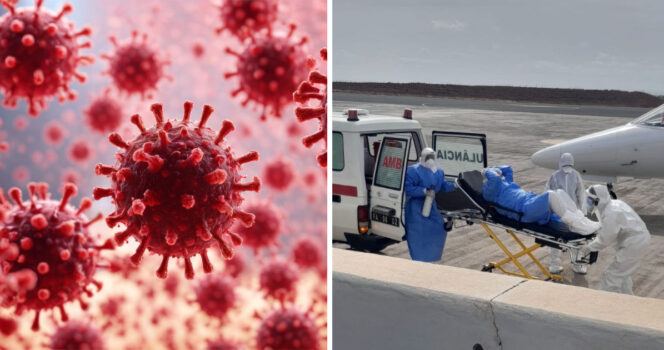
The outbreak aboard the MV Hondius gained international attention because it involved multiple suspected cases in a confined environment with passengers from many countries.
According to reports, several passengers became seriously ill during the voyage, prompting medical evacuations, isolation measures, and international cooperation between health authorities.
Cruise ships naturally raise public concern during infectious disease outbreaks because large numbers of people share enclosed spaces, dining facilities, and living quarters for extended periods.
The situation became even more closely watched after discussions emerged about the possibility of limited person-to-person transmission involving the Andes strain of hantavirus, which is one of the few known variants associated with rare human transmission events.
Still, health organizations repeatedly stressed that the overall public risk remains low.
What the WHO Actually Said
WHO officials have directly addressed growing fears online that hantavirus could become “the next Covid.”
According to public statements, WHO epidemiologist Maria Van Kerkhove emphasized that although hantavirus is serious, comparisons to Covid-19 are misleading.
She reportedly stated:
“This is not the next Covid, but it is a serious infectious disease.”
Her comments reflected two important realities simultaneously:
First, hantavirus infections can indeed become severe in certain cases.
Second, the virus does not spread in the same highly efficient way that allowed Covid-19 to become a global pandemic.
WHO Director-General Tedros Adhanom Ghebreyesus also stated that the overall public health risk currently remains low while monitoring efforts continue.
Why Hantavirus Is Different From Covid-19
One major reason experts are not expecting a Covid-like pandemic is the difference in transmission patterns.
Covid-19 spread rapidly because it transmits efficiently through respiratory droplets and aerosols during ordinary social interaction. Large numbers of people could unknowingly spread the virus before symptoms appeared.
Hantavirus generally behaves very differently.
Most hantavirus infections occur after environmental exposure to infected rodents or contaminated materials. Human-to-human transmission is considered extremely uncommon and has only been associated with certain rare strains.
Even in those rare circumstances, transmission usually requires very close and prolonged contact.
This significantly limits the virus’s ability to spread rapidly through general populations.
Scientists therefore view hantavirus outbreaks as serious but fundamentally different from fast-moving pandemic respiratory viruses.

Why Accurate Information Matters During Health Scares
Public anxiety often increases rapidly during disease outbreaks, especially when incomplete information circulates online.
Experts say clear communication is critical because fear and misinformation can spread faster than the disease itself.
The cruise ship outbreak demonstrates how quickly social media comparisons to Covid-19 can shape public perception before scientific investigations are complete.
Health organizations therefore encourage people to rely on trusted medical sources rather than speculation.
At the same time, officials acknowledge that concern among passengers and families aboard the ship is entirely understandable. Infectious disease situations involving quarantines and emergency evacuations are emotionally stressful even when broader public risk remains low.
How Hantavirus Symptoms Typically Appear
Symptoms of hantavirus infection vary depending on the strain involved.
Early symptoms may resemble flu-like illnesses and can include:
• Fever
• Fatigue
• Muscle aches
• Headaches
• Nausea
Some strains may later affect breathing or kidney function.
Because symptoms initially resemble many other illnesses, laboratory testing is important for accurate diagnosis.
Medical experts emphasize that most people worldwide will never encounter hantavirus directly.
Preventing Hantavirus Exposure
Public health guidance primarily focuses on reducing contact with rodents and contaminated environments.
Preventive recommendations often include:
• Avoiding contact with rodent droppings or nests
• Ventilating enclosed areas before cleaning
• Using gloves and disinfectants when handling contaminated materials
• Properly sealing food and waste
• Controlling rodent infestations around homes or campsites
Outdoor workers, campers, and people entering abandoned buildings may face slightly higher exposure risks in some regions.
Why Humans Fear Emerging Diseases
Disease outbreaks have always triggered strong emotional reactions because they tap into deep human fears about uncertainty and invisible threats.
Modern global travel and instant digital communication intensify these reactions. News of illnesses aboard international flights or cruise ships spreads worldwide within minutes, often accompanied by dramatic headlines and online speculation.
Psychologists note that people naturally compare new disease events to recent collective experiences. Since Covid-19 remains one of the defining global events of recent history, many individuals instinctively evaluate every new outbreak through that lens.
Health experts therefore work carefully to distinguish between understandable concern and scientifically supported risk assessment.
Scientific Monitoring Remains Essential
Although experts do not believe hantavirus is likely to become another Covid-style pandemic, scientists continue monitoring outbreaks carefully.
Disease surveillance allows health agencies to:
• Track transmission patterns
• Identify virus strains
• Monitor mutation changes
• Coordinate international response efforts
• Protect passengers and healthcare workers
Public health systems are designed specifically to investigate unusual outbreaks quickly and transparently.
The response involving the MV Hondius reflects how international cooperation has evolved since earlier global health emergencies.
Conclusion
The hantavirus outbreak linked to the MV Hondius has understandably drawn global attention and concern. Reports involving severe illness, quarantines, and emergency evacuations naturally remind many people of past pandemic experiences.
However, leading experts and the World Health Organization continue emphasizing that hantavirus is not expected to become “the next Covid.” While the disease can be serious, its transmission patterns are far more limited and far less efficient than highly contagious respiratory viruses.
The situation does highlight the importance of accurate information, scientific monitoring, and international public health cooperation. It also reminds us how quickly fear can spread during uncertain moments.
Ultimately, outbreaks like this reveal both the strengths and challenges of our interconnected world. Science, communication, and calm public understanding remain essential tools whenever unusual health events capture global attention.
Sources
World Health Organization (WHO)
Centers for Disease Control and Prevention (CDC)
European Centre for Disease Prevention and Control (ECDC)
