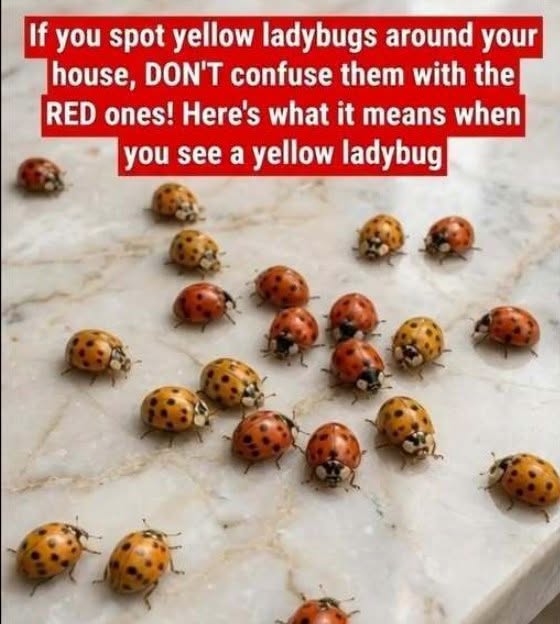

One sunny morning, a gardener paused while watering a bed of blooming flowers. Resting quietly on a green leaf was a tiny yellow insect dotted with black spots. At first glance, it looked familiar, yet different from the classic red ladybug seen in children’s books. Curious, the gardener wondered whether this unusual visitor meant something special.
Across the world, yellow ladybugs often inspire similar questions. Their bright golden color catches the eye, leading some people to associate them with luck, renewal, or positive change. Others simply wonder whether these colorful beetles are beneficial for their gardens or if they signal a problem with nearby plants.
The answer is both fascinating and reassuring. Yellow ladybugs are real members of the lady beetle family, and many species play an important role in maintaining healthy gardens and balanced ecosystems. While cultural traditions have attached symbolic meanings to these insects, scientific research highlights their practical value as natural helpers that contribute to plant health.
Let’s explore what yellow ladybugs really are, why they appear in gardens, and how both science and folklore have shaped the stories surrounding these remarkable little insects.
What Is a Yellow Ladybug?
Despite their unusual appearance, yellow ladybugs are not a separate type of insect from traditional ladybugs. They belong to the same family of beetles, known scientifically as Coccinellidae, which includes thousands of species found across the globe.
While many people picture ladybugs as bright red with black spots, nature offers a remarkable variety of colors. Depending on the species, lady beetles may appear yellow, orange, pink, brown, black, or even cream-colored.
Some yellow ladybugs have distinct black spots, while others display very few markings or none at all. Their color differences are completely natural and help illustrate the incredible diversity found within this group of beneficial insects.
Rather than indicating anything unusual or harmful, a yellow ladybug is simply another beautiful variation of one of nature’s most familiar garden allies.
Why Yellow Ladybugs Visit Gardens
Gardens provide ideal habitats for many ladybug species because they contain both food and shelter.
Many yellow ladybugs feed on tiny insects such as aphids, which are common garden pests that can damage flowers, vegetables, herbs, and ornamental shrubs by feeding on plant sap.
Some species also consume mites, scale insects, or powdery mildew, depending on their specific diet.
When gardeners notice yellow ladybugs among their plants, it often means the local ecosystem supports a healthy balance between predators and prey.
Rather than relying entirely on chemical pest control, many gardens naturally benefit from these tiny beetles as part of an environmentally friendly ecosystem.
Their quiet work often goes unnoticed, yet it contributes significantly to healthier plants and more sustainable gardening practices.
Natural Pest Control in Action
One of the greatest advantages of ladybugs is their appetite for common garden pests.
Aphids reproduce rapidly and can gather in large numbers on stems and leaves. Left unchecked, they may weaken plants by removing nutrients and slowing healthy growth.
Ladybugs help manage these populations naturally.
Both adult beetles and their larvae can consume numerous aphids throughout their lives, reducing pest numbers without harming most garden plants.
Because of this ecological role, gardeners often consider ladybugs among the most beneficial insects they can welcome into their outdoor spaces.
Their presence demonstrates how natural predator-prey relationships help maintain balance within healthy ecosystems.
Why Color Does Not Determine Their Benefits
People sometimes wonder whether yellow ladybugs behave differently from red ones.
In reality, color alone does not determine whether a ladybug is beneficial.
Different species have different diets, but many yellow species provide valuable ecological services similar to their red relatives.
Some specialize in eating soft-bodied insects.
Others feed on fungi such as powdery mildew.
A few species have broader diets that change throughout different stages of their life cycle.
Scientists identify ladybug species by examining several characteristics, including body shape, markings, size, and habitat rather than relying solely on color.
This diversity highlights the remarkable adaptability of these insects across forests, farms, gardens, grasslands, and urban landscapes.
The Science Behind Yellow Ladybugs
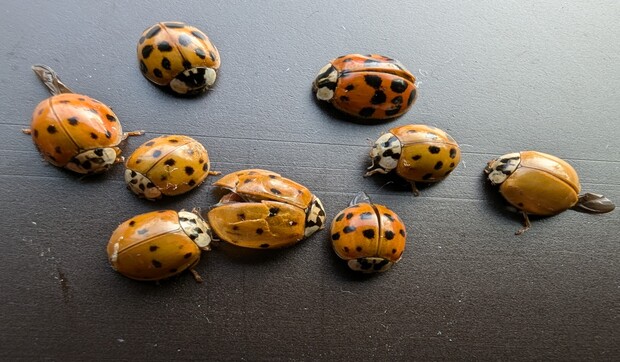
The brilliant yellow coloration results from natural pigments found within the insect’s outer shell.
Like many animals, ladybugs have evolved colors that may serve multiple purposes.
Bright colors can discourage certain predators by signaling that the beetles may taste unpleasant due to defensive chemicals they naturally produce.
Although not every predator responds the same way, these warning colors provide an additional layer of protection in nature.
Color variation may also reflect evolutionary adaptation among different species occupying diverse environments around the world.
Scientists continue studying these fascinating insects to better understand how coloration, habitat, and behavior have evolved over millions of years.
The Ladybug Life Cycle
Yellow ladybugs experience the same basic life cycle as other lady beetles.
The process begins with tiny eggs laid on plants near potential food sources.
After hatching, larvae emerge with appearances quite different from adult ladybugs. Their elongated bodies and distinctive markings often surprise gardeners unfamiliar with their appearance.
During this stage, larvae actively feed before forming a pupa.
Eventually, an adult beetle emerges.
At first, the newly emerged adult may appear pale before its characteristic yellow coloration develops fully over time.
This remarkable transformation illustrates one of nature’s many examples of complete metamorphosis.
Yellow Ladybugs and Garden Biodiversity
Healthy gardens depend upon biodiversity.
Plants, insects, birds, fungi, and microorganisms interact continuously, creating complex ecological networks.
Yellow ladybugs contribute to these systems by helping regulate insect populations naturally.
Their presence often indicates that the garden supports a variety of organisms rather than relying solely on artificial interventions.
Encouraging biodiversity benefits pollinators, beneficial insects, soil organisms, and ultimately the plants themselves.
Simple gardening practices such as planting diverse flowers, reducing unnecessary pesticide use, and providing natural habitats can help support these valuable insect communities.
Cultural Symbolism of Yellow Ladybugs
Long before modern entomology explained ladybug biology, people around the world assigned symbolic meanings to these colorful insects.
Many cultures viewed ladybugs as signs of good fortune, happiness, protection, or prosperity.
Yellow varieties, with their warm golden color, naturally became associated with optimism, sunshine, personal growth, and fresh beginnings.
Some individuals believe encountering a yellow ladybug symbolizes upcoming opportunities or positive transformation.
Others simply enjoy viewing the insect as a reminder to appreciate life’s small moments.
These interpretations belong to folklore and personal belief rather than scientific evidence, yet they continue to enrich humanity’s relationship with the natural world.
Why Rare Sightings Feel Special
Compared with familiar red ladybugs, yellow species may appear less frequently in certain regions.
When people encounter something less common, it naturally attracts attention.
Psychologists explain that unusual experiences often become more memorable because our brains are wired to notice novelty.
This tendency helps explain why spotting a yellow ladybug can feel meaningful even without any supernatural explanation.
The combination of rarity, bright coloration, and peaceful behavior creates a memorable encounter that many people enjoy sharing with friends and family.
Appreciating Nature Through Observation
Yellow ladybugs remind us that nature rewards careful observation.
A quick glance through a garden may reveal flowers, butterflies, bees, birds, and occasionally one of these tiny golden beetles quietly exploring nearby leaves.
Observing insects encourages curiosity about ecology, biodiversity, and the many interconnected relationships that sustain healthy environments.
Even children often develop an early appreciation for science through simple encounters with insects in parks and gardens.
Each observation becomes an opportunity to learn more about the remarkable diversity surrounding us every day.
Should You Protect Yellow Ladybugs?
For most home gardens, the answer is yes.
Because many yellow ladybugs contribute positively by helping control pest populations, they are generally considered beneficial visitors.
Gardeners can support them by:
Keeping a variety of flowering plants.
Reducing unnecessary pesticide applications.
Providing natural vegetation where beneficial insects can shelter.
Maintaining healthy soil that supports diverse ecosystems.
These simple practices create welcoming environments not only for ladybugs but also for bees, butterflies, and countless other beneficial organisms.
Healthy ecosystems depend upon many small species working together, and yellow ladybugs are one important part of that larger picture.
Conclusion
Yellow ladybugs may first attract attention because of their unusual color, but their true importance extends far beyond appearance. Scientifically, many species serve as valuable allies that help maintain healthy gardens by naturally managing plant pests and supporting ecological balance. Their presence often reflects a thriving environment where nature performs many of its own protective functions.
At the same time, centuries of folklore have given yellow ladybugs symbolic meanings connected with optimism, renewal, and good fortune. While these interpretations remain matters of personal belief rather than scientific fact, they reflect humanity’s enduring desire to find beauty and meaning in the natural world.
Whether you encounter a yellow ladybug while tending flowers, walking through a park, or exploring your backyard, it offers an opportunity to pause and appreciate one of nature’s smallest yet most remarkable helpers. Sometimes the most fascinating discoveries are not the largest or loudest but the quiet creatures carrying out important work, one tiny step at a time.

Sources
- University of California Agriculture and Natural Resources. Lady Beetles in Landscapes. https://ipm.ucanr.edu
- Cornell University College of Agriculture and Life Sciences. Beneficial Garden Insects. https://cals.cornell.edu
- Xerces Society for Invertebrate Conservation. Beneficial Insects and Biodiversity. https://www.xerces.org
- National Wildlife Federation. Garden Wildlife and Beneficial Insects. https://www.nwf.org
- Encyclopaedia Britannica. Ladybird Beetle. https://www.britannica.com
