
Octomom’s Unfinished Journey
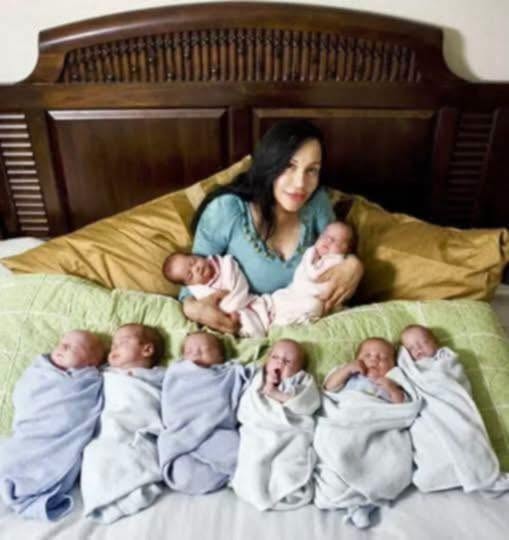
In January 2009, Natalie Suleman became one of the most closely watched mothers in the world after giving birth to octuplets in California. The event was medically unusual, internationally reported, and immediately surrounded by public debate. At the time, Suleman was already the mother of six young children. Her family grew to 14 children overnight, creating a story that extended far beyond a single extraordinary birth.
For years, Suleman was widely identified by the media nickname “Octomom,” a label that became inseparable from public arguments about fertility treatment, parenting, financial security, celebrity culture, and the ethical responsibilities of medical professionals. Yet the headline-friendly nickname also simplified a complex human story. Behind it was a mother raising a large family under unusual levels of scrutiny, while her children grew up in an environment shaped by attention they did not choose.
Her journey remains significant not only because of the rare birth itself, but because it raised questions that continue to matter: How should fertility care be regulated? What happens when private family decisions become public entertainment? And how can society discuss difficult issues without losing sight of the children and people at the center of the story?
The 2009 Octuplets Birth That Drew Global Attention
Suleman gave birth to eight babies at Kaiser Permanente Bellflower Medical Center in Bellflower, California, on January 26, 2009. The children were delivered prematurely, which is common in high-order multiple pregnancies. Medical teams prepared extensively for the delivery, and the babies received specialized neonatal care.
The birth attracted worldwide attention because octuplet deliveries are extremely rare. Multiple births involving twins or triplets have become more visible over recent decades in part because of fertility treatments, but pregnancies involving eight fetuses carry exceptionally high medical risks. These can include premature birth, low birth weight, pregnancy complications, and the need for extended neonatal intensive care.
News coverage initially focused on the medical achievement and the survival of the newborns. As more details emerged, however, public discussion quickly shifted toward the circumstances of the pregnancy. Suleman had undergone in vitro fertilization, commonly known as IVF, and reports indicated that a large number of embryos had been transferred during treatment.
The case became a major point of discussion in reproductive medicine because modern fertility practice generally aims to reduce the likelihood of high-order multiple pregnancies. Medical organizations have developed guidance on embryo transfer limits, reflecting improvements in IVF success rates and the known health risks associated with carrying multiple fetuses.
Fertility Treatment, Ethics, and Medical Oversight
The birth of Suleman’s octuplets prompted renewed scrutiny of the fertility specialist involved in her treatment, Dr. Michael Kamrava. In 2011, the Medical Board of California revoked his medical license after finding that his care of Suleman departed from accepted standards. The board’s decision became one of the most prominent regulatory outcomes connected to the case.
The controversy helped bring wider public attention to a subject that is often discussed mainly within medical settings: the careful balance between helping patients pursue pregnancy and protecting the health of patients and future children. IVF has helped many individuals and families have children, and it remains an important form of reproductive healthcare. At the same time, medical experts emphasize that treatment decisions should be guided by evidence, individualized risk assessment, informed consent, and established professional recommendations.
The American Society for Reproductive Medicine has published guidance regarding the number of embryos transferred during IVF. These recommendations are intended to promote healthy singleton pregnancies whenever possible and to reduce avoidable risks linked to multiple gestation. Factors such as a patient’s age, embryo quality, previous treatment history, and the use of tested embryos may influence clinical decisions.
Suleman’s case was therefore not simply a personal story. It became part of a larger international conversation about medical regulation, patient autonomy, professional accountability, and the evolving standards of fertility care. It also illustrated why reproductive health issues require careful reporting: highly personal decisions can have medical, legal, emotional, and social consequences.
Life Under the “Octomom” Label
Public fascination with Suleman intensified after the birth. Tabloid coverage, television appearances, online commentary, and constant speculation turned her family into a cultural phenomenon. Much of the attention focused on whether she could support and care for 14 children. Critics questioned her choices, while supporters argued that coverage often ignored the intense pressure faced by a single parent whose circumstances had become globally visible.
The “Octomom” nickname made the story instantly recognizable, but it also had consequences. Labels can shape how the public sees a person long after the original news event has passed. In Suleman’s case, the name became associated with controversy rather than the many day-to-day realities of parenting a large family: school schedules, meals, housing, healthcare, employment, financial planning, and the emotional needs of children at different stages of development.
Media attention can create an especially difficult situation for families with children. Parents may become public figures, but children generally have little control over their visibility. Responsible reporting on such families should avoid treating children as spectacles or reducing them to a novelty. Their privacy, dignity, and long-term wellbeing deserve consideration even when public curiosity is high.
Financial Pressure and the Reality of Raising Fourteen Children
Raising any child requires substantial time, emotional commitment, and financial resources. Raising 14 children requires extensive organization and support. Suleman’s financial challenges were frequently covered in the years after the octuplets’ birth, including housing difficulties and a bankruptcy filing. Those developments contributed to public debate, but they also reflected a broader truth: large families can face significant economic pressure, particularly when one parent is responsible for most caregiving.
Costs associated with food, clothing, transportation, education, childcare, healthcare, and housing increase rapidly as a family grows. For parents of multiples, practical needs can be even more demanding. Infants born prematurely may require additional medical monitoring and developmental support. As children get older, their needs become more varied rather than less complex.
Suleman pursued media work and other paid opportunities during periods of public attention. Some of those choices generated criticism, while others viewed them as attempts to provide for her family amid limited options and sustained public pressure. It is possible to acknowledge the controversy surrounding those decisions while also recognizing that financial hardship and public judgment can coexist.
The story also highlights the importance of accessible family support systems. Affordable housing, mental health services, childcare, nutrition assistance, educational resources, and fair employment opportunities can be decisive for parents facing overwhelming responsibilities. These issues are not unique to one famous family, even if Suleman’s circumstances were unusually public.
Stepping Back From Public Attention
Over time, Suleman moved away from the level of media exposure that defined the years immediately following the birth of the octuplets. In later interviews and public posts, she has described a desire to focus on parenting, personal stability, and a more private life. Her decision to limit public visibility reflected a challenge faced by many people who become famous unexpectedly: the ability to reclaim ordinary routines after extraordinary attention can be difficult.
The children have also grown older outside the intense early-news cycle that followed their birth. This passage of time matters. Stories about highly publicized families are often frozen at the moment of crisis or controversy, but real lives continue after headlines fade. Children develop identities, interests, friendships, and ambitions that should not be defined solely by events that occurred before they could understand them.
For that reason, a respectful account of Suleman’s life should avoid assuming that the public has a right to every detail of her family’s private world. Public interest does not erase personal boundaries. The most meaningful part of any long-term story may be the quieter work of building stability, maintaining relationships, and allowing children space to grow.
What the Octomom Story Means Today
More than a decade after the octuplets’ birth, the story continues to resonate because it sits at the intersection of several major issues. It is a case study in the ethical practice of fertility medicine, the pressures created by sudden fame, and the tendency of modern media to turn complicated people into lasting symbols.
It also serves as a reminder that public debate is often most constructive when it focuses on systems rather than humiliation. Questions about IVF standards, medical oversight, access to healthcare, and family support are important. They can be discussed through evidence and expert guidance without treating parents or children as objects of ridicule.
For reproductive medicine, the case reinforced the importance of evidence-based embryo transfer practices and professional accountability. For journalists and audiences, it raised questions about privacy, sensationalism, and the long lifespan of an internet-era reputation. For families, it underscored the practical and emotional realities that can lie behind a widely shared news story.
Natalie Suleman’s life cannot be reduced to the birth that made her famous or to the nickname that followed her. Her story includes medical controversy, financial strain, public criticism, personal reinvention, and the ongoing responsibilities of motherhood. Most importantly, it includes 14 individuals whose lives have unfolded beyond the spectacle that first introduced their family to the world.
A More Thoughtful Way to View a Public Family Story
The enduring lesson of the Octomom story is not simply that an unusual birth captured global attention. It is that media narratives can become much larger than the people inside them. A rare medical event became a debate about reproductive ethics. A mother’s personal decisions became an international cultural controversy. A group of newborns became symbols in arguments they could not participate in.
Looking back with context makes a more balanced view possible. The medical concerns surrounding high-order multiple pregnancies were real and deserved serious examination. Regulatory action involving the fertility treatment was also significant. At the same time, public commentary often failed to account for the human cost of constant scrutiny.
As the children continue into adolescence and adulthood, the most responsible approach is to recognize their right to dignity and privacy. Their family’s past may remain part of public memory, but it does not have to determine their future. Suleman’s unfinished journey, like that of many families who have lived through public controversy, is ultimately less about a headline than about the long, private work of moving forward.
Sources
- Reuters — reporting and archival coverage of Natalie Suleman, the octuplets birth, and related public developments.
- BBC News — international news coverage and background on the 2009 octuplets case.
- Medical Board of California — official information on California medical regulation and disciplinary actions.
- American Society for Reproductive Medicine — professional guidance and educational resources on assisted reproductive technology and embryo transfer.
- Centers for Disease Control and Prevention — information on assisted reproductive technology, IVF outcomes, and multiple births.
- World Health Organization — global health information and reproductive health resources.
Disclaimer: This content is intended for entertainment purposes only and is not based on real events.
