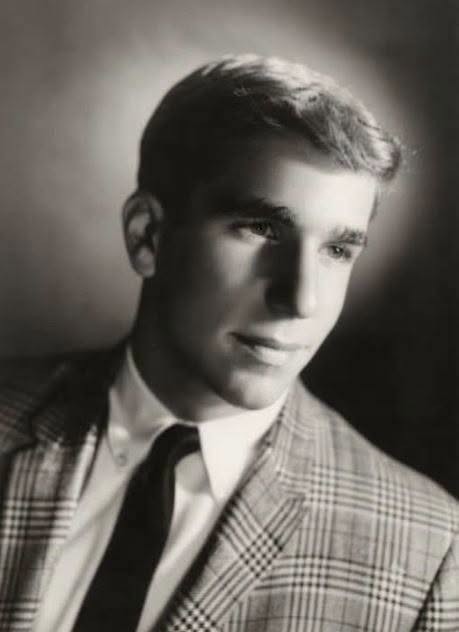

Henry Winkler’s Journey to Hollywood Fame
Henry Winkler’s path to becoming one of television’s most recognizable performers is a story of persistence, creativity, and resilience. Best known for playing Arthur “Fonzie” Fonzarelli on the long-running sitcom Happy Days, Winkler became an international star through a character defined by cool confidence and humor. Behind that success, however, was a childhood shaped by serious struggles with reading, writing, and schoolwork that were not understood at the time.
Winkler has spoken openly for years about growing up with dyslexia, a learning difference that can affect reading fluency, spelling, writing, and the ability to process written language. During his childhood, dyslexia was less widely recognized than it is today. As a result, he was often viewed as a student who was not trying hard enough, despite the substantial effort he put into his assignments. His later success in acting, producing, directing, and writing has made him a prominent advocate for a more compassionate understanding of learning differences.
His career also illustrates a broader point: academic difficulties do not measure a person’s intelligence, talent, or future potential. From college rejections to his breakthrough in Hollywood and his work creating books for young readers, Winkler’s experiences have encouraged families, educators, and children to look beyond conventional definitions of achievement.
Henry Winkler’s Family Background and Early Life
Henry Winkler was born in New York City in 1945 to German Jewish parents, Ilse Anna Maria and Harry Irving Winkler. His parents had left Germany before the Second World War and built a new life in the United States. Their family history was shaped by the persecution faced by Jewish communities under Nazi rule, and education was especially important in their household.
Like many parents who had endured instability and displacement, Winkler’s parents hoped that academic success would provide their children with security and opportunity. Winkler has described the pressure he felt to perform well at school. Yet his daily experience in the classroom was often frustrating. Reading assignments could take much longer than they did for other students, and written work presented continuing challenges.
At the time, his difficulties were not identified as dyslexia. Instead, adults around him sometimes assumed he was being careless, lazy, or defiant. In later interviews, Winkler recalled that these assumptions were painful because he was working hard, even when the results did not reflect that effort. His story remains relevant because children with undiagnosed learning differences can still face similar misunderstandings today.
Understanding Dyslexia and Its Impact on Learning
Dyslexia is a common learning difference that primarily affects skills involved in accurate and fluent word reading and spelling. It is not linked to low intelligence, poor motivation, or a lack of imagination. People with dyslexia may have difficulty decoding words, remembering sequences, reading quickly, or organizing written information. At the same time, many have significant strengths in areas such as problem-solving, visual thinking, communication, creativity, and practical reasoning.
Medical and educational organizations emphasize that early recognition and support can make a meaningful difference. Structured literacy instruction, classroom accommodations, patient teaching, and encouragement can help students develop effective reading and writing strategies. For families, a proper assessment can also replace blame with understanding.
Winkler’s childhood occurred during a period when many schools had fewer resources and less public awareness regarding learning differences. His experience reflects why accurate information about dyslexia matters. A child who struggles with reading may need targeted support rather than punishment or negative labels. Public figures who discuss their own challenges can help reduce stigma and encourage parents and teachers to seek evidence-based help.
College Rejections Did Not End His Ambitions
As Winkler approached college, his academic record created another barrier. He has said that he applied to 28 colleges and was rejected by 26 of them. Those rejections could have ended his hopes of pursuing an artistic career, especially for a student who had already spent years being told that he was not meeting expectations.
Instead, Winkler continued to pursue opportunities. He was accepted by Emerson College in Boston, where he studied theatre. His decision to focus on performance was significant because acting gave him a field in which his imagination, empathy, energy, and ability to connect with people could become professional strengths.
After earning his undergraduate degree from Emerson, Winkler continued his training at the Yale School of Drama. Admission to Yale represented a major turning point. The school’s demanding environment allowed him to deepen his understanding of character, movement, voice, and stagecraft. He received a Master of Fine Arts degree from Yale in 1970, entering the profession with formal training and a strong commitment to his craft.
His route to Yale is an important part of the Henry Winkler success story, but it should not be reduced to a simple message that determination alone solves every obstacle. Educational access, supportive mentors, appropriate teaching, and opportunities all matter. Winkler’s persistence was essential, yet his story also demonstrates the value of institutions and teachers that recognize talent beyond grades and test scores.
From Trained Actor to Television Star
After completing drama school, Winkler began building a career through theatre, commercials, and smaller screen roles. Like many actors, he faced uncertainty while seeking steady work. His defining opportunity came in the 1970s when he was cast in Happy Days, a television comedy created by Garry Marshall.
The series, which premiered in 1974, was set in an idealized version of 1950s and early 1960s America. Winkler played Arthur Fonzarelli, better known as “Fonzie” or “The Fonz,” a leather-jacketed mechanic with a reputation for confidence and popularity. Although the character was initially intended to have a limited role, audiences responded strongly to Winkler’s performance.
Fonzie became a central figure in the show and one of the most enduring characters in American television history. Winkler gave the role more warmth and vulnerability than its surface image might suggest. Beneath the character’s swagger was a person who cared deeply about friends, loyalty, and belonging. That balance helped make Fonzie appealing to viewers across generations.
Happy Days ran for 11 seasons and became a major part of popular culture. Winkler received multiple Emmy Award nominations for his work on the series, and the character’s catchphrases, mannerisms, and signature thumbs-up became widely recognized. The role established him as a household name, but it also created the challenge of being closely identified with one iconic character.
Building a Career Beyond Fonzie
Winkler responded to that challenge by continuing to work in many areas of entertainment. Over the decades, he appeared in films and television programs, worked as a producer and director, and took on roles that differed greatly from Fonzie. His credits include acting in comedies, dramas, family films, and acclaimed television productions.
His later work introduced him to new audiences. He received particular praise for playing acting teacher Gene Cousineau in the HBO series Barry. The role earned Winkler the Primetime Emmy Award for Outstanding Supporting Actor in a Comedy Series in 2018, decades after he first became famous on Happy Days. The award highlighted the durability of his career and his ability to keep developing as a performer.
Winkler’s longevity in the entertainment industry is notable because television audiences and production systems have changed dramatically since the 1970s. He successfully navigated those changes while remaining associated with an era of network television that continues to hold cultural significance. His career has included both mainstream popularity and critical recognition, a combination that relatively few performers sustain over such a long period.
How Henry Winkler Became a Dyslexia Advocate
Although Winkler had lived with learning challenges since childhood, he did not fully understand dyslexia until adulthood. He has explained that his awareness increased after dyslexia was identified within his family. This gave him a clearer framework for understanding many of the problems he had faced at school.
Rather than keeping those experiences private, Winkler began discussing them publicly. He has repeatedly emphasized that children with dyslexia are not unintelligent and should not be judged by the speed at which they read or write. His message has been especially meaningful to students who feel isolated by school struggles and to parents seeking reassurance that their children can thrive.
Advocacy in this area can have practical value. It encourages schools to provide assessments and support, helps caregivers recognize potential signs of learning differences, and reminds communities that students learn in different ways. Winkler’s public comments have consistently focused on confidence, patience, and the importance of identifying a child’s strengths.
For educators, his story also reinforces a central lesson: criticism without support can damage a student’s self-esteem, while informed instruction can help unlock ability. A child may need extra time, audiobooks, tutoring, specialized reading approaches, or accommodations in testing. These supports are not shortcuts; they are tools designed to give learners fair access to education.
The Hank Zipzer Books and Representation for Young Readers
Winkler extended his advocacy through children’s literature. Working with author and producer Lin Oliver, he co-created the Hank Zipzer book series. The books center on Hank, a bright, funny, inventive boy who has dyslexia and often finds conventional school expectations difficult to manage.
The character was inspired in part by Winkler’s own childhood experiences. Rather than portraying Hank as a child defined by a diagnosis, the books present him as a complete person: creative, caring, determined, and sometimes frustrated. The stories use humor and everyday situations to show that learning differences can create real challenges without limiting a child’s worth or future.
The series has been widely used by families and educators because it offers representation that many young readers may not find elsewhere. Seeing a character confront similar obstacles can help children feel understood. It can also help classmates develop empathy and encourage adults to start conversations about dyslexia in a positive, age-appropriate way.
Winkler and Oliver later created additional books featuring another young protagonist, Billy Broccoli, continuing their focus on stories that support confidence and inclusion. Their work demonstrates how entertainment and literature can contribute to public understanding of educational issues without becoming overly clinical or discouraging.
Why Henry Winkler’s Story Still Matters
Henry Winkler’s journey remains compelling because it connects personal hardship with professional achievement without suggesting that success has only one path. He faced school struggles, misunderstanding, and repeated college rejection. He also found opportunities, pursued rigorous training, and built a career through preparation and persistence.
For people with dyslexia and other learning differences, his career provides visible evidence that academic challenges do not erase talent. For parents and teachers, it is a reminder to listen carefully when a child is struggling. For aspiring actors, writers, and artists, it demonstrates that setbacks can become part of a longer story rather than its final chapter.
Winkler’s legacy is broader than Fonzie, even though the character remains a beloved part of television history. He is an accomplished actor, producer, author, and advocate whose public work has helped challenge outdated assumptions about dyslexia. His message is both realistic and hopeful: difficulties deserve recognition and support, while every individual deserves the chance to be seen for their abilities rather than their limitations.
Sources
- Television Academy: Henry Winkler biography and awards
- Yale University
- International Dyslexia Association: Dyslexia information and resources
- National Institute of Child Health and Human Development: Learning disabilities information
- Encyclopaedia Britannica: Henry Winkler biography
- CBS News: Henry Winkler on his career, dyslexia, and memoir
Disclaimer: This content is intended for entertainment purposes only and is not based on real events.