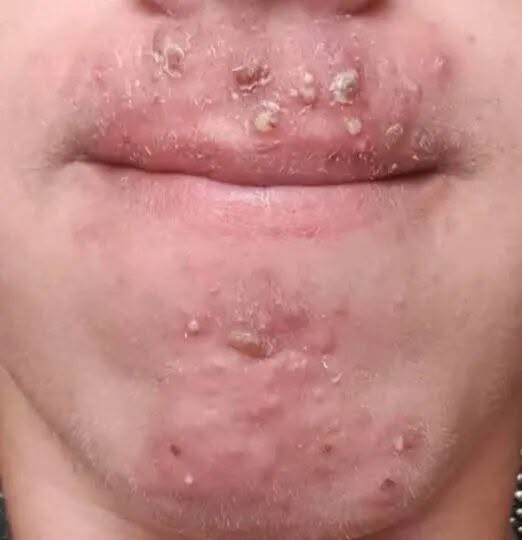

A burning red ring around your mouth is not “just dry skin.” It can spread, crack, crust, and quietly turn into a contagious infection before you even realize what’s happening. Every touch, every towel, every kiss risks passing it on. And the creams you grab online could be making it worse, not better…
What looks like a harmless rash around the mouth can, in reality, be a sign of something your skin can’t fight off alone. Conditions like impetigo or perioral dermatitis often start subtly, then rapidly worsen with scratching, over-cleansing, or misuse of steroid or acne creams. Yellow crusts, oozing patches, clusters of bumps, or painful redness are all signals that the skin barrier is damaged and possibly infected. Ignoring these changes, or trying to “fix” them with random products, can spread bacteria, deepen inflammation, and even leave scars.
A calm, protective routine and timely medical help matter far more than guesswork. Gentle cleansing, avoiding shared towels or razors, skipping irritating skincare, and resisting the urge to pick give your skin a chance to heal. A doctor or dermatologist can identify whether the cause is bacterial, viral, allergic, or inflammatory and prescribe targeted treatment before it spirals into something far more serious.
The Unseen Threat Around Your Mouth
A burning red ring around your mouth is not “just dry skin.” It can spread, crack, crust, and quietly turn into a contagious infection before you even realize what’s happening. Every touch, every towel, every kiss risks passing it on. And the creams you grab online could be making it worse, not better…
What looks like a harmless rash around the mouth can, in reality, be a sign of something your skin can’t fight off alone. Conditions like impetigo or perioral dermatitis often start subtly, then rapidly worsen with scratching, over-cleansing, or misuse of steroid or acne creams. Yellow crusts, oozing patches, clusters of bumps, or painful redness are all signals that the skin barrier is damaged and possibly infected. Ignoring these changes, or trying to “fix” them with random products, can spread bacteria, deepen inflammation, and even leave scars.
A calm, protective routine and timely medical help matter far more than guesswork. Gentle cleansing, avoiding shared towels or razors, skipping irritating skincare, and resisting the urge to pick give your skin a chance to heal. A doctor or dermatologist can identify whether the cause is bacterial, viral, allergic, or inflammatory and prescribe targeted treatment before it spirals into something far more serious.
![Selfie] Girlfriend gets perioral dermatitis only after kissing me, nothing helps : r/SkincareAddiction](https://i.redd.it/9tbyhnt4t3nf1.jpg)
Anatomy of the Perioral Zone: Why This Skin Is So Vulnerable
The skin surrounding the lips (the perioral area) has unique anatomical and physiological characteristics that make it particularly susceptible to irritation, barrier breakdown, and secondary infection.
-
Thinner Epidermal Layers: The skin around the lips is thinner and possesses fewer oil (sebaceous) glands than the rest of the face, making it prone to transepidermal water loss (TEWL) and rapid dehydration.
-
Constant Exposure to Moisture and Enzymes: Saliva contains digestive enzymes like amylase and lipases designed to break down organic material. When saliva frequently sits on the skin—whether from chronic lip-licking, drooling during sleep, or mouth breathing—it actively degrades the lipid matrix of the stratum corneum.
-
High Contact Area: The lower face is constantly touched by hands, phones, food, napkins, lip balms, and dental products, introducing potential pathogens and chemical irritants dozens of times each day.
Common Diagnoses: Sorting Out the Causes
Because many perioral skin conditions present with overlapping visual features—such as redness, scaling, bumps, or crusting—misidentifying the underlying cause is extremely common.
The Steroid Trap: Why Popular Creams Backfire
When faced with a red, itchy rash, many people reach for over-the-counter hydrocortisone or leftover prescription steroid creams. While corticosteroids are powerful anti-inflammatory agents, applying them to perioral skin—especially when the cause is unknown—often leads to severe long-term complications.
-
Steroid-Induced Perioral Dermatitis: Prolonged use of topical steroids thins the cutaneous tissue and alters local skin microflora. When the cream is stopped, the skin undergoes a violent “rebound flare,” erupting in dense clusters of painful, burning pustules.
-
Suppression of Local Immunity: If the underlying cause is bacterial (impetigo) or fungal (Candida), steroids suppress the skin’s local immune cells, allowing pathogens to multiply unchecked while masking early warning signs.
![Skin Concerns] Guys SOS- I made out with a very new love interest yesterday and woke up with this monstrosity of irritation and scabs from beard burn. I'm on Retinol every night,](https://i.redd.it/vaiyc84bq1n31.jpg)
Transmission and Hygiene: Preventing the Spread
Rashes around the mouth carry a high risk of spreading to other parts of the face or to family members through direct contact or fomites (contaminated objects).
Essential Hygiene Rules
-
Strict Towel Separation: Never share face towels, hand towels, or pillowcases. Wash linens in hot water and dry on high heat during an active outbreak.
-
Hands Off: Avoid touching, picking, or scratching the area. If you apply topical medication, wash your hands thoroughly with soap and warm water both before and after application.
-
Discard Contaminated Cosmetics: Throw away lipsticks, lip balms, or facial sponges used right before or during the onset of the rash to prevent re-infecting healed skin.
-
Pause Shaving and Exfoliation: Avoid shaving over active lesions or using mechanical scrubs, chemical acids (AHA/BHA), or retinoids, which create micro-tears and spread microbes across the lower face.
Clinical Assessment and Targeted Management
Resolving a persistent perioral rash requires moving away from trial-and-error home remedies toward a diagnostic evaluation by a pediatrician, general practitioner, or dermatologist.
What to Expect at a Medical Visit
-
Visual Examination & Dermoscopy: Dermatologists evaluate the distribution pattern, checking whether the rash spares the vermilion border (classic for perioral dermatitis) or involves honey-colored crusting (classic for impetigo).
-
Swab Cultures: If liquid-filled blisters or oozing sores are present, a gentle skin swab can identify whether bacteria (Staphylococcus, Streptococcus) or viruses (HSV) are responsible, guiding precise antibiotic or antiviral prescription choices.
-
Patch Testing: For chronic, recurring dermatitis, patch testing helps identify specific contact allergens in toothpastes, mouthwashes, or skincare products.
The “Zero Therapy” Approach for Inflammatory Rashes
When perioral dermatitis or severe irritant contact dermatitis is diagnosed, clinicians often recommend a protocol known as Zero Therapy:
-
Discontinue all active skincare products, heavy moisturizers, cosmetics, and topical steroids.
-
Wash the face exclusively with lukewarm water or an extremely mild, non-soap cleanser.
-
Allow the skin barrier to reset without external chemical interference before slowly reintroducing minimal, dermatologically approved products.
Caring for Your Skin Barrier
Your skin is an active immune organ, not a surface to be aggressively scrubbed or covered in unchecked remedies. A burning red ring around the mouth is a clear signal that the skin barrier has been compromised and needs rest, protection, and accurate medical diagnosis.
By identifying warning signs early, avoiding the trap of indiscriminate cream use, maintaining rigorous personal hygiene, and seeking professional guidance, you can resolve uncomfortable perioral conditions safely—restoring both your skin barrier and your peace of mind.