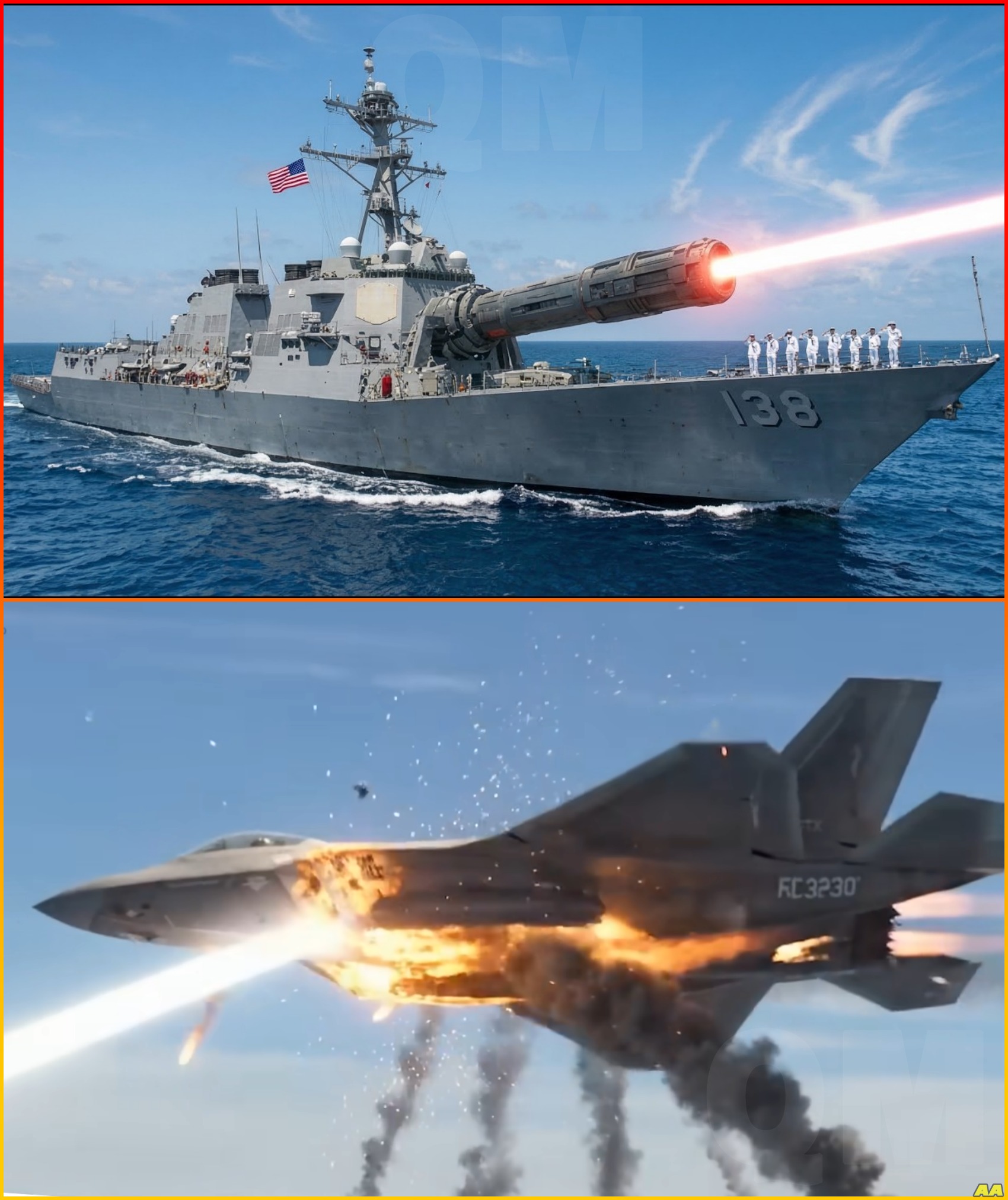

For centuries, naval power has been defined by visible force—cannons, missiles, and massive fleets crossing open waters. But today, a quieter transformation is underway. Instead of relying solely on traditional weapons, modern navies are exploring something far more subtle yet powerful: concentrated beams of light.
At the center of this shift is the United States Navy, which has been developing advanced laser systems designed to enhance defensive capabilities at sea. While the idea may sound futuristic, it is grounded in real science and ongoing research.

Understanding the Basics of Laser Technology
What Is a Laser Weapon?
A laser, in scientific terms, is a focused beam of light energy. The principle behind it is known as Light Amplification by Stimulated Emission of Radiation. By concentrating energy into a narrow beam, lasers can deliver precise amounts of heat or energy to a specific point.
In defense applications, this precision allows systems to interact with targets in a controlled way, such as disabling sensors or affecting external components.
Why Precision Matters
Unlike traditional systems that rely on physical projectiles, laser-based systems operate at the speed of light. This enables rapid response times and reduces the need for complex logistics associated with conventional equipment.
From a technical perspective, this precision can be particularly useful in environments where accuracy and timing are critical.
The Changing Nature of Maritime Challenges
The Rise of Small, Fast Threats
In recent years, naval operations have had to adapt to new types of challenges. Smaller, faster, and more affordable aerial systems—often referred to as drones—have become increasingly common in maritime environments.
These systems can operate in groups, move unpredictably, and require rapid response strategies. Traditional defense methods, while effective, can be resource-intensive when used repeatedly against such targets.
Exploring Alternative Solutions
To address these challenges, organizations like the United States Navy have explored technologies that offer efficiency and adaptability. Laser systems are one such option, providing a method of engagement that does not rely on conventional ammunition.
It is important to note that while these systems show promise, their deployment and effectiveness depend on many factors, including weather conditions, power availability, and operational context.

How Laser Systems Function in Practice
A Simplified Explanation
Laser systems generate energy, focus it into a beam, and direct it toward a target using advanced tracking systems. The interaction between the beam and the target depends on factors such as distance, duration, and material properties.
Rather than causing large-scale impact, these systems are often designed for controlled effects, such as interfering with external components.
Integration Into Naval Platforms
One advantage of laser technology is its flexibility. Systems can be installed on ships or land-based platforms, allowing for integration into existing infrastructure.
This adaptability supports ongoing experimentation and refinement, as engineers and researchers continue to improve performance and reliability.
Testing and Real-World Evaluation
From Concept to Demonstration
Before any new technology becomes widely used, it undergoes extensive testing. The United States Navy has conducted multiple trials to evaluate how laser systems perform under different conditions.
These tests help researchers understand both the strengths and limitations of the technology.
What Testing Reveals
Results from testing suggest that laser systems can be effective in specific scenarios, particularly when dealing with smaller, fast-moving objects. However, they are not a universal solution and are best viewed as part of a broader defense strategy.
This balanced perspective is essential when evaluating emerging technologies.
Myths and Cultural Perceptions
The Influence of Popular Media
Laser technology has long been a staple of science fiction, often portrayed as an all-powerful tool. These portrayals can shape public expectations, sometimes creating a gap between perception and reality.
In truth, real-world systems are more nuanced, designed for specific applications rather than dramatic effects.
Separating Fact From Speculation
While laser systems represent a significant technological advancement, claims about their capabilities should be approached with care. Much of the discussion around them includes speculation about future potential rather than confirmed outcomes.
Understanding this distinction helps maintain a realistic view of their role.

The Broader Impact of Innovation
Efficiency and Sustainability
One of the frequently discussed advantages of laser systems is their potential efficiency. Without the need for traditional materials used in other systems, they may reduce certain logistical challenges.
However, they also require significant energy, which introduces its own considerations.
Collaboration and Research
Advancements in laser technology are not limited to one organization. Research institutions, engineers, and scientists worldwide contribute to ongoing developments in optics, energy systems, and materials science.
This collaborative effort drives innovation across multiple fields, not just defense.
Looking Toward the Future
Continued Development
As research progresses, laser systems are expected to evolve in capability and application. Improvements in power generation, targeting systems, and durability will shape how these technologies are used.
The United States Navy continues to explore these possibilities through ongoing programs and partnerships.
A Complement, Not a Replacement
Experts generally view laser systems as complementary tools rather than replacements for existing methods. They add another layer of capability, contributing to a more flexible and adaptive approach.
This perspective reflects a broader trend in modern technology: integration rather than substitution.

A Reflection on Curiosity and Innovation
The idea of using light as a tool for defense captures the imagination. It represents the intersection of science, engineering, and human curiosity.
From early experiments with light to today’s advanced systems, the journey reflects a constant desire to explore new possibilities. Yet, as with all innovations, understanding comes from careful study, testing, and reflection.
In the end, the story of laser technology is not just about machines or systems. It is about how humans seek to understand and shape the world around them—one discovery at a time.
Sources
USFandomStarEveryday. Overview of naval laser technology developments
United States Navy official research updates and public releases
Optical Society. Fundamentals of laser physics
Defense Advanced Research Projects Agency. Energy and directed research initiatives
