
Optical illusions have become one of the internet’s favorite brain challenges. They are simple to enjoy, require no special knowledge, and often spark lively discussions as everyone compares what they spotted first.
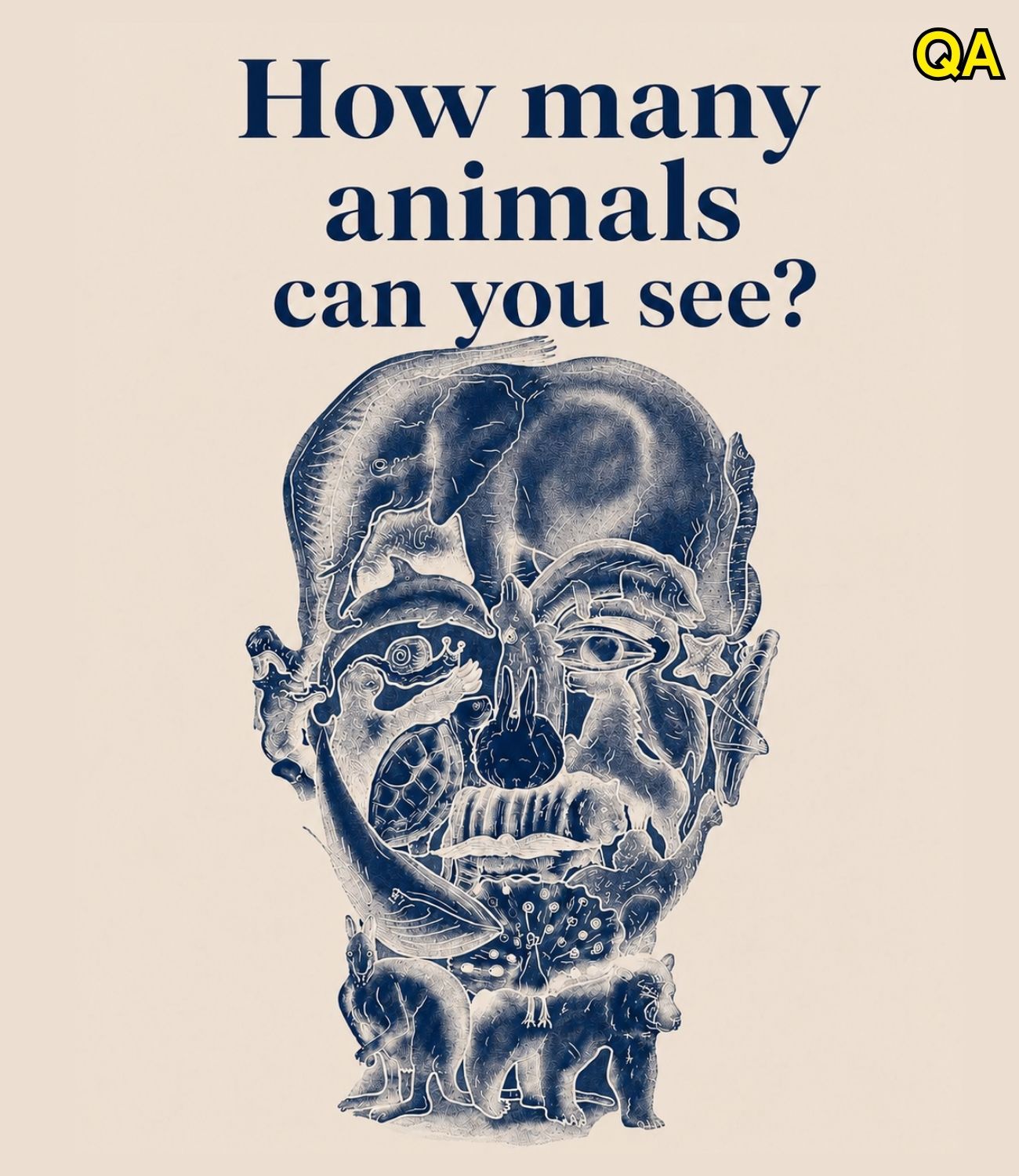
One image that has captured people’s attention features a human face cleverly formed by numerous hidden animals. At first glance, you may only notice a few creatures. But the longer you study the picture, the more animals seem to appear.
So, how many animals can you actually find?
Let’s take a closer look at this fascinating visual puzzle and explore why it has become so popular.

Why Hidden Animal Optical Illusions Are So Popular
Optical illusion puzzles combine entertainment with mental exercise.
Instead of simply looking at an image, your brain actively searches for patterns, shapes, and familiar objects. Every person notices different details first, making these puzzles fun to share with friends and family.
People enjoy these challenges because they:
- Test observation skills
- Encourage patience and concentration
- Create friendly competitions
- Provide satisfying “aha!” moments
- Can be enjoyed by all ages
Unlike quizzes that require knowledge or experience, optical illusions rely entirely on how your brain interprets visual information.
How Many Animals Are Hidden?
After carefully examining the illustration, many puzzle enthusiasts identify 18 different animals hidden within the design.
These include:
- Elephant
- Dolphin
- Crocodile
- Rabbit
- Seal
- Turtle
- Fish
- Lizard
- Starfish
- Kangaroo
- Snail
- Whale
- Peacock
- Bear
- Squirrel
- Snake
- Mouse
- Bird
Some animals are immediately obvious, while others blend naturally into the facial features and require much closer inspection.
The challenge is not simply seeing the shapes but recognizing how cleverly they have been integrated into the larger artwork.
Why Do Different People See Different Numbers?
One interesting aspect of optical illusions is that there is often no universally agreed answer.
Several factors influence what people notice:
1. Visual Attention
Your eyes naturally focus on larger objects first.
For example, most viewers immediately spot the elephant because it occupies the top portion of the image.
Smaller animals hidden near the nose, cheeks, or chin require much more careful observation.
2. Pattern Recognition
Your brain constantly compares what you see with shapes already stored in memory.
Someone familiar with wildlife may recognize certain animals much faster than someone who isn’t.
3. Viewing Time
The longer you look, the more details emerge.
Many people initially find only eight or nine animals before discovering several additional creatures after another minute or two.
4. Image Size
Viewing the illustration on a larger screen often reveals details that are difficult to notice on a smartphone.
Zooming in can also help uncover cleverly hidden shapes.
Tips for Finding More Hidden Animals
If you’re stuck, try these simple techniques.
Look From Top to Bottom
Start at the top of the image instead of randomly scanning.
This systematic approach prevents you from overlooking sections.
Focus on the Outline
Many hidden animals share outlines with larger figures.
Pay attention to curved lines and unexpected shapes.
Rotate Your Perspective
Without actually rotating the picture, mentally imagine different angles.
Sometimes an animal becomes obvious only after changing the way you interpret the surrounding lines.
Take Short Breaks
Looking away for a few seconds allows your brain to “reset.”
When you return, new shapes often become easier to identify.
Zoom In
Smaller details near the eyes, mouth, and chin can be difficult to recognize without enlarging the image.
The Psychology Behind Optical Illusions
Optical illusions reveal fascinating aspects of human perception.
Your eyes collect visual information, but your brain determines what you actually “see.”
Rather than processing every tiny detail individually, your brain uses shortcuts to recognize familiar patterns quickly.
This process is incredibly efficient in everyday life but can also make cleverly designed illusions surprisingly challenging.
That’s why two people looking at the exact same image may notice completely different things.
Observation Skills Can Improve
The good news is that observation is a skill.
The more visual puzzles you solve, the better you become at identifying hidden details.
Regularly completing observation games may help improve:
- Visual attention
- Pattern recognition
- Concentration
- Patience
- Problem-solving skills
While these puzzles are primarily for entertainment, many people enjoy them as a relaxing way to exercise the mind.
Can Everyone Find All 18 Animals?
Not necessarily.
Some viewers may confidently identify 15 or 16 animals.
Others may discover even more shapes depending on how they interpret certain parts of the illustration.
This doesn’t mean anyone is right or wrong.
Many optical illusion artworks intentionally contain ambiguous shapes that resemble multiple objects.
That ambiguity is exactly what makes them so enjoyable.
Challenge Your Friends
Hidden picture puzzles become even more entertaining when shared.
Instead of immediately revealing the answer, invite friends or family members to count the animals on their own.
You’ll probably notice that everyone arrives at a different number.
Comparing answers often leads to interesting discussions about which animals were easiest—or hardest—to find.
Are Optical Illusions Good for Your Brain?
Optical illusions are often described as “brain teasers.”
Although they shouldn’t be viewed as a medical or scientific assessment of intelligence, they can encourage active visual engagement.
Many people enjoy them because they:
- Stimulate curiosity
- Encourage focused attention
- Promote careful observation
- Offer a fun mental challenge
- Provide a relaxing break from daily routines
Most importantly, they’re simply enjoyable.
Frequently Asked Questions
How many animals are hidden in this picture?
Most viewers identify 18 hidden animals in the illustration, although some interpretations may vary slightly.
Which animal do most people see first?
The elephant is usually the first animal people notice because it occupies the largest area near the top of the image.
Is there only one correct answer?
Not always.
Some optical illusions are intentionally designed so certain shapes can represent more than one object, leading to slightly different counts.
Does seeing more animals mean you’re smarter?
No.
These puzzles measure observation rather than intelligence.
Factors such as viewing time, screen size, attention, and experience all influence what someone notices.
Can children enjoy these puzzles?
Absolutely.
Hidden animal puzzles are family-friendly activities that encourage curiosity and careful observation for people of all ages.
Final Thoughts
Hidden animal optical illusions continue to entertain millions of people because they combine creativity, curiosity, and visual exploration into a single image.
Whether you spotted only a handful of animals or successfully found all 18, the real fun comes from slowing down, looking closely, and discovering new details that weren’t obvious at first glance.
Now it’s your turn.
How many animals did you find before checking the answer? Count them carefully, compare your result with friends, and see who has the sharpest eye!
