
Why Your Dog Barks at Certain People and Walks Past Everyone Else
A dog may quietly pass several people during a walk and then bark at one person who appears, to a human observer, no different from anyone else. This can be confusing and sometimes embarrassing for owners. However, dogs do not usually react without a reason. Their response may be influenced by a combination of visual cues, movement, distance, sounds, location, previous experiences, and their emotional state at that moment.
Understanding why a dog barks at certain people can help owners make walks, visitor arrivals, and public outings safer and less stressful. Barking is a form of communication, not a diagnosis of what a dog is feeling. It can be linked to alertness, uncertainty, excitement, frustration, fear, territorial behavior, or a desire to create more distance from something the dog finds uncomfortable.
The most useful question is often not, “Why does my dog dislike that person?” Instead, it is, “What was different about this encounter?” Looking at the dog’s body language, the person’s approach, and the setting can offer valuable clues. With patient management, positive training, and professional support when needed, many dogs can learn to feel more comfortable around unfamiliar people.
Dogs Notice Details People May Not See
Dogs experience the world differently from humans. Their sense of smell is highly developed, and they can also pay close attention to movement, posture, voice, and changes in familiar routines. A person may look ordinary to an owner but present an unusual combination of signals to a dog.
For example, a dog may notice a strong scent from another animal, food, smoke, perfume, medication, or an unfamiliar workplace. The person may be carrying bags, using an umbrella, wearing a long coat, pushing a stroller, riding a bicycle, or walking with a cane. These details are not inherently negative, but they can be unfamiliar or surprising to a dog that has not encountered them often.
Research and guidance from animal welfare organizations emphasize that dogs communicate through subtle body language. A dog that is uncomfortable may turn its head away, lick its lips, yawn when not tired, lower its body, tuck its tail, raise its hackles, become still, or attempt to increase distance. Barking may occur after these quieter signals have gone unnoticed or when the dog feels there is no easy way to move away.
It is important not to assume that a barking dog can accurately judge a person’s character. Dogs can react to patterns and immediate sensory information, but barking does not prove that someone is dangerous, untrustworthy, or threatening. In most cases, the behavior reflects the dog’s own perception of the situation rather than an assessment of the person.
Appearance, Clothing, and Accessories Can Affect a Dog’s Response
Some dogs bark more readily at people wearing hats, helmets, sunglasses, hooded jackets, bulky coats, uniforms, or face coverings. These items can alter the outline of a person’s body or make facial expressions more difficult for the dog to read. A wide-brimmed hat or dark sunglasses may make a familiar human face appear less recognizable, especially from a distance.
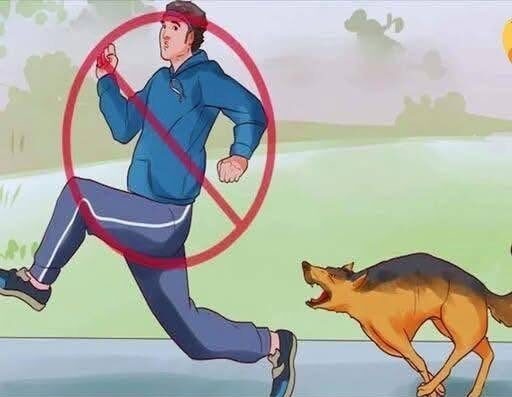
Dogs may also respond to unusual movement. Someone limping, jogging, using walking poles, carrying a large package, or moving unpredictably may attract extra attention. A person who is tall, speaks loudly, bends over the dog, or makes direct eye contact may seem more intense than somebody who walks calmly past at a comfortable distance.
These reactions should be approached with care and without blame. People have many reasons for how they dress, move, or use mobility equipment. The owner’s responsibility is to manage the dog respectfully, maintain a safe distance, and prevent the dog from making another person feel threatened or unwelcome.
Rather than forcing a dog to approach, owners can help by creating space. Crossing the street, stepping off a path, or moving behind a parked car can reduce pressure during an encounter. A dog that has enough room to observe without feeling trapped is often better able to remain calm.
How a Person Approaches Can Matter More Than Who They Are
Direct approaches can be difficult for some dogs. From a human perspective, walking straight toward a dog and reaching out to pet it may seem friendly. From the dog’s perspective, however, a direct approach can feel intrusive, particularly if the person is unfamiliar.
Dogs generally have more comfortable interactions when strangers allow them space and avoid looming over them. A calm person who stands sideways, keeps their hands to themselves, speaks softly, and lets the dog choose whether to come closer may be less intimidating than someone who bends down quickly or tries to make immediate contact.
Children can be especially exciting or challenging for dogs because they may move quickly, use high-pitched voices, run, or change direction suddenly. This does not mean dogs and children cannot safely share spaces. It means adults should actively supervise interactions, teach children to respect a dog’s space, and avoid expecting a dog to tolerate hugging, climbing, chasing, or unwanted touching.
Even a friendly dog may bark when surprised. A person emerging suddenly from behind a corner, stepping out of a vehicle, or approaching from behind can trigger an alert response. In these situations, the bark may be brief and may stop once the dog has processed what happened. Repeated barking, stiff body language, or difficulty recovering may indicate that the dog needs more distance and additional support.
Past Experiences Can Shape a Dog’s Reactions
A dog’s history plays an important role in how it reacts to unfamiliar people. A dog that has had positive, well-managed experiences with a variety of people may be more comfortable in new settings. A dog that was frightened, overwhelmed, mishandled, or insufficiently exposed to everyday situations may be more likely to react when something resembles a previous stressful experience.
This does not mean an owner can always identify one specific cause. Dogs may develop associations from events that humans barely notice, such as a loud noise near a person wearing a particular type of clothing or an unexpected reach from a visitor. A single incident does not necessarily create a long-term problem, but repeated stressful experiences can increase sensitivity.
Age and health can also influence behavior. Pain, reduced hearing, declining vision, and cognitive changes can make a dog more easily startled or less tolerant of close interactions. A dog that begins barking or reacting differently without an obvious explanation should be examined by a veterinarian. Medical conditions should be considered before treating a behavior change as purely a training issue.
Why Dogs Often Bark More at the Front Door or Fence
Many dogs behave differently at home than they do on a walk. A dog that ignores strangers outdoors may bark intensely when a delivery driver, neighbor, or guest approaches the front door. The home environment can feel more important because it contains familiar resources, resting places, family members, and predictable boundaries.
Windows, fences, doorbells, and repeated delivery routines can make barking more likely. A dog may see a person approach, bark, and then watch the person leave. From the dog’s viewpoint, the sequence can appear to confirm that barking worked. In reality, the person may simply have completed a delivery or continued down the street, but the pattern can still reinforce the behavior.
Management can make a meaningful difference. Before opening the door, place the dog behind a secure gate, in another room, or in a comfortable crate if the dog is already crate-trained and relaxed there. Covering a lower portion of a window, using privacy film, or moving furniture away from a frequently monitored window may reduce visual triggers. Owners can also prepare treats or a food puzzle before known delivery times to help create a calmer routine.
Visitors should not be asked to test whether a barking dog has “settled down” by reaching toward it. A dog needs time and space, and introductions should be planned rather than rushed. In some cases, the best arrangement is for the dog to remain separated from guests for the duration of a visit.
Socialization Helps Puppies Learn Without Overwhelming Them
Puppy socialization is often misunderstood as encouraging every puppy to greet every person and dog. In reality, effective socialization involves safe, positive exposure to a wide range of everyday experiences. Puppies can benefit from seeing people of different ages and appearances, hearing ordinary city and household sounds, encountering vehicles and surfaces, and observing unfamiliar activities from a distance they can handle.
The goal is not constant interaction. A puppy does not need to be petted by everyone it sees. Watching a cyclist pass while receiving a treat, noticing a person in a hat from across the street, or calmly observing visitors from behind a baby gate can all be useful learning experiences.
Owners should watch for signs that a puppy is becoming overwhelmed. If the puppy stops taking treats, freezes, repeatedly tries to leave, barks persistently, or cannot settle, the situation may be too difficult. Increasing distance and ending the interaction calmly is often more helpful than insisting the puppy stay.
Positive reinforcement is widely recommended for teaching alternative responses. When a puppy or adult dog notices a person and then looks back at the owner, remains loose-bodied, or continues walking calmly, reward that behavior with a treat, praise, or access to something enjoyable. Over time, the dog can learn that seeing unfamiliar people predicts positive outcomes rather than pressure.
Use Distance and Training to Support a Reactive Dog
For a dog that regularly barks, lunges, or becomes highly aroused around people, distance is one of the most effective tools. This is sometimes called working below threshold. The threshold is the point at which a dog becomes too stressed or excited to respond well to cues, eat treats, or process information calmly.
If a dog can see a person from 20 feet away and remain relaxed but begins barking at 8 feet, training should begin at the greater distance. From there, the owner can reward calm observation and gradually adjust the environment only when the dog is comfortable. Progress is rarely perfectly linear. A dog may need more distance on busy days, in narrow spaces, or when surprised.
A well-fitted harness and standard leash can improve control and reduce the risk of injury. Avoid punishments that cause pain, fear, or intimidation. Harsh corrections may suppress barking temporarily but can worsen the dog’s emotional association with people or make warning signals less predictable. Evidence-based behavior professionals generally focus on management, reward-based training, and changing the dog’s underlying emotional response.
Owners can also teach practical skills at home before using them in difficult environments. Useful cues may include turning away, moving behind the owner, finding treats on the ground, looking at the owner, or going to a mat. These are not meant to force a dog to endure a stressful interaction. They provide clear, familiar options for leaving or coping safely.
When Growling, Snapping, or Lunging Requires Professional Help
Growling, snapping, and lunging should be taken seriously, but they should not be met with panic or punishment. Growling is an important warning signal. Punishing it can remove a dog’s early communication while leaving the discomfort that caused it unchanged.
If a dog has bitten someone, made contact with teeth, repeatedly lunges toward people, or cannot be safely managed around visitors, contact a veterinarian promptly. The veterinarian can assess whether pain or illness may be contributing and may refer the owner to a qualified veterinary behaviorist or experienced reward-based behavior professional.
Keep a simple record of incidents. Note the date, location, distance from the person, what the person was doing, the dog’s body language, and what happened immediately before and after the reaction. This information can help a professional identify patterns and develop a realistic safety and training plan.
Until professional guidance is available, prioritize prevention. Use secure barriers at home, avoid crowded routes if needed, keep the dog on leash in public, and do not allow unfamiliar people to approach without consent. A properly conditioned basket muzzle can be an additional safety tool for some dogs when recommended and introduced gradually through positive training. It should never be used as a substitute for supervision, distance, or behavior support.
Helping Your Dog Feel Safer Around People
A dog that barks at certain people is not necessarily aggressive, stubborn, or trying to dominate a situation. More often, the dog is communicating excitement, uncertainty, fear, frustration, or a need for more space. Owners can make a difference by observing patterns instead of making assumptions.
Consider the whole picture: the person’s appearance, movement, scent, distance, and approach; the location; the dog’s prior experiences; and the dog’s body language. Small adjustments, such as creating room on a walk or managing the front door before visitors arrive, can prevent stressful encounters from escalating.
With consistent, humane training and appropriate professional guidance, many dogs can become more comfortable navigating the world around them. The objective is not to make every dog greet every person. It is to help the dog feel secure, behave safely, and have the freedom to move through daily life with less stress.
Sources
Disclaimer: This content is intended for entertainment purposes only and is not based on real events.