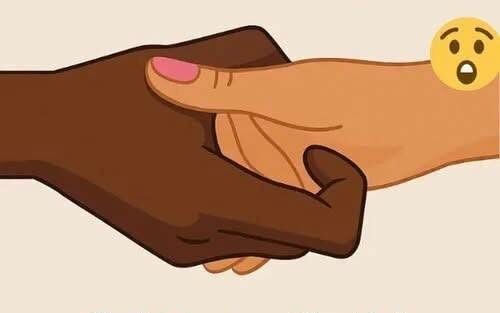

When a Man Scratches a Woman’s Palm During a Handshake, Here’s What It Could Really Mean
A handshake is one of the most familiar social gestures in many parts of the world. It may be used to greet someone, acknowledge an introduction, congratulate a colleague, or close a professional conversation. Because the gesture is usually brief and predictable, an unexpected movement during a handshake can stand out.
One situation that sometimes causes confusion is when a man appears to scratch, brush, or stroke a woman’s palm while shaking hands. The action may last only a moment, yet it can prompt questions about whether it was intentional, flirtatious, accidental, or simply a result of an awkward grip.
There is no universal, scientifically validated code that assigns one fixed meaning to a palm scratch during a handshake. In some informal social discussions, people describe it as a possible sign of flirtation. However, a single physical gesture cannot reliably reveal another person’s feelings or intentions. Context, culture, the relationship between the people involved, and each person’s comfort level matter far more than any supposed hidden signal.
Why an Unusual Handshake Can Feel Significant
Most people expect a handshake to involve a brief clasp of hands followed by release. When the interaction differs from that familiar pattern, it may feel more personal or memorable. The palm is also a sensitive area, so even a light movement can be noticeable.
A person may begin wondering about the meaning of the gesture when it occurs alongside other behaviors, such as prolonged eye contact, smiling, a lingering handshake, or an especially personal conversation. Yet these details remain open to interpretation. Eye contact may reflect attentiveness or cultural norms. Smiling may be simple politeness. A longer handshake may be a matter of habit, nervousness, or poor timing rather than romantic interest.
Nonverbal communication can add context to an interaction, but it is not a precise language in which every motion has one definition. Research on body language consistently cautions against drawing firm conclusions from isolated gestures. People communicate differently depending on their personality, background, environment, stress level, social expectations, and individual habits.
Does Scratching Someone’s Palm During a Handshake Mean Flirting?
It can be interpreted as flirting in some settings, but it should not be treated as proof of attraction. Informal beliefs about a palm scratch often present it as a discreet romantic signal. These claims are widely repeated online and in social conversations, but they are not a universal custom and should not be confused with established evidence about a person’s intentions.
If two adults already have an openly flirtatious relationship, a gentle or unusual touch may be understood in that existing context. For example, people who have been exchanging clear signs of mutual interest may view a playful handshake differently from strangers meeting at a networking event. Even in that situation, however, the gesture alone does not confirm what either person wants.
Flirting is most respectful and understandable when it is mutual. A person may show interest through warm conversation, appropriate compliments, or a low-pressure invitation, such as asking whether someone would like to continue a conversation over coffee. These approaches give the other person a clear opportunity to respond, decline, or set a boundary.
Why the Gesture May Be Accidental
Not every unexpected movement during a handshake is deliberate. Hands can shift while people adjust their grip, move to release contact, or turn toward another person. A fingernail, ring, bracelet, dry skin, or the angle of the hands can create a sensation that feels like a scratch. Some people also gesture with their fingers without realizing how the movement is being perceived.
An accidental explanation may be especially plausible when the contact happens once, ends immediately, and is not accompanied by other behavior suggesting personal interest. It is understandable to notice an unusual touch, but assuming that every unexpected action carries a secret message can lead to unnecessary discomfort or misunderstanding.
The difference between a scratch and a stroke may also affect how someone experiences the moment. A scratch may involve a fingernail moving across the skin, while a stroke may involve the pad of a finger. Neither type of contact automatically explains intent. An action may be accidental even if it feels unusual, and a deliberate action may still be unwelcome even if it seems gentle.
Culture, Relationship, and Setting Shape the Meaning
Handshakes and other forms of greeting vary widely around the world. In some cultures, handshakes are common in business and everyday social life. In others, people may prefer bows, nods, verbal greetings, hand-over-heart gestures, or no physical contact at all. Expectations can also differ according to age, religion, family customs, gender norms, and the setting.
For that reason, the same handshake can have very different meanings to different people. One person may have heard that a palm scratch is flirtatious, while another may never have encountered that idea. A person who is comfortable with frequent physical contact may not realize that someone else prefers more personal space.
Relationship context is equally important. A touch between people in an established relationship may feel affectionate or playful. The same touch between coworkers, strangers, or people in a formal meeting can feel confusing or inappropriate. No one should assume that familiarity, friendliness, or a conventional handshake gives permission for more personal physical contact.
Why Body Language Should Not Be Treated as a Secret Code
Popular articles and social media videos often make body language appear more certain than it really is. They may claim that a particular glance, smile, posture, or touch always reveals attraction, dishonesty, nervousness, or confidence. In reality, human behavior is much more complex.
A smile can express warmth, politeness, embarrassment, or happiness. Folded arms may reflect comfort, temperature, habit, or a desire to hold an item. Eye contact can signal attention in one culture but may feel overly direct in another. Similarly, a movement across the palm during a handshake may have a range of possible explanations.
Experts in communication generally emphasize looking at patterns, context, and spoken words rather than trying to decode one isolated behavior. Even then, interpretation has limits. The only dependable way to know whether someone is interested, uncomfortable, or trying to communicate something personal is through respectful conversation.
Personal Boundaries Matter More Than Guessing Intent
The most important question is not whether a palm scratch has a hidden meaning. It is whether the person receiving the contact feels comfortable. A woman does not need to accept a form of touching simply because it happens during a familiar social ritual such as a handshake.
If the interaction feels uncomfortable, she can release her hand, take a step back, or choose a different greeting in the future. She may decide to say something simple and direct, such as, “I prefer a regular handshake,” or, “Please do not touch my hand that way.” A clear boundary does not require an argument, an apology, or a detailed explanation.
People may also choose different responses depending on the circumstances. In a casual interaction, withdrawing from the handshake may be enough. If the behavior occurs repeatedly or takes place in a setting where there is a power imbalance, such as between a supervisor and an employee, documenting the incident and seeking support may be appropriate.
Palm Scratches and Professional Workplace Conduct
Professional settings require particular awareness of boundaries. Workplaces are generally expected to support respectful interactions that do not make people feel pressured, singled out, or uncomfortable. A greeting that seems personal or flirtatious may be especially unwelcome if there is a difference in authority, influence, or job security.
Guidance from the United States Equal Employment Opportunity Commission explains that harassment can include unwelcome conduct based on protected characteristics when it becomes sufficiently severe or pervasive to create a hostile work environment, or when enduring the conduct becomes a condition of employment. A single ambiguous handshake does not automatically establish harassment. However, repeated unwanted contact or conduct that continues after a person has expressed discomfort can be a serious workplace concern.
Employees who feel uneasy about repeated behavior can review their organization’s policies, speak with a manager they trust, contact human resources, or use available reporting procedures. The safest response will depend on the circumstances, workplace culture, and the individual’s needs. Everyone deserves a professional environment where personal boundaries are respected.
How to Respond if You Want Clarification
When a person wants to understand an unusual handshake, a calm and direct question can reduce speculation. For example, they might ask, “Did you mean to brush my palm during that handshake?” This gives the other person an opportunity to clarify without requiring anyone to guess.
If the gesture was accidental, the matter may end there. If it was intentional and the recipient is not comfortable, they can state that clearly. If both people are interested in one another, they can discuss that interest openly and respectfully rather than relying on ambiguous physical signals.
Direct communication is not always easy, particularly when someone feels surprised, nervous, or concerned about the other person’s reaction. It is also not required in every situation. A person can simply disengage from unwanted contact and seek support if necessary. The person receiving the touch is entitled to choose the response that feels safest and most appropriate.
What Respectful Flirting Looks Like
Respectful flirting depends on mutual interest, awareness, and the ability to say no without pressure. It does not require secret gestures or confusing physical contact. Someone can express attraction through conversation, appropriate compliments, or an invitation that is easy to decline.
For example, asking, “Would you be interested in getting coffee sometime?” is clearer than assuming that a handshake will communicate romantic intent. A respectful person pays attention to the response, accepts a lack of interest gracefully, and does not continue behavior that makes another person uneasy.
Consent also matters with seemingly small gestures. Agreeing to a standard handshake does not necessarily mean agreeing to additional touching, especially if it feels intimate or unexpected. Mutual comfort is a better guide than trying to follow social media claims about hidden signs.
What a Palm Scratch During a Handshake Really Tells You
A palm scratch during a handshake tells you that an unexpected movement occurred. It may have been an intentional attempt to flirt, an unconscious habit, an awkward adjustment, or a completely accidental touch. Without further information, no single explanation can be confirmed.
Context can offer clues, but clues are not certainty. A person’s relationship with the other individual, the setting, cultural expectations, verbal communication, and repeated patterns of behavior may all influence how the interaction is understood. Most importantly, the recipient’s comfort and boundaries should remain central.
Rather than relying on a supposed secret handshake signal, people can communicate openly, ask respectful questions, and honor one another’s preferences. If an interaction feels welcome, both people can continue it freely. If it does not, a boundary should be enough.
Sources
Disclaimer: This content is intended for entertainment purposes only and is not based on real events.