
Copperhead Snake Bite First Aid: What to Do and What to Avoid
A suspected copperhead snake bite can be frightening because it happens quickly and may cause immediate pain, anxiety, and uncertainty. Eastern copperheads are venomous pit vipers found across much of the eastern and central United States. They are usually well camouflaged among leaf litter, woodlands, grass, rocks, and fallen branches, and they generally try to avoid people. However, a snake may bite when it feels threatened, surprised, stepped on, handled, or unable to retreat.
The most important message after any suspected venomous snake bite is straightforward: move away from the snake, remain as calm and still as possible, and seek urgent medical evaluation. Do not try to determine on your own whether venom was injected. Some bites may involve little or no venom, but there is no reliable way for a person in the field to tell the difference. Pain, swelling, bruising, and other symptoms can change over time, so professional observation is essential.
Deaths from copperhead bites are uncommon in the United States, particularly when medical care is obtained promptly. Even so, copperhead venom can cause substantial local injury, including severe pain, swelling, blistering, and tissue damage. A bite should never be dismissed simply because the person initially feels well or because the snake appeared small.
Why Copperhead Encounters Can Feel So Sudden
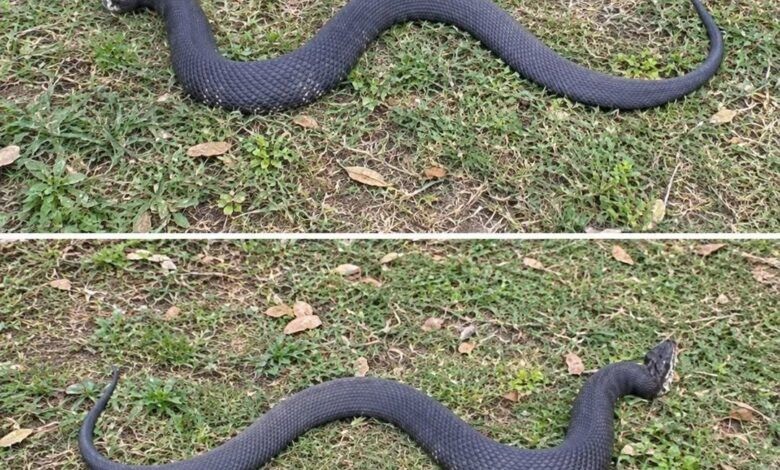
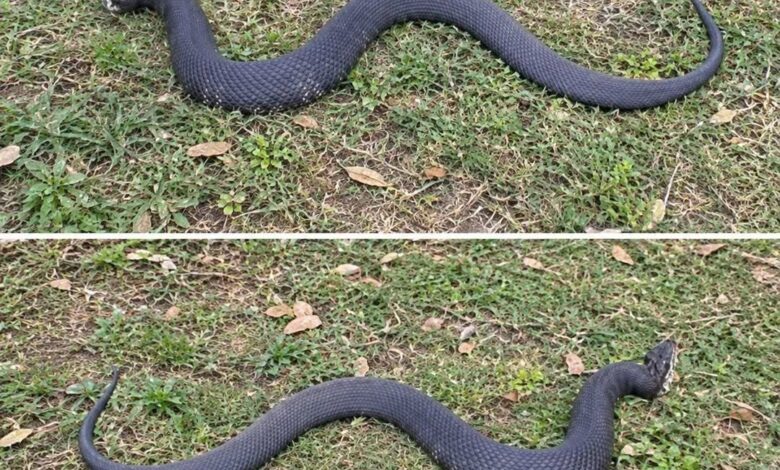
Eastern copperheads are known for their distinctive camouflage. Their tan, copper, brown, and chestnut coloring can blend closely with dry leaves, forest floors, garden mulch, brush, and shaded ground. The pattern is often described as resembling hourglass-shaped bands when viewed from above, although visual identification should not be relied on during an emergency.
Many encounters occur during warmer months, when people are hiking, gardening, hunting, camping, walking dogs, working outdoors, or moving through areas with dense vegetation. A person may not notice the snake until they are already very close. In most cases, the snake is not pursuing a person; it is responding defensively to a perceived threat.
This context matters because it can help prevent a second injury. Once a bite occurs, people may feel a strong urge to look for the snake, identify it, take a closer photograph, or remove it from the area. These actions can create another opportunity for a bite. The priority should immediately shift away from the animal and toward getting the injured person safely evaluated by medical professionals.
What to Do Immediately After a Suspected Copperhead Bite
Emergency guidance from public health authorities and medical experts emphasizes a small number of practical steps. These measures are intended to reduce the risk of additional injury and support safe transport to medical care.
- Move away from the snake. Create a safe distance without attempting to capture, touch, corner, or kill the animal. Snakes can strike again when disturbed.
- Call emergency services or arrange immediate transport to an emergency department. In the United States, call 911 when symptoms are serious, transportation is unsafe, or the bite involves a child, older adult, or person with significant medical conditions. Poison Control can also provide immediate guidance at 1-800-222-1222.
- Keep the person calm and limit movement. Walking or physical exertion may increase circulation and make symptoms more difficult to manage. If possible, have someone else drive or wait for emergency responders.
- Remove rings, watches, bracelets, boots, or tight clothing near the bite. Swelling can develop rapidly, particularly if the bite is on a hand, arm, foot, or leg. Removing restrictive items early can prevent complications.
- Support the affected limb in a comfortable, neutral position. Avoid excessive movement and do not tightly wrap the limb. Medical responders can provide more specific positioning advice based on the person’s condition.
- Note the time of the bite and changes in symptoms. If it can be done without delaying care, record when the bite occurred and observe whether pain, swelling, nausea, weakness, or other symptoms are developing.
If a photograph of the snake can be taken from a safe distance, it may be helpful to clinicians or wildlife authorities. However, a picture is never worth delaying medical care or risking another bite. A photograph also cannot tell clinicians how much venom entered the body or predict how an individual will respond.
Symptoms of a Copperhead Snake Bite
Copperhead bites often cause local symptoms around the bite site. Pain may begin quickly and can become significant. Swelling may spread beyond the initial puncture marks, and the skin can become discolored or bruised. Some people may experience nausea, vomiting, sweating, tingling, weakness, dizziness, or anxiety.
Symptoms can vary widely. Children, older adults, and people with certain health conditions may be more vulnerable to complications, but every suspected venomous bite should be assessed regardless of age or apparent health. A person who seems stable immediately after the bite may still develop worsening swelling or other concerns during the next several hours.
It is also important to understand that the appearance of fang marks does not confirm the severity of a bite. A snake can leave one or more punctures, scratches, or marks that are difficult to see. Conversely, visible marks do not reveal whether venom was injected. Medical teams focus on the patient’s symptoms, physical examination, laboratory testing when appropriate, and changes observed over time.
Treatments and Folk Remedies to Avoid
Fear can lead bystanders to try traditional remedies that seem practical but are not supported by modern medical evidence. Several actions can worsen injury, increase infection risk, restrict blood flow, or delay needed care.
Do not cut the bite wound. Cutting the skin does not remove venom and can cause additional bleeding, scarring, and infection. Similarly, do not attempt to suck venom from the wound by mouth or with a suction device. These methods have not been shown to help and may damage tissue.
Do not apply a tourniquet or tightly constricting band. Restricting circulation can seriously damage the limb and may make swelling-related injury worse. Pressure immobilization techniques are recommended for some types of snakebite in specific regions of the world, but they are not generally recommended for suspected pit viper bites such as copperhead bites in the United States unless directed by qualified medical professionals.
Do not use ice, cold packs, heat, electric shock, alcohol, or chemicals on the bite. Ice can increase tissue injury, while electric shock has no proven benefit and can create new medical risks. Avoid applying herbs, ointments, or other substances that may irritate the skin or interfere with medical assessment.
Do not consume alcohol or caffeine in an effort to cope with stress. These substances are not treatments for snakebite and can complicate dehydration, anxiety, or medical evaluation. Do not take aspirin, ibuprofen, or other nonsteroidal anti-inflammatory drugs unless a clinician advises it, because they may affect bleeding risk in certain circumstances. Healthcare professionals can recommend appropriate pain management.
How Hospitals Assess and Treat Copperhead Bites
At an emergency department, clinicians will evaluate the person’s overall condition and carefully examine the affected area. They may document the extent of swelling, measure the limb at intervals, monitor vital signs, and ask about the time of the bite, medical history, medications, allergies, and symptoms.
Because venom effects can evolve, observation is often an important part of care. Medical teams may perform laboratory tests to assess blood counts, clotting, kidney function, and other indicators when clinically appropriate. The decision to admit a patient, observe them for a longer period, or discharge them with follow-up instructions depends on the severity and progression of symptoms.
Antivenom may be used when clinicians identify medically significant effects from the bite, such as progressive swelling, serious pain, or systemic symptoms. Antivenom decisions are based on clinical assessment rather than on a person’s confidence that they identified a copperhead. The benefits and possible risks of antivenom are considered by the treating team, often with support from poison control specialists or medical toxicologists.
Not every copperhead bite requires antivenom. Some patients can be treated with observation, pain control, wound care, elevation or positioning advice after assessment, and follow-up. However, that determination must be made by trained healthcare professionals. Delaying evaluation to see whether symptoms “get bad enough” can make treatment more complicated.
Why Identification Is Helpful but Not the Main Priority
People often want to know exactly which snake caused the bite. A calm description from a safe distance may be useful: color, approximate size, markings, location, and whether the snake had a broad triangular-looking head can all provide context. Still, rushed visual identification is not reliable, especially when an encounter happens in tall grass, low light, or dense leaves.
In the United States, healthcare teams generally treat a suspected venomous snake bite according to the patient’s clinical presentation. A photo may support the history, but it does not replace evaluation. More importantly, returning to the snake can put the injured person, family members, pets, or bystanders at risk.
Wildlife agencies generally advise people to leave snakes alone whenever possible. Snakes play important ecological roles by helping control rodent populations and serving as part of local food webs. Respecting their space, rather than trying to handle or harm them, is safer for people and animals alike.
Preventing Copperhead Bites Outdoors
Prevention begins with awareness in areas where copperheads may live. When walking in woods, fields, rocky terrain, or locations with thick vegetation, stay on clear paths where possible and watch where you place your hands and feet. Wear closed-toe shoes or sturdy boots and long pants when working outdoors, especially while clearing brush, gathering firewood, gardening, or hiking.
Use a flashlight after dark, since snakes may be difficult to see in low light. Avoid reaching into woodpiles, hollow logs, rock crevices, dense shrubs, or piles of leaves without first checking carefully. Keep yards reasonably clear of accumulated debris that can provide shelter for rodents and snakes.
Parents and caregivers can also teach children a simple rule: never touch a snake, whether it appears alive, injured, or dead. A snake that looks motionless may still react defensively. Dogs should be kept on a leash in areas where snakes may be present, as pets can be bitten while investigating brush or leaf piles.
When to Call for Emergency Help
Any suspected venomous snake bite warrants urgent professional advice and medical assessment. Call emergency services immediately if the person has trouble breathing, faints, becomes confused, develops severe weakness, has rapidly spreading swelling, experiences persistent vomiting, or cannot safely travel to a hospital. Emergency care is particularly important for bites involving children, pregnant people, older adults, or anyone with serious underlying medical conditions.
Even when symptoms appear limited, contact Poison Control or seek emergency evaluation promptly. The central goal is not to panic, but to act efficiently: get away from the snake, avoid harmful home treatments, reduce unnecessary movement, remove constricting items, and allow clinicians to monitor the injury.
Key Takeaway: Prompt Medical Care Is the Safest Response
A copperhead bite is an urgent medical situation, but effective steps are clear and practical. Do not chase or handle the snake. Do not cut, suck, freeze, shock, or tightly wrap the wound. Instead, move to safety, contact emergency services or Poison Control, keep the affected person calm, and get evaluated at a hospital.
Copperheads are often difficult to see because their camouflage is effective, and encounters can leave people shaken. A calm, evidence-based response gives the injured person the best chance of avoiding complications and receiving the right treatment. In the uncertainty that follows a bite, professional assessment is far safer than relying on appearances, folklore, or delayed action.
Sources
Disclaimer: This content is intended for entertainment purposes only and is not based on real events.