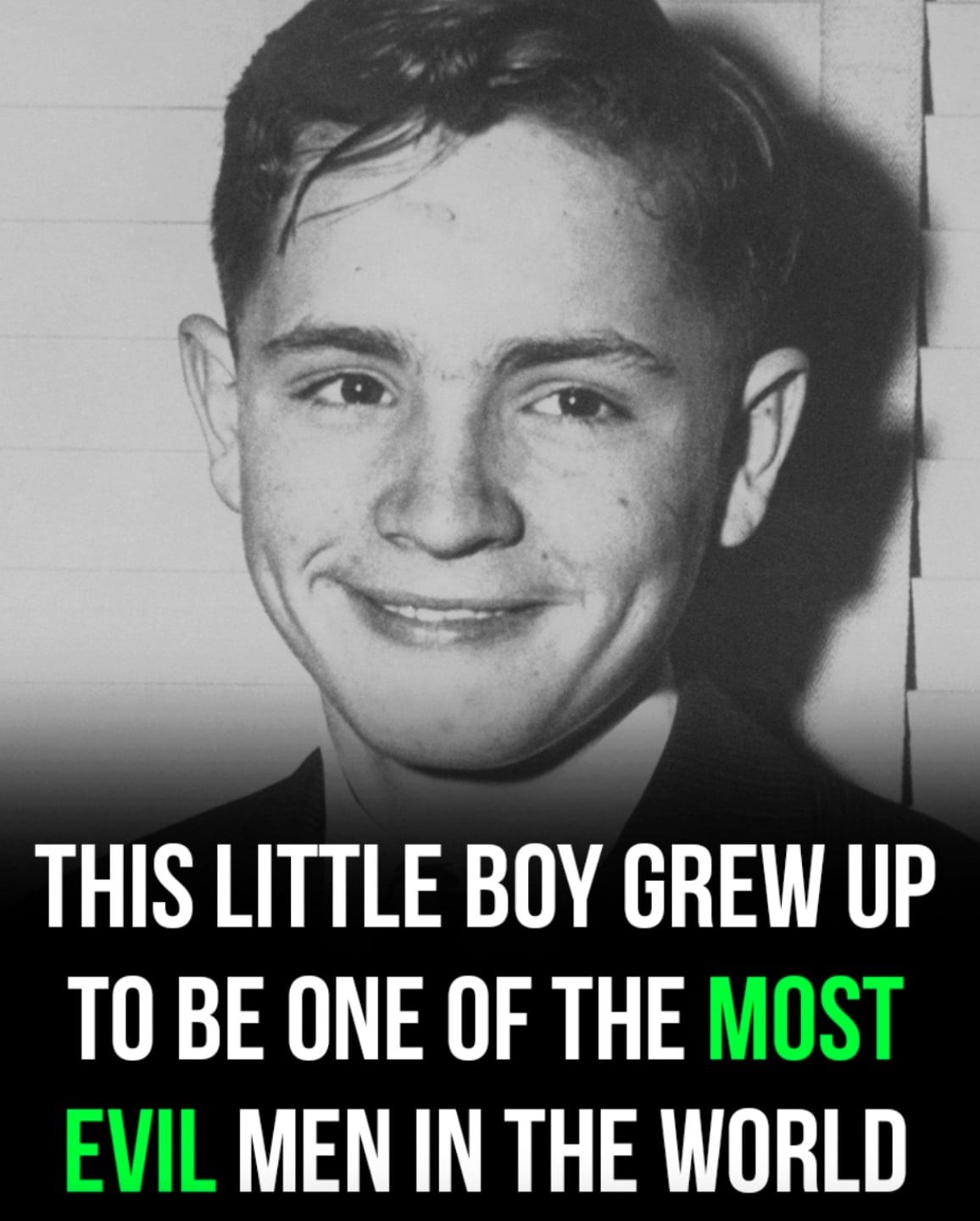

Even before the blood, before the cult, before the word “Manson” became shorthand for evil, something was already cracking. A boy was learning that love could vanish, that violence got results, that no one was coming to save him. Step by step, his world turned darker—until the day his name stopped being just a na…
The story of Charles Manson is not an excuse for what he became, but a map of how a damaged child can grow into a dangerous man. A father who vanished, a teenage mother imprisoned for robbery, and a carousel of relatives and institutions taught him early that people were temporary and pain was permanent. Reform schools, Catholic boys’ homes, and federal facilities layered trauma over defiance, sharpening his instincts for survival into skills of manipulation and control.
As he moved into adulthood, those instincts evolved into something far more sinister. Hypnosis, psychological pressure, and a predatory focus on the vulnerable allowed him to build the Manson Family, a cult bound by fear, drugs, and delusion. The “Helter Skelter” murders were the final, horrifying expression of a life shaped by chaos and fueled by choice. Long after his death, Manson’s legacy endures as a warning: untreated damage doesn’t just disappear—it can metastasize into monstrosity.
The Institutional Crucible: Forging a Manipulator
Born in Cincinnati, Ohio, in November 1934 to sixteen-year-old Kathleen Maddox, Charles Milles Manson spent his earliest years without stability, consistent protection, or emotional anchoring. When his mother was sentenced to prison for armed robbery in 1939, young Charles was shuffled between reluctant relatives before entering a series of state reformatories and boys’ institutions—including the Gibault School for Boys in Indiana and Boys Town in Nebraska.
Rather than rehabilitating him, the mid-century juvenile justice system functioned as an unintentional training ground. In overcrowded, often punitive facilities, Manson discovered that physical size was not his greatest weapon—psychological observation was. He studied how guards, peers, and authorities operated, learning to read emotional vulnerabilities and exploit them for protection or dominance.
By the time he was released from Terminal Island federal prison in March 1967—at age thirty-two, having spent more than half his life behind bars—Manson was ill-equipped for ordinary society yet dangerously fluent in human manipulation. During his prison years, he had absorbed books on self-help, hypnosis, and behavioral conditioning, translating those concepts into tools for controlling others.
The Architecture of Coercive Control in the Manson Family
Arriving in San Francisco during the height of the 1967 “Summer of Love,” Manson recognized an unprecedented opportunity. Thousands of disillusioned, emotionally unmoored young people had drifted away from their families in search of spiritual awakening, communal love, and rebellion against mainstream authority.
Manson did not recruit followers through immediate threats of violence. Instead, he used a calculated sequence of psychological conditioning that criminologists and cult experts still study today as a textbook example of coercive persuasion.
Through this systematic dismantling of personal identity, Manson transformed ordinary, middle-class young men and women into compliant instruments of his grievances—particularly his simmering resentment toward the Los Angeles music and entertainment establishment that had rejected his own ambitions as a songwriter.
Choice vs. Circumstance: The Line Between Trauma and Culpability
When examining the biography of a notorious criminal, an essential moral and analytical distinction must remain clear: understanding the roots of pathology never excuses the crimes committed.
Millions of children endure abandonment, poverty, abuse, and institutional neglect without ever harming another human being. Many channel early pain into empathy, advocacy, or quiet resilience. Charles Manson’s childhood explains how he developed an acute radar for human weakness and a deep hostility toward social rules—but his adult actions were deliberate, calculated choices.
In August 1969, when Manson dispatched followers to the Cielo Drive residence of Sharon Tate and Jay Sebring, and the following night to the home of Leno and Rosemary LaBianca, he was not acting out of blind childhood panic. He was executing a cold, narcissistic strategy—hoping to ignite racial panic and societal chaos while keeping his own hands physically clean of the blades. California courts rightly recognized that orchestrating murder through psychological coercion carries full legal and moral culpability, resulting in his conviction on seven counts of first-degree murder and conspiracy.
The Enduring Warning of a Dark Chapter
Charles Manson died in prison in November 2017 at the age of eighty-three, nearly half a century after the summer of 1969 shattered the illusion of carefree counterculture innocence. Yet the fascination—and warning—surrounding his life persists because his methods were neither supernatural nor uniquely bound to 1960s California.
Predatory manipulation still thrives wherever isolation, unhealed trauma, and charismatic authoritarianism intersect. Manson’s trajectory stands as a sobering dual reminder: society pays a steep price when damaged children are warehoused in punitive institutions without genuine care, and every adult remains fully accountable for whether they use their survival instincts to heal—or to destroy.