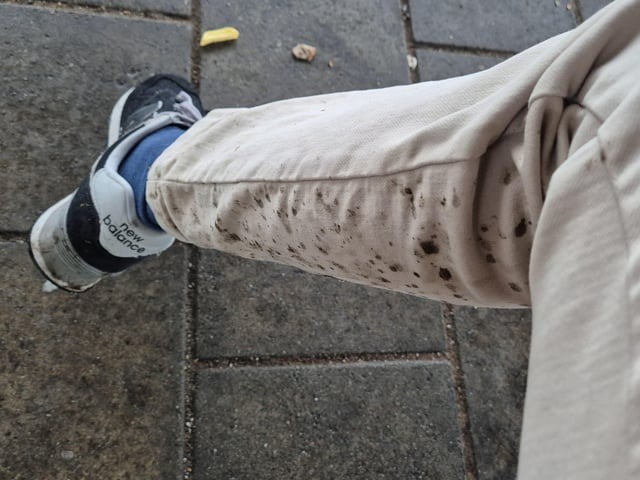

A walk through a grassy trail, park edge, field, or overgrown footpath can leave behind an unexpected souvenir: dozens of tiny dark objects attached to a pant leg, shoe lace, sock, or jacket sleeve. They may look like dirt, dried plant material, small pods, or unfamiliar insects at first glance. Their ability to remain firmly attached to fabric can make the discovery feel surprising.
In many cases, these tiny hitchhikers are burrs, also spelled burs, or other adhesive seed structures produced by plants. They are not usually a sign of a dangerous problem. Instead, they are part of a highly effective natural system for moving seeds from one place to another. A person walking past a plant may unknowingly become temporary transportation for its next generation.
Understanding how burrs work can turn a confusing outdoor moment into an interesting lesson in plant ecology. These small structures reveal that plants are not passive parts of the landscape. Many species have evolved specialized ways to use wind, water, animals, and people to disperse their seeds across a wider area.
Why Tiny Seed Pods Stick to Pants and Shoes
Plants need their seeds to travel away from the parent plant. If all seeds fall directly beneath the same plant, young seedlings may compete for light, moisture, nutrients, and space. Seed dispersal helps reduce that competition and allows plants to colonize suitable new habitats.
Some plants rely on wind, producing light seeds that can float through the air. Others produce fruit that animals eat and later disperse. Another strategy is called epizoochory: seeds travel externally by attaching to the fur, feathers, skin, or clothing of passing animals and people.
Burrs are among the best-known examples of this strategy. Depending on the species, a burr may have hooks, barbs, bristles, spines, or stiff projections. These features catch in animal fur or woven fibers. When a walker brushes against a mature plant, the burrs can transfer quickly and remain attached until they are removed somewhere else.
This is why the objects may be concentrated on one side of a pant leg rather than scattered evenly across clothing. A person often picks them up after passing close to a specific patch of vegetation, leaning against a plant, stepping off a narrow trail, or brushing through grass. Shoes and laces are also common collection points because they come into direct contact with low-growing plants.

What Were the Tiny Objects on the Pant Leg?
Without a clear photograph, location, or sample examined by a qualified local expert, it is not possible to identify a plant with certainty. However, burr-producing plants are common in many regions, particularly near disturbed ground, paths, field borders, roadsides, woodland edges, and areas where grass has grown tall.
Several plant groups produce seed structures that may cling to clothing:
- Burdoch species: Burdock produces rounded burrs with hooked tips. These hooks are especially effective at catching on fabric and animal fur.
- Cocklebur species: Cockleburs form oval, spiny seed cases that can adhere to clothing and fur. Their appearance is distinctive, though individual species vary by region.
- Beggar-ticks and tickseed species: Some plants in the genus Bidens produce narrow seeds with barbed projections that cling easily to socks, trousers, and pet fur.
- Bedstraw and cleavers: Certain bedstraw plants have small hooked fruits that can attach to fabric after contact.
- Grass awns and other bristled seeds: Some grasses produce bristly seed heads that may become tangled in clothing, though they do not always look like classic rounded burrs.
The common name “burr” describes a function more than a single plant species. Different plants can produce very different-looking structures while using the same basic strategy: catching a ride on something moving through the environment.
Why Burrs Can Look So Unfamiliar
Burrs are easy to overlook while still attached to a living plant. They may be hidden among leaves, grasses, stems, or other vegetation. Once they appear against the smooth surface of dark or light clothing, however, their shape becomes much more noticeable.
They can also look different after they dry. Fresh seed structures may be green, soft, or partly concealed by foliage. Mature burrs often become brown, tan, dark, or nearly black. They may feel woody, stiff, or rough. Some are round and compact, while others are curved, oval, segmented, or needle-like.
It is understandable for a person to wonder whether the objects could be insects, eggs, or another unfamiliar outdoor material. But seed structures generally show a consistent plant-like shape and tend to collect where fabric brushed vegetation. Insects and their eggs have different life cycles and are not typically distributed as dozens of identical hooked objects tightly embedded across one side of a trouser leg after walking through tall grass.
If there is any uncertainty, a close, well-lit photograph can help. Local botanical gardens, cooperative extension offices, natural history museums, native plant organizations, and plant-identification communities may be able to offer guidance. Identifying a plant is most reliable when images include the entire plant, its leaves, flowers, stem, habitat, and seed structure rather than only a single burr.
A Natural Design That Inspired Velcro
The gripping ability of burrs has influenced modern design. One of the best-known examples is Velcro, a hook-and-loop fastening system inspired by burrs. Swiss engineer George de Mestral reportedly examined burrs that had attached to his clothing and his dog’s fur during a walk in the 1940s. Looking at them under magnification, he observed tiny hooks that caught onto loops in fabric and fur.
That observation eventually led to the development of a reusable fastening material based on the same principle. Today, hook-and-loop fasteners are used in clothing, shoes, medical products, spacecraft equipment, sports gear, and many household items.
This connection is a useful example of biomimicry, the practice of drawing inspiration from natural systems to solve human design challenges. Burrs may be inconvenient when they cover clothing, but their structure demonstrates an efficient mechanical solution refined through evolution.
How to Remove Burrs From Clothing Safely
Most burrs can be removed at home without special equipment. The best method depends on how deeply the hooks or bristles have become entangled in the fabric.
Start by removing loose burrs outdoors or over a bin to prevent seeds from spreading inside the home. Gently pull larger burrs away from the fabric one at a time. Avoid yanking delicate clothing, as this can stretch fibers or create snags.
For stubborn pieces, try one of these practical approaches:
- Use a fine-toothed comb to lift burrs from sturdy fabrics.
- Use tweezers for individual hooks caught in seams, laces, or knit material.
- Wear gloves when handling sharp or prickly seed pods.
- Use a lint roller for tiny loose fragments after the larger pieces are gone.
- Wash the garment according to its care label after removing visible plant material.
It is usually better to remove burrs before putting clothing in a washing machine. Hooks and plant fragments can remain attached, and larger seed pods may become lodged in other garments. Checking shoes, socks, pet fur, bags, and jacket cuffs can also help prevent burrs from being carried from one location to another.
Are Burrs Harmful to People or Pets?
For most people, ordinary contact with burrs is mainly an annoyance. They are designed to attach, not to cause injury. Still, some burrs and grass awns can be prickly, and handling them may irritate sensitive skin. Gloves are a sensible option when removing a large number of sharp seed structures.
Pet owners should inspect a dog’s coat after walks through long grass, brushy areas, or dry fields. Burrs can become tangled in long fur and may be uncomfortable if they collect around paws, ears, or other sensitive areas. Grass awns deserve particular attention because some types can work their way into fur and skin. If a pet appears uncomfortable, persistently licks one area, limps, shakes its head repeatedly, or has a burr or awn lodged where it cannot be safely removed, a veterinarian should be consulted.
It is also important not to assume that every plant seed is harmless if swallowed. Certain plants can be toxic to people or animals, and some prickly plant material can create a physical hazard. Keeping unidentified seeds away from children and pets is a reasonable precaution. When in doubt, local poison-control services, a veterinarian, or a regional plant expert can provide more specific advice.
How Walkers Can Avoid Collecting Burrs
Completely avoiding burrs is not always realistic, especially in late summer and autumn when many plants are releasing mature seeds. A few simple habits can reduce the chance of bringing home a pant leg covered in hitchhikers.
Stay near the center of maintained trails when possible, particularly where vegetation leans into the path. Long pants made from smoother, tightly woven fabric may collect fewer burrs than loose knits or fleece. Closed shoes can help protect feet and make it easier to inspect footwear after a walk. If walking with a dog, regular brushing and a quick coat check can prevent seeds from becoming tangled.
For hikers, gardeners, and outdoor workers, a small comb, tweezers, or lint roller can be useful additions to a bag or vehicle. Removing seeds soon after exposure is often easier than waiting until they have been pressed deeper into fabric.
What Burrs Teach Us About Seed Dispersal
A pant leg covered in tiny seed pods may seem like an ordinary outdoor inconvenience, but it represents a larger ecological process. Plants cannot walk toward new habitat, yet their seeds can travel. By using animals and humans as accidental carriers, burr-producing plants increase the distance their offspring may reach.
This form of dispersal has helped plants occupy changing landscapes for a very long time. Trails, fields, forest edges, and open spaces can provide opportunities for seeds to establish themselves where conditions are favorable. Human movement can also influence where seeds travel, which is one reason people are encouraged to clean footwear, clothing, bicycles, and pet fur after visiting natural areas. Removing plant material helps limit the unintentional spread of invasive species between ecosystems.
The next time small hooked objects appear on clothing after a walk, the explanation may be less alarming than it first seems. They are often simply seeds using a successful method of transportation. What looks like a strange cluster of tiny objects is frequently evidence of a plant’s practical and surprisingly sophisticated survival strategy.
Sources
Disclaimer: This content is intended for entertainment purposes only and is not based on real events.