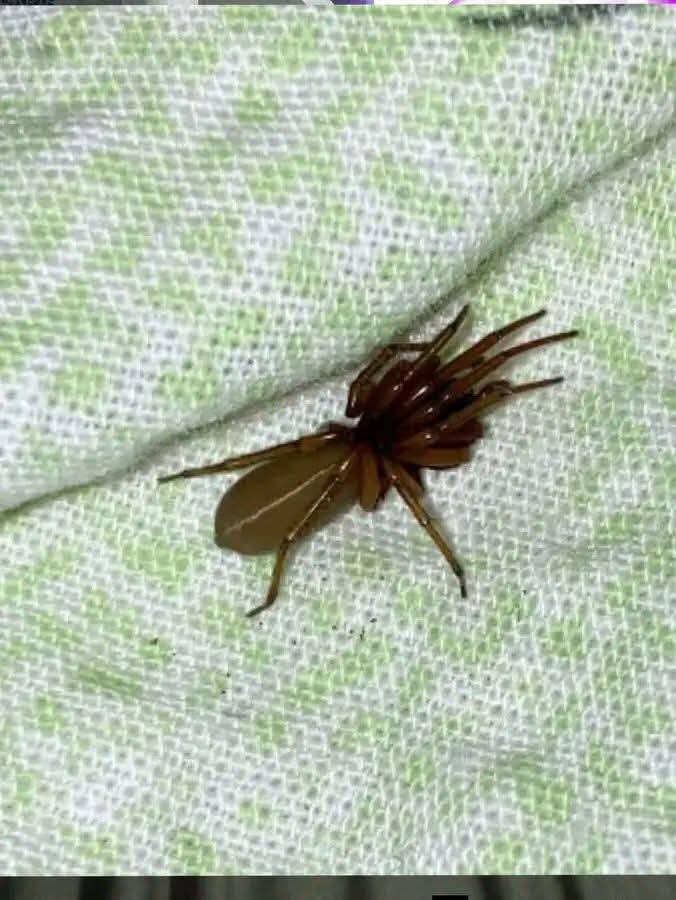

Red-Fanged Wandering Spider: A Nocturnal Hunter Without a Web
Many people associate spiders with carefully constructed webs stretched between branches, corners, or garden plants. Webs are indeed one of nature’s most effective prey-capture tools, but they are far from the only strategy used by spiders. Across the world, many species hunt actively instead of waiting for prey to become trapped in silk. Often described in popular accounts as a red-fanged wandering spider, these night-active hunters rely on mobility, camouflage, touch-sensitive hairs, and rapid responses rather than on a large capture web.
The phrase “red-fanged wandering spider” is not always a precise scientific name. Common names can vary between countries, regions, wildlife guides, and online reports. Spiders with reddish mouthparts or fangs may belong to different families, and “wandering” can simply describe an active hunting lifestyle rather than a single species. For that reason, accurate identification generally requires a clear photograph, location information, and examination of features such as body shape, eye arrangement, markings, and reproductive structures by a qualified arachnologist.
Even so, the description points to a fascinating and well-documented style of spider behavior: nocturnal hunting without a prey-catching web. These spiders demonstrate that silk is not limited to trapping insects. Active hunters may still use silk for shelters, egg sacs, safety lines, or temporary retreats, while depending on their senses and speed to secure food.
What Makes a Wandering Spider Different?
Web-building spiders and wandering spiders occupy different ecological roles. Orb-weavers, for example, produce the familiar circular webs that intercept flying insects. Their webs can provide information about prey size and location through vibrations transmitted along silk threads. Wandering spiders take a more direct approach. They move through vegetation, soil, bark, leaf litter, stones, and other surfaces where potential prey may be hiding.
An active hunter must solve several challenges. It needs to find prey without a wide web acting as a trap, approach without being detected, and respond quickly enough to catch an insect that may jump, fly, or run away. The solution is a combination of physical adaptations and behavior. Many hunting spiders use low-light activity patterns, cryptic coloration, sensitive sensory organs, and quick bursts of movement to improve their chances of success.
Nocturnal activity can offer important advantages. At night, temperatures may be cooler, humidity may be higher, and some prey species become more active. Darkness may also reduce the likelihood of being seen by certain predators. However, hunting after sunset requires an animal to interpret a world where visual information can be limited. Spiders meet this challenge through an array of sensory systems that are remarkably effective at close range.
A Spider Built for Detecting Movement
Spiders do not have ears in the way mammals do, but they are exceptionally sensitive to vibration and air movement. Fine hairs and specialized sensory structures on their legs and bodies can detect subtle changes in their surroundings. These structures help a spider register the movements of nearby insects, the vibration of a surface, or even faint air currents produced by another animal.
For a ground-dwelling or foliage-hunting spider, this sensory awareness is essential. A beetle walking beneath leaves, a cricket moving across soil, or a moth resting on bark may generate cues that reveal its location. The spider can pause, orient its body, and decide whether to approach. Rather than randomly rushing through its habitat, an effective hunter often uses a sequence of careful movements, brief stillness, and rapid action.
Vision also varies greatly among spider groups. Some active hunters, especially jumping spiders, are known for highly developed eyesight. Other nocturnal spiders may depend more heavily on touch and vibration, although they still possess eyes that help them detect light, movement, or nearby objects. The balance between sight and other senses depends on the species, habitat, and time of activity.
The Role of Red Fangs and Mouthparts
Reddish fangs can make a spider appear especially dramatic, but color alone does not determine how dangerous it is. In spiders, the fang-bearing structures are called chelicerae. They are used to grasp prey and inject venom. Depending on the species, the chelicerae may be dark brown, black, orange, red, or another shade. Their appearance can vary with age, sex, lighting, and the condition of the spider’s outer body covering.
Venom is a normal part of spider biology. It helps spiders subdue prey and begin digestion. Most spiders are adapted to capture small invertebrates, not to interact with people. In the great majority of cases, spiders avoid humans and bite only when handled, trapped against skin, or disturbed in a hiding place. The medical significance of a bite depends entirely on the species involved, the amount of venom delivered, the individual’s health, and the availability of medical care.
Because common names can be unreliable, people should not assume that any red-fanged or wandering spider has the same risk profile. If an unknown spider is found indoors or near areas used by children or pets, it is usually best to avoid handling it. A clear photograph taken from a safe distance can be useful for local wildlife experts, pest-management professionals, museums, or public health authorities that provide identification guidance.
How Active Hunting Works After Dark
The hunting process typically begins in a protected retreat. During daylight hours, an active spider may shelter beneath loose bark, rocks, logs, dense plants, leaf litter, or cracks in structures. At night, it emerges and searches through a relatively small area or patrols a broader route depending on the species and the available food.
Once prey is detected, the spider may stalk slowly and remain nearly motionless between steps. This careful approach reduces the chance of alerting the target. At close range, the spider can rush forward, seize the prey with its legs and chelicerae, and inject venom. The prey is then immobilized or subdued, allowing the spider to feed safely.
Spiders do not chew food in the same way humans do. Instead, many use digestive fluids to break down tissues externally before taking in the resulting liquid. This feeding method is shared broadly among spiders and is one reason their mouthparts are so specialized. While the process can sound unusual, it is a highly successful adaptation that has helped spiders become important predators in ecosystems around the globe.
The speed of a hunting spider should not be mistaken for aggression. A spider may move quickly because it is searching for prey, escaping a disturbance, or seeking cover. When encountered by people, most spiders prefer retreat over confrontation. Giving the animal space and avoiding direct contact are sensible ways to reduce stress for both the spider and the person observing it.
Why Webless Spiders Matter in Ecosystems
Active hunting spiders are part of a larger food web. They consume insects and other small invertebrates, while they may themselves become prey for birds, reptiles, amphibians, mammals, parasitoid wasps, and other spiders. Their role in controlling invertebrate populations can be especially valuable in gardens, forests, grasslands, and agricultural landscapes.
Scientists have long recognized spiders as significant generalist predators. Because they feed on many types of insects, their presence can contribute to the natural balance of local ecosystems. They are not a substitute for carefully managed pest-control systems where those are needed, but they can be one component of healthy biodiversity. A garden with leaf litter, native plants, and undisturbed corners may support a variety of spider species alongside pollinators, beetles, and other wildlife.
Wandering spiders also reveal how diverse spider evolution has become. Some species build elaborate orb webs, while others construct funnel webs, sheet webs, burrows, nursery webs, or small silken retreats. Still others hunt by ambush, chase prey across open surfaces, or wait near flowers where insects visit. The absence of a large capture web does not mean silk has disappeared from the spider’s life; it means silk is being used in a different way.
Identification Requires Caution and Context
Spider identification from a brief description is difficult. Color is particularly unreliable because many unrelated species may share reddish fangs, dark legs, patterned abdomens, or brown body coloration. Geographic location is one of the most important clues. A spider in Australia, North America, South America, Africa, Europe, or Southeast Asia may belong to entirely different groups even if it looks similar at first glance.
Reliable identification resources typically ask for several details: where the spider was found, the date and time, whether it was indoors or outdoors, its approximate size, and photographs showing the top and front of the body if these can be obtained without risk. Local natural history museums, university extension services, arachnological societies, and official health agencies may offer region-specific information.
It is also important to avoid overstating danger in online descriptions. Sensational labels can lead people to kill harmless wildlife or to panic after seeing a common house or garden spider. Evidence-based information is more useful: do not touch an unknown spider, use gloves when moving stored items or debris, shake out footwear left outdoors, and seek medical advice if a bite causes concerning symptoms such as severe or worsening pain, breathing difficulty, widespread rash, dizziness, or signs of infection.
Living Alongside Nocturnal Spiders
For most households, coexistence is practical. Spiders found indoors can often be gently contained with a glass and stiff card and released outside, provided this can be done without close contact and local guidance does not advise otherwise. Sealing gaps around doors, windows, pipes, and screens can reduce the likelihood of spiders entering buildings. Reducing clutter near exterior walls and keeping outdoor lighting managed may also limit the insects that attract spider prey.
In areas where medically important spiders are known to occur, residents should follow advice from local public health authorities. Simple precautions include wearing gloves while gardening, checking bedding or clothing that has been stored in sheds, and keeping sleeping areas away from undisturbed piles of materials. These measures are designed to prevent accidental contact, not to encourage fear of all spiders.
For nature observers, a nocturnal hunting spider can be an opportunity to appreciate a less visible side of wildlife. With a flashlight used carefully and without disturbing the animal, observers may notice how deliberately a spider navigates leaves, soil, and bark. Its movements reflect millions of years of evolutionary adaptation: a predator capable of succeeding without a conventional web, guided by sensory information that humans rarely notice.
What the Red-Fanged Hunter Teaches Us About Spider Diversity
The image of a spider waiting at the center of a web is only one part of a much larger story. Active hunters show that spiders have evolved many solutions to the challenge of finding food. Some rely on silk architecture, while others depend on stealth, sensory precision, camouflage, and short bursts of speed. A red-fanged wandering spider, whatever its exact species, represents this broader diversity of arachnid life.
Understanding these animals begins with careful identification and credible information rather than assumptions based on a striking color or dramatic common name. In most cases, spiders are beneficial members of their ecosystems and prefer to remain unnoticed. Their nighttime hunts help illustrate a simple ecological reality: even in the quiet spaces beneath rocks, logs, and leaves, complex interactions are taking place every evening.
Sources
Disclaimer: This content is intended for entertainment purposes only and is not based on real events.
