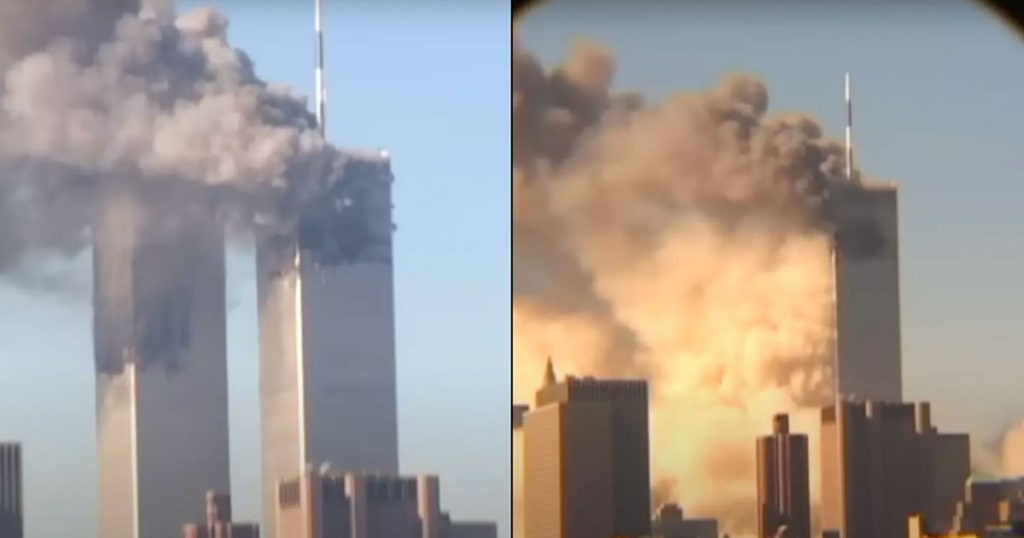

Never-Before-Seen Footage of the Twin Towers’ Collapse Released After 22 Years
More than two decades after the September 11, 2001 attacks, newly shared personal footage of the World Trade Center has drawn renewed attention to the importance of eyewitness records, historical preservation, and collective remembrance. The video, reportedly filmed by Kei Sugimoto and kept privately for more than 22 years, presents events from a perspective that was not broadly available to the public at the time.
September 11 remains one of the most consequential days in modern United States history. The attacks caused profound personal loss, transformed national security policy, influenced international relations, and left a lasting mark on cities and communities around the world. For many people, photographs, broadcasts, emergency communications, and home video recordings are not simply archival materials. They are part of the wider public record of a day that continues to be remembered with solemnity.
As historical footage surfaces years later, it can provide additional context for researchers, journalists, educators, survivors, and families. At the same time, such material requires careful handling. Recordings connected to a national tragedy should be shared responsibly, with attention to accuracy, privacy, and the emotional impact they may have on viewers.
The Day That Changed the World

On September 11, 2001, 19 members of al-Qaeda hijacked four commercial aircraft in coordinated attacks against the United States. Two planes were flown into the World Trade Center’s North and South Towers in New York City. A third aircraft struck the Pentagon in Arlington, Virginia. The fourth, United Airlines Flight 93, crashed in rural Pennsylvania after passengers and crew attempted to regain control of the aircraft.
According to the National September 11 Memorial & Museum, 2,977 people were killed in the attacks, excluding the 19 hijackers. The victims included people from more than 90 countries, reflecting the international character of New York City and the global significance of the events. Families, first responders, office workers, travelers, students, and people going about ordinary routines were affected by the attacks and their aftermath.
The collapse of the Twin Towers became an enduring symbol of the day. News organizations around the world broadcast live and recorded images from lower Manhattan, while thousands of people in nearby neighborhoods documented what they witnessed with cameras, camcorders, and early mobile devices. These personal records have since become an important complement to official reports and professional journalism.
A New Perspective From a Personal Archive
The reported release of footage recorded by Kei Sugimoto illustrates how personal archives can become historically significant over time. People who captured images or video on September 11 did not necessarily know how their material might later be used. Some recordings were made for family members, personal documentation, or local news purposes. Others remained stored on tapes, discs, or personal devices for decades.
When such footage is made public, it may offer details about timing, weather conditions, crowd movement, emergency responses, and the changing skyline of lower Manhattan. It can also help historians compare different viewpoints with established timelines. A new camera angle does not change the central facts of September 11, but it can add to the visual record and deepen understanding of how the events unfolded across a large and densely populated area.
It is important to distinguish between newly released footage and newly discovered facts. The causes and broad sequence of the World Trade Center collapse have been extensively investigated by U.S. authorities, including the National Institute of Standards and Technology, or NIST. NIST’s investigations examined the impacts, fires, structural damage, and building performance associated with the collapse of the World Trade Center towers.
Personal recordings can be meaningful historical evidence, but they must be interpreted carefully. Video may capture only a limited view, may not include accurate timestamps, and can be affected by distance, audio quality, camera movement, or later editing. Researchers typically compare it with verified news footage, photographs, witness accounts, emergency records, and official documentation before drawing conclusions.
Why Eyewitness Footage Matters to History
Eyewitness media plays a major role in documenting major public events. Before smartphones and social media made instant sharing commonplace, camcorders and consumer cameras still enabled individuals to preserve moments that may not have been recorded by television crews. September 11 is among the most documented events in recent history, yet archives continue to grow as people digitize aging materials and decide to share them.
For historians, these materials can help create a more complete account of the day. Official records are essential, but personal footage often captures aspects of daily life that formal documentation may not show. It can reveal how people received information, how neighborhoods reacted, and how emergency conditions developed in real time. This wider record supports historical research while also showing the human dimension of events that are sometimes discussed only through policy, statistics, or political consequences.
Museums and archival institutions have increasingly emphasized the value of preserving first-person materials. The September 11 Memorial & Museum maintains collections that include photographs, oral histories, artifacts, and personal items. These records help connect large historical events to the experiences of individuals, families, communities, and responders.
Digital preservation is especially important because videotapes and older storage formats can deteriorate. Magnetic tapes may lose quality over time, and equipment used to play older formats can become difficult to find. Archivists often recommend digitizing fragile material, documenting where and when it was created, and retaining original files whenever possible. Context, including dates, locations, names, and permissions, can be as valuable as the image itself.
Remembering September 11 With Care and Accuracy
Interest in newly released September 11 footage is understandable, particularly for people who remember watching events unfold in 2001 or who learned about them later. However, the subject calls for sensitivity. For survivors, relatives of victims, first responders, and many New Yorkers, images from that day can bring back difficult memories. Responsible reporting should avoid sensational language and should place visual material within a respectful historical context.
Commemoration has remained a central part of the public response to September 11. Each year, family members, public officials, first responders, and members of the public gather at the National September 11 Memorial in New York to read the names of those killed in the 2001 attacks and in the 1993 World Trade Center bombing. The memorial’s reflecting pools sit on the footprints of the former Twin Towers, while the museum documents the attacks, the recovery effort, and their long-term effects.
The anniversary is also observed at the Pentagon and in Shanksville, Pennsylvania, where the Flight 93 National Memorial honors the passengers and crew of United Airlines Flight 93. These sites demonstrate that the story of September 11 extends beyond a single location. It is a national and international story of loss, service, resilience, and remembrance.
The Long-Term Impact of the September 11 Attacks
The consequences of September 11 were felt far beyond New York, Virginia, and Pennsylvania. In the United States, the attacks prompted major changes in aviation security, emergency preparedness, intelligence coordination, immigration procedures, and counterterrorism policy. The Transportation Security Administration was created in 2001, and airport screening practices changed significantly in the years that followed.
Internationally, the attacks influenced diplomatic relationships and military policy for decades. The United States and its allies launched military operations in Afghanistan after al-Qaeda, then led by Osama bin Laden, was identified as responsible for the attacks. The wider political and humanitarian consequences of the period remain subjects of extensive public debate and academic study.
September 11 also changed the way media organizations cover breaking news. The scale and immediacy of television reporting on that day shaped expectations for live coverage of major events. Since then, the rise of social media and mobile technology has made citizen-recorded video even more common. This has expanded access to firsthand material, while also increasing the need for verification before images or claims are widely shared.
For cities and communities, the recovery process was long-term. Lower Manhattan underwent years of rebuilding, infrastructure work, environmental monitoring, and public discussion about memorialization. The One World Trade Center complex, the memorial, and the museum became prominent parts of the rebuilt site. The area remains both an active business district and a place of reflection for visitors from around the world.
How Researchers Verify Historical Video
When previously unseen video emerges from a major event, credible verification is essential. Journalists and researchers may begin by identifying the original source and establishing who recorded the material. They can compare visible landmarks, lighting conditions, weather, audio, and known event timelines with authenticated records. Metadata, if available, may offer useful information, although older recordings often lack complete digital data.
Experts may also compare footage with material held by established archives, broadcasters, government agencies, and museums. The goal is not simply to determine whether a video is real, but to understand its limitations and place it accurately within the historical record. Clear labeling is important when the precise time, location, or sequence of a recording cannot be independently confirmed.
This approach helps prevent misinformation. Major historical events often generate false captions, recycled imagery, altered videos, and unsupported claims online. Viewers can assess material more carefully by checking whether it has been reported by reputable news organizations, whether its origin is identified, and whether recognized experts or archival institutions have provided context.
A Continuing Record of Memory and Resilience
The release of personal footage more than 22 years after September 11 is a reminder that history is preserved not only in official reports and museum collections, but also in the memories and possessions of ordinary people. A recording from a previously unavailable angle can contribute to public understanding when it is presented accurately and respectfully.
For many, the value of such footage lies less in novelty than in remembrance. It reinforces the scale of a day that affected millions of lives while encouraging continued respect for those who were killed, injured, displaced, or called into service. It also highlights the importance of preserving reliable records for future generations.
As new materials are digitized and shared, the most meaningful response is to approach them with care. The September 11 attacks remain a defining historical event, but they are also deeply personal for families and communities. Accurate documentation, responsible journalism, and thoughtful commemoration can help ensure that the public record remains both informative and humane.
Sources
Disclaimer: This content is intended for entertainment purposes only and is not based on real events.
