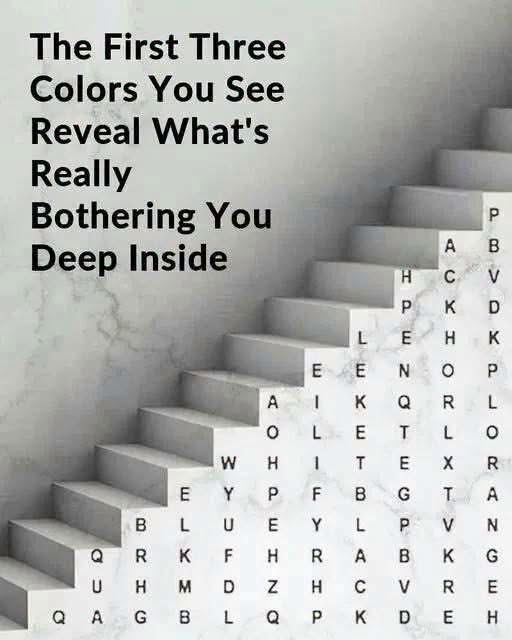

One Unexpected Color Can Bring a Buried Feeling Rushing Back
Colors are woven deeply into the fabric of our lives. With even a glance, a particular shade can evoke a vast array of feelings, transport us to a long-forgotten memory, or inspire questions about ourselves and our experiences. Though we may not always be conscious of it, color perception can play a subtle yet powerful role in our emotional landscape. The intricate connection between color and emotion is not only a subject of artistic exploration but also a topic that draws increasing interest from psychologists, neuroscientists, and wellbeing experts.
This article takes an analytical and informative look at the psychology of color, exploring how and why certain colors can conjure up everything from nostalgia to quiet longing or unresolved thoughts. By examining scientific research, expert opinion, and cultural perspectives, we aim to shed new light on the remarkable impact colors have on our mood, wellbeing, and self-reflection.
The Science Behind Color Perception
Color is more than a visual phenomenon; it is the result of complex interactions between light, the eyes, and the brain. When light hits the retina, it is transformed into electrical signals that travel to the brain’s visual cortex. The brain then interprets these signals as different colors based on their wavelengths. According to research published by the American Psychological Association, our emotional response to color can be both physiological and psychological, stemming from evolutionary adaptations, individual experiences, and cultural conditioning.
Neuroscientific studies have shown that certain colors can stimulate the autonomic nervous system, influencing heart rate, blood pressure, and arousal. For example, the color red is associated with increased heart rate and alertness, a response linked to its evolutionary significance as a warning signal or indicator of ripeness and fertility. Blue, on the other hand, tends to promote calmness and relaxation, perhaps due to its association with clear skies and tranquil bodies of water.
Individual Associations: Memories and Personal Experience
While there are broad tendencies in how people respond to color, individual associations often tell a more nuanced story. A seemingly innocuous hue—an emerald green, a faded yellow, or a dusty mauve—can suddenly trigger a flood of emotion, recalling a childhood room, a favorite piece of clothing, or a pivotal life event.
These emotional responses are rooted in our personal history. “Color has the power to activate involuntary memory,” notes Dr. Anna Franklin, a professor of visual perception. Such memories, first characterized by psychologist Endel Tulving as ‘autonoetic consciousness,’ are often vivid, spontaneous, and emotionally charged. For example, one may feel a tightness in the chest when seeing the warm brown of a lost parent’s coat, or pang of joy at the sight of the robin’s egg blue that recalls a childhood holiday.
Notably, these associations often go unrecognized until a color brings them to the surface, inviting personal reflection or prompting the articulation of long-neglected feelings. The process of identifying such color-emotion connections can be a valuable tool for self-understanding and emotional healing.
Cross-Cultural Perspectives on Color
The meanings we assign to colors are not universal — they are influenced by cultural traditions, geographic location, and societal symbolism. For instance, while white commonly symbolizes purity and marriage in Western cultures, it is associated with mourning and funerals in several Asian countries.
Red, which elicits excitement and passion in many Western societies, is also linked with prosperity and good luck in China. Similarly, while blue is often seen as calming and trustworthy in the West, some Middle Eastern cultures associate blue with protection against evil. These differences reflect how traditions, rituals, and shared histories shape collective responses to color, layering cultural context atop sensory perception and personal meaning.
Understanding the cultural relevance of color is especially important for artists, designers, marketers, and therapists who work with diverse populations. A color scheme that is calming to some might be unsettling to others, depending on their cultural background and personal experiences.
Colors and Mental Health: Therapeutic Implications
The relationship between color and emotion has significant implications for mental health and therapy. Many therapeutic disciplines make use of color to facilitate healing, self-expression, and emotional regulation. Art therapy, for example, often encourages individuals to express their feelings through painting or drawing, allowing their inner world to manifest through color choices.
Research published in Frontiers in Psychology highlights the use of color in cognitive-behavioral interventions. Color can help anchor positive emotions, trigger self-reflection, or identify unresolved emotional conflicts. Simple exercises, such as choosing a color that represents one’s current mood or a memory and reflecting on the associations it evokes, can bring deeper emotional awareness.
Color is also used in certain design approaches to support mental health. Hospitals, schools, and workplaces might incorporate calming blues, restorative greens, or uplifting yellows to create an environment conducive to wellbeing. While individual responses can vary, growing evidence suggests that thoughtfully chosen color palettes can reduce stress and promote healing.
The Role of Color in Everyday Life and Design
Beyond therapy or introspection, color influences many aspects of our everyday lives. Marketers and advertisers carefully select color schemes to elicit desired emotional responses and guide consumer behavior—red for urgency and excitement, blue for trust and stability, green for health and sustainability. Interior designers likewise use color strategically to create moods, define spaces, or evoke certain feelings.
Color selection is not a neutral choice; it is a reflection of both intent and impact. Public spaces, such as transportation hubs or educational institutions, often employ color psychology to improve mood, increase alertness, or support concentration. The growing trend of “biophilic design,” for instance, leverages the restorative effects of green and other nature-inspired colors to promote wellbeing.
On a personal level, the clothes we wear, the art we collect, and even the foods we prepare are influenced (consciously or unconsciously) by our color preferences and emotional associations. A study from BBC Future underscores how our color choices frequently communicate aspects of personality, mood, and social identity—often more powerfully than words.
Expert Views: Insights from Psychology and Neuroscience
Experts continue to explore the far-reaching effects of color on human emotion, cognition, and behavior. According to Dr. Stephen Westland, color science professor at the University of Leeds, our reactions to color are a product of biological, psychological, and social factors. “There is no one-size-fits-all effect… responses are highly individualized and context-dependent,” he notes.
Additionally, neuroscientists are investigating how color perception overlaps with other sensory modalities. Synesthesia—a rare condition in which stimulation of one sense automatically triggers another—provides unique insight into the deep wiring of color and emotion. For some people, colors are viscerally linked to tastes, sounds, or emotions, underscoring just how personal and profound the experience of color can be.
Increasingly, therapists and counselors encourage exploring individual color associations, whether as a form of mindfulness or a gateway to deeper self-awareness. The simple act of noticing which colors evoke a strong reaction can open “a surprisingly personal door to struggles we’ve yet to articulate,” as described in many contemporary psychological practices.
Societal and International Perspectives on Color Emotion
Around the world, societies use color to express identity, celebrate rituals, and mark transitions—be it through national flags, festival decorations, or traditional attire. Events like Holi in India, which celebrates the arrival of spring with colorful powders, or the solemn white worn for mourning in Japan, illustrate how color is embedded in the rhythms of communal life.
Modern movements for social change often harness color symbolism: rainbow flags for LGBTQ+ rights, pink ribbons for breast cancer awareness, black clothing for protest and solidarity. In this way, color becomes not just a personal language of emotion but also a shared vocabulary for collective expression and activism.
Even as digital technologies expand the palette of colors available in art, media, and design, fundamental links between color and emotion remain powerful as ever, inviting ongoing exploration across scientific, artistic, and cultural domains.
Conclusion: Opening the Door to Emotional Awareness
A single color can indeed bring a buried feeling rushing back. Whether anchored in past experience, cultural symbolism, or biological wiring, the emotional weight of color is a pervasive yet often overlooked part of our cognitive and emotional life.
Taking even a brief moment to notice your response to color can provide valuable insight into your emotional state, memories, and sense of self. The next time your eyes rest on an unexpected hue and a feeling wells up—whether joy, sadness, longing, or wonder—recognize it as a window into your inner world, deserving of curiosity and respect.
Disclaimer: This content is intended for entertainment purposes only and is not based on real events.
