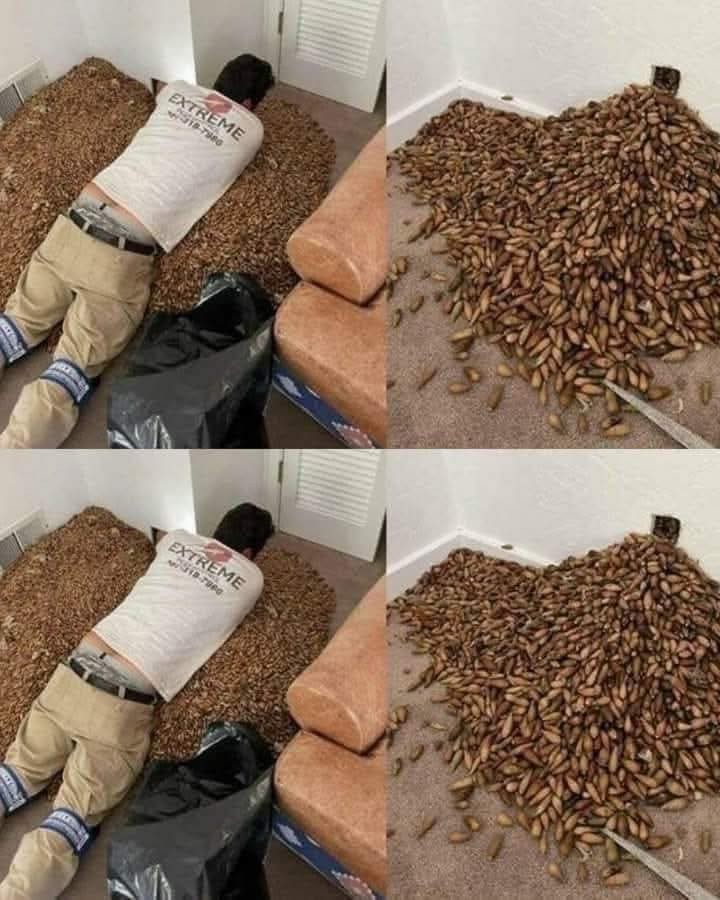

A Foul Smell Behind the Wall: An Unexpected Discovery and What Homeowners Should Know
An unusual smell inside a home can be more than a minor inconvenience. While unpleasant odors are often associated with everyday household problems, such as plumbing issues, spoiled food, damp materials, or poor ventilation, persistent smells sometimes point to a problem hidden behind walls, beneath floors, or inside ceilings.
One particularly unusual possibility is that a small animal has become trapped inside a building cavity and died there. Although this situation may sound uncommon, wildlife and pest management specialists recognize dead animals and accumulated animal waste as potential sources of persistent indoor odors.
A reported household incident involving a strong smell coming from a wall illustrates why homeowners should investigate unusual odors carefully. According to the account, a resident initially suspected an ordinary plumbing or sanitation problem. However, when the smell continued to intensify, further investigation reportedly revealed animal remains inside the wall.
The discovery offered a possible explanation for the persistent odor and highlighted an often-overlooked aspect of home maintenance: problems inside inaccessible building spaces can sometimes affect the comfort and cleanliness of an entire property.
Although the original account does not provide an independently verifiable location, date, or inspection report, the underlying situation is consistent with documented wildlife-management and pest-control concerns. Understanding the possible causes, warning signs, and appropriate responses can help homeowners handle similar situations responsibly.
Why an Unpleasant Smell Can Develop Inside a Wall
Residential walls contain more than their visible exterior surfaces. Depending on the construction of a property, the spaces behind drywall may contain insulation, electrical wiring, plumbing, wooden framing, and small openings that connect different parts of a building.
These concealed spaces can occasionally become accessible to rodents, squirrels, bats, and other small animals. Gaps around utility lines, damaged exterior materials, roof openings, and poorly sealed construction joints can provide potential entry points.
Once an animal enters an enclosed space, it may have difficulty finding its way back outside. If it becomes trapped or dies inside the structure, decomposition can produce an unpleasant odor that gradually spreads into nearby rooms.
The Internet Center for Wildlife Damage Management explains that animal remains can create noticeable odors in buildings. Its guidance identifies several possible warning signs, including a smell that becomes progressively stronger, persists for days or weeks, and may be accompanied by increased fly activity.
The size of the animal, its location, environmental conditions, and the amount of ventilation can all influence how noticeable the smell becomes.
How Decomposing Animals Affect Indoor Air Quality
When an animal dies, natural biological processes begin breaking down its tissues. These processes produce gases and other compounds that may have a strong and unpleasant smell.
In an open outdoor environment, air circulation helps disperse these compounds. Inside a wall cavity, however, limited airflow can allow odors to accumulate. Small openings around electrical outlets, floorboards, pipes, and construction joints may provide pathways through which the smell enters occupied rooms.
Temperature and humidity can also influence decomposition. Warmer conditions generally accelerate biological activity, while the size of the animal affects the amount of material that must break down.
Consequently, a relatively small animal can sometimes produce a surprisingly noticeable odor. The smell may initially be limited to one room before becoming more apparent in adjacent areas.
It is important to recognize that an unpleasant smell does not automatically establish that an animal has died inside a wall. Several other household problems can produce similar symptoms, making proper identification essential.
Other Possible Causes of Persistent Household Odors
Before assuming that animal remains are responsible, homeowners should consider other potential sources of unusual smells.
1. Plumbing and Drainage Problems
Damaged wastewater pipes, leaking connections, and drainage problems can produce persistent odors. In some cases, the smell may appear to originate from a wall because plumbing systems frequently run through concealed spaces.
Wastewater-related odors may be intermittent or continuous, depending on the nature of the problem. A qualified plumber can inspect relevant pipes and connections to determine whether a plumbing defect is responsible.
2. Moisture and Mold-Related Problems
Water leaks, condensation, and inadequate ventilation can create conditions that encourage microbial growth. Damp insulation, wooden framing, and other building materials may develop musty odors when moisture problems remain unresolved.
These issues require a different approach from animal removal. Simply covering the smell with an air freshener will not correct the underlying moisture problem.
3. Animal Waste and Nesting Materials
Animals do not necessarily need to die inside a building to create odor problems. Rodents and other wildlife can leave urine, droppings, nesting materials, and other debris in attics, crawl spaces, and wall cavities.
The Internet Center for Wildlife Damage Management identifies accumulated animal waste as another potential source of unpleasant building odors.
4. Ventilation and Airflow Problems
Inadequate ventilation can allow odors from different parts of a property to accumulate. Air may also travel through concealed openings, making it difficult to identify the original source by smell alone.
For this reason, a thorough inspection should consider the building’s ventilation system and surrounding spaces rather than focusing exclusively on the strongest-smelling location.
Warning Signs That an Animal May Be Inside a Wall
Although no single symptom can confirm the presence of a dead animal, several observations may help homeowners determine whether a wildlife-related problem deserves further investigation.
- Persistent unpleasant odors: A smell that remains concentrated around one section of a wall may indicate a localized problem inside the structure.
- Changes in odor intensity: An odor that becomes progressively stronger before gradually fading may be consistent with decomposition.
- Increased fly activity: Flies gathering near a particular wall or ceiling area may provide another clue that biological material is present.
- Earlier scratching sounds: Sounds coming from walls, ceilings, or attic spaces may indicate that animals have previously accessed the building.
- Visible entry points: Small gaps around rooflines, vents, pipes, and exterior walls may provide opportunities for wildlife to enter.
These signs should be treated as observations rather than proof. A professional inspection is often the most reliable way to distinguish an animal-related issue from plumbing, moisture, or ventilation problems.
Why Breaking Open a Wall Is Not Always the Best Solution
When a smell appears to originate from behind a wall, opening the structure may seem like the quickest way to identify the problem. However, doing so without locating the source can create unnecessary damage.
Wall cavities may contain electrical wiring, water pipes, insulation, and other materials that require careful handling. An incorrectly positioned opening could damage these components while failing to expose the actual source of the odor.
The Internet Center for Wildlife Damage Management specifically advises against immediately cutting into walls to investigate suspected animal odors. It notes that a fiber-optic inspection scope can sometimes help professionals examine concealed spaces without creating large openings.
Such equipment allows an inspector to examine areas that would otherwise be difficult to access. Depending on the building’s construction, other inspection methods may also be appropriate.
Before any structural work begins, homeowners should consider contacting a qualified pest-control or wildlife-removal professional. If the evidence points toward a plumbing or building-system issue, the appropriate specialist should be involved instead.
How Professionals Address an Animal Odor Problem
Resolving an odor associated with animal remains involves more than making the smell disappear. The underlying source must be identified, and any affected materials must be evaluated.
Inspection and Source Identification
The first step is determining where the odor originates. Professionals may examine walls, ceilings, attics, crawl spaces, roof openings, and nearby utility areas.
They may also look for droppings, nesting materials, insect activity, damaged insulation, and other evidence of animal access.
Safe Removal
If an animal carcass is located and can be safely accessed, appropriate removal may help eliminate the original source of the odor.
However, animal remains and contaminated materials should not be handled casually. Protective equipment and suitable cleaning procedures may be necessary, particularly when rodents or their waste are involved.
The U.S. Environmental Protection Agency also emphasizes the importance of appropriate protective measures when dealing with pest-related contamination during building work.
Cleaning and Assessment of Affected Materials
After removal, the surrounding area may require cleaning and disinfection. Insulation or other porous materials that have become contaminated may need additional attention or replacement.
The appropriate treatment depends on the materials involved and the extent of contamination. Using a deodorizing product without addressing affected materials may provide only temporary relief.
Repairing Entry Points
Once the immediate problem has been addressed, identifying how the animal entered the building is an important preventive measure.
Professionals may recommend repairing gaps, securing vents, improving roofline protection, and sealing appropriate openings around utility connections.
These measures can reduce opportunities for future animal entry and help protect the building from related maintenance problems.
How Long Can a Dead Animal Smell Last Inside a Wall?
One of the most common questions homeowners have concerns how long an unpleasant odor will remain after an animal dies inside an inaccessible area.
There is no universal timetable. The duration depends on several factors, including the animal’s size, temperature, humidity, ventilation, and the characteristics of the surrounding materials.
Guidance published by pest-management specialists indicates that odors associated with small animal remains can sometimes persist for days or weeks. Larger animals may take longer to decompose, potentially extending the period during which the smell remains noticeable.
As decomposition progresses and the remains dry, the odor may gradually become less noticeable. However, this does not necessarily mean that all affected materials are clean or that the source of the problem has been properly addressed.
Removing accessible remains and evaluating contaminated materials can provide a more direct solution than relying exclusively on natural decomposition.
Practical Ways to Prevent Wildlife From Entering a Home
Preventing animals from entering concealed building spaces is generally easier than addressing a problem after it develops.
The EPA recommends an integrated pest management approach that focuses on reducing the conditions that attract pests and limiting their access to buildings.
Homeowners can consider several practical maintenance measures:
- Inspect exterior openings: Regularly check rooflines, foundations, vents, and utility openings for gaps or damage.
- Protect ventilation openings: Use suitable protective covers that allow proper airflow while limiting animal access.
- Store food securely: Keep food in sealed containers and clean up crumbs, spills, and food waste promptly.
- Reduce unnecessary clutter: Maintain organized storage areas to limit potential nesting and hiding places.
- Address moisture problems: Repair leaking pipes and remove standing water that may attract pests.
- Schedule appropriate inspections: Have suspected wildlife activity evaluated before animals establish themselves inside concealed spaces.
These recommendations are consistent with the EPA’s integrated pest management guidance, which emphasizes prevention, sanitation, exclusion, and the careful selection of pest-control methods.
Important Safety Considerations for Homeowners
Finding animal remains or suspected contamination inside a wall requires caution. Rodents and other wildlife can leave biological materials that should not be disturbed without appropriate precautions.
The EPA recommends using suitable protective equipment when working in pest-contaminated areas. Depending on the situation, professional assistance may be preferable to attempting removal independently.
Homeowners should also avoid applying pesticides, disinfectants, or other chemicals inside wall cavities without understanding their intended use and following the product instructions. The EPA emphasizes that pesticides must be used according to their approved labels and that indoor applications should be approached carefully.
Ventilation may help reduce the concentration of unpleasant odors, but it does not replace identifying and correcting the underlying problem.
It is also important to distinguish an ordinary decomposition odor from potentially urgent household hazards. If an odor suggests a possible natural gas leak, occupants should leave the affected area and contact the appropriate emergency service or gas provider from a safe location rather than attempting to investigate it themselves.
What This Unusual Household Discovery Teaches Homeowners
The reported discovery of animal remains behind a residential wall illustrates how an apparently ordinary household problem can sometimes have an unexpected explanation.
Persistent odors deserve attention because their causes are not always visible. While a dead animal may be one possibility, plumbing defects, moisture problems, accumulated waste, and ventilation issues can produce similar complaints.
The most effective response is therefore based on careful investigation rather than assumptions. Identifying the source, involving the appropriate professionals, removing contaminated materials when necessary, and addressing potential entry points can help restore a comfortable indoor environment.
For homeowners, the broader lesson is straightforward: unusual household odors should not automatically be dismissed as temporary inconveniences. Paying attention to persistent changes in indoor conditions and arranging an appropriate inspection can prevent minor maintenance concerns from becoming more complicated problems.
Ultimately, good home maintenance involves looking beyond what is immediately visible. Regular inspections, responsible pest prevention, and timely repairs can help keep concealed building spaces clean, functional, and less attractive to unwanted wildlife.
Sources
- Internet Center for Wildlife Damage Management – Identifying and Responding to Wildlife Odors
- U.S. Environmental Protection Agency – Biological Contaminants and Indoor Air Quality
- U.S. Environmental Protection Agency – Pesticides’ Impact on Indoor Air Quality
- U.S. Environmental Protection Agency – Citizen’s Guide to Pest Control and Pesticide Safety
- Ask Extension – Dead Animal Odor: Expert Guidance
- Orkin – What to Do If an Animal Dies in Your Wall

Disclaimer: This content is intended for entertainment purposes only and is not based on real events.