

Imagine sitting down at a desk in a classroom.
You pick up a pen with your left hand.
The person beside you reaches for theirs with the right.
Nothing about the moment seems unusual.
Yet suddenly, you notice something.
The desk feels slightly awkward.
The position of the chair is not quite right.
Your notebook sits at an angle that feels more comfortable than the standard position.
Perhaps the scissors are easier to use in one hand than the other.
Maybe the computer mouse has always been positioned on the opposite side from the hand you naturally prefer.
For most right handed people, these details may never attract much attention.
For left handed people, they can become ordinary parts of everyday life.
Left handedness is a natural variation in human behavior. It does not make someone better or worse, smarter or less intelligent.
But it does raise fascinating questions about the human brain.
Why do some people naturally prefer one hand?
How does handedness develop?
Does it influence the way the brain processes information?
And could growing up in a predominantly right handed world encourage certain forms of adaptability?
The answers are more complicated than many popular claims suggest.
Left Handedness Is a Natural Human Variation

Most people naturally favor one hand for tasks that require precision.
Writing, drawing, eating with utensils, throwing, using tools, and many other activities often reveal a person’s preferred hand.
The majority of people are right handed.
A smaller percentage are left handed, while some people show mixed or variable preferences depending on the task.
Researchers generally understand handedness as a complex trait influenced by multiple biological and environmental factors.
It is not simply a matter of personal choice.
Children often begin showing hand preferences during development, although the strength and consistency of those preferences can vary.
For many left handed people, using the left hand feels as natural as using the right hand feels to someone else.
There is nothing inherently unusual about it.
The interesting part is how this preference relates to the organization of the brain.
What Does Handedness Have to Do With the Brain?

The human brain is divided into two major hemispheres.
The left and right hemispheres are connected and constantly communicate with each other.
Although popular descriptions sometimes portray the left brain as purely logical and the right brain as purely creative, neuroscience is much more complicated.
Both hemispheres participate in many different functions.
Language, movement, attention, memory, spatial processing, and perception involve networks that can extend across both sides of the brain.
Handedness is connected to this organization because movement is controlled in a largely opposite-sided manner.
The left side of the brain primarily controls movement on the right side of the body, while the right side primarily controls movement on the left.
But the relationship between handedness and brain organization is not perfectly symmetrical.
That is one reason scientists continue to study it.
Does Being Left Handed Mean Using Both Sides of the Brain More?
This is one of the popular ideas surrounding left handedness.
You may have heard that left handed people use both sides of their brains more effectively or have more balanced brain activity.
The reality is less straightforward.
Research suggests that patterns of brain lateralization can differ among left handed and right handed individuals.
For example, language functions may be organized differently in some left handed people.
However, there is considerable variation within both groups.
Being left handed does not automatically mean that someone uses both hemispheres more effectively.
The brain is already an interconnected system in which both hemispheres cooperate.
The differences associated with handedness are interesting, but they should not be turned into simple rules about personality or ability.
Does Handedness Affect Intelligence?

No reliable evidence supports the idea that left handed people are inherently more intelligent than right handed people.
Likewise, being right handed does not make someone intellectually superior.
Intelligence is influenced by many factors, including genetics, education, environment, health, experience, motivation, and opportunity.
Handedness represents only one small characteristic.
Some studies have investigated relationships between handedness and cognitive performance, but findings have not established a universal intelligence advantage for left handed people.
This is important because internet discussions sometimes transform interesting scientific observations into exaggerated claims.
A person can be brilliant, average, highly creative, analytical, artistic, or exceptionally practical regardless of which hand they use.
Where Did the Creativity Connection Come From?
The association between left handedness and creativity has existed for a long time.
People have noticed that some famous artists, musicians, writers, architects, and innovators were left handed.
Those examples are interesting.
But famous examples do not prove that left handedness causes creativity.
Creativity itself is difficult to define and measure.
It can involve imagination, flexible thinking, originality, experimentation, problem solving, and the ability to combine ideas in new ways.
People express creativity in countless forms.
A scientist solving a difficult problem can be creative.
A chef developing a new recipe can be creative.
An engineer designing a practical tool can be creative.
A parent finding an inventive way to explain something to a child can also be creative.
There is no single brain characteristic that explains all of these abilities.
Why Left Handed People May Develop Different Strategies
There is another possible explanation for why left handed people sometimes report approaching certain tasks differently.
They live in environments largely designed around right handed conventions.
Consider everyday tools.
Scissors often have handles designed with right handed users in mind.
Desks may be arranged in ways that favor right handed writing.
Certain kitchen tools can feel more natural in one hand.
Sports equipment may be designed around common right handed techniques.
Even the arrangement of a workspace can create subtle inconveniences.
A left handed person may therefore need to adapt.
Sometimes the adaptation is tiny.
A person changes the angle of a notebook.
They reposition a tool.
They learn to use an object differently.
They find an alternative method.
Over many years, these adjustments can become second nature.
Adaptability Can Become a Practical Skill
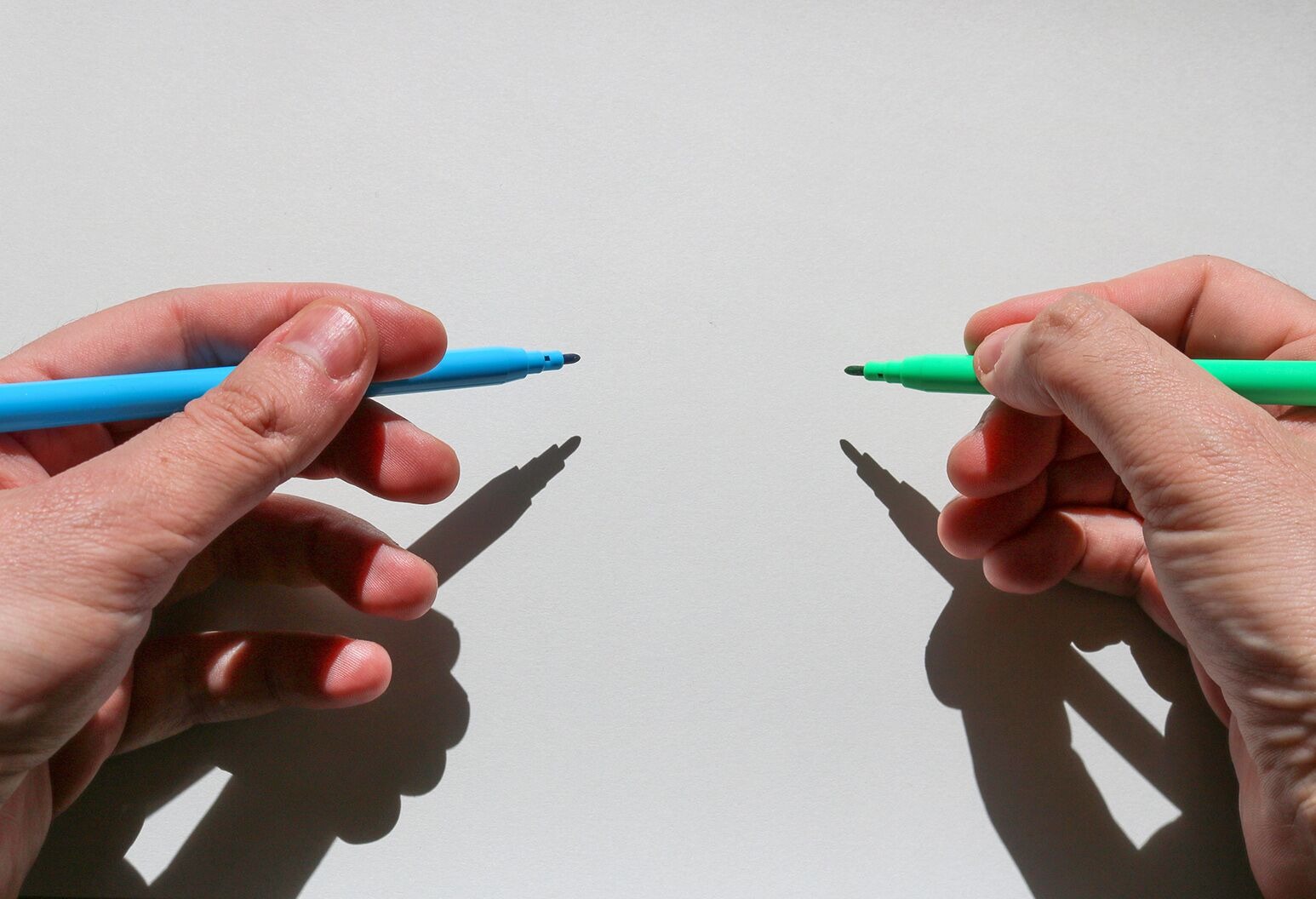
Growing up in an environment that does not always match your natural preferences can encourage problem solving.
But it is important not to romanticize this.
Being left handed does not automatically make someone more resilient.
Many right handed people also grow up adapting to circumstances that do not suit them.
However, repeated small adjustments can teach a useful lesson.
There is rarely only one way to accomplish a task.
If the standard method is uncomfortable, another method may work better.
That mindset can be valuable in many areas of life.
It encourages experimentation.
It encourages people to ask whether there is another solution.
And sometimes, the ability to find an alternative approach is more important than following the conventional method.
Left Handedness and Writing
Writing is one of the most visible areas where handedness can make a difference.
Left handed writers may need to position their hand and paper differently to avoid covering what they have just written.
Depending on the writing system and the person’s technique, this can influence comfort and handwriting style.
Children learning to write may benefit from finding a comfortable paper angle and hand position rather than being forced into a single posture.
Teachers and parents can help by recognizing that a left handed student may need slightly different positioning.
The goal is not to make left handed writing look identical to right handed writing.
The goal is comfortable and effective writing.
Sports Offer Another Interesting Perspective
Handedness can also matter in sports.
Some sports involve throwing, hitting, serving, or aiming with one preferred hand.
A left handed athlete may therefore encounter opponents who are accustomed to practicing primarily against right handed players.
This can sometimes create a different tactical experience.
The advantage, when it exists, is not necessarily biological superiority.
It may come from familiarity.
If most athletes regularly train against right handed opponents, encountering a left handed opponent can require adjustment.
This phenomenon has been discussed in sports science, particularly in sports where players directly interact with one another.
Again, the effect varies by sport and individual.
Handedness Does Not Determine Personality
Another popular misconception is that left handed people have certain personality traits.
They are sometimes described as more independent, artistic, emotional, unconventional, or adventurous.
These descriptions can be entertaining.
But they should not be treated as scientific personality tests.
A person’s personality develops through many influences.
Family.
Culture.
Education.
Relationships.
Experiences.
Temperament.
Environment.
Life circumstances.
Hand preference is not a reliable shortcut for understanding someone’s character.
A quiet left handed person and an outgoing left handed person can be just as different from one another as two right handed people.
Human individuality is much richer than a single physical preference.
Why Scientists Find Handedness Fascinating
Even though handedness does not determine intelligence or creativity, it provides researchers with an interesting window into brain development.
The human body is remarkably coordinated.
The brain must organize movement, perception, and sensory information efficiently.
Hand preference provides clues about how these systems develop.
Scientists can use imaging techniques, developmental studies, genetic research, and large population studies to investigate these relationships.
The goal is not to label people.
It is to understand how the human brain develops and why individuals can organize similar functions in slightly different ways.
That variation is scientifically valuable.
Genes May Play a Role, but They Are Not the Whole Story
Handedness appears to have a genetic component.
Studies of families and twins suggest that genetics influence the likelihood of developing a particular hand preference.
However, no single “left handed gene” explains the trait.
Instead, handedness appears to involve many biological factors.
Developmental processes before and after birth may also contribute.
Environmental influences may have a role as well.
This complexity is typical of human traits.
Most characteristics are not controlled by one simple switch.
They emerge from interactions among many biological and environmental influences.
Culture Has Also Shaped Attitudes Toward Left Handedness
Historically, attitudes toward left handedness have varied considerably between societies.
In some communities and periods, using the left hand was discouraged.
Children could be pressured to write or eat with their right hand.
Today, many societies increasingly recognize left handedness as a normal human variation.
This shift reflects a broader understanding of individual differences.
Rather than forcing everyone into the same pattern, modern educational approaches generally recognize that children may have different natural preferences.
Allowing a child to develop comfortable motor skills can be more constructive than treating left handedness as something that needs to be corrected.
Why Everyday Design Is Slowly Becoming More Inclusive
As awareness grows, designers and manufacturers have increasingly recognized that products do not always need to assume one dominant hand.
Workspaces can be made more flexible.
Tools can be designed for different users.
Educational environments can accommodate different writing positions.
Technology can often be customized.
These changes may seem small.
But small improvements in design can make everyday tasks more comfortable.
This is an example of how understanding human diversity can influence practical innovation.
Being Different Does Not Mean Being Better
There is an important lesson here.
It can be tempting to respond to diversity by ranking differences.
If left handed people are different, perhaps they must have some special advantage.
But science does not require that conclusion.
A difference can simply be a difference.
Left handedness does not need to provide superior intelligence or creativity to be interesting.
Human variation is valuable precisely because it demonstrates how many ways a healthy human brain and body can function.
Different does not automatically mean better.
It also does not mean worse.
What Left Handedness Can Teach Us About Problem Solving
Perhaps the most interesting lesson comes from adaptation.
When a person encounters a tool designed for someone else’s preferred hand, they have a choice.
They can become frustrated.
They can adjust.
They can find another method.
They can modify the environment.
They can develop a new technique.
That process illustrates something larger about human beings.
We are remarkably adaptable.
When circumstances do not match our preferences, we often invent solutions.
Left handed people are not the only people who do this.
But their experiences can provide a visible example of how everyday environments influence behavior.
The Bigger Picture
Left handedness is not a secret code that reveals someone’s intelligence, personality, or creative potential.
It is a natural variation in human motor preference that has fascinating connections to brain organization, development, culture, and everyday experience.
Some left handed individuals may approach particular tasks differently.
Some may develop creative workarounds because of the environments around them.
Some may excel in artistic or technical fields.
Others may have completely ordinary interests and abilities.
There is no contradiction.
Individual differences are expected.
The mistake is assuming that one characteristic can explain an entire person.
A Different Way to Look at Human Variation
Perhaps the most interesting thing about left handedness is not what it says about left handed people.
It is what it says about all of us.
Human beings are remarkably diverse.
We do not all move the same way.
We do not all learn in the same way.
We do not all solve problems using the same strategies.
We do not all experience the world from the same perspective.
And yet, those differences exist within the same remarkable human species.
A left handed child reaching for a pencil is not doing something wrong.
They are simply demonstrating one of the many ways human development can unfold.
The world may be designed predominantly around one convention, but people continually find ways to adapt, innovate, and make those environments their own.
Perhaps that is why left handedness continues to fascinate researchers.
It offers a small but meaningful reminder that there is rarely only one way for the human brain and body to work.
And maybe the most valuable lesson is not that left handed people possess some hidden advantage.
It is that human diversity itself is an advantage.
Every unusual preference, unexpected strategy, and different perspective adds another piece to our understanding of what it means to be human.
Sometimes, the things that appear different at first are simply another expression of the extraordinary flexibility of the human mind.
