

Pregnant Couple Who Expects Identical Twins Gets Distressing News From Doctor Who Told Them He’s Sorry
The Journey Begins: Anticipation and Uncertainty
When awaiting the arrival of a new child, families often focus on ensuring their child’s health and wellbeing. Prenatal scans and medical check-ups are routine, but not every family opts for genetic screening. Ultrasounds typically reveal information such as the baby’s sex and the number of fetuses; however, they cannot identify all underlying genetic conditions or anomalies. In the story of Matt and Jodi Parry, their anticipation doubled when they discovered they were expecting twins, a moment that soon became filled with both excitement and anxiety.
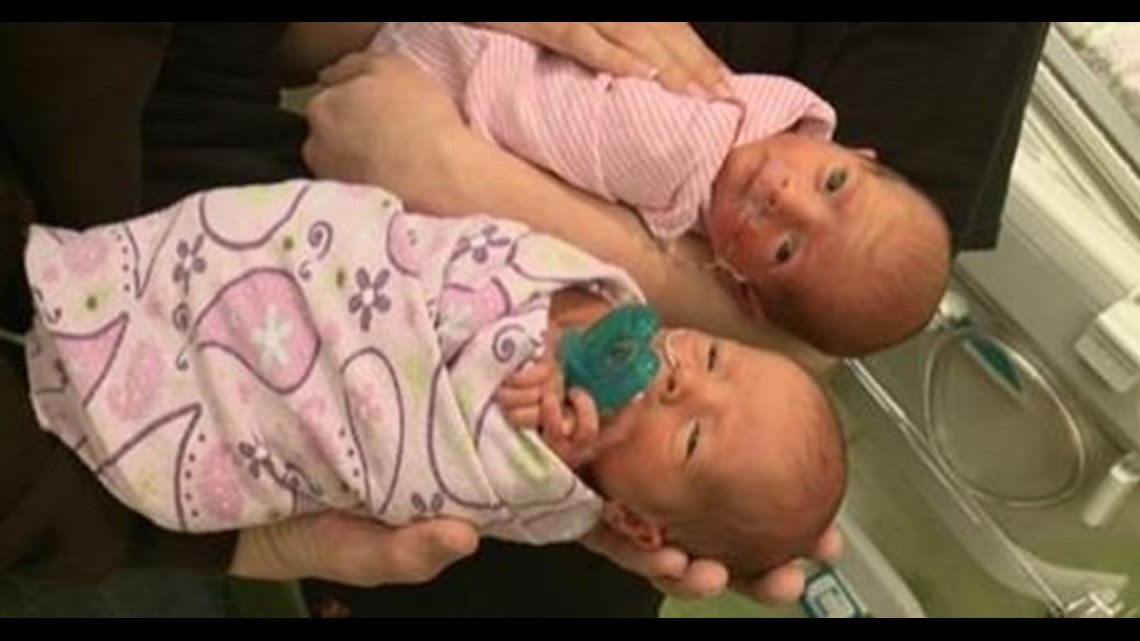
The Parrys’ experience took a pivotal turn as their daughters, Abigail and Isobel, were born prematurely, spending a month in neonatal intensive care. During this challenging period, the couple was confronted with an unexpected and life-altering diagnosis.
Receiving the News: Medical and Emotional Perspectives
When the doctors shared the results, the words left a lasting impression. “When the doctors took us to one side to give us the results, the one thing he said to us was that he was sorry that Abigail and Isobel both have Down’s syndrome. To this day, I’ll never know what he was sorry for. And I think if I could ever meet them again I’d like to show him Abigail and Isobel and kind of say ‘Why did you say sorry? Because we wouldn’t change Abigail and Isobel for the world now,’” Jodi recounted in an interview with BBC 3.
This was a moment that encapsulated the emotional shock many parents feel upon receiving news of a genetic diagnosis. Jodi and Matt’s confusion and concern were compounded by a lack of information. According to Jodi, much of what followed seemed a blur, with initial questions about their daughters’ futures—would they walk, would they talk, would they be able to interact with others?
Understanding Down Syndrome: Medical Facts and Rarity Among Twins
Down syndrome, or trisomy 21, is a genetic disorder caused by the presence of an extra copy of chromosome 21. The diagnosis often leads to questions and uncertainties about a child’s development and quality of life. With twins, the likelihood of both being affected by Down syndrome is exceedingly rare, making the Parrys’ story unique not only on a personal level but within the medical community as well.
The Centers for Disease Control and Prevention (CDC) notes that about one in every 700 babies in the United States is born with Down syndrome. Among identical twins, the probability that both will have Down syndrome is substantially lower; only a small fraction of twin births show this outcome. Experts emphasize that while a diagnosis may introduce new challenges, families can expect a range of developmental outcomes, with many children achieving important milestones.
Emotional Responses and Societal Perceptions
Jodi described the moment of diagnosis to The Mirror as “feeling like a life sentence.” Her words illustrate common parental fears about raising a child—or in this case, two children—with a lifelong condition. “That day, I didn’t feel like a mother. I just felt lost and confused. I had bleak visions of the future. I thought we’d be carers until we dropped dead,” she wrote. Such reactions are not uncommon, as parents often grapple with unanticipated news, sometimes feeling isolated or overwhelmed.
Medical professionals have a significant impact through their communication. Jodi noted the doctor’s apologetic approach left them with few answers, saying, “We knew nothing about Down’s syndrome and left the hospital with no answers, no information, just fear and dread.” This underscores the importance of compassionate, informative support when disclosing sensitive diagnoses.
 For Illustration Purposes Only (With Models) – istockphoto.com/Viorika
Navigating the Challenges: A Family’s Adjustment
Since their daughters’ birth, Matt and Jodi have balanced raising their eldest son Finn, alongside Abigail and Isobel. The challenges they face mirror those of many parents raising children with special needs. Research shows that early intervention and access to supportive resources can improve outcomes for children with Down syndrome.
Jodi believes that more understanding could have eased their distress: “If there had been more understanding and attentiveness towards us as parents, our distress would have been acknowledged, and we would have been better equipped with the necessary information for their daughters’ future—not just scientific jargon about their extra chromosomes.” This highlights the importance of personalized care and clear communication from healthcare providers.
Matt echoed these sentiments when he shared with BBC 3: “I don’t care biologically about the girls. I don’t care how many chromosomes they’ve got. All I mind is—Will they walk? Will they talk? Will they interact? I’ve learned that there is no difference between them and Finley… Their persistence is amazing.” Over time, the Parrys learned to value each milestone and appreciate their daughters’ individuality.
Down Syndrome: Development and Potential
Children with Down syndrome experience a range of developmental progress. According to the CDC, milestones such as sitting, walking, and talking may be reached later than their peers, but most children with Down syndrome learn to walk, talk, and interact socially. Speech therapy, occupational therapy, and inclusive educational settings are often recommended to support development.
Medical issues related to Down syndrome can include heart defects, hearing loss, and vision problems, all of which can be managed with appropriate medical care. Early intervention programs, tailored to individual needs, enable families to focus on abilities rather than limitations.
The Parrys’ journey reflects the fortitude many families find. According to the Mayo Clinic, children with Down syndrome thrive best in environments where they receive encouragement and support.
Expert Views: Communication in Healthcare
Medical communication experts highlight the profound impact of physician-patient conversations. Dr. Brian Skotko, a leading researcher and advocate for individuals with Down syndrome, notes that parents respond best when information is provided clearly, empathetically, and with attention to emotional needs. A diagnosis should be accompanied by practical guidance, support resources, and referrals to specialists, rather than only scientific explanations.
Educational resources, counseling, and peer support groups help families transition from initial uncertainty to acceptance, enabling them to focus on their children’s growth and achievements. In many countries, Down syndrome advocacy organizations provide guidance on education, health, and social integration.
International and Societal Responses
Across societies, perceptions of Down syndrome have evolved. Awareness campaigns and advances in health care and education have improved opportunities for individuals with the condition. In the UK, the Down’s Syndrome Association offers extensive support for families. Globally, organizations such as WHO are committed to promoting equity and inclusion.
Many countries have enacted policies mandating inclusive education and healthcare, with the goal of enabling children with Down syndrome to reach their full potential. Social attitudes are slowly changing, as families and advocacy groups work to dispel myths and provide accurate information.
The Parrys’ story is a reminder of the importance of respectful, supportive communication—both within families and in broader society. Their experience encourages others to seek knowledge, connect with support networks, and focus on the strengths and achievements of children with Down syndrome.
A Family’s Resilience and Hope
Matt and Jodi Parry’s journey underscores that a diagnosis is only the beginning. Through perseverance, love, and support, their daughters Abigail and Isobel have thrived. The Parrys’ story advocates for compassionate healthcare, robust support systems, and greater public awareness.
By sharing their experience, the Parrys have helped highlight the need for empathetic medical care. Their narrative reflects the broader progress in society’s understanding and acceptance of Down syndrome, demonstrating that every child deserves opportunities to flourish.
Disclaimer: This content is intended for entertainment purposes only and is not based on real events.
