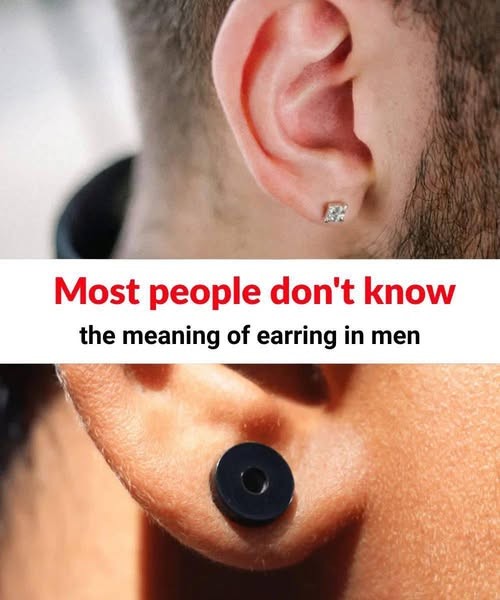

The Meaning and History of Men’s Earrings
Men wearing earrings is an increasingly familiar sight in cities, workplaces, entertainment, sports, and social media. A small stud, hoop, or ear cuff can be a simple accessory, but it can also carry a personal, cultural, historical, or spiritual meaning. While earrings are often discussed as a modern fashion trend, their history reaches back thousands of years.
Across different societies, men have worn earrings to communicate social status, religious belief, group identity, wealth, military achievement, artistic affiliation, or individual style. Their meanings have never been fixed. An earring that represented privilege in one period could be viewed as unconventional in another. Today, men’s earrings are widely understood as a form of self-expression, although individual motivations vary greatly.
Understanding this history helps move beyond assumptions about what an earring “means” on a man. Jewelry has always reflected the values, customs, and changing aesthetics of the societies in which it is worn. Men’s earrings are part of that long and evolving story.
Men’s Earrings in Ancient Civilizations

Archaeological evidence shows that earrings have been used in many ancient cultures. Gold earrings were found in the ancient city of Ur, located in present-day Iraq, and archaeological discoveries indicate that ear jewelry was worn in Mesopotamia thousands of years ago. These early ornaments were often made from valuable materials, including gold, silver, gemstones, and shells, making them markers of craftsmanship and access to resources.
In ancient Egypt, jewelry carried practical, decorative, and symbolic importance. Earrings and other forms of body adornment were associated with status and beauty, and they appeared in elite contexts. Gold was especially significant because it was linked with permanence and divine qualities in Egyptian culture. Both men and women could wear jewelry, although styles and access to costly materials differed according to wealth and social position.
In ancient Greece and Rome, earrings were more commonly associated in surviving art and written material with women, but male adornment was not unknown across the wider Mediterranean world. The meaning of jewelry depended heavily on region, class, occupation, and era. It is important not to apply one society’s rules to every historical culture: attitudes toward masculine dress and ornamentation have always been diverse.
Ancient cultures in South Asia also developed rich jewelry traditions. In India, ear ornaments have longstanding religious, artistic, and cultural importance. Jewelry may be connected to family customs, ceremonies, regional identities, and religious practices. Historical images and sculptures show that elaborate adornment was not exclusively female. Men in royal, spiritual, and ceremonial settings have long worn decorative jewelry, including ear ornaments.
Earrings, Identity, and Tradition Around the World
In many Indigenous and traditional communities, ear jewelry has served purposes beyond fashion. Earrings may signal age, community belonging, family heritage, achievement, spiritual commitment, or participation in ceremonial life. Materials can hold local significance: bone, wood, stone, metal, feathers, shells, and beads may reflect a region’s environment and artistic traditions.
Because these traditions are specific to particular peoples and places, they should be understood with care rather than reduced to a general “tribal” aesthetic. The cultural value of an earring can be inseparable from language, ritual, family knowledge, and collective history. Museums, cultural institutions, and Indigenous-led organizations increasingly emphasize the importance of learning about traditional adornment in its proper context.
In some African societies, earrings and other jewelry have historically communicated social roles and life stages. In parts of East Africa, for example, body adornment can be connected with community customs and ceremonial practices. Across the continent, however, traditions differ substantially. Africa includes thousands of cultural groups, and no single explanation can represent the continent’s many forms of jewelry and dress.
For sailors and seafarers, earrings later became part of maritime folklore in Europe and North America. Popular stories have suggested that a gold earring could help pay for a sailor’s burial if he died far from home. Historians note that such traditions are difficult to document consistently and may have been romanticized over time. Still, portraits and historical accounts confirm that earrings were associated with seafaring style in some periods. The image of the earring-wearing sailor became especially influential in popular culture.
Changing Views of Masculinity and Jewelry

The meaning of men’s earrings has changed as ideas about masculinity have changed. In many historical periods, elite men wore highly decorative clothing, wigs, jewelry, embroidered fabrics, and cosmetics. European aristocratic fashion of the Renaissance and later centuries often included pearls, jeweled accessories, and single earrings. Portraits of monarchs, courtiers, and military figures show that personal ornament was not automatically treated as incompatible with masculinity.
During the nineteenth century, fashion norms in parts of Europe and North America became more restrained for men. Historians sometimes refer to this shift as the “Great Male Renunciation,” a period when men’s formal clothing generally moved toward darker colors and less visible ornament. Jewelry did not disappear, but it was often limited to watches, rings, cufflinks, tie pins, and other relatively discreet items.
In the twentieth century, earrings re-emerged in various youth and cultural movements. Musicians, artists, countercultural communities, and performers used them as visible signs of creativity and nonconformity. By the 1970s, 1980s, and 1990s, male celebrities and athletes helped bring earrings into mainstream popular fashion. A stud or hoop became common in music videos, films, sports coverage, and magazine photography.
These shifts show that fashion does not move in a straight line. What seems unusual in one generation can become ordinary in the next. Men’s earrings have repeatedly moved between mainstream acceptance, subcultural association, luxury fashion, and everyday wear.
What Does an Earring on a Man Mean Today?
Today, there is no universal answer. For many men, an earring is simply a preferred accessory. It may complement an outfit, highlight a hairstyle, or add a small detail to a personal look. Minimal studs, small hoops, and ear cuffs are common choices because they can be worn casually or in more formal settings.
For others, earrings may represent cultural continuity or a family tradition. Some people wear jewelry handed down by relatives, while others choose designs linked to a heritage, faith, or meaningful event. A piece of jewelry can also commemorate a milestone, such as a birthday, graduation, travel experience, or personal transition.
In creative industries, earrings may be part of a professional image or artistic identity. Musicians, designers, actors, dancers, and visual artists often use clothing and accessories to communicate a particular style. However, earrings are no longer limited to creative fields. They can be seen among professionals in technology, business, education, hospitality, and many other sectors, depending on local workplace expectations.
For some people, wearing an earring can also feel like an act of confidence. Personal style may help an individual feel more comfortable in their appearance or more connected to their identity. That does not mean every accessory has a deep message. Sometimes a person simply likes the design, color, or sparkle.
Debunking Myths About Left and Right Ear Piercings
One persistent myth claims that the side on which a man wears an earring reveals a specific aspect of his identity or sexuality. These claims are unreliable and should not be treated as factual. In some places and at certain times, informal social codes were discussed or assumed, but they were never universal and varied widely by country, region, generation, and community.
Today, the ear chosen for a piercing does not provide a dependable way to identify someone’s beliefs, relationships, sexuality, or personality. Making assumptions based on jewelry can reinforce stereotypes and overlook the many ordinary reasons people choose particular styles. The most accurate interpretation is usually the simplest one: the meaning belongs to the person wearing it.
Popular Styles of Men’s Earrings
Modern men’s earring styles range from understated to highly expressive. Stud earrings are among the most common choices. They may feature plain metal, diamonds, cubic zirconia, pearls, or small colored stones. Their compact size makes them suitable for people seeking a subtle look.
Hoop earrings remain popular because they have appeared in many cultures and fashion eras. Small, close-fitting hoops can look minimal, while larger hoops make a more noticeable statement. Huggie hoops, which sit close to the earlobe, are another versatile option.
Ear cuffs offer an alternative for people who do not want a permanent piercing. Many cuffs clip or wrap around the outer ear and can be removed easily. They are often used to experiment with style before deciding whether to get a piercing.
Materials matter as well. Surgical-grade titanium, niobium, and high-quality gold are commonly recommended for new piercings because they are less likely to cause irritation for many people. Nickel can trigger allergic contact dermatitis in some individuals, so those with sensitive skin may wish to choose nickel-free jewelry and seek advice from a qualified piercer or healthcare professional.
Safe Ear Piercing and Aftercare
Anyone considering an ear piercing should prioritize hygiene and professional standards over convenience. Reputable piercing studios use sterile, single-use needles, appropriate jewelry, and clear aftercare guidance. The Association of Professional Piercers advises clients to ask about sterilization practices, jewelry materials, and the piercer’s training.
Proper aftercare can reduce the risk of irritation and infection. General guidance often includes washing hands before touching the piercing, following the piercer’s instructions, avoiding unnecessary twisting or handling of jewelry, and monitoring for signs of complications. Persistent pain, swelling, warmth, discharge, or fever should be assessed by a healthcare professional.
Healing time varies depending on the location of the piercing. Earlobe piercings commonly heal faster than cartilage piercings, but every person’s experience is different. Changing jewelry too soon can irritate the area and delay healing. A qualified piercer can provide practical guidance, while a clinician can address medical concerns.
Men’s Earrings as a Continuing Cultural Conversation

The growing visibility of men’s earrings reflects broader changes in fashion and social attitudes. Contemporary style increasingly allows people to choose accessories without rigidly following older gender expectations. Major fashion houses, independent designers, sports figures, and entertainers have all contributed to this wider acceptance, but everyday wearers are equally important in making earrings feel normal in daily life.
At the same time, acceptance is not identical everywhere. Workplace dress codes, family traditions, religious values, and local customs can shape how jewelry is viewed. Respectful conversation is more useful than quick judgment. An earring can be a trend, an heirloom, a cultural symbol, or simply a favorite accessory.
Ultimately, men’s earrings connect a contemporary fashion choice with a much older human practice: using personal adornment to express belonging, beauty, memory, status, and individuality. From ancient gold ornaments to modern minimalist studs, earrings demonstrate that style is never only about appearance. It can also tell a story about history, culture, and the freedom to define oneself.
Sources
Disclaimer: This content is intended for entertainment purposes only and is not based on real events.
