

John F. Kennedy Jr. Plane Crash: Search, Recovery and Official Findings

Few American families have attracted as much sustained public attention as the Kennedy family. Their history has been marked by political influence, cultural prominence, public service and deeply personal losses that have unfolded under exceptional media scrutiny. The death of John F. Kennedy Jr. in a plane crash in July 1999 became one of the most widely followed tragedies associated with the family.
More than two decades later, the accident remains an important case study in aviation safety, particularly the dangers of night flying over water for pilots without an instrument rating. It also remains a story of a large and complex maritime search, led by the United States Coast Guard and supported by agencies across Massachusetts, New York and the federal government.
John F. Kennedy Jr., the only son of President John F. Kennedy and Jacqueline Kennedy Onassis, was 38 when the Piper Saratoga II aircraft he was piloting crashed into the Atlantic Ocean. His wife, Carolyn Bessette Kennedy, 33, and her sister, Lauren Bessette, 34, were also on board. None survived.
The Flight From New Jersey to Martha’s Vineyard
On the evening of July 16, 1999, Kennedy departed from Essex County Airport in Fairfield, New Jersey, in a single-engine Piper PA-32R-301 Saratoga II. The planned route took the aircraft toward Martha’s Vineyard, Massachusetts. The group intended to continue to Hyannis Port on Cape Cod for the wedding of Kennedy’s cousin, Rory Kennedy.
The flight occurred after sunset, with reduced visibility caused by haze. The route also required travel over open water, a setting that can make it difficult for a pilot to maintain a reliable sense of the horizon. Unlike land-based night flying, where lights and terrain may provide visual references, dark water can leave pilots with few external cues to determine whether an aircraft is level, climbing or descending.

Kennedy had received flight training and had accumulated experience as a pilot, but he was not instrument-rated. An instrument rating qualifies a pilot to operate using aircraft instruments in conditions where outside visual references are limited or unavailable. The National Transportation Safety Board later concluded that the flight was conducted under visual flight rules, meaning the pilot was expected to navigate primarily by visual reference to the outside environment.
His planned arrival was late in the evening, and the aircraft did not arrive at Martha’s Vineyard Airport as expected. Concern grew after family members and airport personnel were unable to establish contact. The Coast Guard was notified, beginning a search that quickly became a major national news event.
A Large-Scale Coast Guard Search Operation
The search for Kennedy’s aircraft drew extensive resources because of the uncertainty about the plane’s last known location, the size of the possible search area and the challenging maritime conditions. Coast Guard aircraft, boats, local emergency personnel, law-enforcement agencies and volunteer organizations took part in the effort. Search crews worked across waters between Long Island, Cape Cod and Martha’s Vineyard.
Search-and-rescue operations at sea depend on many variables, including weather, water currents, drift models, witness reports, radar information and the likely fuel endurance of an aircraft. In this case, investigators and rescue personnel had to establish where the aircraft might have entered the water while also accounting for changing currents and the possibility that floating debris could move away from the crash site.
The public attention was extraordinary. John F. Kennedy Jr. had lived in the public eye from childhood, and his disappearance prompted constant media coverage in the United States and internationally. The attention also generated unsubstantiated reports and rumors, illustrating a recurring challenge for emergency officials: separating useful information from speculation during a high-profile investigation.
Authorities focused on verifiable evidence rather than claims circulating in the media. As the hours passed, debris associated with the aircraft was located, making clear that the search had shifted from rescue to recovery. For the Kennedy and Bessette families, the operation was a period of profound uncertainty and grief.
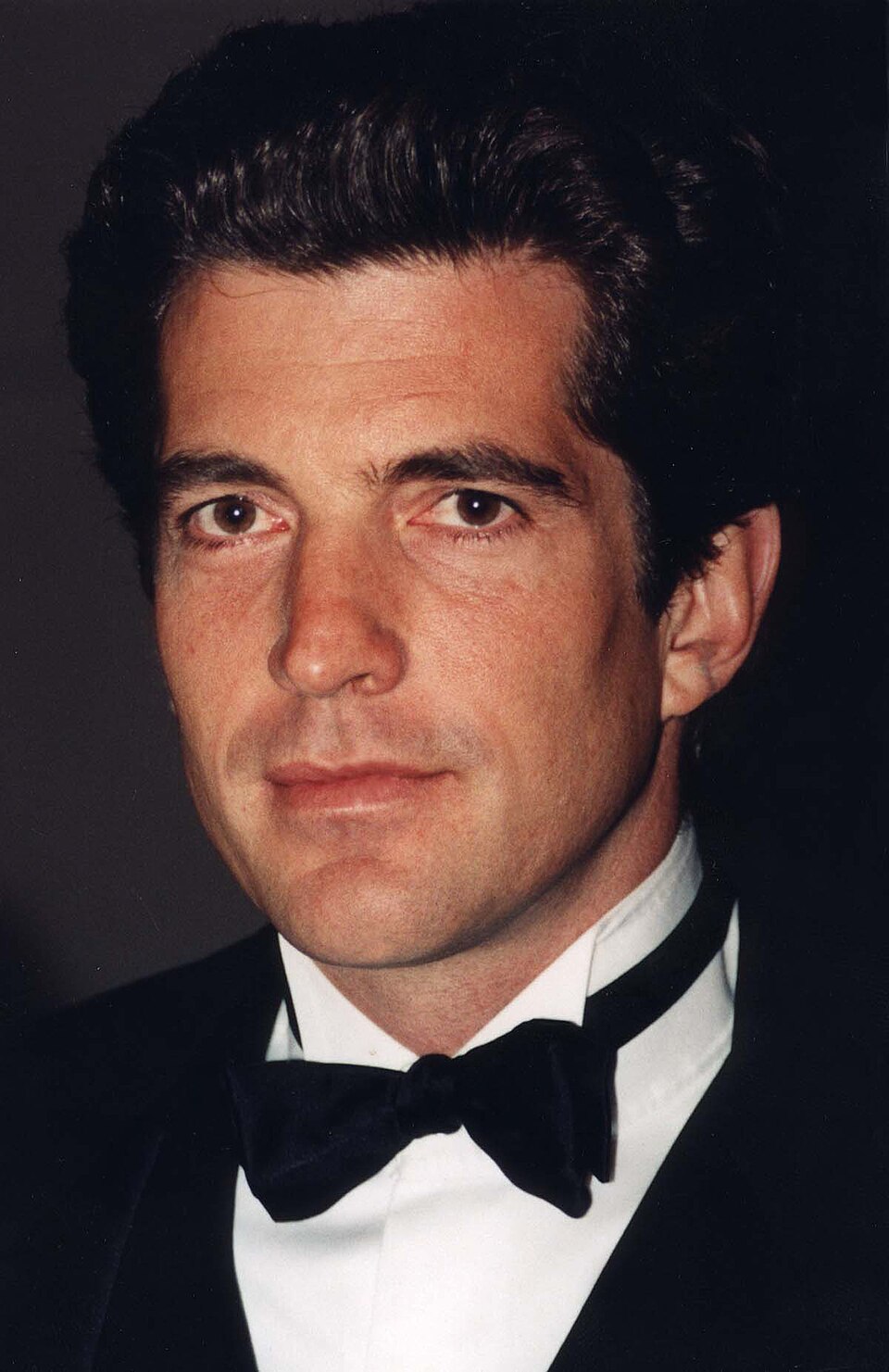
Wreckage and Recovery Near Martha’s Vineyard
On July 21, 1999, five days after the aircraft disappeared, search teams located the wreckage on the ocean floor approximately 7.5 miles southwest of Martha’s Vineyard. The water depth at the site was roughly 120 feet. The discovery provided investigators with essential physical evidence and gave the families a clearer account of what had occurred.
U.S. Navy divers assisted in the recovery operation. The bodies of Kennedy, Carolyn Bessette Kennedy and Lauren Bessette were recovered from the crash site, according to contemporary official reporting and subsequent accounts of the operation. The recovery brought a painful conclusion to the search and enabled the families to hold private memorial services.
In later years, retired Coast Guard Capt. W. Russell “Russ” Webster, who served as incident commander during the search, has discussed the operation in interviews and in a book written with maritime historian Theresa Mitchell Webster. He has described the difficult timeline facing search crews and the importance of locating the wreckage before currents and conditions complicated recovery further.
Accounts published long after the crash have included details about the positions in which the victims were found. Such recollections are distinct from the National Transportation Safety Board’s official accident findings. The central documented facts remain that the wreckage was found southwest of Martha’s Vineyard, that all three occupants died in the crash, and that the investigation determined the aircraft struck the ocean after the pilot lost control during descent.
What the NTSB Determined Caused the Crash
The National Transportation Safety Board, the independent federal agency responsible for investigating civil transportation accidents in the United States, examined the flight, weather, aircraft and pilot qualifications. Its probable-cause finding was clear: the accident resulted from Kennedy’s failure to maintain control of the airplane during a descent over water at night.

The NTSB identified spatial disorientation as a contributing factor. Spatial disorientation occurs when a pilot’s sensory perception does not accurately reflect the aircraft’s actual position or movement. The human body is not naturally equipped to judge changes in attitude, acceleration or direction in the absence of a visible horizon. A pilot may feel that an aircraft is flying level even while it is banking or descending.
The Federal Aviation Administration has long warned pilots about the risk of spatial disorientation, especially during night flights, in haze, clouds, fog, precipitation or other conditions that reduce outside visual references. In these situations, pilots must rely on instrument training and disciplined instrument scanning rather than physical sensations.
The NTSB report noted that the aircraft was descending and turning before impact. Its findings did not support theories of mechanical failure, sabotage or a medical emergency as the cause of the crash. The official investigation instead emphasized the combined risks of darkness, haze, flight over water and the pilot’s lack of an instrument rating.
This conclusion has been widely cited in aviation education because it demonstrates how quickly visual conditions can deteriorate. Even a relatively short flight on a familiar route can become hazardous when the environment no longer provides dependable visual information.

Why Night Flights Over Water Can Be Especially Dangerous
The Kennedy crash is often discussed alongside broader aviation-safety guidance for private pilots. Night flights are not inherently unsafe, but they require careful planning, current training, appropriate weather evaluation and a clear understanding of personal limitations. Conditions that may appear manageable from the ground can be much more demanding in the air.
Haze can obscure the natural horizon and reduce the contrast between the sky and the sea. Over water at night, the surface may appear as a featureless dark expanse. Without clear lights, stars, shoreline references or a visible horizon, a pilot flying visually can experience what aviation experts call a “black-hole” environment.
Instrument training is designed to help pilots manage exactly these situations. Pilots trained and rated for instrument flight learn to trust flight instruments when sensory perceptions conflict with the aircraft’s indicators. They also learn procedures for communicating with air traffic control, managing approaches and responding to unexpected weather changes.
Federal aviation guidance encourages pilots to assess weather, route conditions, recent flying experience, fatigue and proficiency before departure. The decision to delay, alter or cancel a flight can be a responsible safety choice, particularly when night conditions and reduced visibility are involved.
Public Grief and the Kennedy Family’s Place in American Life
The death of John F. Kennedy Jr. resonated far beyond the immediate families involved. He was known not only as the son of a president but also as a lawyer, publisher and public figure in his own right. He founded George magazine in 1995, using a mix of politics and popular culture to engage readers in public affairs.
For many Americans, the news recalled the widely remembered image of Kennedy as a young child at his father’s 1963 funeral. His death, nearly 36 years after President Kennedy’s assassination, renewed public reflection on the family’s history of loss while also prompting an outpouring of sympathy for Carolyn Bessette Kennedy’s and Lauren Bessette’s relatives.

Public interest in the accident has never entirely disappeared, but the official record provides important boundaries for responsible discussion. There is no evidence supporting conspiracy claims about the crash. The NTSB’s findings were based on the available physical evidence, aircraft data, weather information and investigative analysis.
Remembering the event responsibly means recognizing both the human loss and the practical lessons. The crash was a tragedy for three families, and it also reinforced a message shared by aviation-safety organizations: pilots must make conservative decisions when conditions challenge their training or limit visual orientation.
Legacy of the John F. Kennedy Jr. Crash
The 1999 crash remains one of the best-known general aviation accidents in modern American history. Its public profile has sometimes encouraged speculation, yet its enduring significance is rooted in documented aviation lessons. The accident illustrates that experience, familiarity with a route and confidence are not substitutes for appropriate ratings, weather awareness and instrument proficiency.
It also highlights the demanding work of the Coast Guard, Navy divers, local authorities and other responders who conduct searches in difficult conditions. Their efforts provided answers to grieving families and allowed investigators to establish a factual account of the accident.
For readers revisiting this story, the most reliable source remains the NTSB’s official accident report. It offers a careful explanation of the circumstances surrounding the final flight and helps distinguish verified findings from later recollections or unsupported rumors. The legacy of John F. Kennedy Jr., Carolyn Bessette Kennedy and Lauren Bessette is best approached with accuracy, empathy and respect for the families whose lives were changed by the loss.
Sources
Disclaimer: This content is intended for entertainment purposes only and is not based on real events.
