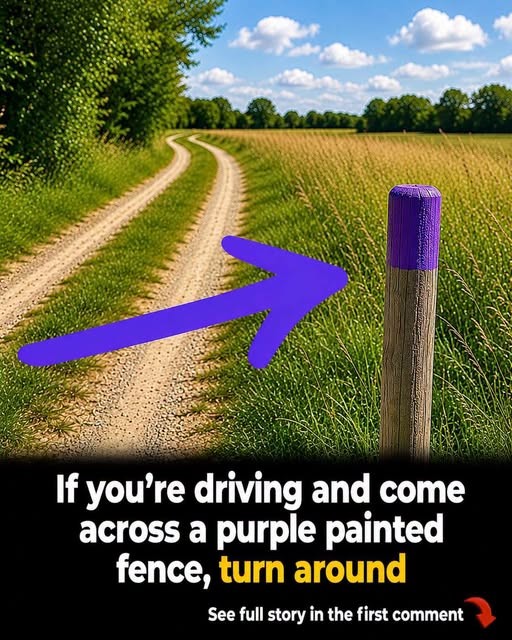

Those Purple Marks May Have an Important Purpose
While exploring rural America, you may have noticed vertical streaks of purple paint on fence posts or tree trunks. What might first appear decorative or as mere landowner preference can, in certain regions, have a legally significant meaning. In some U.S. states, these purple paint marks are not just colorful accents—instead, they serve as an official way to indicate “no trespassing” without the need for traditional signage. Understanding what these marks mean, how laws vary from state to state, and how to respond is crucial for hikers, hunters, and anyone spending time outdoors.
The Purpose Behind Purple Paint Laws
Traditionally, property owners have relied on posted signs to indicate private property and restrict entry. However, maintaining signs along extensive property boundaries can be challenging. Weather, vandalism, overgrowth, and fading often render signage ineffective over time. Recognizing these difficulties, lawmakers in several states have adopted “purple paint laws”—provisions that allow landowners to use purple paint as an official, state-sanctioned notice of private property boundaries where entry is prohibited without permission. This system offers a durable, cost-effective, and easily recognizable alternative to signs.
Why the Color Purple?
Purple stands out vividly against a variety of natural backgrounds, making it easy to spot during all seasons. Importantly, purple is less commonly used for other land-related markings, such as utility work, forestry operations, or surveying, reducing the chance of confusion. By selecting a color with few other associations, states aimed to create a distinct and recognizable signal for property boundaries and trespassing regulations.
State-by-State Differences in Purple-Paint Laws
Critical to understanding purple paint markings is knowing that not all states recognize or enforce purple-paint laws. Regulations are set at the state level, so rules about the use, placement, size, spacing, and even the exact shade of paint can differ significantly. For example, while one state may require vertical marks at a specific height and interval along property lines, another may have no legal recognition of purple paint as a posting method at all. Travelers and outdoor enthusiasts should always check local regulations before assuming the meaning behind these markings.
Case Studies: States That Use Purple Paint Laws
Arkansas: A Pioneer in Paint Marking
Arkansas was among the first states to adopt the purple paint policy in the early 1980s. The state’s laws specify how marks must be applied: they should be vertical stripes at least 8 inches long and between 3 to 5 feet above ground level, and must be readily visible to anyone approaching the property. Arkansas even standardized the hue, recommending a particular light-purple exterior-grade paint for these markings.
Texas: Detailed Standards for Boundaries
Texas, a leader in land and agricultural regulation, includes purple-paint provisions in its trespass laws (Texas Penal Code Section 30.05). The law prescribes that marks should be vertical lines at least 8 inches long and 1 inch wide, placed between 3 and 5 feet above the ground, and spaced no more than 100 feet apart on forest land (or 1,000 feet apart on open land). This method is legally equivalent to posting “No Trespassing” signs.
North Carolina: Clear Communication for Outdoor Activities
North Carolina also recognizes purple paint as an official method of posting private property. The law is especially relevant for activities like hunting, fishing, and trapping. Marks must meet specific size, interval, and visibility requirements—often including vertical lines at least 8 inches long, with consistent placement along property boundaries and entrances.
Why Paint Instead of Signs?
Maintaining visible, legible signs is a continuous chore for rural landowners, who may need to monitor miles of boundary fence or wooded property. Purple paint, by contrast, does not succumb to weather as quickly, cannot be easily removed or stolen, and remains visible even if vegetation grows nearby. The law provides landowners increased flexibility and durability for their no-trespassing notices.
Understanding What Purple Marks Mean (and Don’t Mean)
Not every purple paint mark designates a restricted boundary. Utility workers, foresters, or surveyors may also use yellow, blue, or even purple paint for their own coding systems. Some trail organizations use painted marks to indicate hiker routes, and individual property owners may paint posts for purely decorative reasons. Only repeated, carefully placed vertical purple marks—especially those that appear consistently along a property line—should be interpreted as potential legal notices of restricted entry.
The Importance of State and Local Context
Because these laws vary by state, interpreting purple marks requires an awareness of local regulations. In some states, unauthorized crossing of a boundary marked with purple paint is legally treated the same as crossing past a “No Trespassing” sign, potentially resulting in fines or legal action. In other states, such marks may have no official status, leaving property owners reliant on other posting methods.
Proper Placement and Specifications
Where purple-paint laws apply, there are usually detailed requirements for how marks must be created. States often specify:
- Mark length (commonly 8 inches or more)
- Width (typically at least 1 inch)
- Height above ground level (usually between 3 and 5 feet)
- Visibility: marks must be placed on trees, posts, or other permanent objects, visible from outside the property
- Spacing: marks may need to occur at specific intervals along boundaries (from 100 feet in forested areas to 1,000 feet in open land, depending on state law)
Marks that do not meet these specifications may not be legally recognized as notice of trespass.
Practical Guidance for Hikers and Outdoor Visitors
Outdoor enthusiasts must remain aware of their surroundings. If you see repeated vertical purple marks along a property boundary, stop before entering and determine if you are on public or private land. Official trail maps, park websites, or local authorities can provide information. If you are unsure, it is always safest to respect the boundary until you confirm access or obtain permission.
Special Considerations for Hunters, Anglers, and Trappers
Regulations are especially important for those hunting, fishing, or trapping, as these activities frequently intersect with private property. Several states with purple paint laws specifically reference hunting and require hunters and anglers to respect posted boundaries, whether they are signed or painted. Failure to do so can result in significant penalties, including fines or loss of hunting privileges.
Property Boundaries and Public Land
Even in large public recreation areas, the boundaries with private land may be marked only by purple paint. Having a clear understanding of your location is critical to avoid accidental trespass. This is particularly true for those exploring the edges of state or national parks, forests, or wildlife areas.
Respecting Private Property: What to Do When You See Purple Paint
If you encounter repeated vertical purple markings:
- Pause and determine your location.
- Check maps, signs, or contact property managers or authorities if possible.
- Avoid crossing marked boundaries unless you have verified permission.
- Never alter or remove paint marks, as this may violate the law and disrespect property rights.
International and Societal Reactions
While purple-paint laws are specific to the U.S., the concept reflects a broader societal trend toward clear, durable, and efficient property posting methods. As populations increase and outdoor recreation grows in popularity, conflicts over land access can become more frequent. Similar strategies—such as color-coded signs or markers—are used in parts of Europe and Australia. The purple paint system offers a model that other nations or regions might consider adapting, particularly where rural signage is difficult to maintain.
Expert Commentary and Ongoing Discussions
Legal and property experts generally support purple-paint laws as an effective way to prevent trespassing and protect landowner rights. According to the National Agricultural Law Center and state agricultural extension agencies, these laws help clarify boundaries, minimize costly disputes, and reduce the ambiguity often associated with faded or missing signs. However, some legal professionals caution that ongoing public education is crucial to ensure visitors understand the meaning of purple marks, especially as laws change or expand.
Summary: A Simple Mark With Important Implications
The next time you notice a trail of purple marks along a fence post or on trees, consider more than just their appearance. In states with purple paint laws, these symbols function as legal boundary markers for private property, standing in for posted signs. While the specific requirements and enforcement vary, the underlying message is consistent: respect the property boundary unless you are certain you have access. Take time to verify your location, consult official maps and authorities, and avoid inadvertently violating property laws. Paying attention to these understated but significant markers is a key part of responsible outdoor recreation and land stewardship.
Disclaimer: This content is intended for entertainment purposes only and is not based on real events.
