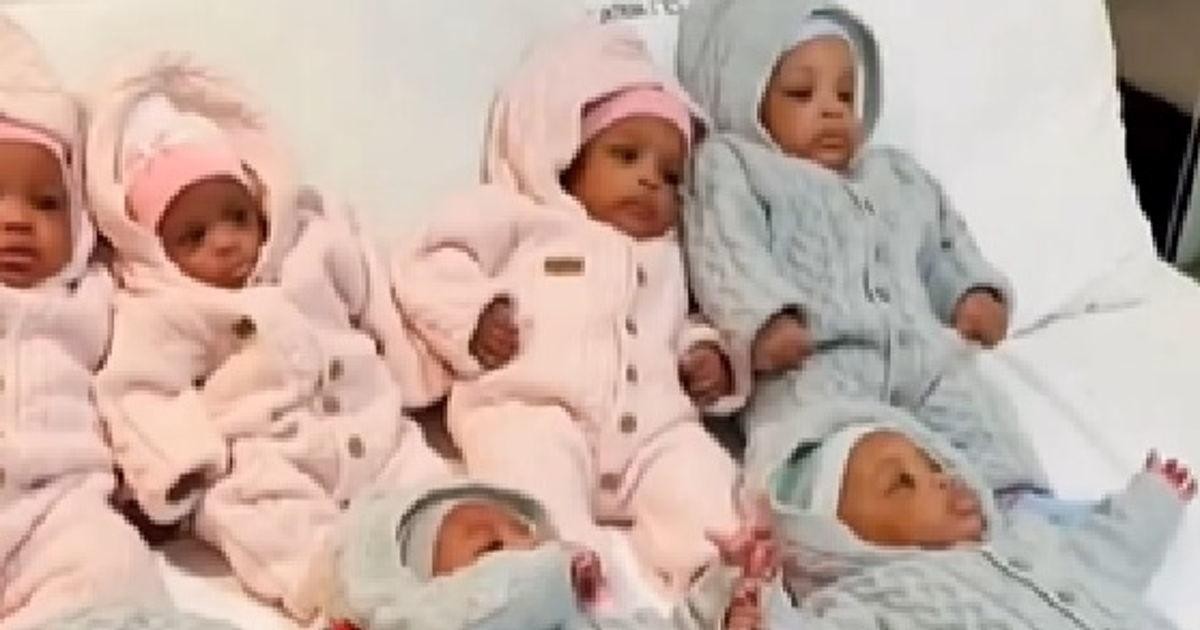

The Historic Birth of the World’s Only Surviving Nonuplets
In a remarkable event that made headlines across continents, Halima Cissé and Abdelkader Arby, a couple from Mali, welcomed the world’s first and only surviving set of nonuplets—nine babies born in a single pregnancy. Their unprecedented story continues to inspire wonder, gratitude, and admiration more than four years after their record-breaking delivery in May 2021.
The children, consisting of five daughters and four sons, were born in Casablanca, Morocco, when Halima Cissé was just 30 weeks pregnant. Given the high risks associated with multiple births, the delivery was carefully managed by a team of specialists and conducted via Caesarean section. Each infant arrived prematurely, weighing between 1.1 and 2.2 pounds (approximately 500 to 1,000 grams).
The successful survival and ongoing health of all nine babies represent a monumental moment not only for the Cissé-Arby family but also for the international medical community. Their journey, from the tense anticipation of high-risk pregnancy to the celebrations of childhood milestones, highlights the extraordinary capabilities of modern neonatal care and the unyielding spirit of family.
A Medical Marvel: The Pregnancy and Delivery
Multiple births, especially those involving more than three infants, are exceedingly rare and present unique medical challenges. According to the World Health Organization (WHO), higher-order multiple pregnancies significantly increase the risks for both mothers and babies, including pre-term birth, low birth weight, and complications during delivery.
What sets Halima Cissé’s pregnancy apart is not only the number of babies but also its natural occurrence. Cissé did not undergo fertility treatments or in vitro fertilization (IVF), making the event an extraordinary statistical and physiological rarity. Most naturally occurring pregnancies resulting in more than quadruplets face critical complications, and historically, few infants survive.
The initial medical screenings suggested Cissé was expecting seven babies. It was only shortly before the operation that an updated ultrasound revealed the presence of nine fetuses. Reflecting on that pivotal moment, Cissé recalled, “As the babies were coming out, there were so many questions going through my mind. I was very aware of what was going on, and it seemed as if there was an endless stream of babies coming out of me.” Her statements, given to the Daily Mail, capture both the awe and anxiety that accompanied the delivery.
The parents’ immediate concerns turned to the wellbeing of each child. Cissé described the emotional scale of the experience: “My sister was holding my hand but all I could think about was how would I look after them and who was going to help me?”
From Fragile Beginnings to Thriving Childhood
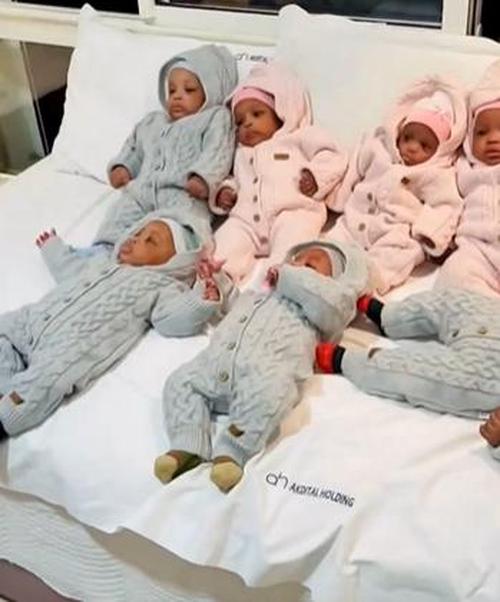
Four years after these historic events, the Cissé-Arby family is celebrating the healthy development of their nonuplets. A recent social media post featured a rare collection of heartfelt images showing the siblings—Kadidia, Fatouma, Hawa, Adama, Oumou, Mohammed VI, Oumar, Elhadji, and Bah—sharing special moments together.
The Instagram post, translated by Guinness World Records, was accompanied by the caption:
“Here are some rare images of our treasures just after they were born, in their tiny hatches and a precious photo of their mum Halima during her exceptional pregnancy.”
The family’s record was officially recognized by Guinness World Records in 2021, confirming that they hold the title for the most children delivered during a single birth to survive. This recognition has heightened public interest and provided a platform for the parents to share their gratitude:
“A miracle of life, incredible strength, immense love. We are filled with gratitude for how far we have come and for all the support we have received since the very beginning. Thank you to everyone who has been with us since day one.”
The cherished photo collection captures the nonuplets in matching outfits, interacting playfully at different stages of early childhood. These images underline both their individual personalities and the extraordinary sibling bond formed under such rare circumstances. In one memorable snapshot, a son proudly displays the Guinness World Records plaque, surrounded by his siblings and beaming parents. Their older sister, Souda, age six, was notably absent from the series but remains part of their close-knit family unit.
Raising Nine Siblings: Everyday Life and the Challenges Ahead
Raising a large family presents logistical, emotional, and financial challenges even under ordinary circumstances. For Halima Cissé and Abdelkader Arby, caring for nine same-age children demands precise organization, immense patience, and profound community support.
The couple has benefited from assistance provided by both the Malian and Moroccan governments and has received international attention, support, and gifts. In her discussion with Guinness World Records, Halima remarked that the fourth birthday celebrations “were held in a grandiose way, as a celebrity would!” That spirit of celebration runs through their reflections as they continue to cherish every milestone their children reach.
Daily routines revolve around ensuring each child’s physical, mental, and emotional needs are met. Tasks such as distributing meals, overseeing hygiene, facilitating learning and play, and fostering positive sibling relationships represent a continual balancing act. The exceptional nature of their family has also required adapting their home environment—arranging sleeping quarters, schoolwork spaces, and play areas to ensure every child can thrive.
Abdelkader Arby has described the experience as rewarding yet demanding, emphasizing the collective strength of their family and the vital role community plays in supporting them. Contributions from local organizations, the broader Malian society, and well-wishers worldwide have helped the family secure nutrition, education, and medical care for the nonuplets.

The Significance of This Medical and Human Milestone
The successful survival and early childhood of all nine siblings are not only joyful for their parents but also stand as a testament to advances in neonatal medicine. Multiples born very prematurely—as the nonuplets were at 30 weeks—typically face high risks of developmental and health challenges.
According to expert neonatologists, the coordinated approach undertaken at the Ain Borja Clinic in Casablanca was central to the nonuplets’ survival. The clinic’s staff prepared in advance for the complex birth, assembling specialized teams, equipment, and neonatal intensive care beds. Early intervention and continuous monitoring were critical in addressing immediate needs like respiratory support, feeding challenges, and infection prevention.
The progress of the nonuplets is being followed with great interest by pediatric and maternal health experts globally. Their growth and development not only provide hope to families faced with challenging pregnancies but also offer valuable data for future research into the care and outcomes of extremely high-order multiples.
While multiple births have increased globally with the rise of assisted reproductive technologies, nonuplets born without such interventions are virtually unheard of. Singleton and twin pregnancies vastly outnumber higher-order multiples. Medical literature records only a handful of prior nonuplet pregnancies, nearly all resulting in the loss of some or all infants. The Cissé-Arby nonuplets stand as the first confirmed set to reach toddlerhood and beyond.
Wider Societal Impact and Reactions
The story of the Malian nonuplets has drawn widespread international admiration and media attention. In Mali, their historic birth is regarded as a point of national pride, and their wellbeing is a symbol of resilience and hope. Meanwhile, medical experts across Africa and worldwide have acknowledged the collaboration between Mali and Morocco as pivotal to the successful outcome.
Their journey has prompted public conversations about maternal and child health in West Africa and highlighted the importance of access to skilled healthcare for complicated pregnancies. Humanitarian organizations have noted that Cissé’s experience, while unique, underscores the ongoing need for improved maternal care, neonatal resources, and community support for families with special medical needs.
Around the world, families and parents have expressed support and curiosity about the realities of raising such a large group of siblings all at once. The nonuplets’ story has inspired television documentaries, interviews, and academic presentations, encouraging greater awareness of the complexities involved in caring for both mother and children in exceptional circumstances.
Looking to the Future: Hopes and Aspirations
As the world watches the nonuplets grow, questions about their future—education, identity formation, individual interests, and family dynamics—are front of mind. For Halima and Abdelkader, the coming years hold new challenges, but also immense joy. With continued support, they hope to ensure each of their children can pursue their unique potential while maintaining a strong familial bond.
The nonuplets’ remarkable story reminds us all of the incredible possibilities inherent in life and the resilience in the face of daunting odds. It is both a celebration of modern science and a tribute to the enduring strength of family and community.
Conclusion
The journey of Halima Cissé, Abdelkader Arby, and their nine surviving children stands as a beacon of hope, resilience, and innovation in contemporary healthcare. As the nonuplets celebrate their fourth birthday, their thriving lives offer valuable insight for families and doctors alike, while inspiring people around the globe.
Their ongoing happiness and health will undoubtedly continue to capture hearts and contribute to the legacy of medical and human achievement.
Disclaimer: This content is intended for entertainment purposes only and is not based on real events.
